TL;DR

Get workout gear delivered free with Prime
- Fast, free delivery on millions of items
- Prime Video, Amazon Music and more included
- Member-only deals all year
Even small spaces can become functional home gyms with the right layout and equipment. Knowing your goals and using space-saving strategies helps you create a workout area that fits your lifestyle.
Think you need a massive room to get a good workout at home? Think again. Many successful home gyms are under 200 square feet—sometimes even smaller. The real secret is understanding what you need for your specific fitness goals and designing your space accordingly.
In this guide, you’ll learn how much space is truly necessary for different workouts, what equipment fits best in limited areas, and how to make the most of your available space. Whether you’re squeezing into a tiny apartment or planning a dedicated room, you’ll find practical tips to set up a gym that works for you.
Your fitness goals determine your space needs more than the size of the room.
A typical home gym can be effective in as little as 100-150 square feet with smart layout and equipment choices.
Vertical storage and multi-purpose equipment maximize limited space.
Larger spaces (400+ sq ft) offer more comfort and variety but come with higher costs.
Accurate measurements and thoughtful layout are key to a safe, functional gym.
How Your Fitness Goals Shape Your Space Needs
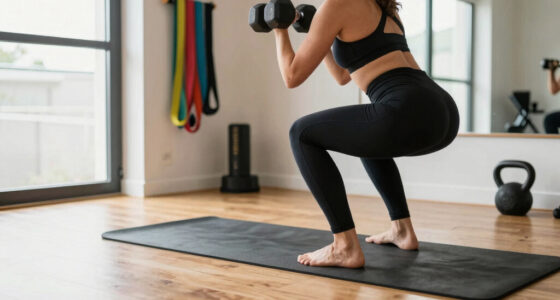
Your workout type determines how much space you need. Cardio routines and strength training demand different setups. For example, a quick yoga session fits easily into 50 square feet, which is enough for a mat and some breathing room, emphasizing the importance of space for flexibility and mental focus. In contrast, a squat rack or treadmill requires more room to ensure safety and proper form, which directly impacts your workout effectiveness and injury prevention.
If you love high-intensity interval training (HIIT), you might prefer a small, open area for dynamic movement, but even then, the space should allow for quick transitions and safe landings. Want to do heavy lifts? Plan for extra clearance around your equipment to prevent accidents and accommodate larger ranges of motion. The tradeoff here is between maximizing space for variety versus dedicating enough room for safe, effective lifting.
For a typical mix—say, some cardio, bodyweight exercises, and resistance training—aim for around 150-200 square feet. That’s enough to incorporate a few pieces of equipment and still move freely without feeling cramped, which is crucial for maintaining motivation and preventing injuries.
As an affiliate, we earn on qualifying purchases.
The Real Space You Need for Common Equipment
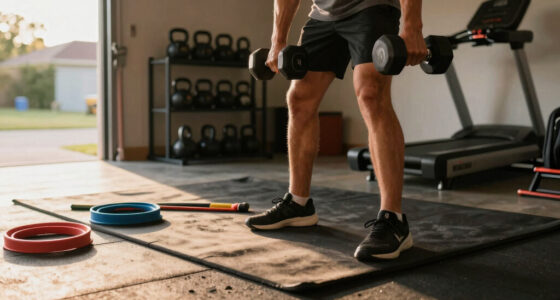
Here’s a quick look at typical equipment sizes and how much space they need, along with the implications of each choice. For instance, a treadmill generally requires about 6-8 feet in length and 3-4 feet in width, plus 2-3 feet of clearance behind to allow safe entry and exit. This extra space isn’t just for comfort—it’s critical for safety, reducing the risk of accidents during busy or intense workouts. Similarly, a stationary bike takes about 4 feet by 2 feet, but you should consider leaving at least 1 foot around it for easy access and movement, which enhances usability without cluttering your space.
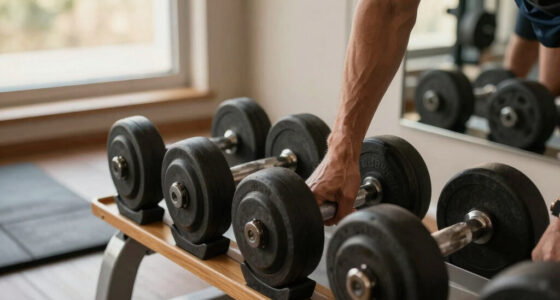
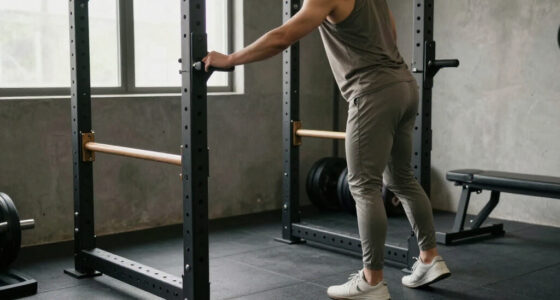
Adjustable dumbbells and benches are compact but require thoughtful placement—placing them too close can hinder movement or cause damage. A squat rack, often 4-5 feet wide, needs at least 3 feet of clearance in front to safely perform lifts without risk of injury or damage to surrounding objects. The tradeoff is between minimizing space and ensuring safety and functionality. For example, a smaller footprint might save space but could compromise safe operation or limit workout variety. Prioritizing safety and versatility means sometimes sacrificing a little extra room for peace of mind and better results.
Understanding these considerations helps you plan a layout that balances space efficiency with safety and usability, ensuring your gym is both functional and secure.
As an affiliate, we earn on qualifying purchases.
Small Space? No Problem! Tips to Maximize Your Gym
Living in a tiny apartment? You can still build an effective gym by adopting a mindset of smart, space-efficient design. Use vertical storage—mount resistance bands on hooks, attach wall racks for weights, and hang mats to free up floor space. Mirrors are not just for aesthetics—they create a sense of openness and help you maintain proper form, which is vital for preventing injuries and ensuring effective workouts. The tradeoff is that they occupy wall space but significantly enhance the perception of roominess and safety.
Invest in foldable or multi-purpose equipment. Fold-up benches, stacking steps, and resistance bands can be stored easily when not in use, allowing you to switch between workout types without clutter. Prioritize essential gear that can serve multiple functions, reducing the need for multiple machines and freeing up space for movement and variety. For example, a foldable bench can double as a step or a support for various exercises, making it a versatile addition.
Imagine a 100-square-foot corner where a wall-mounted rack holds dumbbells, a foldable bench doubles as a step, and a small mat unrolls for yoga or bodyweight moves. This setup demonstrates that with thoughtful planning, you can create a comprehensive workout zone even in tight quarters. The key is balancing storage, safety, and accessibility to maximize every inch of your space.
As an affiliate, we earn on qualifying purchases.
Is Bigger Always Better? When Larger Spaces Make Sense
While small gyms can meet most needs, larger spaces—around 400+ square feet—offer significant advantages that can enhance your workout experience. They allow for multiple machines, free weights, and dedicated zones for different activities, which can make workouts more comfortable, varied, and safer. For example, a 500-square-foot basement can comfortably house a treadmill, squat rack, weight bench, and separate cardio and strength zones, reducing the risk of overcrowding and injury. The increased space also enables better airflow and ventilation, improving comfort during intense sessions.
However, larger spaces come with increased costs—not just for equipment, but also for flooring, lighting, and ventilation systems. The tradeoff involves balancing your budget with your fitness ambitions. A well-designed 150-square-foot gym can sometimes outperform a cluttered larger space because it encourages better organization and focused workouts. Ultimately, the decision hinges on your specific goals, available space, and budget constraints.
As an affiliate, we earn on qualifying purchases.
How to Design Your Home Gym for Space and Safety
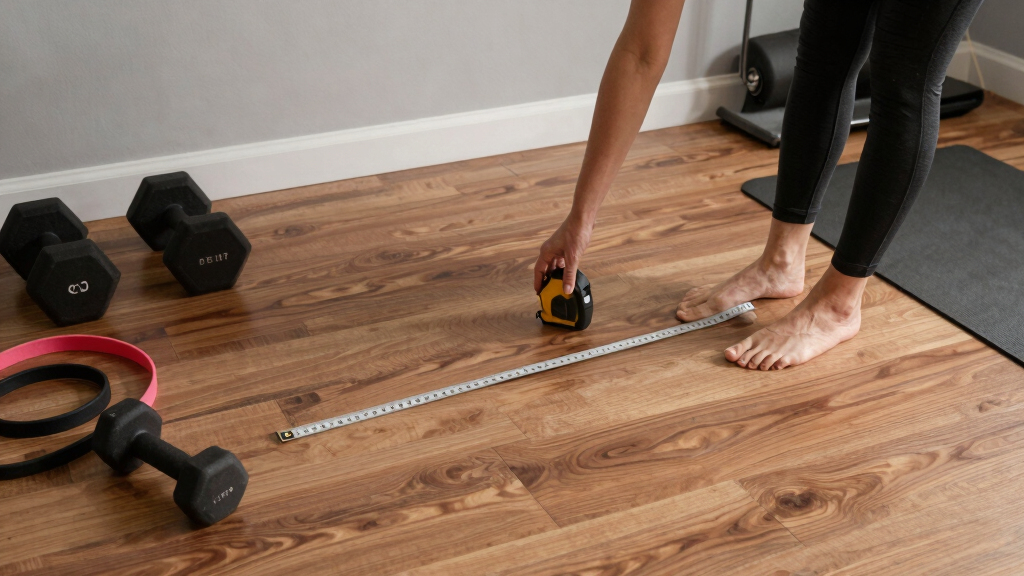
Designing a safe, efficient layout starts with accurate measurement and thoughtful planning. Mark out your space with painter’s tape or cardboard cutouts to visualize the footprint of each piece of equipment, considering not just the size but also the clearance needed for safe movement. This step helps you identify potential bottlenecks or hazards before you set anything up, reducing the risk of accidents.
Think about flow—your workout shouldn’t feel cramped or chaotic. Place heavier, bulkier equipment near walls to maximize open space in the center for dynamic exercises, stretching, or bodyweight moves. Keep pathways clear and avoid clutter to prevent trips or injuries. For example, in a 150-square-foot room, positioning the treadmill against a wall leaves enough room for resistance bands nearby and open space for bodyweight exercises, which enhances safety and functionality.
Adding a mirror on the wall can create a sense of openness and serve as a visual guide for proper form, which is especially important in limited spaces. The tradeoff is that mirrors can take up wall space but are invaluable for maintaining good technique and motivation. Careful layout planning, considering both safety and usability, ensures your gym is both effective and secure, even in a compact area.
Frequently Asked Questions
How much space do I need for a treadmill or elliptical?
A treadmill typically needs about 6-8 feet in length and 3-4 feet in width, with at least 2-3 feet of clearance behind for safety. Ellipticals are similar, requiring around 4-6 feet of length and space for movement around them. Prioritizing this clearance can prevent accidents and ensure safe operation, particularly in high-traffic or multi-user households.
Can I create a home gym in a small apartment?
Yes, with compact equipment like resistance bands, foldable benches, and vertical storage, even small apartments can host effective workout areas. Prioritizing multi-use items and vertical space allows you to maximize limited square footage without sacrificing workout variety or safety.
What are the best space-saving gym equipment options?
Foldable benches, wall-mounted racks, resistance bands, compact cardio machines, and adjustable dumbbells are all excellent choices for small spaces. These options help minimize clutter while providing versatility, ensuring you can perform a wide range of exercises without sacrificing safety or comfort.
How can I make the most of a tiny workout space?
Use mirrors to create a feeling of openness, keep the floor clear of clutter, and incorporate vertical storage solutions. Planning your layout before setting up helps you utilize every inch efficiently and safely, enabling a comprehensive workout experience even in limited space.
Is it worth investing in a larger space for a home gym?
If you have the room and budget, larger spaces allow for more equipment, variety, and comfort, supporting diverse and more engaging workouts. However, a small, well-organized gym can be equally effective if you focus on strategic layout and multi-use equipment, making it a practical choice for many.
Conclusion
You don’t need a mansion-sized room to build a capable home gym. Focus on your goals, measure your space carefully, and choose versatile equipment that fits. A well-planned, cozy setup can support your fitness journey just as well as a sprawling one.
Remember, it’s not about the size but how you make use of what you have. Your perfect gym is the one you actually use—so start small, think smart, and grow as you go.
Fall Picks
fall essentials
As an affiliate, we earn on qualifying purchases.