Adjusting an adjustable dumbbell set allows you to customize weight for different exercises and fitness levels. This guide provides clear, step-by-step instructions suitable for beginners to safely modify the weight of your dumbbells. Whether you’re setting up for a workout or changing weights between sets, following these steps ensures accurate and secure adjustments, preventing accidents or damage. With proper technique, you can achieve effective training sessions with minimal setup time.

Get workout gear delivered free with Prime
- Fast, free delivery on millions of items
- Prime Video, Amazon Music and more included
- Member-only deals all year

2026 FDB2 Adjustable Dumbbell Set of 2, 25 lbs Each, with Storage Box
- ✔ Weight per dumbbell: 25 lbs
- ✔ Weight options: 4, 10, 15, 20, 25 lbs
- ✔ Total weight: 50 lbs
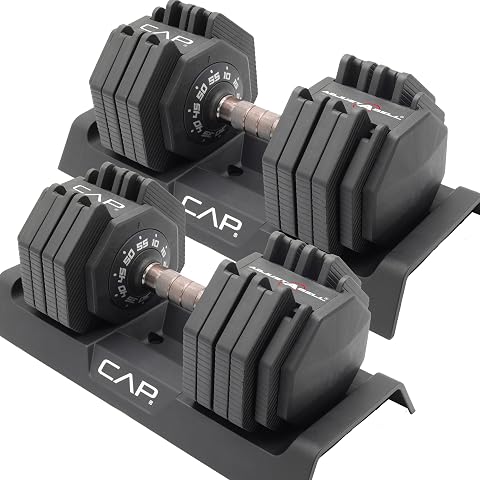
Adjustabell Adjustable Dumbbell Set, 25 lb & 55 lb, Quick-Select, Hex Dumbbells, Multiple Handle Options
- ✔ Weight range: 10–55 lbs
- ✔ Handle type: Straight non-slip grip
- ✔ Number of weights: 10

16lb 20lb Adjustable Dumbbells Set
- ✔ Weight options: 2, 4, 6, 8 lbs
- ✔ Set weight: 16 or 20 lbs
- ✔ Locking mechanism: Double lock
Difficulty: Beginner | Time: 5-10 minutes per adjustment
What You’ll Need
Tools & Materials:
- Adjustable dumbbell set
- Optional: towel or cloth for grip
Knowledge:
- Basic understanding of dumbbell components
- Awareness of safety when handling weights
2026 FDB2 Adjustable Dumbbell Set of 2, 25 lbs Each, with Storage Box
<p>The <strong>2026 FDB2</strong> stands out for its <strong>near-instant one-second weight adjustment</strong>, making it ideal for high-intensity interval training or quick workout transitions. The textured grip and dual-lock safety system enhance safety, though the set’s maximum weight of 25 lbs per dumbbell limits its appeal for advanced lifters. Compared to the Adjustabell, which offers a broader weight range, the FDB2 prioritizes convenience over versatility. If speed and space-saving are your top priorities and your strength goals are moderate, this set makes a compelling choice.</p>
Pros:
- Rapid one-second weight change for efficient workouts
- Compact, space-saving design with included storage
- Durable construction with safety locking system
- Ergonomic, anti-slip grip
Cons:
- Limited to 25 lbs per dumbbell, not suitable for heavy lifting
- Some users may find the locking system initially complex
- No expandability beyond 25 lbs
Best for: Home users seeking quick, simple adjustments for moderate strength training
Not ideal for: Advanced lifters needing heavier weights or those wanting a versatile range for diverse exercises
Bottom line: Ideal for quick, moderate workouts in small spaces, but not suited for advanced strength training.
“Ideal for quick, moderate workouts in small spaces, but not suited for advanced strength training.”
Adjustabell Adjustable Dumbbell Set, 25 lb & 55 lb, Quick-Select, Hex Dumbbells, Multiple Handle Options
<p>The <strong>Adjustabell Set</strong> offers a <strong>patented quick-select system</strong> that enables seamless weight changes from 10 to 55 pounds—perfect for users progressing in strength or doing varied workouts. Its durable nylon-coated plates resist impact, and the multiple handle options improve comfort. Compared with the FDB2, the Adjustabell caters to a broader range of strength levels but requires more space for its storage tray. It suits those who want a versatile, space-efficient solution that can grow with their fitness journey, despite a higher price point.</p>
Pros:
- Quick and effortless adjustment from 10 to 55 lbs
- Durable nylon-coated plates resist wear
- Space-efficient with storage tray included
- Multiple handle options for comfort
Cons:
- Limited to 55 lbs maximum, not suitable for very heavy lifting
- More expensive than basic dumbbells
- Requires dedicated space for tray storage
Best for: Intermediate to advanced users seeking a broad weight range and quick adjustment
Not ideal for: Beginners on a tight budget or those with limited space who only need light weights
Bottom line: This set balances versatility and ease of use, making it a smart choice for versatile home training with room to grow.
“This set balances versatility and ease of use, making it a smart choice for versatile home training with room to grow.”
16lb 20lb Adjustable Dumbbells Set
<p>The <strong>16lb & 20lb set</strong> excels in providing <strong>versatile, lightweight options</strong> with four weight options per dumbbell—ideal for beginners or those doing full-body workouts. Its <strong>double lock security</strong> and textured TPU handles ensure safety and comfort, while its hexagonal shape prevents rolling. However, the limited weight range makes it less suitable for users progressing into heavier lifting or strength-focused routines. This set is perfect for portability, outdoor workouts, or space-constrained environments, but it might fall short for advanced training needs.</p>
Pros:
- Adjustable weights for versatile, beginner-friendly workouts
- Secure double lock mechanism ensures safety
- Compact, portable, and easy to store
- Textured handles for a comfortable grip
Cons:
- Limited maximum weight for heavy lifting
- Switching weights can be slightly complex for some users
- Not suitable for progressive overload at high levels
Best for: Beginners, casual lifters, or users seeking portable, light-weight options
Not ideal for: Advanced strength trainers or those needing higher weights for progressive overload
Bottom line: A great lightweight, portable option for beginners or casual workouts, but limited for serious strength training.
“A great lightweight, portable option for beginners or casual workouts, but limited for serious strength training.”
As an Amazon Associate we earn from qualifying purchases.
Before You Start
Check the weight markings on your dumbbells and decide on the desired weight for your workout. Ensure your hands are dry and free of sweat to avoid slipping during adjustment. Confirm that the dumbbells are on a stable surface to prevent falling or injury during modification.
Step-by-Step Instructions
Step 1: Identify the adjustment mechanism
Examine your dumbbell to locate the adjustment mechanism, which could be a dial, a pin, a screw, or a collar. Familiarize yourself with how it operates and where it is positioned.
Tip: Consult the manufacturer’s manual if available, as mechanisms differ between brands and models.
Check: You can clearly see and understand how to operate the adjustment feature of your dumbbell.
Step 2: Secure the dumbbell
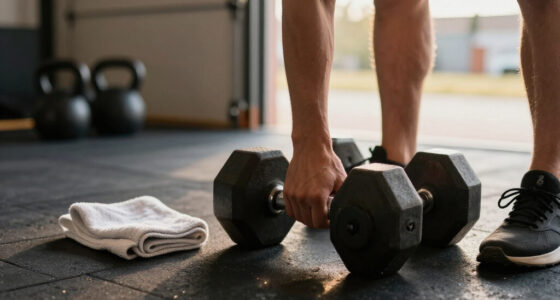
Place the dumbbell on a flat, stable surface with the adjustment mechanism accessible. Make sure it is steady and will not roll or fall during adjustment.
Tip: Use a towel or cloth underneath if the surface is slippery or uneven.
Check: The dumbbell remains stable and securely positioned, ready for adjustment.
Step 3: Engage the adjustment mechanism
Depending on your model, either turn the dial, pull the pin, unscrew the collar, or slide the weight plates. Follow the specific method to unlock or release the weight plates.
Tip: Apply firm but controlled force; do not force parts if they resist, to avoid damage.
Check: The mechanism moves smoothly and you can access the weight plates or internal components.
Step 4: Select the desired weight
Adjust the weight plates or settings to match your target weight. For dial mechanisms, turn to the corresponding number. For pin systems, insert the pin into the appropriate hole. For screw collars, loosen and slide plates accordingly.
Tip: Double-check the markings or indicators to ensure you select the correct weight setting.
Check: The mechanism indicates the correct weight setting, and all parts are aligned securely.
Step 5: Secure the adjustment
For dial mechanisms, lock the dial in place. For pins, fully insert and ensure it clicks or seats securely. For collars, tighten until firm. Confirm that the weight plates are firmly attached and cannot move during use.
Tip: Use your hand or a tool if necessary to tighten collars or locks thoroughly.
Check: The weight is firmly secured, with no loose parts or wobbling to prevent accidents during lifting.
Step 6: Test the adjustment
Lift the dumbbell slightly off the surface and gently shake it to verify all parts are secure. Make sure the weight does not shift or come loose.
Tip: Do this over a soft surface if possible, to prevent damage if something slips.
Check: The dumbbell feels stable with no movement or noise, indicating a proper adjustment.
Common Mistakes to Avoid
- Not double-checking the lock or lock-in mechanism after adjusting. — Always confirm that the adjustment feature is fully engaged and secured before lifting.
- Forcing the adjustment mechanism if it resists. — Follow manufacturer instructions carefully and avoid forcing parts, which can cause damage.
- Adjusting weights while the dumbbell is not on a flat surface. — Place the dumbbell on a stable surface during adjustment to prevent slipping or uneven movement.
Troubleshooting
Problem: The weight plates do not seem to lock in place or slip after adjustment.
Solution: Revisit the locking step, tighten collars or locks securely, and verify the mechanism is engaged properly.
Problem: The dial or pin mechanism is stiff or difficult to turn/insert.
Solution: Apply gentle force, and check for debris or dirt; clean the mechanism if necessary, and lubricate lightly if recommended by the manufacturer.
Problem: The dumbbell feels unbalanced after adjustment.
Solution: Ensure all weight plates are evenly distributed and securely fastened on both sides. Recheck the locking mechanism.
What Success Looks Like
The adjustable dumbbell is set to the desired weight, with all locking mechanisms fully engaged. The weight feels solid, with no wobbling or looseness during movement. You can lift and handle the dumbbell without concern for parts coming loose or shifting.
Next Steps
After adjusting, perform a few controlled lifts to test stability. Store the dumbbells on a flat surface or rack, and check periodically that the settings remain secure. When not in use, keep the adjustment mechanisms clean and dry. Repeat adjustments as needed for different exercises or weight changes.
Frequently Asked Questions
Can I adjust the dumbbell weights during a workout?
Yes, but do so carefully and only when the dumbbell is at rest on a stable surface to prevent injury or damage.
How often should I check the locking mechanisms?
Inspect the locks and plates regularly, especially before heavy lifts, to ensure safety and stability.
What is the maximum weight capacity of adjustable dumbbells?
The capacity varies by model; check your manufacturer’s specifications to avoid exceeding the recommended limits.
Are all adjustment mechanisms compatible with my dumbbell?
No, mechanisms differ between brands; always follow the specific instructions for your model.
Halloween Picks
halloween
As an affiliate, we earn on qualifying purchases.