
TL;DR

Get workout gear delivered free with Prime
- Fast, free delivery on millions of items
- Prime Video, Amazon Music and more included
- Member-only deals all year
Fit&Well reports that physical therapist Erin Cannon recommends thread the needle, banded shoulder external rotations and shoulder CARs as mobility exercises. Cannon suggests two to three sets of five to 10 repetitions, three times weekly, while stressing that the right amount varies by person.
Fit&Well has reported three shoulder mobility exercises recommended by Erin Cannon, a physical therapist with Hackensack Meridian JFK Johnson Rehabilitation Institute: thread the needle, banded shoulder external rotations and shoulder CARs. The report presents the moves in an article about protecting shoulder joints as people age, but it does not establish that they prevent injuries or are suitable for everyone.
Cannon says regular mobility work can help maintain range of motion and encourage circulation to the shoulder joint. The report notes that sore shoulders can affect daily activities such as getting dressed or putting away shopping. It also says strengthening the muscles around the joint can help people avoid injury, though it does not provide research findings or quantify any protective effect from these exercises.
Thread the needle begins on hands and knees. Rotate the torso and reach one arm toward the ceiling, then bring that shoulder toward the mat while sliding the arm beneath the body. Do five to 10 repetitions on each side. The report’s form cues are to engage the core and avoid excessive rounding or arching through the spine.
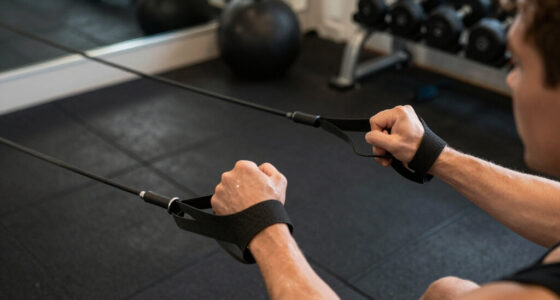
For banded external rotations, stand with feet hip-width apart, elbows bent at 90 degrees and held close to the sides. Pull a resistance band apart by rotating the shoulders outward, then return with control. Shoulder CARs—controlled articular rotations—are slow arm circles performed standing, using a comfortable range. Cannon’s general suggestion is two to three sets of five to 10 repetitions, three times per week; the report says beginners can start at the lower end and build gradually.
Mobility Advice for Everyday Shoulder Use
The recommendations offer readers a short routine that can be done with a mat and resistance band, and they include form instructions intended to keep the movement controlled. That may be useful for people looking for ways to work shoulder mobility into a weekly exercise schedule, particularly when everyday tasks involve reaching or rotating the arm.
However, the article describes a physical therapist’s guidance, not a clinical trial. It does not establish that the routine will prevent shoulder injuries, treat pain or preserve mobility for every person. Cannon says the appropriate number of sets and repetitions can vary from person to person. Fit&Well advises readers with injuries or mobility concerns to consult a doctor before trying the exercises.
Products Worth Considering

Fitbit Sense Advanced Smartwatch – Sage Grey/Silver (One Size, S & L Bands Included)

Garmin Forerunner 70 GPS Running Smartwatch, 43 mm, Black

Oral-B iO Series 7 Rechargeable Electric Toothbrush with 2 Brush Heads and Charging Travel Case
As an affiliate, we earn on qualifying purchases.
How the Three Exercises Differ
The moves address shoulder motion in different positions. Thread the needle combines torso rotation and an arm reach while on hands and knees. The band exercise focuses on outward shoulder rotation against resistance, with elbows kept near the body. Shoulder CARs use slow, controlled circles to move the arm through a comfortable arc.
Cannon’s stated technique emphasis is to maintain a vertical posture during each move. The report also lists core engagement among the tips for the exercises. For the band exercise, a rolled-up towel between the elbow and torso can help someone keep the elbow close to the body. The report says repetitions and sets can differ between individuals; it does not give a specific progression plan or resistance level.
“A general standard to follow could be two to three sets of five to 10 reps, three times per week.”
— Erin Cannon, physical therapist at Hackensack Meridian JFK Johnson Rehabilitation Institute, as quoted by Fit&Well
Who Should Modify the Routine
The report advises consulting a doctor before attempting the exercises if a person has an injury or mobility concern. It does not discuss specific shoulder conditions or describe how the moves may suit people with particular concerns. Cannon says to use a comfortable range for shoulder CARs, but the report does not provide further guidance on a pain threshold or a tailored progression. Individual suitability is not established for people with injuries or mobility concerns.
The report does not say that the exercises replace assessment or care from a qualified health professional.
Start Gently and Track Comfort
For beginners, Fit&Well reports Cannon’s advice to start at the lower end of her suggested range and build gradually. For shoulder CARs, she recommends using a comfortable range; the report does not specify a starting number of sets and repetitions for everyone considering the routine.
Fit&Well advises people with an injury or mobility concern to speak with a doctor before attempting the moves. The source offers no follow-up schedule or promised outcome.
Key Questions
Which three exercises does the physical therapist recommend?
Thread the needle, banded shoulder external rotations and shoulder CARs are the three moves recommended by Erin Cannon in the Fit&Well report.
How often does the report suggest doing them?
Cannon gives a general guideline of two to three sets of five to 10 repetitions, three times per week. She says the appropriate amount varies by person, and beginners can start at the lower end.
What equipment is needed?
The routine uses an exercise mat and resistance band. Thread the needle and shoulder CARs do not require the band.
Are the exercises suitable for someone with shoulder pain or an injury?
The report does not establish that the moves are suitable for every condition. It advises people with injuries or mobility concerns to speak with a doctor before trying them.
Source: fitandwell.com