TL;DR
Open a free Amazon Business account
Business pricing, bulk buying and tax-exempt orders.
Create a free accountAs an affiliate, we earn on qualifying purchases.
Wearables don’t directly measure psychological stress. They track physiological signals like heart rate, HRV, and skin conductance to estimate arousal. Use these scores as trend indicators, not definitive stress measures.
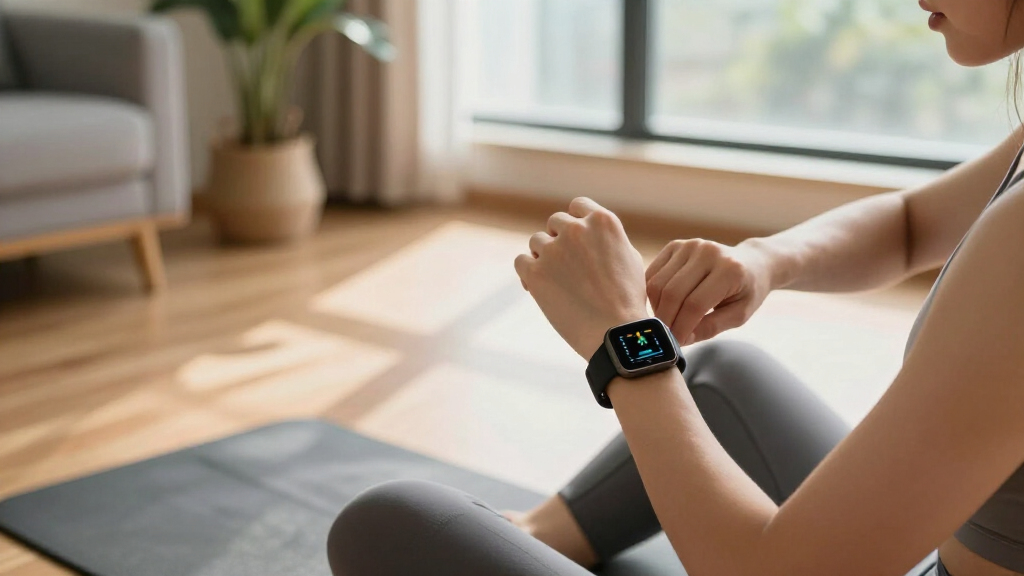
Ever glance at your fitness tracker and see a ‘stress level’ reading? That number might seem like a clear window into your mental state, but it’s more like a snapshot of your body’s physiological fuss. Wearables don’t directly detect feelings of anxiety or overwhelm; instead, they measure how your body responds to different demands.
Understanding how these devices estimate stress can help you interpret their signals realistically. They’re helpful for spotting patterns—like increased arousal during a stressful week—but they aren’t a substitute for talking to a professional. Let’s unpack how they work, what the data really means, and how to use it without jumping to conclusions.
Wearables estimate stress indirectly through signals like heart rate, HRV, and skin conductance, reflecting arousal, not emotions.
A high or low score is best understood as a physiological trend over time, not a diagnosis of emotional distress.
Multiple signals and context improve accuracy, but readings remain estimates influenced by many factors.
Interpret scores by comparing them to your personal baseline, not others’, and watch for patterns.
Use wearable data as a tool for awareness and self-care, not as a substitute for professional advice.
How Wearables Estimate Your Stress Levels
Your wearable does not read anxiety, overwhelm, or emotion. It tracks physiological signals, compares them with your usual patterns, and estimates how activated or strained your body appears.
Wearables detect clues from the body—not stress itself.
What the sensors actually see
Each input reveals a different part of the autonomic response. None can identify the cause by itself, so devices combine signals and context.
Heart rate
What it shows: beats per minute. It may rise with anxiety—but also with exercise, illness, caffeine, heat, dehydration, or excitement.
HRV
What it shows: variation in time between beats. Lower-than-usual HRV can accompany strain or poor recovery.
Skin conductance
What it shows: sweat-gland activity. It detects arousal, but cannot distinguish anxiety from excitement, pain, or heat.
Respiratory rate
What it shows: breathing speed and regularity. Stress can produce faster, shallower, or less regular breaths.
Skin temperature
What it shows: temperature changes linked to sleep, illness, hormonal cycles, environment, or physiological load.
Movement & sleep
What they show: whether elevated signals occur during activity, rest, sleep, or a recovery window.
From wrist signal to stress score
The visible number is the final output of a filtering, comparison, and interpretation pipeline—not a direct measurement.
Sense the body
Optical and electrical sensors capture pulse, beat intervals, EDA, temperature, and motion.
Filter noise
Software rejects movement artifacts, poor contact, vibration, and low-quality readings.
Check baseline
Current measurements are compared with personal resting patterns built over days or weeks.
Add context
Movement, sleep, recent activity, and time of day help reduce false interpretations.
Produce a score
A proprietary algorithm outputs stress, strain, recovery, readiness, or an alert.
Arousal is not the same as emotion
A high score usually means that your physiology differs from its usual resting pattern. It does not reveal why that change occurred.
Relative usefulness by task
Conceptual comparison: direct measurements tend to be more dependable than conclusions inferred from several layers of data.
What a wearable can—and cannot—tell you
| Question | Useful for | Definitive? |
|---|---|---|
| Is heart rate elevated? | ✓ Direct signal | ✓ Often |
| Is HRV below my baseline? | ✓ Personal trend | ~ Quality dependent |
| Is my body more activated? | ~ Combined estimate | ~ Context needed |
| Am I emotionally stressed? | ✗ Not directly measured | ✗ No |
| Do I have a mental health condition? | ✗ Not a diagnostic tool | ✗ No |
Use the score without letting it use you
Treat alerts as prompts to notice patterns, check context, and reflect on how you feel—not as verdicts about your mental health.
Follow trends
Review several days or weeks. One isolated reading is usually weak evidence.
Use your own baseline
HRV and other signals vary greatly between people. Your normal matters more than another person’s score.
Annotate the context
Note sleep, exercise, caffeine, illness, heat, medication, and how you actually felt.
Escalate persistent concerns
If troubling patterns continue—or you feel unwell—discuss them with a qualified healthcare professional.
The interpretation chain
Confidence drops as the output moves farther from the original physical measurement. Human context closes the final gap.
Can a smartwatch tell whether I am stressed?
It can detect patterns associated with physiological arousal. It cannot definitively identify emotional stress.
Why does it report stress when I feel calm?
Heat, caffeine, dehydration, illness, recent activity, or sensor error may produce similar signals.
What should I do with a high score?
Pause, check the context, note how you feel, and look for a repeated pattern before drawing conclusions.
What signals do wearables use to gauge stress — and what do they mean?
Wearables analyze a handful of physiological signals that often change when your nervous system reacts to stress. Heart rate shoots up when you’re anxious or exercising. Heart-rate variability (HRV)—the subtle variation in time between beats—drops when your body is under strain. Skin conductance, or electrodermal activity (EDA), spikes when you sweat more, which happens during arousal from any cause.
Other signals include faster, shallower breathing, fluctuations in skin temperature, and movement patterns. For example, a rapid breathing pattern might indicate stress, but it can also happen if you’re out of breath from running or laughing. Recognizing what these signals are telling us is key to understanding wearable stress estimates.
Imagine a day when your wrist device shows a high arousal score. It could be because you are genuinely anxious, or simply because you’re in a hot, humid room. The signals are sensitive, but not specific to emotional stress.
As an affiliate, we earn on qualifying purchases.
How the stress calculation actually works — step-by-step
- Physiological data is collected via sensors—like PPG (photoplethysmography) for heart rate and EDA sensors for skin conductance.
- The device filters out noise—such as movement artifacts or poor contact—and checks the quality of data.
- Current signals are compared against your baseline—your typical resting or normal state—built from days or weeks of data.
- The software considers context—like whether you’re moving, sleeping, or active—to avoid false alarms.
- Finally, an algorithm produces a score or category—sometimes called stress, strain, or recovery—based on the combined signals and context.
This process is complex, and different brands tweak how they weigh signals and interpret data, so stress scores aren’t directly comparable across devices.
As an affiliate, we earn on qualifying purchases.
Why physiological arousal isn’t the same as feeling stressed
Here’s the truth: a high stress or arousal score doesn’t always mean you’re feeling anxious or overwhelmed. Your body reacts similarly to excitement, caffeine, pain, heat, or even after a workout. For example, after a brisk walk, your heart rate and breathing quicken, and a wearable might flag this as elevated arousal—even if you’re feeling perfectly calm.
Research shows that signals like HRV and skin conductance are more about how your autonomic nervous system is responding—not whether you’re emotionally stressed. This distinction matters because it prevents you from mistaking a physical response for a psychological state.
Think of it like a car’s dashboard: a warning light might indicate an issue, but it doesn’t tell you if the problem is emotional or mechanical. That’s where context and subjective feelings come into play.
As an affiliate, we earn on qualifying purchases.
The limits of accuracy — what wearables really measure
Wearables can reliably track resting heart rate and some aspects of recovery, but their stress scores are less precise. Factors like sensor quality, movement, skin contact, and even tattoos can distort readings. For example, if your watch shifts during a workout, the data can become unreliable.
Studies show that wrist-based HRV and EDA measurements are vulnerable to artifacts. For instance, a sweaty wrist from hot weather can falsely elevate skin conductance readings. This means your wearable’s stress estimate should be seen as an educated guess, not a medical diagnosis.
Moreover, the algorithms behind these scores are proprietary—so you often don’t know exactly how they’re calculated or what thresholds they use. Expect variation, and don’t treat a high score as a definitive statement about your mental state.
As an affiliate, we earn on qualifying purchases.
What recent advances in wearable tech mean for stress tracking
Technology keeps improving. Modern wearables now combine multiple signals—heart rate, HRV, EDA, temperature, and movement—for a fuller picture. Machine learning models analyze complex patterns, often personalized to your baseline, making estimates more nuanced.
Some devices now monitor you passively throughout the day, detecting trends rather than relying on single measurements. For example, a device might notice your HRV dips over several days, hinting at prolonged stress or fatigue.
Newer metrics focus on recovery and resilience—like how quickly your body bounces back from exertion—rather than just flagging high arousal. These insights can support healthier habits, such as scheduling breaks or adjusting sleep routines.
However, it’s worth remembering: even the most advanced algorithms cannot turn physiological arousal into a clear label of emotional stress. They offer clues, not diagnoses.
How to interpret your stress scores without losing your mind
Don’t read a single high or low score as a verdict on your mental health. Instead, look for patterns over days or weeks. For example, if your device shows elevated arousal every evening after work, it might signal accumulated fatigue or stress triggers.
Compare current readings to your own baseline—don’t rely on others’ scores. A score that’s high for you might be normal for someone else. Keep a simple journal: note what you did, how you felt, and what might have influenced the signals.
Use alerts as prompts for reflection, not diagnoses. If you notice persistent, troubling patterns—like consistently low HRV or frequent high arousal—consider talking to a healthcare provider. Remember, these tools are guides, not medical instruments.
Common questions about wearable stress estimation—answered
- Can a smartwatch really tell whether I am stressed? It detects physiological patterns associated with arousal, but it cannot definitively tell if you’re emotionally stressed. Context and subjective feelings matter.
- What does a high stress score mean? Usually, your signals—like heart rate or skin conductance—differ from your baseline, but it could also be due to heat, caffeine, illness, or exercise.
- Why does my wearable report stress when I feel calm? Your body might be reacting to factors like dehydration, caffeine, or heat. Sensor errors and algorithm limits can also cause mismatches.
- Why does it show low stress when I feel overwhelmed? Emotional distress doesn’t always produce a strong physiological response. The device might not detect subtle changes or might interpret movement as normal.
- Is lower HRV always a sign of stress? Not necessarily. HRV varies with activity, sleep, medication, and health. Trends are more meaningful than isolated numbers.
Conclusion
Wearables give you a window into your body’s response patterns, but not your feelings. They can help you notice when your system is under strain and guide healthier habits. The key is to see their numbers as signals, not labels—use them to inform, not diagnose.
Imagine your device as a gentle coach, highlighting moments of stress or recovery. With a clear understanding, you can tune into your body’s rhythms and nurture a calmer, more aware daily life. The real power lies in using data to support your well-being, not define it.
NFL season / tailgating Picks
team gear
As an affiliate, we earn on qualifying purchases.