
TL;DR

Get workout gear delivered free with Prime
- Fast, free delivery on millions of items
- Prime Video, Amazon Music and more included
- Member-only deals all year
Active calories are those burned through movement, while total calories include resting metabolism. Wearables estimate both, but with some margin of error. Knowing the difference helps you use your data wisely for healthier habits.
Ever looked at your fitness tracker and wondered what those numbers really mean? You see ‘active calories’ and ‘total calories,’ but do you know how they differ? Understanding this distinction can help you interpret your daily energy burn more accurately—and use that info to support your health goals.
Many people assume that all calories are equal, but the way your device estimates them can be quite different. Whether you’re trying to lose weight, build muscle, or just stay active, knowing what these numbers truly represent makes a difference. Let’s break down the truth behind ‘active’ versus ‘total’ calories, and how to make sense of your fitness data.
Active calories usually account for only about 15-30% of your total daily energy burn.
Wearables estimate calories with improving algorithms but still have margin of error, especially during intense activities.
Your resting metabolic rate forms the biggest chunk of total calories—don’t forget it when considering your daily energy use.
Personal factors like age, gender, and fitness level significantly affect calorie estimates and actual burn.
Use calorie data as motivation and guidance, not absolute measures—balance movement with mindful eating.
The Truth About “Active Calories” vs “Total Calories”
Active calories are burned through movement. Total calories include that movement plus the energy your body spends staying alive at rest. Wearables estimate both, but the smartest use is trend-reading, not treating every number as a lab result.
Most of your daily burn is invisible.
Your resting metabolism usually does more work than your workout. Active calories matter, but they are only one slice of your total daily energy expenditure.
What The Numbers Actually Mean
Fitness trackers split energy burn into categories so you can understand what comes from movement and what comes from baseline biology. The split is useful, but it is still an estimate shaped by sensors, algorithms, and your personal physiology.
Movement above rest
Walking, lifting, running, dancing, errands, and exercise. This number helps you see how much activity changed your day.
The full daily burn
Resting metabolism, digestion, physical activity, and everything else your body spends energy on across the day.
Context beats precision
A single workout estimate may be off, but weekly patterns can still guide healthier movement and eating habits.
Your Daily Burn, Broken Down
Total Daily Energy Expenditure is usually dominated by resting metabolic rate. Physical activity is meaningful and adjustable, but it often represents a smaller portion than people expect.
Active vs Total: A Tracker Comparison
The same device can estimate both numbers, but the ingredients behind them differ. Movement sensors and heart rate help estimate activity, while total calories also require a baseline metabolism model.
| Feature | Active Calories | Total Calories | How To Use It |
|---|---|---|---|
| Estimate Method | ✓Motion, heart rate, GPS, workout type | ✓Resting metabolism plus activity estimates | Read as a directional signal, not a perfect measurement. |
| Accuracy | ~Varies during intense or unusual activities | ~Depends on accurate personal inputs and algorithms | Compare trends across similar days and workouts. |
| Real-World Example | ~A 30-minute jog may show 300-400 calories | ✓A 2,000-calorie day includes resting and active burn | Use workout numbers for motivation, not food permission. |
| Big Risk | ✗Overvaluing exercise burn | ✗Assuming the daily total is exact | Pair tracker data with hunger, recovery, and dietary awareness. |
Why Resting Metabolism Is The Major Player
Resting metabolic rate is the energy your body uses for breathing, circulation, cell repair, temperature regulation, and basic survival. If your RMR is 1,400 calories, that is energy burned even on a very still day.
The baseline comes first.
Total calories start with your body’s maintenance cost. Activity adds on top, which is why a low active-calorie day does not mean your body burned nothing.
Personal traits shift the math.
Age, sex, body size, muscle mass, fitness level, and health status can all change both actual burn and the estimate your wearable displays.
How To Interpret Your Calorie Data
The strongest strategy is to connect the numbers into a feedback loop. Your tracker can motivate movement, but it should sit beside nutrition, recovery, and realistic goals.
Check the split
Separate active calories from total calories before judging the day.
Scan the trend
Look at weekly patterns instead of reacting to one noisy reading.
Add food context
Energy balance depends on both intake and expenditure.
Adjust gently
Increase movement gradually with walking, strength work, or sports.
Protect balance
Use data as guidance, not a reason to obsess over every calorie.
Actionable Takeaways
The healthiest approach is practical: let the numbers inform your choices without letting them run the whole show.
Use active calories for motivation.
They are helpful for nudging movement and comparing similar workouts, but they should not be treated as exact.
Use total calories for the big picture.
Total burn better reflects daily energy demand because it includes resting metabolism and activity.
Personalize your expectations.
Age, gender, body composition, and fitness level shape calorie burn, so avoid one-size-fits-all targets.
Prioritize consistency.
Small daily walks, regular strength training, and mindful eating often matter more than chasing one perfect number.
Frequently Asked Questions
The short version: wearables are useful, improving, and still imperfect. Treat them like a dashboard, not a verdict.
Are wearable calorie estimates reliable for weight loss?
They can help you track patterns, but they still have a margin of error, especially for high-intensity or non-standard activities.
Should I burn more active calories every day?
Not necessarily. Aim for sustainable movement. Weight change depends on total energy balance, not active calories alone.
What Are Active Calories and Why Do They Matter?
Active calories are the energy you burn through physical movement—like walking to the store, lifting weights, or dancing in your living room. They exclude your body’s basic functions at rest. Knowing how many calories you burn actively helps you see how movement influences your overall energy expenditure.
Understanding the significance of active calories allows you to tailor your activity levels more effectively. For instance, if your goal is weight loss, increasing your active calorie burn through more movement can create a calorie deficit. Conversely, if you’re focusing on recovery or maintenance, recognizing how much activity contributes to your total helps balance your routines. The tradeoff is that focusing solely on active calories might overlook the importance of your resting metabolism, which forms the foundation of your energy expenditure.
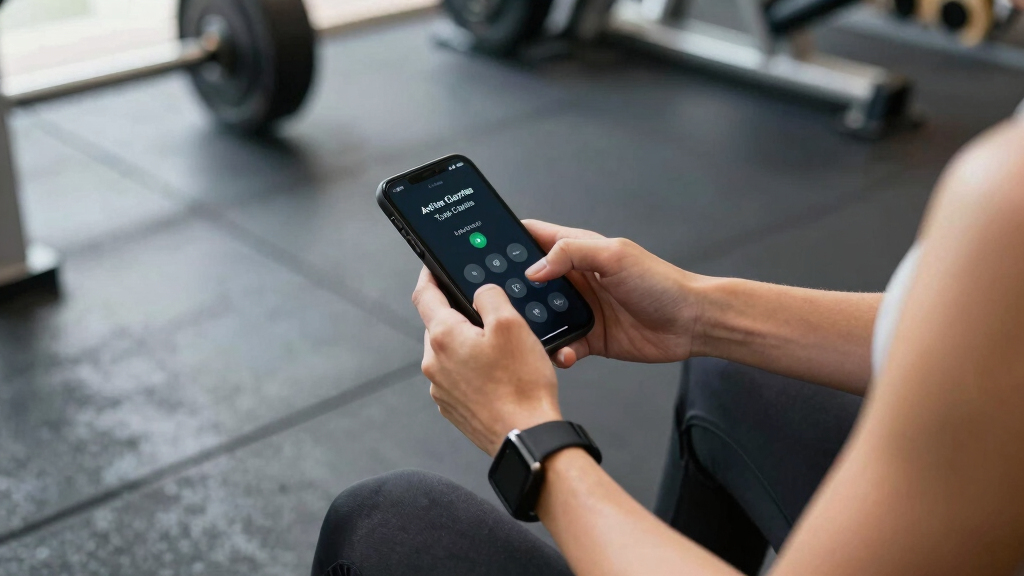
fitness tracker with calorie estimation
As an affiliate, we earn on qualifying purchases.
As an affiliate, we earn on qualifying purchases.
What Are Total Calories and How Do They Differ?
Total calories encompass everything your body burns in a day—resting metabolic rate, digestion, physical activity, and more. It’s your overall energy expenditure, often called Total Daily Energy Expenditure (TDEE). If your device says you burned 2,000 calories today, that includes both your resting and active energy use.
Think of your body as a car. Total calories are like the total miles driven in a day, including idling in traffic or stopping at lights. Active calories are akin to the miles driven during actual movement—accelerating, cruising, or climbing hills. Both are important: active calories show how movement impacts your day, but total calories give the full picture of your body’s energy demands. Recognizing this helps avoid overestimating efforts based solely on active calories and underscores the importance of resting metabolic rate, which often accounts for the largest portion of daily energy burn. This understanding can influence how you set realistic activity targets and interpret your data in context.
As an affiliate, we earn on qualifying purchases.
Compare Wearable Estimates: How Accurate Are They?
| Feature | Active Calories | Total Calories |
|---|---|---|
| Estimate Method | Based on movement sensors, heart rate, algorithms | Includes resting metabolic rate plus activity estimates |
| Accuracy | Improving but varies especially during high-intensity or unusual activities; can lead to under- or over-estimation depending on the activity type and individual differences | |
| Real-world example | If you jog for 30 mins, it might estimate 300-400 calories, but actual burn can differ due to factors like running speed, terrain, and individual physiology | |
| Implication | Use as a motivational guide, but be cautious about precision, especially during complex or vigorous workouts |
As an affiliate, we earn on qualifying purchases.
Why Your Resting Metabolism Is a Major Player in Total Calories
Your resting metabolic rate (RMR) is the energy your body uses just to keep basic functions running—breathing, circulating blood, cell repair. It makes up about 60-75% of your total daily calories. Think of it as the engine idling while your body is parked, constantly working even when you’re not moving.
Understanding RMR’s contribution helps you recognize that not all calories are created equal. For example, if your RMR is 1,400 calories a day, that’s what your body burns even if you stay in bed all day. This baseline is crucial because it forms the foundation upon which activity adds extra calories burned. Ignoring RMR can lead to underestimating the total energy your body needs, which might result in unnecessary calorie restriction or misjudging your activity impact.
As an affiliate, we earn on qualifying purchases.
How Factors Like Age, Gender, and Fitness Shape Your Burn
Your individual traits dramatically influence calorie counts. Younger people tend to burn more calories at rest, while men usually burn more than women due to differences in muscle mass and body composition. Fitness level also plays a role: a fit person’s body is more efficient, often burning fewer calories at rest but more during activity.
Imagine two friends—one a runner, the other sedentary. The runner’s active calorie burn during a workout might be higher, but their overall daily burn also includes a higher resting rate due to increased muscle mass and metabolic adaptations. Conversely, a sedentary person may burn fewer calories overall. Recognizing these differences helps you interpret your data more accurately and set realistic goals based on your personal context, avoiding one-size-fits-all assumptions that can lead to frustration or misguided efforts.
Actionable Tips to Make Sense of Your Calorie Data
- Use your device’s active calorie number to motivate movement, but don’t obsess over it. Remember, these are estimates that can fluctuate based on activity type and individual differences. Focus on overall trends rather than daily fluctuations to gauge progress.
- Combine tracker estimates with dietary awareness. Tracking what you eat alongside your activity helps create a more balanced view of your energy balance, making adjustments more effective and sustainable.
- Remember: estimates are guides, not gospel. They are useful for motivation and tracking patterns but should be interpreted within the context of your personal goals and circumstances. Consider factors like workout intensity, duration, and your unique physiology.
- Focus on consistency, not perfection. Small, regular movements—like daily walks or stretching—add up over time and contribute significantly to your health.
- Consult professionals for personalized advice, especially if you have health concerns or specific goals. They can help interpret your data in the context of your overall health and guide you toward realistic, effective strategies.
Frequently Asked Questions
Are wearable calorie estimates reliable enough for weight loss tracking?
Wearable estimates are improving but still have some margin of error—especially during high-intensity or non-standard activities. They’re best used as a guide to motivate movement and track trends over time, rather than exact measurements.
Should I aim to burn more active calories every day?
Not necessarily. Focus on consistent movement that feels good and sustainable. Increasing activity gradually supports overall health, but total calorie balance—how much you eat versus burn—is what really influences weight change.
Can I rely on my device alone for calorie tracking?
No, devices provide useful estimates but aren’t perfectly accurate. Combining their data with mindful eating, physical activity, and possibly professional advice yields a healthier, more realistic approach.
How can I improve the accuracy of my calorie estimates?
Wear devices that incorporate heart rate and GPS, wear them consistently, and calibrate settings when possible. Remember, individual differences matter—so use the data as a helpful guide, not an absolute truth.
What are some common mistakes when interpreting calorie data?
Over-relying on numbers, ignoring personal factors, and expecting perfect accuracy can lead to frustration. Focus on overall patterns and habits instead of obsessing over daily fluctuations.
Conclusion
Understanding the difference between active and total calories arms you with better insights into your health habits. It’s easy to get caught up in numbers, but remember—these estimates are tools, not rules. Focus on steady movement, balanced eating, and listening to your body.
As your journey unfolds, let your awareness of what your body truly burns guide your choices. Sometimes, a simple walk or a glass of water can be more meaningful than a perfect calorie count.
Halloween Picks
halloween
As an affiliate, we earn on qualifying purchases.