TL;DR

Get workout gear delivered free with Prime
- Fast, free delivery on millions of items
- Prime Video, Amazon Music and more included
- Member-only deals all year
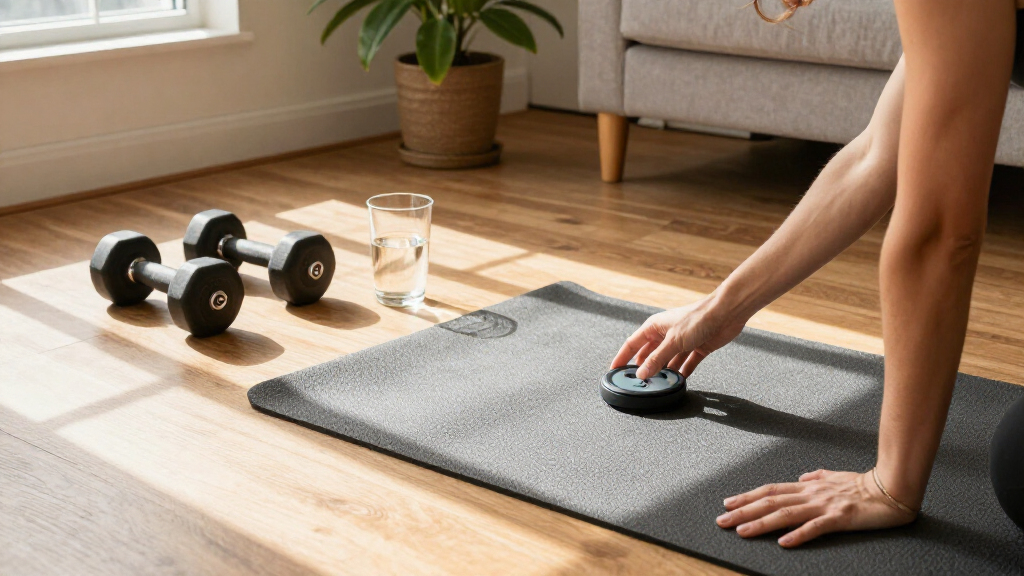
Personal trainer Pippa Sealey recommends shorter rest periods and unilateral exercises to add challenge to home dumbbell workouts when heavier weights are unavailable. The Fit&Well report presents a workout for people already comfortable with basic movements such as squats and deadlifts.
Personal trainer Pippa Sealey recommends combining shorter rest periods with unilateral exercises—movements performed one side at a time—to keep home dumbbell workouts challenging when heavier weights are not available. A Fit&Well report outlines a workout using supersets and tri-sets built around those methods, aimed at people already confident with fundamental exercises such as squats and deadlifts.
Sealey said she uses shorter rests and one-sided movements instead of bilateral exercises, which work both sides together, when she does not have access to heavier loads at home. She describes these methods as ways to keep workouts challenging without buying extra equipment; the sample routine itself uses dumbbells and a step. The report does not discuss whether these methods replace heavier weights across training plans.
In a superset, a person completes one set of an exercise and moves straight to a different exercise before resting. Sealey also suggests agonist supersets, which pair exercises targeting the same muscle groups. The report describes the workout as using supersets and tri-sets: participants complete a set of each exercise in a group, rest, and repeat the sequence three times before moving on.
The sample session includes calf raises, hamstring bridge marches, wall sits, single-leg Romanian deadlifts, split squats, push-ups, a single-arm dumbbell push press, rows and core exercises. The listed prescription generally calls for three sets, with repetitions or hold times varying by movement. Some groups specify 60 to 90 seconds of rest after a round; no rest is listed between the exercises within those groups. For push-ups, the instruction is to continue only while maintaining good form.
How the Workout Adds Challenge
For people working with a limited set of dumbbells, Sealey’s suggestions offer ways to adjust a session without immediately purchasing heavier weights. Shortening rest can make a workout denser, while unilateral movements ask each side to work separately. Pairing exercises for the same muscle group can also raise the local demands of a session, as Sealey describes.
That practical appeal comes with limits. The article presents a trainer’s programming advice and a sample routine, not a controlled comparison showing how much strength or muscle a person will gain from these techniques. The workload may feel different from lifting heavier weights, but the source does not establish that the methods are equivalent or appropriate for every goal. Readers should treat the workout as an option to adapt, rather than a guarantee of results.
adjustable dumbbells for home strength training
As an affiliate, we earn on qualifying purchases.
As an affiliate, we earn on qualifying purchases.
A Routine for Experienced Beginners
The report frames the workout for people who are already comfortable performing fundamental movements such as squats and deadlifts and want a greater challenge. That qualification matters because the session includes balance-dependent single-leg hinges, split squats, overhead pressing and exercises performed with little or no rest within a group.
The instructions emphasize controlled movement in several exercises. For example, the single-leg Romanian deadlift involves hinging at the hips while keeping the hips square, and the split squat calls for the front knee to track in line with the toes. The wall sit is prescribed for 60 seconds, with the knees bent and aligned with the toes. These are details from the source’s exercise guidance, not an individualized assessment of a reader’s technique or physical capacity.
The workout’s structure is more specific than the broad advice alone: it alternates among lower-body, upper-body and core movements, with three rounds of each exercise group. The report gives instructions for the exercises, including the single-arm push press.
non-slip aerobic step platform for home workouts
As an affiliate, we earn on qualifying purchases.
As an affiliate, we earn on qualifying purchases.
Limits of the Published Details
The source material does not give a publication date, identify the dumbbell weights Sealey uses, or report measured outcomes from people following the workout. It also does not establish how the session compares with training using heavier loads, or how often readers should perform it.
The report describes the routine for people already confident with basic strength exercises. It does not discuss adaptations for beginners, people with injuries, or those with medical conditions. The source offers exercise instructions, but it does not provide an individualized assessment of a reader’s technique or physical capacity.
exercise mat for dumbbell strength workouts
As an affiliate, we earn on qualifying purchases.
As an affiliate, we earn on qualifying purchases.
How Readers Can Apply the Advice
The report’s sample workout provides a structure readers can refer to, including three rounds of each exercise group and specified rest periods for some groups. For push-ups, the source advises continuing only while maintaining good form. The report does not announce a follow-up study, additional trainer guidance or a schedule for future updates.
The source presents shorter rest and unilateral movements as ways to increase the challenge of home dumbbell workouts when heavier loads are unavailable. It does not give broader recommendations about selecting loads, practicing before following the routine, or adapting exercises and rest periods. Further details about the report’s publication timing remain unavailable in the supplied material.
Key Questions
What are the two methods Pippa Sealey recommends?
Sealey recommends shorter rest periods and unilateral movements, which work one side at a time, when heavier dumbbells are not available at home.
What is a superset in this workout?
A superset means doing one set of an exercise and then moving straight to a different exercise before resting. The report also describes tri-sets, which add a third exercise to the sequence.
Who is the sample workout intended for?
Fit&Well describes it as a routine for people already confident with fundamental movements such as squats and deadlifts who want to increase the challenge. It does not provide a beginner-specific version.
Does the workout prove that lighter dumbbells work as well as heavier ones?
No. The report presents Sealey’s training advice and a sample session, but provides no comparative research or measured results showing that shorter rests and unilateral exercises are equivalent to lifting heavier weights.
What should someone do if an exercise feels unsafe or too difficult?
Stop or modify the movement rather than continue with poor form. A qualified fitness professional can help adapt a routine, and people with pre-existing health conditions should seek appropriate professional guidance before starting demanding exercise.
Source: rss
Halloween Picks
halloween
As an affiliate, we earn on qualifying purchases.