
TL;DR

Get workout gear delivered free with Prime
- Fast, free delivery on millions of items
- Prime Video, Amazon Music and more included
- Member-only deals all year
Many people neglect deep stabilizing muscles crucial for good posture. Strengthening these muscles, like the deep neck flexors and transversus abdominis, leads to better alignment, less pain, and a more sustainable posture over time.
Think about your posture. Chances are, you focus on stretching tight muscles or strengthening your back and abs. But many of the muscles that keep us upright and balanced are hidden, quiet, and often ignored. These forgotten muscles quietly do the heavy lifting—stabilizing your spine, supporting your head, and maintaining your alignment.
Focusing on these tiny, deep muscles can transform your posture, ease chronic pain, and make movement feel effortless. This isn’t about big, showy muscles; it’s about the small, vital ones that keep your body in check. Ready to learn about these unsung heroes and how to activate them? Let’s get started.
Focus on activating deep stabilizing muscles like the deep neck flexors and transversus abdominis.
Simple exercises like chin tucks, pelvic tilts, and bird-dogs are effective and accessible.
Strengthening these muscles takes patience—noticeable change usually appears after 4-8 weeks.
Proper posture isn’t just about stretching tight muscles—activation and awareness matter more.
Incorporate these habits daily for lasting improvements in alignment and comfort.
The Deep Neck Flexors: Your Head’s Unsung Supporters
The deep neck flexors are a set of muscles deep inside your neck, supporting your head and cervical spine. When these muscles weaken, your head shifts forward—think of that slouched, forward-leaning posture many of us adopt at desks. This misalignment can cause strain, headaches, and even contribute to long-term neck issues if left unaddressed. Why? Because the head’s weight shifts forward, increasing the load on your cervical spine and muscles, which can lead to chronic discomfort and reduced mobility.
To activate them, try the classic chin tuck: gently draw your chin back as if trying to make a double chin, holding for a few seconds. This small movement fires up those deep muscles without straining your neck. Regular practice can help realign your head and reduce that nagging neck tension. Think of it as resetting the foundation of a house—if the base is misaligned, everything above suffers. Correcting these deep muscles ensures your head sits properly over your shoulders, reducing unnecessary stress and preventing long-term postural problems.
deep neck flexor exercise equipment
As an affiliate, we earn on qualifying purchases.
As an affiliate, we earn on qualifying purchases.
Core Stability Starts Deep: The Transversus Abdominis
The transversus abdominis (or TA) is like your body’s natural corset. It wraps around your abdomen, providing a deep layer of support that stabilizes your spine during movement. Imagine wearing a tight belt that keeps everything snug and aligned—that’s what the TA does internally. When this muscle weakens, your pelvis can tilt or shift, leading to poor posture, lower back pain, and even issues with balance. For example, if you’ve ever experienced a dull ache in your lower back after a long day of sitting, it might be because your core isn’t providing enough support.
To engage it, practice diaphragmatic breathing: breathe deeply into your belly, feeling it expand as you inhale. Then gently tighten your lower abs as if pulling your navel toward your spine without holding your breath. This activation helps build a supportive internal corset, much like tightening a belt around your waist. Strengthening the TA improves overall posture, reduces strain on your back, and enhances your ability to move with stability. Think of it as reinforcing the foundation of a building—without a strong core, everything else becomes unstable and prone to collapse.
transversus abdominis support belt
As an affiliate, we earn on qualifying purchases.
As an affiliate, we earn on qualifying purchases.
Pelvic Floor Muscles: The Foundation of Upright Posture
Pelvic floor muscles are located at the base of your pelvis, supporting organs like the bladder and intestines, while also stabilizing your core. Weakness here can cause a cascade of issues, from lower back aches to pelvic instability. Think of these muscles as the foundational pillars of a building—if the pillars are shaky, the entire structure can wobble. For instance, during pregnancy or after prolonged sitting, these muscles can weaken, leading to poor posture and discomfort.
To engage your pelvic floor, try gentle squeezes, like stopping urination mid-stream (though not as a regular exercise), or perform pelvic tilts: lie on your back, knees bent, and tilt your pelvis to flatten your lower back against the floor. These simple moves awaken this often-overlooked muscle group. Strengthening your pelvic floor creates a more stable base for your entire posture, helping prevent slouching and reducing strain on your lower back and hips. It’s like tightening the foundation of a house—when the base is solid, everything else naturally aligns better.
As an affiliate, we earn on qualifying purchases.
Deep Spinal Stabilizers: The Multifidus and Rotatores
The multifidus and rotatores are tiny, deep muscles that run along your spine, acting like internal braces that lock each vertebra into place. Their primary role is to stabilize your spine during movement, preventing unnecessary shifting that could lead to injury or poor posture. Picture a house with internal scaffolding; without it, the structure becomes unstable, especially when you move or carry loads. When these muscles weaken, your spine can become less stable, making you more prone to slouching or even disc issues.
One effective exercise: the bird-dog. On hands and knees, extend one arm and the opposite leg, keeping your spine neutral. Hold for a few seconds, then switch sides. This move not only strengthens those deep stabilizers but also trains your body to maintain proper alignment during everyday activities, like reaching for something or bending down. Think of it as tightening the internal braces of a building—when they’re strong, the entire structure remains upright and resilient, reducing the risk of injury and improving posture over time.
As an affiliate, we earn on qualifying purchases.
Shoulder Blade Stabilizers: Serratus Anterior and Rhomboids
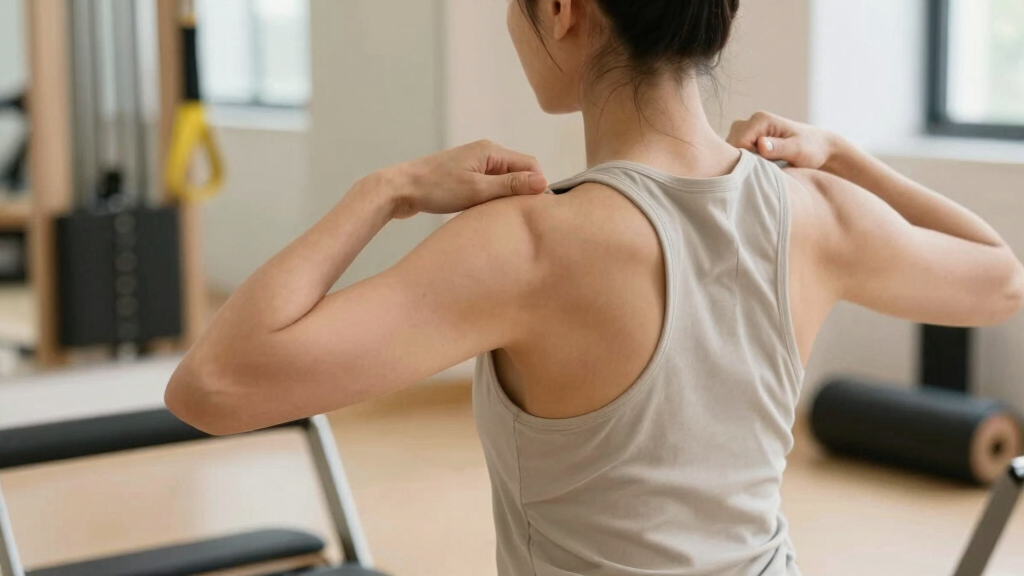
The serratus anterior and rhomboids keep your shoulder blades in proper position. When these muscles weaken, your shoulders tend to round forward—a common postural flaw that can lead to neck tension and upper back pain. Imagine the shoulder blades as the scaffolding supporting your upper arms; if they slip out of place, your entire upper posture becomes compromised. For example, many people develop ‘tech neck’ from looking down at devices, which over time weakens these stabilizers and promotes slouching. Strengthening them helps you sit and stand taller, reducing strain on your neck and shoulders.
Try wall slides: stand with your back against a wall, arms raised like a goalpost. Slide your arms up and down, keeping contact with the wall. This exercise activates those stabilizers, encouraging proper shoulder positioning. Think of it as reinforcing the scaffolding—when these muscles are strong, your shoulders naturally sit in the correct position, preventing the forward hunch and promoting an upright, open posture. Over time, this leads to less upper back pain and a more confident stance.
The Latest in Posture Fixes: Why Activation Matters More Than Stretching
Recent studies reveal that focusing on activating these deep, stabilizing muscles can lead to more lasting improvements than merely stretching tight muscles. Why? Because tight muscles are often a reaction to weakness elsewhere—your body compensates by tightening certain areas to maintain balance. If you only stretch, you temporarily relieve tension but don’t address the root cause. Think of a house with a foundation that’s sinking; lifting the roof without fixing the foundation is only a temporary fix. Strengthening these internal stabilizers rebuilds the body’s support system, allowing proper alignment to occur naturally.
Technologies like biofeedback devices are now helping people learn to engage these muscles correctly, offering real-time cues to ensure proper activation. Physical therapists prioritize these exercises because they address the core issue—muscle weakness—rather than just symptoms. This approach is akin to reinforcing the foundation of a building before cosmetic repairs, ensuring long-term stability and posture correction.
In practical terms? It’s about building a solid internal structure first, then addressing tight muscles or joint mobility issues. This strategy reduces the risk of rebound postural problems and promotes sustainable change.
Quick Facts About These Muscles You Should Know
| Fact | Details |
|---|---|
| Muscle weakness causes poor posture | Weak stabilizers lead to imbalances and slouching. |
| Activation improves posture | Targeted exercises can realign your body in weeks. |
| Progress is gradual | Noticeable changes often appear after 4-8 weeks of consistent effort. |
| Small efforts make a big difference | Breathing, tilts, and simple holds activate these muscles daily. |
Your Questions, Answered: The Quick Guide to Fixing Posture
- Which exercises target these muscles? Planks, bird-dogs, chin tucks, pelvic tilts, and diaphragmatic breathing are all effective.
- How long until I see results? With consistent effort, most people notice improvements in 4-8 weeks.
- Can I strengthen these muscles if I have pain? Generally, yes, but consulting a healthcare provider ensures safe, personalized guidance.
- Are weak muscles the only cause of bad posture? No, but they are a common and fixable root cause that often gets overlooked.
- Is posture only about exercises? No, it also involves ergonomic tweaks, movement awareness, and habits.
Conclusion
Building strength in these often-forgotten muscles is a quiet but powerful way to improve your posture naturally. It’s about creating a resilient internal support system that keeps you upright—no fancy gadgets needed. The next time you catch yourself slouching, remember: your best posture starts from the inside out.
Pick one or two of these exercises today, and watch how your body begins to hold itself better—without strain or effort. Good posture isn’t a magic fix; it’s a daily practice of strengthening what matters most: your body’s foundation.
Fall Picks
fall essentials
As an affiliate, we earn on qualifying purchases.