
TL;DR

Get workout gear delivered free with Prime
- Fast, free delivery on millions of items
- Prime Video, Amazon Music and more included
- Member-only deals all year
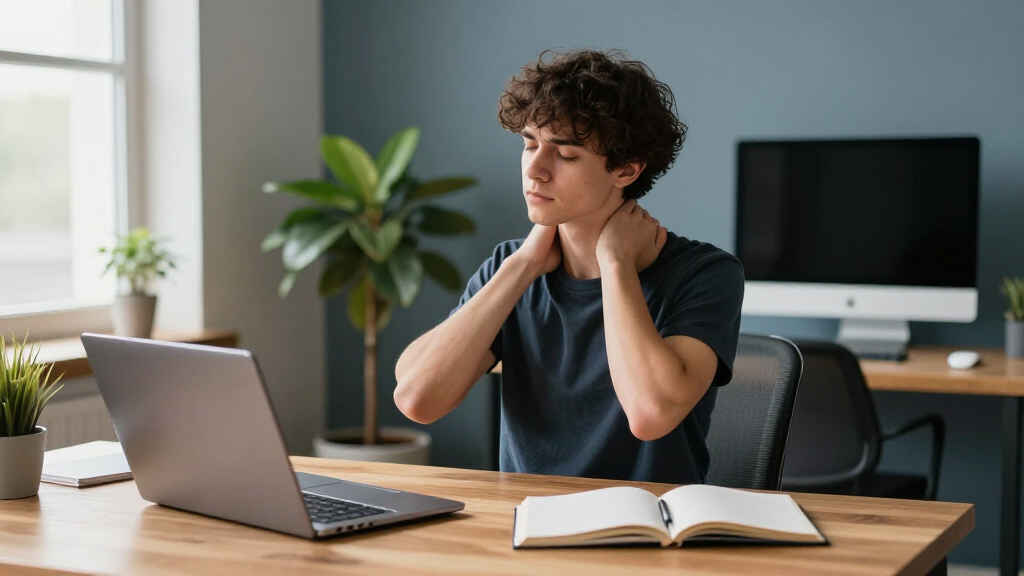
A Fit&Well report outlines three exercises people can do at a desk for screen-related neck discomfort: a side neck stretch, a chin tuck and a seated chest stretch. Physical therapists cited in the report also recommend movement breaks and workstation adjustments.
Fit&Well has published three desk-friendly exercises for people experiencing neck discomfort after extended periods looking down at devices or leaning toward screens: a side neck stretch, a chin tuck and a seated chest stretch. The report includes advice from physical therapists Raj Suppiah and Ashley Katzenback. For the side neck stretch, Katzenback advises moving gently and stopping if the movement causes pain.
The first movement is a side neck stretch. Sit with feet flat and shoulders relaxed, hold the side of the chair with one hand, then gently move the opposite ear toward the shoulder. The report suggests holding for five seconds and repeating three times on each side. Katzenback, a doctor of physical therapy and owner of Cape Concierge Physical Therapy, says the movement works muscles around the neck and shoulder. She recommends actively moving into the stretch rather than pulling the head down with a hand.
The second exercise is a chin tuck, described as five to 10 repetitions with a two-second hold. Sitting upright, place a finger in front of the chin and move the head and neck backward, away from the finger, without forcing the movement. Katzenback says it activates deep neck flexor muscles and stretches muscles at the base of the skull. The third is a seated chest stretch: keep the feet grounded, let the arms rest by the sides with palms facing forward, and lift the chest slightly while avoiding an arch in the lower back. Fit&Well suggests five repetitions, holding each for five to 10 seconds.
Alongside the exercises, Suppiah, a physical therapist at Foundation Physical Therapy and Wellness, recommends taking movement breaks every 30 to 45 minutes, adjusting screen height so its top third is around eye or forehead level, and keeping the keyboard and mouse close enough to avoid reaching forward or looking down. He also recommends regular walking, strength training and mobility work for the neck, shoulders and upper back.
Small Movements During Screen Work
For people who spend much of the day at a computer or on a phone, the report offers brief movements that can be done without leaving a desk. That makes them practical to fit between work tasks, while the advice on screen height and breaks addresses habits that may contribute to prolonged forward-leaning posture. The article presents the exercises and advice from the named physical therapists.
The exercises target different areas: the side stretch focuses on the neck and shoulder, the chin tuck moves the head backward, and the chest stretch addresses tightness across the front of the body. Katzenback says the chest stretch also calls on mid-back muscles as the shoulders draw back.
As an affiliate, we earn on qualifying purchases.
How the Report Defines Tech Neck
Fit&Well describes “tech neck” as discomfort associated with spending extended periods looking down at a device or slouching toward a screen. Suppiah defines it as neck-muscle strain linked to prolonged flexed posture. He says extended time hunched over phones and computers can leave neck muscles tight or overloaded, with possible stiffness, pain or headaches. These are his explanations of the issue, not a diagnosis of any individual reader.
The report’s practical advice includes regular breaks, screen positioning and keeping input devices within easy reach, as well as general exercise and mobility work. The report describes the three movements and includes the therapists’ advice on screen habits and posture.
““the strain of neck muscles as a result of a prolonged flexed [looking down] posture””
— Raj Suppiah, physical therapist at Foundation Physical Therapy and Wellness
As an affiliate, we earn on qualifying purchases.
Limits of the Exercise Advice
The supplied report gives instructions for three movements and advice on screen positioning and breaks. It does not include a publication date. Its discussion describes discomfort associated with prolonged flexed posture and presents the therapists’ explanations and recommendations.
For the side neck stretch, Katzenback advises moving gently and stopping if it causes pain. The report also gives repetition and hold instructions for the chin tuck and seated chest stretch.
adjustable monitor stand for eye level
As an affiliate, we earn on qualifying purchases.
As an affiliate, we earn on qualifying purchases.
Putting the Desk Routine Into Practice
The report gives readers a short routine to try at a desk: perform the side stretch gently on each side, complete five to 10 chin tucks, and finish with five seated chest stretches. It also points to breaks every 30 to 45 minutes and a workstation setup that reduces the need to look down or reach forward.
For the side neck stretch, the report advises moving gently and stopping if the movement causes pain. It also describes the chin tuck and seated chest stretch with specified repetitions and hold times.
desk exercise equipment for neck relief
As an affiliate, we earn on qualifying purchases.
As an affiliate, we earn on qualifying purchases.
Key Questions
Which three desk exercises does the report recommend?
It describes a side neck stretch, chin tuck and seated chest stretch. The report presents them as movements for screen-related discomfort, not as a guaranteed treatment.
How many repetitions are suggested?
The side neck stretch is held for five seconds and repeated three times per side. The chin tuck is done for five to 10 repetitions with a two-second hold. The seated chest stretch is held for five to 10 seconds for five repetitions.
Should I pull my head during the side stretch?
No hand-pulling is required in the instructions. Katzenback recommends actively moving into the stretch and advises keeping the movement gentle and comfortable.
What else does the report suggest changing?
Suppiah recommends taking a movement break every 30 to 45 minutes, placing the top third of the screen around eye or forehead level, and keeping the keyboard and mouse close enough to avoid reaching forward or looking down.
What if an exercise causes pain?
The report says to stop if there is pain and stay within a comfortable range. It does not provide individualized advice for existing conditions; persistent or worsening symptoms are a reason to seek guidance from a qualified health professional.
Source: rss
Halloween Picks
halloween
As an affiliate, we earn on qualifying purchases.