
TL;DR
Listen free for 30 days with Audible
Thousands of audiobooks and originals — cancel anytime.
Start your free trialAs an affiliate, we earn on qualifying purchases.
Smartwatches are fairly accurate for measuring resting heart rate and general trends, but accuracy drops during vigorous activity or movement. Advances like ECG features improve reliability, yet they remain supplementary tools rather than medical devices.
Ever glance at your smartwatch and wonder if that heartbeat number is really telling you the truth? You’re not alone. Many of us rely on these gadgets for a quick pulse check, but how much can we trust what they say? Today, we’ll unpack the real accuracy of smartwatch heart rate readings and what factors influence their reliability.
Whether you’re tracking fitness, managing health concerns, or just curious, knowing when to trust your device can save you from false alarms or missed signals. Let’s get clear on what these devices can and can’t do, backed by recent research and real-world examples.
Smartwatches measure heart rate using PPG, which is generally accurate at rest but less during vigorous movements.
Factors like fit, skin tone, tattoos, and movement can cause fluctuations and inaccuracies in readings.
Recent tech improvements, including ECG features and noise-filtering algorithms, boost reliability but don’t replace medical-grade devices.
Use smartwatch heart rate data mainly for trend tracking and motivation, not for diagnosing health issues.
Always consult healthcare professionals for medical concerns, and treat device readings as supportive info, not definitive diagnoses.
How Do Smartwatches Measure Heart Rate — And How Well Do They Do It?
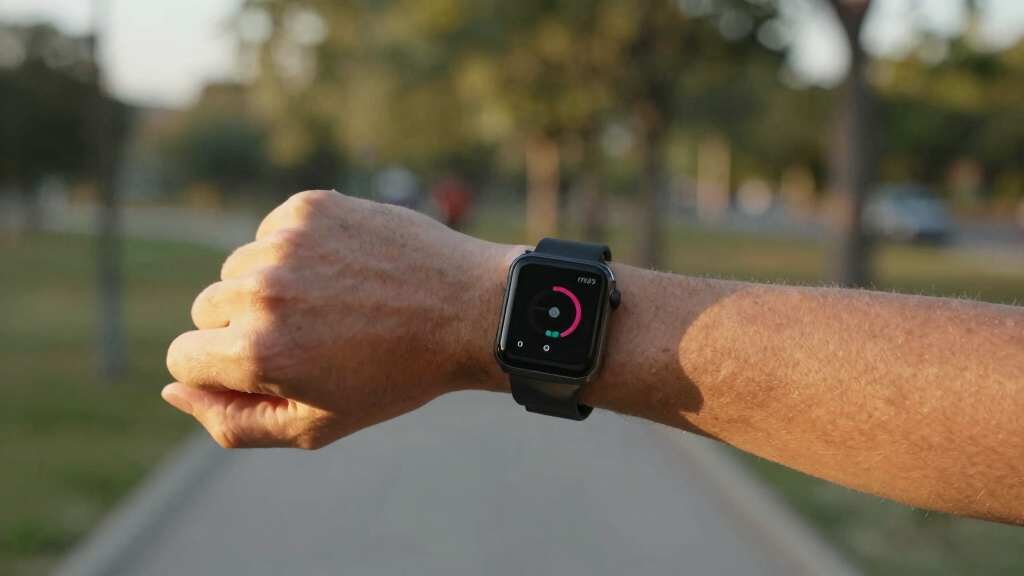
Smartwatches primarily use photoplethysmography (PPG), a technique that shines green LED lights into your skin to detect blood flow changes. As your heart beats, blood volume in your wrist fluctuates, and the sensors pick up those tiny shifts.
Imagine it like a camera that captures the rhythm of your blood instead of a heartbeat from an ECG. This method is convenient and works well at rest, but it can get noisy during movement. Recent studies show that during calm moments, many smartwatches measure heart rate within 5 beats per minute of medical-grade devices, but accuracy drops with quick motions or sweat.
As an affiliate, we earn on qualifying purchases.
What Factors Can Throw Off Your Watch’s Heart Rate Readings?
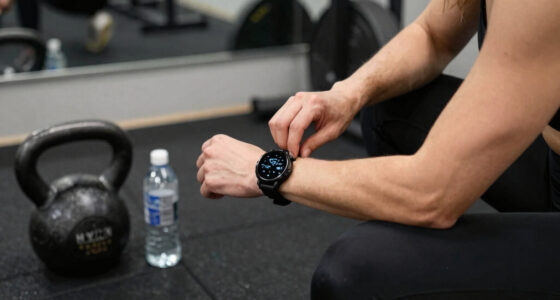
Several real-world factors can cause your smartwatch to give you fuzzy numbers. For example, if your watch isn’t snug enough, it might slip or lose contact, leading to inaccurate readings. Think of it like trying to measure a heartbeat through a loose band — inconsistent contact means inconsistent data.
Skin tone and tattoos can also interfere. Darker skin or inked skin absorb or scatter the light differently, reducing sensor accuracy. During a quick sprint or a sweaty workout, your wrist’s movement creates noise, making the device struggle to find a steady pulse.
For instance, a runner wearing a loose band during a HIIT workout might see heart rate swings of 10-15 bpm, just because the sensor is bouncing around or losing contact.
As an affiliate, we earn on qualifying purchases.
How Do Smartwatches Compare to Medical-Grade Heart Rate Devices?
| Feature | Smartwatch | Medical Device |
|---|---|---|
| Technology | PPG-based optical sensors | ECG or invasive sensors |
| Accuracy at rest | Within 5 bpm of medical devices | Highly precise, clinically validated |
| During exercise | Accuracy decreases, especially during rapid movements | Gold standard, reliable during activity |
| Convenience | High; continuous, non-invasive | Lower; often requires clinical setting |
Think of a smartwatch as a helpful sketch artist—great for general impressions but not a fine painter. They give a decent picture at rest, but during vigorous activity, their accuracy can wobble.
As an affiliate, we earn on qualifying purchases.
What’s New? How Are Tech Improvements Making Readings More Reliable?
Manufacturers are pouring resources into smarter sensors and algorithms. Recent models like the latest Apple Watch include ECG features, letting you record heart rhythms that are closer to medical-grade tests. These single-lead ECGs can detect irregularities like atrial fibrillation with more confidence.
Additionally, machine learning algorithms now filter out motion noise, especially during exercise. According to recent studies, these innovations have improved accuracy by up to 20% during active periods.
This means your watch is inching closer to a clinical tool—though it still shouldn’t replace professional diagnostics.
As an affiliate, we earn on qualifying purchases.
Should You Trust Your Smartwatch Data for Health or Fitness Decisions?
Smartwatches are best for tracking general trends: noticing if your resting heart rate drops or spikes, or keeping an eye on recovery after exercise. They’re not perfect for diagnosing conditions or making medical decisions.
For example, if your watch shows a resting HR consistently above 80 bpm, it’s a good idea to consult a healthcare professional. But if it fluctuates during a workout or runs a little high, don’t panic — it’s just noise or movement interference.
Use these devices as a helpful guide, not a medical tool. Think of them as your fitness buddy, not your doctor.
Frequently Asked Questions
Are smartwatch heart rate readings reliable during workouts?
They can be reasonably accurate at rest, but during intense workouts or rapid movements, readings may fluctuate or be less reliable. Use them as a trend indicator rather than an exact measure.Can I depend on my smartwatch to detect heart problems?
Some devices with ECG capabilities can flag irregular rhythms, but they shouldn’t replace a professional diagnosis. If you suspect a heart issue, see a healthcare provider.Why does my smartwatch show different heart rates at different times?
Variations often come from movement, fit, skin conditions, or sensor noise. Factors like sweat and loose bands can cause inconsistent readings.Are newer smartwatches more accurate?
Yes, models with ECG sensors and advanced noise filtering tend to produce more reliable readings, especially during activity.Should I use smartwatch data to track my health progress?
Yes, but mainly for noticing trends over time. For medical concerns or precise measurements, consult a healthcare professional.Conclusion
Your smartwatch gives you a helpful glimpse into your heart health, especially during calm moments. But it’s not a crystal ball. Think of it as a helpful sketch—not a precise portrait.
Invest in understanding its limits and use it to guide your activity and wellness habits, not to replace medical advice. That vivid pulse on your wrist is a good start, but not the final word.
Flea & tick season Picks
flea and tick prevention
As an affiliate, we earn on qualifying purchases.