TL;DR

Get workout gear delivered free with Prime
- Fast, free delivery on millions of items
- Prime Video, Amazon Music and more included
- Member-only deals all year
Dumbbells are enough to build muscle, strength, and fitness. The key is to focus on full-body workouts, progressive overload, and using unilateral movements to challenge muscles as weights become lighter. Consistency and smart variation matter more than having complex equipment.
Imagine having just a pair of dumbbells and still managing to build strength, muscle, and overall fitness. It might seem limiting at first glance, but in reality, dumbbells are incredibly versatile. They’re like a Swiss Army knife for your workouts—compact, adaptable, and capable of nearly everything you need.
In this guide, you’ll learn how to get the most out of your dumbbells—whether they’re adjustable or fixed—by focusing on smart programming, progressive overload, and effective exercises. No fancy machines or heavy barbells required. Just you, your dumbbells, and a plan that works.
Focus on full-body movements that target all major muscle groups, even with just dumbbells.
Use progressive overload by adding reps, sets, or controlling movement, not just heavier weights.
Unilateral exercises and range-of-motion work keep challenging muscles as dumbbells get lighter.
Train consistently with about 6–12 challenging sets per muscle group weekly, adjusting based on recovery.
Prioritize safety, control, and proper technique to stay injury-free and make steady progress.
How to Train When You Only Have Dumbbells
Dumbbells are enough to build muscle, strength, work capacity, and general fitness. Cover the major movement patterns, train hard with control, and make each week slightly more demanding.
Cover every major movement pattern
Think in movement patterns rather than individual muscles. A balanced selection trains nearly the entire body without cables, machines, or a barbell.
Squat
Goblet squat, dumbbell front squat, Bulgarian split squat, or reverse lunge.
Hinge
Romanian deadlift, single-leg Romanian deadlift, hip thrust, or glute bridge.
Horizontal Press
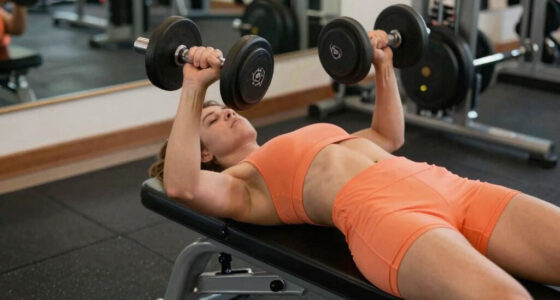
Floor press, bench press, or push-ups performed with hands on dumbbells.
Vertical Press
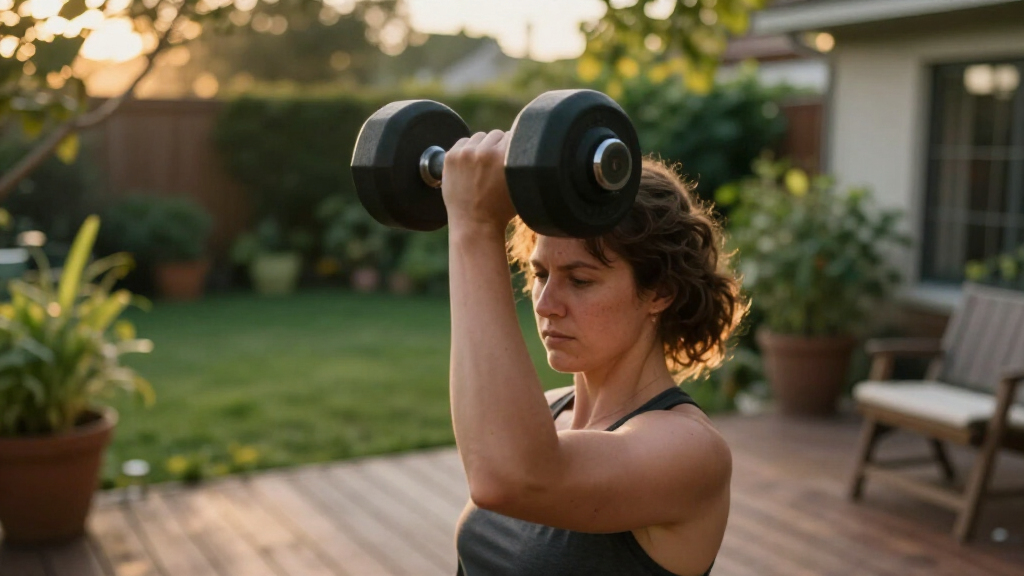
Standing, seated, or one-arm overhead press with a stable trunk position.
Row & Pullover
One-arm row and chest-supported row, plus pullovers as a vertical-pull substitute.
Carry & Core
Farmer carry, suitcase carry, plank, or weighted dead bug for resilient stability.
Make the same dumbbells feel heavier
Load is only one progression lever. When weight is limited, increase the work, improve execution, or make each limb work independently.
Use double progression
Choose a repetition range. Add repetitions while preserving technique. When every set reaches the top of the range, increase load and return to the lower end.
The bars show a practical order of use—not a ranking of physiological effectiveness.
Choose a load you can control for eight solid repetitions.
Add a repetition to one or more sets as performance improves.
Reach 12 repetitions across every prescribed set with good form.
Increase weight—or choose a harder variation—and restart near eight.
Alternate two full-body workouts
Train on three nonconsecutive days. Alternate Workout A and Workout B so each movement receives frequent practice without sacrificing recovery.
Workout A
Full bodyWorkout B
Full bodyChoose the right challenge
Use the simplest method that makes the target muscle work harder while keeping technique stable. Stack methods gradually rather than changing everything at once.
| Method | Best use | Primary benefit | Watch for | Verdict |
|---|---|---|---|---|
| Add repetitions | First progression option | More productive work | Very long, uncomfortable sets | ✓ Start here |
| Increase range | Squats, presses, rows | More work through useful positions | Pain or loss of control | ✓ High value |
| Slow the lowering phase | Two to four seconds | Control and time under tension | Extremely slow repetitions | ✓ Useful |
| Add pauses | Hardest position of a lift | Less momentum and stricter form | Reducing range to hold longer | ~ Targeted |
| Reduce rest | Accessories and conditioning | Greater work capacity | Performance falling too sharply | ~ Use carefully |
| Use momentum | Rare advanced applications | Potential overload beyond fatigue | Lost tension and injury risk | ✗ Not a default |
Push close—not blindly—to failure
Most working sets should finish with roughly zero to three good repetitions left. Stop when technique deteriorates, and let recovery determine whether more volume is productive.
Repetitions in reserve
The outlined zone represents the productive target for most working sets. Beginners can usually stay nearer two or three repetitions in reserve while mastering technique.
Adjust when recovery slips
Your dumbbells are not the limiting factor until progression becomes impossible.
Train the whole body, accumulate six to twelve challenging weekly sets per major muscle group, and progress through repetitions, range, tempo, pauses, or unilateral variations. Consistency and execution do the heavy lifting.
Cover All Major Muscle Groups with Simple, Effective Movements
Smart training means hitting every major muscle group with movements that mimic natural patterns. You can do this with just dumbbells — no fancy gym equipment needed.
Think of it as a balanced diet for your muscles: squats for legs, rows for your back, presses for shoulders and chest, and core work to seal the deal.
For instance, a goblet squat targets your thighs and glutes, while a one-arm row hits your lats and middle back. Mix in overhead presses for shoulders and floor presses for chest. These exercises cover almost everything you need.
While dumbbells can’t perfectly replicate every cable or machine move, they’re flexible enough for nearly all major movements. The trick is selecting variations that suit your level and goals.
adjustable dumbbells for strength training
As an affiliate, we earn on qualifying purchases.
As an affiliate, we earn on qualifying purchases.
Progressive Overload Without Heavier Weights
Progressive overload is the secret sauce for building muscle and strength. It’s the principle of gradually increasing the stress placed on your muscles to stimulate growth and adaptation. Without it, your progress stalls, leading to plateaus. But with limited weights, understanding how to apply overload effectively becomes even more critical.
By increasing repetitions, you’re telling your muscles to work longer, which enhances endurance and hypertrophy. Increasing sets amplifies the total volume, signaling your body to adapt. Slowing down the eccentric (lowering) phase increases time under tension, making even lighter weights more challenging and promoting muscle damage necessary for growth. Pausing at the hardest part of a movement eliminates momentum, forcing your muscles to work harder in a static position, which can be more taxing than lifting heavier.
These methods allow you to keep challenging your muscles without necessarily adding more weight, which is especially useful if your dumbbells are limited in weight. The tradeoff is that managing fatigue becomes essential—doing too much too soon can lead to overtraining or injury, so gradual progression and listening to your body are key.
For example, if you’re doing bicep curls with 10-pound dumbbells, increasing reps until they feel easy, then slowing the descent or adding a pause at the top can significantly boost intensity. Once you master these, moving to heavier dumbbells or unilateral work will further challenge your muscles and promote continued growth.
As an affiliate, we earn on qualifying purchases.
How to Push Hard Enough Without Overdoing It
Training hard is about reaching a level of effort that stimulates muscle growth without risking injury or burnout. The balance lies in understanding your effort level—pushing enough to challenge your muscles, but not so much that form breaks down or recovery suffers.
Most effective sets are performed with about 0–3 repetitions in reserve (RIR). This means you’re close to failure but still maintaining control. Training at this intensity ensures you’re stimulating hypertrophy and strength gains while minimizing injury risk. It’s important to recognize that pushing to absolute failure every set isn’t necessary and can lead to overtraining, especially with limited recovery capacity.
For example, during a dumbbell overhead press, aiming to finish a set feeling like you could do 1 or 2 more reps helps ensure you’re challenging your muscles adequately. Beginners might find it better to stop a couple of reps shy of failure to prioritize form and safety. Listening to your body—paying attention to fatigue, form, and pain—is crucial. If your technique starts to falter or pain occurs, it’s a sign to stop or reduce intensity. Over time, as your strength and endurance improve, you can gradually increase effort levels.
In essence, effective training isn’t about maxing out every set but about consistent effort that pushes your limits safely, fostering adaptation and reducing injury risk.
dumbbell exercise equipment for home
As an affiliate, we earn on qualifying purchases.
As an affiliate, we earn on qualifying purchases.
How Much Training Is Enough? Volume and Frequency
Determining optimal training volume and frequency is vital for consistent progress. For muscle growth, research shows that about 6–12 challenging sets per muscle group per week are effective. This volume provides enough stimulus for hypertrophy without overwhelming your recovery capacity. The key is to distribute these sets across multiple sessions—typically two or three for beginners—so muscles are stimulated regularly but not excessively taxed.
Spacing workouts to allow recovery is crucial because muscle growth occurs during rest. For example, a full-body workout hitting each major muscle group 3 times weekly with 3–4 sets per exercise maximizes stimulus while giving your body time to repair and grow. Adjust volume based on your individual recovery rate—if you’re experiencing persistent fatigue, soreness, or performance dips, reduce the volume or increase rest days.
More isn’t always better; overtraining can lead to injuries, burnout, and stagnation. Focus on consistent effort, progressively increasing volume as your body adapts, and respecting your recovery signals. This approach ensures steady, sustainable progress and helps prevent setbacks.
For example, gradually adding an extra set or session per week once your body adapts can lead to ongoing improvements without risking overtraining.
As an affiliate, we earn on qualifying purchases.
Unilateral Exercises: Challenge Muscles as Weights Get Lighter
When dumbbells become too light to provide a challenge for bilateral movements, unilateral exercises become a game-changer. They force each limb to work independently, which not only increases the difficulty due to the need for greater stabilization but also helps identify and correct strength imbalances between sides.
Incorporating exercises like Bulgarian split squats, single-leg Romanian deadlifts, or one-arm presses introduces a new level of difficulty by requiring more core engagement and balance. These movements eliminate the assistance one side might receive in bilateral lifts, making the muscles work harder to stabilize and control the movement.
Addressing imbalances is especially important because unequal strength can lead to compensations and injury over time. Unilateral work ensures both sides develop evenly, promoting better symmetry and functional strength. Moreover, these exercises can be more mentally engaging and challenging, keeping your workouts fresh and progressive even as your weights plateau.
Initially, coordination and balance might be tricky, but perseverance improves neuromuscular control. Over time, this enhances overall strength, stability, and movement efficiency, making your training more effective and balanced.
Maximize Range of Motion and Control for Better Results
Full, controlled range of motion (ROM) isn’t just about flexibility; it’s a critical factor in maximizing muscle engagement and preventing injuries. Moving through a complete ROM ensures muscles are worked throughout their entire length, leading to better hypertrophy and strength gains. Partial reps or quick, uncontrolled movements reduce tension and can increase the risk of strain or injury.
For example, during a dumbbell chest press, lowering the weights slowly until your elbows are just below shoulder level enhances eccentric tension, which is essential for muscle growth. Similarly, in a Romanian deadlift, maintaining a neutral spine and hinging at the hips with a controlled descent recruits the hamstrings more effectively and minimizes lumbar stress.
Tempo is a powerful tool—slowing down the eccentric phase (lowering) to 3–4 seconds increases time under tension, which promotes hypertrophy even with lighter weights. This deliberate movement emphasizes control and stability, reducing momentum that could diminish muscle activation.
Prioritizing control over speed not only improves muscle engagement but also enhances joint stability and safety. Exercises like lunges or rows benefit greatly from a focus on smooth, deliberate movements that maximize muscle stretch and contraction, ultimately leading to better results and lower injury risk.
Sample Three-Day Dumbbell Workout Plan
Stick to a simple schedule: alternating workouts A and B, training three days per week. This structure allows muscles to recover while keeping your routine balanced.
Workout A includes goblet squats, dumbbell presses, rows, Romanian deadlifts, lateral raises, and core work.
Workout B features split squats, overhead presses, pullovers, glute bridges, curls, and triceps extensions.
Rest between 1–3 minutes, depending on the movement’s intensity. Focus on adding reps first, then gradually increase weight when reps become easy. This approach ensures progressive overload while respecting recovery needs.
This plan covers all major muscles with manageable effort, perfect for beginners or those training at home. The alternating pattern prevents overuse, while balanced volume promotes steady gains and reduces injury risk.
What to Do When Dumbbells Feel Too Light
If your dumbbells no longer challenge your muscles, don’t just stop—adapt. Use these methods in order:
- Increase repetitions, aiming for 20–30 reps or more.
- Expand range of motion, moving through bigger angles or deeper stretches.
- Switch to unilateral exercises, like one-arm presses or lunges.
- Add pauses or slow eccentric phases to increase time under tension.
- Shorten rest periods to keep intensity high.
These strategies work because they increase the training stimulus without relying solely on heavier weights. For example, moving from bilateral rows to single-arm rows with a pause at the hardest point forces each side to work harder independently, promoting balanced strength gains. Similarly, emphasizing slow negatives or deeper stretches enhances muscle tension and fatigue, pushing your limits even with light weights. Over time, these modifications help you continue progressing, preventing stagnation and ensuring your workouts remain effective.
Aligning Your Dumbbell Training with Your Goals
Different goals require different approaches. For muscle growth, focus on moderate-to-high reps near failure, with enough weekly volume. Nutrition—especially protein intake—must support this effort.
If strength is your aim, incorporate lower reps (4–6), heavier weights, and longer rest periods. But remember, dumbbells can only take you so far—progressively heavier options help develop maximum strength.
For fat loss, combine your dumbbell routines with calorie control. Short circuits or supersets can boost calorie burn while maintaining muscle. And for general fitness, mix strength work with cardio, like walking or cycling.
Adjust your training based on what you want to achieve, but always prioritize consistency and gradual progression. This targeted approach ensures that your training is efficient, effective, and aligned with your personal goals, leading to better motivation and results over time.
Limitations and How to Overcome Them
While dumbbells are versatile, they have limits. Lower-body workouts can plateau quickly unless you have access to very heavy weights. Pull-up and pulldown movements aren’t directly replaceable, but you can mimic some with pullovers or bands.
Progression gaps arise if your dumbbells don’t get heavier. To bridge this, use unilateral exercises, slow tempos, or mechanical drop sets. Grip fatigue may also limit your reps before your muscles do—training grip separately or using thicker handles can help.
Remember, adding a bench, resistance bands, or a pull-up bar expands your options, but it’s not required to start. Focus on what you can do now, and add equipment gradually as needed. Recognizing these limitations helps you plan smarter workouts and avoid frustration, ensuring you continue making progress within your current setup.
Safety First: How to Keep Your Workouts Injury-Free
Always warm up with light movements before lifting heavier weights. Focus on maintaining a neutral spine during hinges and rows, and keep wrists stable during presses.
Lower weights safely—don’t drop them near your toes or face. Use slow, controlled movements, especially in deep ranges or unilateral exercises. If something hurts, stop—pain isn’t part of progress.
Gradually increase difficulty, especially when trying new ranges or exercises. And consult a professional if you experience persistent pain or injury.
Safety isn’t exciting, but it keeps you training longer and better.
Frequently Asked Questions
Can you really build muscle with just dumbbells?
Yes. Muscle growth depends on tension, effort, volume, and progression. Dumbbells support all these factors well, especially with smart programming and effort.How heavy should my dumbbells be?
Choose weights that challenge you within your target repetitions, finishing close to failure without sacrificing form. Adjustable dumbbells are especially helpful for this.How often should I train with dumbbells?
Two to three full-body sessions per week work well for most beginners. More advanced trainees can increase frequency or split routines for more volume.What if my dumbbells are too light?
Increase repetitions, add range of motion, perform unilateral variations, or slow down your reps. These strategies make even light weights feel harder.Are dumbbell workouts safe for beginners?
Absolutely. Focus on proper technique, start with manageable weights, and build gradually. Safety always comes first to keep your training sustainable.Conclusion
Even with only a pair of dumbbells, you hold a powerful tool for building strength, muscle, and fitness. The secret lies in smart programming—challenging your muscles, varying your movements, and respecting your body’s limits.
Remember, progress isn’t about having the heaviest weights. It’s about making each session count, staying consistent, and always pushing a little further. Your dumbbells are your simple, reliable allies—use them wisely, and watch your strength grow.
Halloween Picks
halloween
As an affiliate, we earn on qualifying purchases.