TL;DR

Get workout gear delivered free with Prime
- Fast, free delivery on millions of items
- Prime Video, Amazon Music and more included
- Member-only deals all year
Supersets and circuits are about arranging exercises to save time and boost effort. They improve training density and metabolic demand but require careful pairing and technique. Used wisely, they can enhance your fitness routine without replacing fundamental principles.
Imagine knocking out your workout in half the time without losing muscle gains or strength. Sounds too good to be true? It’s not. Supersets and circuits aren’t magic tricks—they’re smart ways to organize your exercises, turning a standard routine into a more intense, efficient session.
Whether you’re pressed for time, want to boost your workout density, or add a cardio element, understanding the logic behind these methods can help you use them safely and effectively. Here’s what you need to know about why they work, how to pair exercises, and when to use them.
Supersets and circuits organize exercises to save time and increase effort, but require careful planning and pairing.
Effective pairings minimize resource overlap—opposing muscle groups or unrelated movements work best.
They boost training density and metabolic demand but don’t replace fundamentals like technique, progression, and recovery.
Avoid common mistakes such as over-fatiguing muscles, poor exercise pairing, or neglecting proper tracking.
Use real examples and adjust based on goals—whether building strength, muscle, or improving fitness—while prioritizing safety.
The Logic Behind Supersets and Circuits
Supersets and circuits aren’t magic tricks—they’re smart ways to organize your exercises, turning a standard routine into a more intense, efficient session. They improve training density and metabolic demand, but require careful pairing and technique. Used wisely, they enhance your fitness routine without replacing fundamental principles.
What Exactly Are Supersets and Circuits?
Both methods reorganize your workout to pack more work into less time, but they serve slightly different purposes. Their main value: they change the ‘when’ and ‘how’ of exercise—making sessions more time-efficient, metabolically demanding, and often more engaging.
Superset
Two exercises performed back-to-back with little or no rest between them. Rest usually follows the completed pair. Formats range from antagonist pairings to pre-exhaustion combinations for the same muscle group.
No pause in between
Circuit
Takes the idea further: four or more exercises chained in sequence, with rest between exercises, after each round, or both. Circuits may emphasize resistance, aerobic conditioning, muscular endurance, skills, or a mix.
Rest, then repeat the round
Five Ways to Pair
Not all supersets are built the same. Each format creates a different fatigue pattern and training effect.
Antagonist
Opposing muscle groups—bench press and rows. Minimal interference, best volume preservation.
Non-Competing
Unrelated areas—pull-ups and calf raises. One region works while the other fully recovers.
Agonist / Compound
Two exercises for the same muscle—presses followed by flyes. Rapidly accumulates local fatigue.
Upper–Lower
Alternating upper- and lower-body movements. Spreads fatigue across the whole body.
Pre / Post-Exhaustion
Combining isolation and compound lifts for the same muscles—flyes before, or after, a press.
Agonist Caution
Same-muscle “pump” work isn’t inherently superior for growth—it’s useful only with sufficient tension, volume, and recovery.
Why They Work
Their value is primarily logistical: they change how work is arranged, not the fundamental rules governing strength, muscle growth, or conditioning.
Greater Training Density
More work in less time without sacrificing planned volume. This is the strongest practical argument for supersets—sessions get considerably faster.
Productive Recovery Windows
When one muscle works, another recovers. A press-and-row pairing lets each side perform better than two demanding lifts for the same muscles back-to-back.
Metabolic Demand
Short rests keep heart rate and oxygen demand elevated—boosting work capacity and conditioning. But an elevated heart rate doesn’t equal sustained aerobic training.
Fatigue as a Tool
Same-muscle supersets accumulate fatigue fast and produce a strong pump—useful when equipment, load, or time is limited. Not magic for growth.
Choosing the Right Pairings
Good pairings minimize fatigue overlap and keep your workout safe and productive. Order matters too—place the most demanding, technical lifts at the start, when fatigue is lowest.
| Pairing | Type | Verdict | Why |
|---|---|---|---|
| Bench press + Row | Antagonist | ✓ Great | Opposing muscle groups don’t compete for the same resources |
| Biceps curl + Triceps extension | Antagonist | ✓ Great | Work two muscles quickly; big time savings |
| Overhead press + Leg curl | Upper–Lower | ✓ Great | Unrelated areas recover independently |
| Squat + Light upper-body move | Upper–Lower | ✓ Great | Heavy lower lift paired with low-interference work |
| Chest-supported row + Leg curl | Non-competing | ✓ Great | Minimal overlap, easy to set up |
| Deadlift + Bent-over row | Same system | ✗ Avoid | Heavy overlap in posterior chain—compromised form and injury risk |
Common Mistakes That Sabotage Results
Intensity is good—but not at the expense of safety or form. Maximum strength may suffer if short rest periods reduce load, repetitions, or technique quality, particularly on heavy compound lifts.
Rest too short
Technique suffers and load drops as fatigue takes over—leading to poor form and injury.
Overlapping pairings
Pairing exercises with overlapping muscle demands causes excessive, compounding fatigue.
Haphazard circuits
Circuits without progression lead straight to plateaus. Structure beats randomness.
Overestimating tolerance
Pushing beyond safe limits impairs coordination and judgment mid-session.
No performance log
Without records you can’t measure progress or adjust loads intelligently.
Equipment hogging
Occupying multiple stations unnecessarily during busy hours frustrates everyone.
Two Practical Workouts
Perform 2–3 rounds, resting just enough to maintain good form. Adjust the number of exercises and rounds based on your fitness level and goals.
Time-Efficient Muscle Session
- Squat — rest as needed
- Superset: Bench press + chest-supported row
- Superset: Leg curl + leg extension
- Superset: Biceps curl + triceps extension
Full-Body Circuit
- Goblet squat
- Push-up
- Suspension row
- Romanian deadlift
- Farmer carry
- Jump rope or brisk walk
How to Use Them Without Getting Hurt
Shorter workouts aren’t necessarily easier. Recovery still depends on total volume, effort, sleep, and nutrition.
Plan pairings
Antagonist or non-competing; heaviest lifts first.
Set rest windows
30–60s hypertrophy · 2–3min for strength.
Monitor form
Fatigue impairs coordination—stop when technique breaks.
Track & progress
Log loads and reps; adjust based on goals.
Recover
Sleep, nutrition, and total volume still drive results.
Frequently Asked Questions
Quick answers to the most common questions about supersets and circuits.
Are supersets better than traditional sets?
Supersets are more time-efficient and can boost metabolic demand, but they aren’t always better for maximal strength or power. The choice depends on your goals and how you pair exercises.
Can supersets build muscle as well as regular sets?
Yes—if you maintain sufficient effort, volume, and progression, supersets can produce muscle gains comparable to traditional training. They’re especially useful when time is limited.
What are the best pairings for supersets?
Opposing muscle groups or unrelated movements—like bench press and row, or biceps curl and triceps extension—work well because they minimize fatigue overlap and keep performance high.
How long should I rest between supersets or rounds?
Rest depends on your goal: 30–60 seconds is common for hypertrophy; 2–3 minutes for strength. Always prioritize technique and fatigue management.
Are circuits suitable for beginners?
Yes—but start with simple movements, moderate intensity, and generous rest. Building a solid foundation first makes circuits safer and more effective later.
Do very short rests burn more fat?
Not necessarily. Energy balance, overall activity, and dietary intake remain more influential for fat loss than rest-period length alone.
What Exactly Are Supersets and Circuits—and Why They Change How You Train
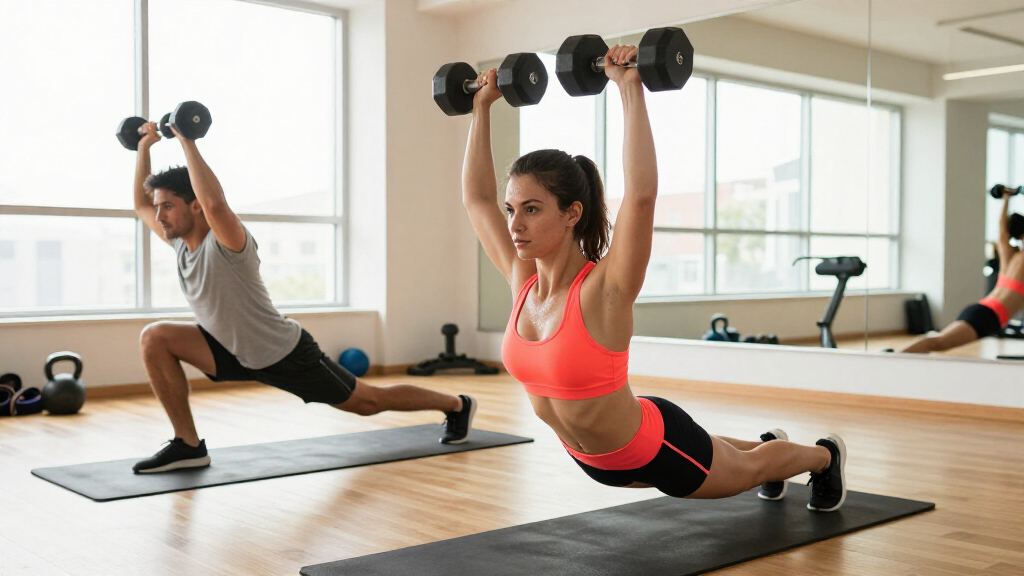
Supersets are two exercises performed back-to-back with little or no rest. Circuits take that idea further, chaining four or more exercises in sequence, often with rest between rounds. Both methods reorganize your workout to pack more work into less time, but they serve slightly different purposes.
Suppose you’re doing a chest press, then immediately follow with a bent-over row—no pause in between. That’s a superset. Now imagine cycling through a squat, push-up, row, and plank, then resting before repeating—that’s a circuit.
Their main value? They change the ‘when’ and ‘how’ of exercise, making your session more time-efficient, metabolically demanding, and often more engaging. They aren’t about replacing fundamental principles—they’re about arranging work smarter.
adjustable dumbbell set for strength training
As an affiliate, we earn on qualifying purchases.
As an affiliate, we earn on qualifying purchases.
How Supersets and Circuits Maximize Your Workout Time
Time is the most common reason people skip workouts or cut them short. Supersets and circuits help you pack more work into less time by reducing downtime. For example, pairing a biceps curl with triceps extension allows you to work two muscles quickly, cutting total workout time by up to 30%.
Here’s how they boost efficiency:
- Greater training density: More work in less time, without sacrificing volume.
- Effective use of recovery: When one muscle works, another recovers, allowing you to sustain effort.
- Increased metabolic demand: Short rests keep your heart rate elevated, which can boost calorie burn and conditioning.
Imagine doing a set of squats, then immediately switching to lunges before resting. You’re getting more done, faster, and challenging your body in new ways.
resistance bands for muscle building
As an affiliate, we earn on qualifying purchases.
As an affiliate, we earn on qualifying purchases.
Choosing the Right Pairings to Keep Your Workout Safe and Effective
Not all exercise pairings are created equal. Good pairings minimize fatigue overlap and keep your workout safe and productive. For example, pairing a bench press with a bent-over row works well because they target opposing muscle groups and don’t compete for the same resources.
Here’s a simple list of effective pairings:
- Bench press + row
- Overhead press + lower-body isolation (like leg curls)
- Squats + light upper-body movements
- Biceps curls + triceps extensions
- Chest-supported row + leg curl
Avoid pairing exercises that heavily tax the same muscles or systems, such as deadlifts followed immediately by bent-over rows, which can lead to compromised form and injury risk.
Order matters—place the most demanding, technical lifts at the start, when fatigue is lowest, to maximize performance and safety.
As an affiliate, we earn on qualifying purchases.
Common Mistakes That Sabotage Your Superset or Circuit Workout
It’s easy to fall into traps that diminish the benefits of supersets and circuits. One mistake? Reducing rest so much that your technique suffers, or load drops, because fatigue takes over. This can lead to poor form and injury.
Other pitfalls include:
- Pairing exercises with overlapping muscle demands, causing excessive fatigue.
- Turning circuits into a haphazard collection without progression, leading to plateaus.
- Overestimating your fatigue tolerance and pushing beyond safe limits.
- Not tracking performance, so you can’t measure progress or adjust loads.
- Occupying multiple pieces of equipment unnecessarily during busy hours.
Remember: intensity is good, but not at the expense of safety or form. Progressively challenge yourself, but listen to your body’s signals.
As an affiliate, we earn on qualifying purchases.
Program Examples: How to Build a Smarter, More Efficient Workout
Here are two practical workout structures using supersets and circuits:
- Time-efficient hypertrophy session:
- Squat (rest as needed)
- Superset: Bench press + chest-supported row
- Superset: Leg curl + leg extension
- Superset: Biceps curl + triceps extension
- Full-body circuit for general fitness:
- Goblet squat
- Push-up
- Suspension row
- Romanian deadlift
- Farmer carry
- Jump rope or brisk walk
Perform 2-3 rounds, resting just enough to maintain good form. Adjust the number of exercises and rounds based on your fitness level and goals.
Safety First: How to Use Supersets and Circuits Without Getting Hurt
Fatigue can impair your coordination and judgment. Always prioritize proper technique, especially when using heavy loads or complex movements. Don’t sacrifice form just to complete a circuit or finish a superset.
If you’re new or have health concerns, seek guidance from a qualified professional. Stop immediately if you experience chest pain, dizziness, or unusual shortness of breath. Recovery still depends on total volume, effort, sleep, and nutrition—shorter workouts aren’t necessarily easier.
Frequently Asked Questions
Are supersets better than traditional sets?
Supersets are more time-efficient and can boost metabolic demand, but they aren’t always better for maximal strength or power. The choice depends on your goals and how you pair exercises.
Can supersets build muscle as well as regular sets?
Yes, if you maintain sufficient effort, volume, and progression, supersets can produce muscle gains comparable to traditional training. They’re especially useful when time is limited.
What are the best pairings for supersets?
Opposing muscle groups or unrelated movements—like bench press and row, or biceps curl and triceps extension—work well because they minimize fatigue overlap and keep performance high.
How long should I rest between supersets or circuit rounds?
Rest depends on your goal. For hypertrophy, 30-60 seconds is common. For strength, longer rests—2-3 minutes—may be needed. Always prioritize technique and fatigue management.
Are circuits suitable for beginners?
Yes, but they should start with simple movements, moderate intensity, and generous rest. Building a solid foundation first will make circuits safer and more effective later.
Conclusion
Supersets and circuits aren’t just gimmicks—they’re practical tools that can make your workouts smarter and more efficient. When used thoughtfully, they help you squeeze more progress from less time, keeping your training fresh and challenging.
Remember: focus on pairing exercises wisely, prioritize form, and listen to your body. The best workout is the one you can do consistently, safely, and with purpose.
Halloween Picks
halloween
As an affiliate, we earn on qualifying purchases.