
TL;DR

Get workout gear delivered free with Prime
- Fast, free delivery on millions of items
- Prime Video, Amazon Music and more included
- Member-only deals all year
A Fit&Well writer’s 30-day test of weighted vests ended with swollen knees and a fitness plateau after the writer increased vest load while also running farther, faster or more often. Trainer Holly Haywood recommends starting with a light load, prioritizing good form and changing only one workout variable at a time. The report says the test did not establish whether weighted vests preserve muscle or bone density.
A 30-day weighted-vest experiment reported by Fit&Well ended with the writer experiencing swollen knees and a fitness plateau after combining extra weight with longer, faster or more frequent runs. The report is a first-person account, not a clinical study showing that vests preserve muscle or bone density; it relays trainer Holly Haywood’s advice to start light, maintain technique and avoid increasing several training demands at once.
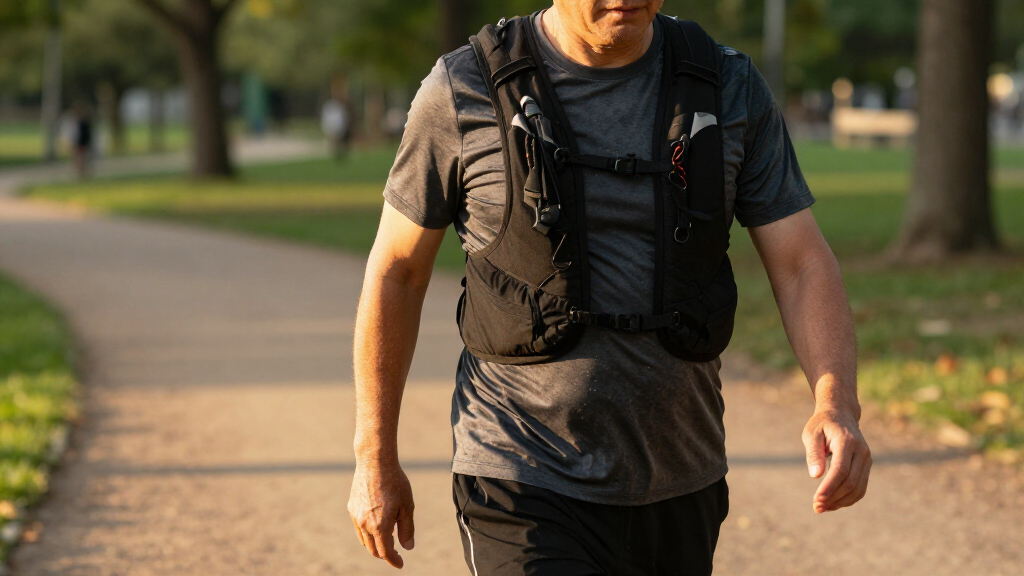
The writer tested OMORPHO’s 6-pound G-Vest Run and 10-pound G-Vest Icon while preparing for a marathon, wearing a vest across workouts for a month. The account says the writer added load while also increasing running distance or speed. During that period, the writer’s knees swelled and fitness plateaued. The report does not describe a medical assessment or evidence that the vest itself caused a specific injury, and it does not report measurements of muscle or bone density.
Haywood, identified as lead instructor at London health-club chain Third Space, recommends beginning with a light vest and increasing the load gradually only while technique remains sound. She gives 5% of body weight as a general starting point for resistance training: an example in the report is an 8-pound vest for someone weighing 160 pounds. The writer says that, for running, a lower starting range of 1% to 2% of body weight may be more appropriate; the report identifies this as the writer’s view, not a clinical guideline.
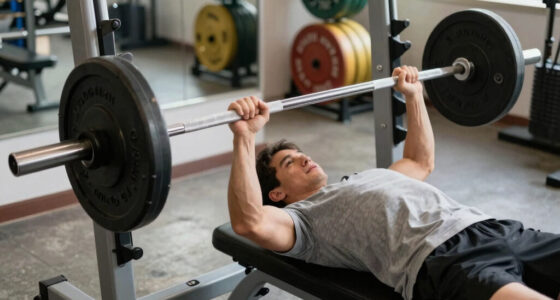
Haywood advises against wearing a vest that causes discomfort or compromises movement. The writer found the vest more manageable during bodyweight exercises, including push-ups, dips and pull-ups; this is the writer’s personal experience, not evidence of a general benefit. Haywood’s central instruction is to keep good form the priority and to change only one training variable at a time.
The Risks of Adding Load
The report matters because a vest can make ordinary movements more demanding, and users may be tempted to add weight on top of an already changing workout. The writer’s account illustrates that load, distance, speed and frequency can compound; it does not establish how often such problems occur or that weighted vests cause knee injuries generally.
The report describes load-bearing exercise as relevant to age-related muscle loss and bone weakening, but the 30-day product test did not measure muscle or bone density. Readers should distinguish that general rationale from evidence of a specific health result. The practical takeaway supported by the attributed advice is narrower: introduce added resistance cautiously, preserve technique and stop or reduce the load if it causes joint discomfort.
For people deciding whether to use a vest, this distinction is useful: a tool that increases workout intensity is not automatically suitable for every exercise, person or training plan. Haywood recommends checking with a trainer or physiotherapist when needed, particularly if the vest is affecting movement or causing discomfort.
As an affiliate, we earn on qualifying purchases.
How the Test Was Conducted
Fit&Well’s account describes an informal personal test lasting 30 days, not a controlled trial. The writer used two OMORPHO vests while training for a marathon, a demanding schedule that included running alongside other workouts. The report identifies the equipment and the writer’s experience but does not give a comparison group, clinical examination or measured changes in muscle mass, bone density or injury risk.
The advice in the article comes from Holly Haywood, rather than from results of the experiment. She compares vest progression with increasing resistance in strength training: begin with a manageable load and build gradually if the wearer can keep sound technique. For a cautious entry point, she suggests starting with a brisk treadmill walk of 15 to 20 minutes, then increasing effort through one adjustment—such as a small incline change—rather than raising time, speed and load together.
The writer’s main reflection is that the experiment changed several demands at once. The report says the writer would have kept running distances and paces steady at first while wearing a lighter vest, then tracked the body’s response. This is a retrospective lesson from one person’s experience, not a tested protocol that guarantees safety.
“The general recommendation, like with most resistance training, is to start light and gradually build up as strength and comfort with the vest improve.”
— Holly Haywood, lead instructor at Third Space, as quoted by Fit&Well
lightweight weighted vest for strength training
As an affiliate, we earn on qualifying purchases.
As an affiliate, we earn on qualifying purchases.
What the Test Cannot Establish
The report cannot show whether weighted vests preserve muscle or bone density, because it did not measure those outcomes or compare vest users with a control group. Nor does one person’s experience establish that a vest caused the writer’s knee swelling, or indicate the frequency of joint problems among users. The reported outcome is an individual experience, and the article offers no diagnosis or clinical evaluation.
The report does not establish a universal ideal vest weight for all users or exercises. Haywood’s 5% example is described as a general resistance-training starting point, while the writer suggests starting lower for running. Individual fitness, health, technique and activity differ, and the source does not give evidence for applying one percentage universally. It remains unclear how much of the writer’s symptoms came from the vest, the marathon training load or their combined demands.
adjustable weighted vest for exercise
As an affiliate, we earn on qualifying purchases.
As an affiliate, we earn on qualifying purchases.
A Gradual Return to Vest Training
The report offers practical next steps rather than a scheduled research or product milestone. Haywood suggests starting with a 15-to-20-minute brisk walk, checking that the vest feels comfortable and technique remains steady, and increasing only one aspect of effort at a time. The writer advises making small load increases and avoiding long runs in a vest, based on the experience described.
Anyone considering a weighted vest should treat pain or joint discomfort as a reason to reduce the load or stop using it, rather than pushing through. Haywood recommends consulting a trainer or physiotherapist to check whether the vest is appropriate and being used well. The supplied report does not announce further testing or provide follow-up on the writer’s knee symptoms, so those outcomes remain unknown.
As an affiliate, we earn on qualifying purchases.
Key Questions
Did the report prove that weighted vests preserve muscle or bone density?
No. The Fit&Well article describes a 30-day personal test and does not report measurements of muscle or bone density. Those benefits are presented as a rationale for load-bearing exercise, not as a result demonstrated by the experiment.
What happened to the writer during the test?
The writer says their knees swelled and fitness plateaued while training for a marathon and combining a weighted vest with changes to running distance, speed or frequency. The account does not establish a medical diagnosis or prove which factor caused the symptoms.
How much weight does the trainer suggest starting with?
Holly Haywood gives 5% of body weight as a general resistance-training starting point, with an 8-pound vest as an example for a 160-pound person. The writer suggests a lower 1% to 2% range for running, but that is the writer’s opinion, not a universal guideline.
Which exercises did the writer find more manageable with a vest?
The writer says the vest worked well for bodyweight movements such as push-ups, dips and pull-ups. This is a personal observation, and the report says technique should be sound before adding resistance.
What should someone do if a vest causes joint discomfort?
Haywood advises moving to a lighter vest or removing it if it becomes uncomfortable on the joints. She also recommends seeking guidance from a trainer or physiotherapist when needed.
Source: rss
Halloween Picks
halloween
As an affiliate, we earn on qualifying purchases.