TL;DR

Get workout gear delivered free with Prime
- Fast, free delivery on millions of items
- Prime Video, Amazon Music and more included
- Member-only deals all year
Choosing gym flooring depends on activity, budget, and safety needs. Rubber is durable for heavy lifting, foam offers comfort for low-impact moves, and tiles provide versatile customization. Recent innovations make hybrid solutions increasingly popular.
Imagine stepping into your home gym. You want it to feel solid, safe, and tailored to your workouts. But choosing the right flooring can feel overwhelming. Rubber, foam, or tile — which one works best for your space and routine? Knowing the real benefits and tradeoffs helps you make a smart decision, avoiding costly mistakes and ending up with a floor that supports your fitness journey.
This guide breaks down each material, shares concrete examples, and offers practical tips. Whether you’re lifting heavy weights, stretching, or doing cardio, understanding your options makes all the difference.
Rubber flooring offers unmatched durability for heavy lifting and high-impact workouts, lasting up to 20 years with proper care.
Foam mats provide a soft, comfortable surface ideal for stretching and low-impact routines but need replacing after 3-5 years.
Tile flooring allows for easy customization and quick replacement, making it a flexible choice for diverse workout zones.
Hybrid solutions—combining rubber and foam—are increasingly popular for creating versatile, multi-use home gyms.
Prioritize impact absorption, slip resistance, and ease of maintenance when choosing your gym flooring.
What is rubber flooring, and why does it stand out?
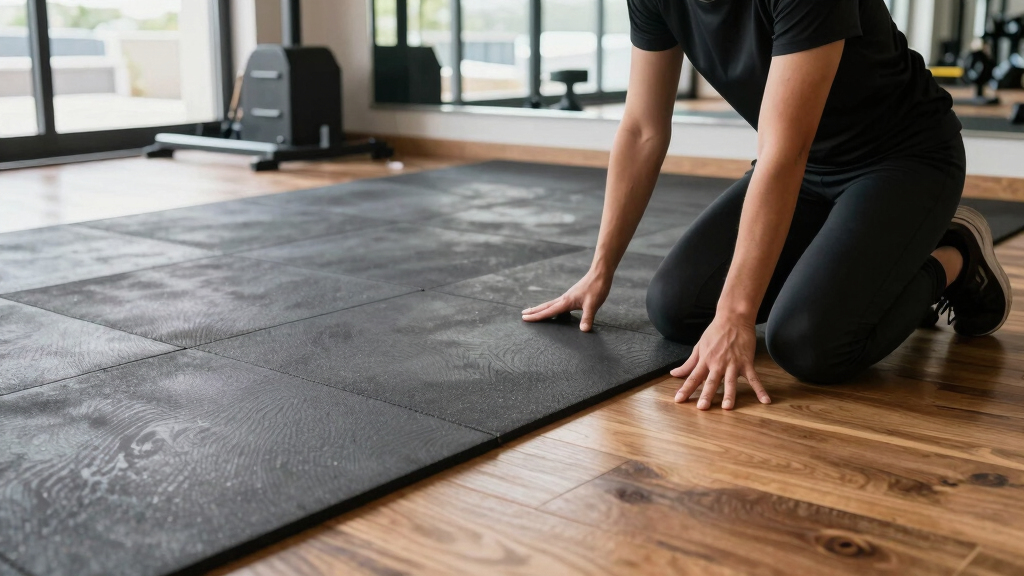
Rubber flooring is a dense, shock-absorbent surface made from recycled or synthetic rubber. It’s the go-to for heavy weights and high-impact workouts. Imagine dropping a barbell — rubber absorbs that shock, protecting your floors and joints. It’s slip-resistant, easy to clean, and can last up to 20 years if maintained well.
In a home gym scenario, rubber flooring handles everything from deadlifts to HIIT sessions. Its durability and safety features make it a favorite for serious athletes and casual users alike.
As an affiliate, we earn on qualifying purchases.
Foam flooring: Comfort that’s perfect for low-impact workouts
Foam flooring is lightweight, cushioned, and soft underfoot. Think of it like the padding in a yoga studio or aerobic class. It’s made from dense, foam mats that easily roll out or interlock. If your workouts involve stretching, bodyweight exercises, or light cardio, foam offers a cozy, forgiving surface.
For example, a home yoga corner with foam mats provides a comfortable space to flow through poses without feeling the hard floor beneath. But beware — foam wears out faster under heavy weights, often lasting 3-5 years. This wear isn’t just about aesthetics; it can affect safety, as worn-out foam might not provide adequate cushioning, increasing the risk of injury during high-impact or strenuous activities. The tradeoff here is between comfort and longevity: foam offers excellent cushioning but requires replacement sooner, which can add to long-term costs and effort.
As an affiliate, we earn on qualifying purchases.
Tile flooring: Flexible, easy to customize, and quick to install
Tile flooring includes rubber tiles, vinyl tiles, or interlocking systems. They come in modular pieces that snap together, creating a seamless surface that’s easy to replace if damaged. Imagine upgrading a corner of your gym with colorful interlocking tiles that match your style.
Rubber tiles are especially popular for balancing durability and aesthetic flexibility. They can handle moderate weights and are simple to install over existing floors. Plus, you can customize patterns and colors, making your gym visually engaging. The key advantage here is the ability to replace individual tiles as needed, which extends the overall lifespan of your flooring and allows for easy updates or repairs. However, the tradeoff is that the interlocking system might not be as seamless as poured or rolled flooring, and some tiles may shift over time if not installed properly. This can impact safety and aesthetics, especially in high-traffic or dynamic workout areas.
As an affiliate, we earn on qualifying purchases.
Compare rubber, foam, and tile: Which suits your needs best?
| Feature | Rubber | Foam | Tile |
|---|---|---|---|
| Durability | High, lasts 10-20 years with proper maintenance, making it ideal for long-term use and heavy impact scenarios. | Moderate, 3-5 years, especially under heavy weights; wear affects safety and aesthetics, requiring replacement to maintain effectiveness. | High, replace individual tiles rather than entire surface; longevity depends on material and usage, but easy to repair or update without major overhaul. |
| Best for | Heavy lifting, high-impact activities, and long-term investment. | Stretching, yoga, low-impact exercises, and light cardio where cushioning is prioritized. | Multi-purpose, customizable workout zones, or aesthetic-focused areas that benefit from easy repairs and design flexibility. |
| Cost | Higher upfront, but cost-effective over time due to longevity and durability. | Lower initial investment, but potential for higher long-term costs due to more frequent replacements. | Variable, depending on material; offers a balance between cost, customization, and ease of repair. |
| Installation | Simple roll-out or tiles, often DIY-friendly, with minimal tools required. | Portable mats or interlocking tiles, usually straightforward to install but may need some prep work. | Interlocking, modular systems that can be installed over existing floors; flexibility allows for easy reconfiguration. |
| Safety & Comfort | Excellent shock absorption, reduces impact injuries, and provides a stable footing for heavy lifts. | Very comfortable, softer surface that minimizes joint strain during low-impact routines. | Good balance of safety and aesthetics, with the ability to customize thickness and surface texture for specific needs. |
As an affiliate, we earn on qualifying purchases.
Which flooring is best for your home gym? Here’s how to decide
- Think about your activities: Heavy weights? Go rubber. Yoga? Foam is perfect.
- Consider your budget: Rubber costs more upfront but lasts longer, making it a more economical choice in the long run. Foam is cheaper initially but may need replacement sooner, which could add to maintenance costs over time. Tiles are a middle ground, with costs varying based on material and design.
- Check your space: Do you want a quick, easy setup? Modular tiles and portable foam mats are ideal for fast installation and reconfiguration, whereas rubber rolls might require more prep but offer a seamless look.
- Safety matters: Impact absorption reduces injury risk during high-impact exercises. Rubber and tiles are excellent here, but ensure proper installation to maximize safety.
- Maintenance needs: Rubber and tiles are generally easy to clean and maintain, with minimal ongoing effort. Foam mats may require more frequent replacement or cleaning, especially in high-traffic areas or if used heavily, which influences long-term costs and convenience.
For example, if you’re lifting heavy weights regularly, rubber flooring will protect your subfloor and your joints, offering long-term safety and durability. If your routine mainly involves stretching or bodyweight exercises, foam mats provide comfort and affordability, but consider replacement frequency for ongoing costs and safety.
Latest trends and innovations in gym flooring
Modern gym flooring integrates eco-friendly materials like recycled rubber and sustainable foams. Interlocking tiles are getting smarter, with better grip and design options. Hybrid setups—combining rubber for weights and foam for stretching—are on the rise. These options create versatile, durable, and visually appealing spaces.
For example, a client might have rubber tiles for the lifting zone and foam mats for a dedicated yoga corner, blending safety, comfort, and style seamlessly. This flexibility allows gym owners and enthusiasts to tailor their spaces to specific needs, optimizing functionality and aesthetics while embracing sustainability trends.
Safety first: What you need to know about gym flooring
Impact absorption and slip resistance are key safety features. Rubber flooring, for instance, reduces the risk of slips and cushions falls, which is especially important for high-impact activities. Proper installation over a stable subfloor not only extends lifespan but also ensures that the safety features perform as intended. For children or elderly users, softer surfaces like foam or cushioned tiles may be preferable, as they reduce injury severity during falls. However, softer surfaces might compromise stability for certain exercises.
Always check that your flooring complies with safety standards, especially if you plan to use heavy weights or high-impact activities. Regular cleaning and inspection help maintain safety over time, preventing slips, tears, or deterioration that could pose hazards.
Frequently Asked Questions
What type of flooring is best for heavy weightlifting?
Rubber flooring is the top choice for heavy lifting. Its dense, shock-absorbing surface protects both your subfloor and your joints, and it can handle the impact of dropping weights without cracking or tearing.Can I install gym flooring over existing floors?
Yes, many types of gym flooring, especially tiles and foam mats, can be installed over existing surfaces. Just ensure the base is level and clean to prevent shifting or damage over time.How often should I replace foam gym mats?
Foam mats typically last 3-5 years depending on usage. Over time, they may develop tears or lose cushioning, so inspect them regularly and replace as needed for safety and comfort.Are rubber floors safe for children and elderly users?
Rubber floors provide excellent impact absorption, making them a safe choice for children and seniors. They reduce slip risks and cushion falls, but always ensure proper installation and maintenance.What’s the cost difference between rubber, foam, and tile flooring?
Rubber tends to have a higher initial cost but lasts longer, often 10-20 years. Foam mats are cheaper upfront but need replacing sooner. Tiles vary in price depending on material, with interlocking options offering flexibility and ease of replacement.Conclusion
Your gym flooring forms the foundation for safe, effective workouts. Rubber, foam, and tile each bring unique strengths — durability, comfort, and flexibility. Think about your routine, space, and budget, then choose what fits best. A well-chosen floor can turn your home gym into a space you actually want to use, day after day.
Remember, the right flooring isn’t just about style or cost. It’s about supporting your movement, protecting your body, and making fitness a sustainable part of your life. Ready to pick your perfect surface and start transforming your space?
Halloween Picks
halloween
As an affiliate, we earn on qualifying purchases.