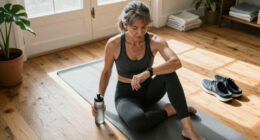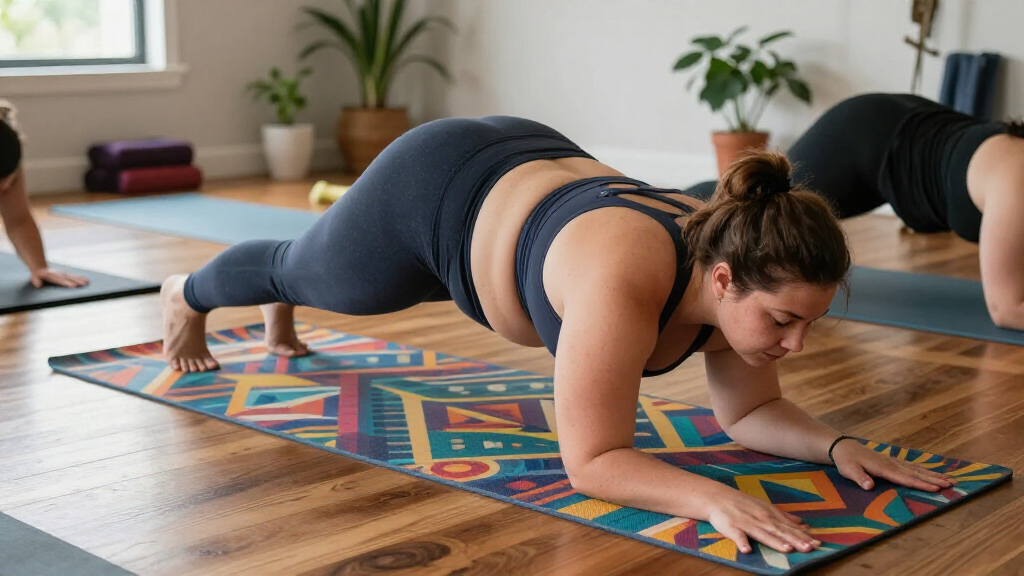

This guide helps you choose and set up a body-positive yoga mat: one that gives you enough room, grip, cushioning, and comfort for your body and practice. It is for beginners and returning practitioners who want to assess a mat by fit and function rather than by appearance or a single standard size. Allow about 20-40 minutes to compare options, plus a few minutes to test your choice at home. You do not need special yoga experience or a particular body shape to use this guide.

Get workout gear delivered free with Prime
- Fast, free delivery on millions of items
- Prime Video, Amazon Music and more included
- Member-only deals all year

YR Large Exercise Mat 78.7"L x 51"W, 15mm Thick Yoga Mat
- ✔ Material: NBR foam
- ✔ Dimensions: 78.7 in L × 51 in W
- ✔ Thickness: 15 mm

Luxury Cork Yoga Mat – Non Slip, Extra Thick & Extra Large
- ✔ Materials: Natural cork and natural tree rubber
- ✔ Extra-long size: 80 in × 26 in
- ✔ Mini size: 72 in × 24 in
Difficulty: Beginner | Time: 20-40 minutes to compare and choose; 5 minutes to set up
What You’ll Need
Tools & Materials:
- A tape measure or ruler
- A clear floor space where you can stretch out
- A notebook or phone for recording mat dimensions and prices
- A few mat options to compare in a shop or online
Knowledge:
- Know which yoga styles you plan to practice, such as gentle, restorative, flow, or hot yoga
- Be able to lie down and extend your arms and legs in a comfortable position, or use a trusted helper to measure
Mat dimensions, thickness, materials, and return policies vary by brand. Check the exact product specifications instead of relying on labels such as extra-wide or extra-long. If you have pain, balance concerns, or mobility needs, choose for comfort and stability and ask a qualified clinician or yoga instructor about individual adaptations when appropriate.
YR Large Exercise Mat 78.7"L x 51"W, 15mm Thick Yoga Mat
The YR Large Exercise Mat is our best overall choice because its 51-inch width changes the practice footprint more than any other spec in this pair. At 78.7 inches long, it also gives taller users room to extend, while the wide surface can accommodate two people according to the product description. For body-positive practice, that extra space can mean less concern about hands or feet landing beyond the mat during wide stances, floor work, or gentle movement.Its defining advantage over the Luxury Cork mat is 15mm of NBR foam cushioning. That substantial padding makes the YR better suited to hard floors and buyers who prefer a softer landing under knees and hips. The cork option, by contrast, is the stronger candidate for sweaty flows where surface grip is the priority; its stated cork surface is designed to grip when damp, while the YR description focuses on moisture resistance and easy cleaning rather than a specific wet-grip claim.The same generous build creates real compromises. At 2.5 kg, it is not a minimalist travel mat, and thick foam may feel less stable than a firmer surface in balance poses. The product description also flags a possible initial rubber smell. A carrying bag and straps help with storage, but do not erase the bulk. Choose this model when floor comfort and room to move outweigh compactness; skip it if you want a firm, sweat-focused surface or regularly carry a mat long distances.
Pros:
- Very wide 51-inch surface offers room for expansive movement
- 15mm NBR foam adds substantial cushioning on hard floors
- 78.7-inch length and two-person capacity suit shared or larger practice areas
- Includes a carrying bag and straps for storage
Cons:
- At 2.5 kg, it is heavier and bulkier than a typical compact mat
- May have an initial rubber smell
- Thick foam may feel less firm under balance-focused poses
Best for: Buyers who want a very wide, deeply cushioned mat for home workouts, hard floors, or shared practice space.
Not ideal for: Commuters who need a lightweight roll, or practitioners who prefer a firmer surface and prioritize grip during sweaty flows.
Bottom line: We recommend the YR for buyers who value unusually broad space and plush cushioning more than a compact, firm, sweat-gripping surface.
“We recommend the YR for buyers who value unusually broad space and plush cushioning more than a compact, firm, sweat-gripping surface.”
Luxury Cork Yoga Mat – Non Slip, Extra Thick & Extra Large
Where the YR prioritizes softness and exceptional width, the Luxury Cork Yoga Mat puts the emphasis on surface traction and a steadier base. Its cork surface and natural rubber base are intended to provide grip even when sweaty, making this the more targeted choice for hot yoga or sessions where damp hands and feet are a concern. The heavyweight construction is also described as helping keep the mat from shifting, a useful contrast with the YR’s plush foam feel.The extra-long option measures 80 by 26 inches, giving tall practitioners more length than the YR while offering only about half its width. That difference matters: if side-to-side room is your main priority, the 51-inch YR is much more accommodating. The cork mat also has a 72-by-24-inch mini option, which provides a less expansive footprint, but it does not match the extra-long version’s dimensions. The product offers multiple designs, including optional alignment lines, for buyers who find visual placement cues helpful.We would choose this mat for a grip-led practice, not as the easiest all-purpose mat to carry. The extra-long version weighs about 9.5–10 lb, and the mini weighs about 5.5–6 lb, so even the smaller configuration is not especially light. Its cork surface also needs regular cleaning to maintain grip: wipe with water, air dry, and avoid prolonged sun exposure. Compared with the YR, it offers a more specialized surface and a firmer, heavier platform, but less width and less plush padding detail. It makes the most sense when traction and stability outweigh broad shared space or soft cushioning.
Pros:
- Cork surface is designed to maintain grip when sweaty
- Extra-long option measures 80 inches for added length
- Heavyweight construction is intended to reduce mat movement
- Natural cork and natural rubber construction, with multiple design options
Cons:
- Extra-long version weighs about 9.5–10 lb and is cumbersome to carry
- At 26 inches wide, it offers far less side-to-side room than the YR
- Requires regular cleaning and careful drying to maintain the surface
Best for: Practitioners who do sweaty or hot yoga and want a long mat with a cork surface designed for moisture grip.
Not ideal for: Anyone seeking maximum side-to-side room, the softest-feeling option, or a lightweight mat for frequent travel.
Bottom line: We favor the cork mat for sweaty sessions and a stable, moisture-gripping surface, provided width and portability are not the main needs.
“We favor the cork mat for sweaty sessions and a stable, moisture-gripping surface, provided width and portability are not the main needs.”
As an Amazon Associate we earn from qualifying purchases.
Before You Start
Decide what you want the mat to do for you before comparing colors or marketing claims. A body-positive choice is personal: more width may help you feel unconfined, extra length may keep your hands and feet on the mat, and greater cushioning may feel kinder to knees. These features can affect stability, portability, and price, so prioritize the needs that matter most to your practice.
Do not assume that a wider or thicker mat is automatically better. Thick, soft surfaces can feel unstable in standing poses, while a wide mat may not fit a small class space. If you attend a studio, check its mat-area rules and the amount of floor space available. If shopping online, verify the mat’s actual measurements, weight, material, cleaning directions, and return terms before ordering.
Step-by-Step Instructions
Step 1: List your comfort and access needs
Write down the features that would make practice more comfortable and usable for you. Consider room to spread your arms, length for your full body, cushioning under knees or wrists, grip when your hands sweat, low weight for carrying, and materials or textures you prefer. Mark each feature as a priority, a preference, or not needed.
Think about how you actually practice rather than how a product photo looks. If you usually stay close to the center of the mat, width may be less urgent. If you move through wide lunges or rest with limbs extended, additional space may matter more. Note any sensory preferences, such as avoiding a strong odor or a sticky surface.
Tip: A mat should accommodate your movement; you do not need to change your body to fit a product’s standard dimensions.
Check: You have a short, ranked list of needs that you can use to compare mats.
Step 2: Measure the space your body uses
Clear a floor area and take the positions you commonly use in practice. Lie on your back with arms and legs comfortably extended, then measure the length and width your body occupies. Repeat with a wide stance or a lunge if those positions are part of your routine. Measure the widest comfortable position, not a forced stretch.
Compare these measurements with each mat’s usable surface. Add a little room around your hands and feet if you prefer not to approach the edges. If measuring yourself is difficult, ask someone you trust to help or use the mat dimensions of a setup that already feels comfortable as a reference.
Tip: Check dimensions in the same units. Product listings may use inches or centimeters, and photographs do not show scale reliably.
Check: You know the approximate mat length and width that would allow your usual positions without feeling crowded.
Step 3: Choose dimensions for your practice space
Compare the measurements you recorded with the mat’s listed length and width. Choose a mat that gives you adequate room for your usual poses while still fitting the space where you practice. For a studio class, ask whether larger mats are allowed and how much space each person may use. For home practice, measure the area where the mat will lie, including nearby furniture or walls.
Do not use a universal height or body-size rule to pick a mat. Your preferred range of movement and comfort are better guides. If you are between sizes, consider how often you practice wide poses and whether carrying or storing a larger mat would be inconvenient.
Tip: Some mats are longer or wider without being both. Verify each measurement separately before buying.
Check: Your shortlist includes mats that fit both your body-in-motion measurements and your practice location.
Step 4: Select thickness, firmness, and surface
Choose cushioning based on the surfaces and poses that cause discomfort. If your knees or wrists need more padding, compare thicker mats or use a folded towel under sensitive areas. Test firmness when possible: press your palm into the mat and notice whether it compresses and recovers. A very soft surface can make standing balance poses less steady.
Check the surface for grip and feel. A textured surface may help prevent sliding, but some textures can irritate sensitive skin. If you practice vigorous or hot yoga, look for grip suited to sweat and follow the maker’s care instructions; a towel over the mat may be useful. If shopping online, read specifications and return terms, since descriptions such as non-slip do not guarantee the same feel for every person.
Tip: Thickness is not the same as softness. A firm, supportive mat may cushion better in practice than a very plush one that compresses unevenly.
Check: You can explain why the mat’s cushioning, firmness, and surface suit your comfort and the yoga you do.
Step 5: Check weight, material, and care
Read the materials and care details before purchasing. Confirm the mat’s weight if you will carry it, and check whether it rolls or folds in a way that works for your storage space. Look for cleaning directions that fit your routine and ask about the maker’s return policy, especially when you cannot test the surface first.
If you have sensitivities to smells or materials, check product information and reviews for reports of odor, but treat them as individual experiences rather than guarantees. When a mat arrives, air it out as directed before use. Do not apply cleaners or essential oils unless the manufacturer permits them; some products can damage the surface or reduce grip.
Tip: A mat that feels suitable but is too heavy to bring to class may not be a practical choice for regular use.
Check: You have confirmed that the mat’s weight, material, care routine, and return terms work for your needs.
Step 6: Set up and test the mat
Place the mat on a clean, level floor and let it lie flat. Follow any first-use instructions, including airing or cleaning, before practicing. Test it with a short sequence: sit, kneel, stand, step into a lunge, and lie down with arms and legs in positions you commonly use. Move at a controlled pace and notice whether you slide, touch the edges, or feel pressure at sensitive joints.
Test balance with a simple standing pose near a wall or chair if you need support. Do not test a new mat with an advanced pose or push through pain. If the mat shifts on the floor, check that the floor and mat underside are clean and dry before repeating the test.
Tip: Use a wall, chair, or another support for balance testing. A mat test should not require risking a fall.
Check: The mat stays in place, gives you the space your usual movements need, and feels acceptably supportive during basic positions.
Step 7: Decide whether to keep, adjust, or return it
After testing, compare what you felt with the priorities you wrote down. Keep the mat if it meets your main needs without creating a new problem, such as slipping or poor balance. If one area needs extra cushioning, try a folded blanket or yoga pad under that area, provided it does not make the pose unstable.
If the mat is too small, shifts, or feels uncomfortable across several basic positions, check whether a different size, surface, or firmness would solve the issue. Follow the retailer’s return conditions and keep the packaging until you have decided. Avoid continuing through pain in the hope that your body will adapt to a poor fit.
Tip: A brief test may not predict every class condition. If possible, confirm the retailer’s trial period before taking the mat to a studio or removing tags.
Check: You have made a clear keep, adjust, or return decision based on comfort, usable space, grip, and stability.
Common Mistakes to Avoid
- Choosing a mat based on a standard size or a model’s appearance. — Measure the space your own movements use and compare it with the mat’s listed length and width.
- Buying the thickest or softest option without testing stability. — Check firmness as well as thickness, then try a basic standing pose with support nearby.
- Assuming an online claim such as non-slip guarantees grip. — Check the material, texture, care instructions, reviews, and return terms; test the mat safely when it arrives.
- Ignoring where and how the mat will be used. — Measure your home practice area or check studio space limits, and weigh portability against size and cushioning.
Troubleshooting
Problem: The mat slides across the floor.
Solution: Stop practicing, then check that the floor and mat underside are clean and dry. Reposition it on a level surface and retest. If it still slides, use a compatible non-slip layer or choose a mat designed for that floor type.
Problem: Your hands or feet slip on the mat surface.
Solution: Pause and dry your hands and the mat. Check whether the surface needs cleaning or conditioning as specified by the manufacturer. For sweaty practice, try a yoga towel designed for your mat or select a surface with grip better suited to moisture.
Problem: Your knees or wrists feel sore during basic poses.
Solution: Stop if you feel sharp or worsening pain. Check that the floor is level and try a folded blanket or knee pad under the sensitive area. If discomfort persists, consider a different cushioning setup and ask a qualified instructor or clinician about modifications.
Problem: The mat feels cramped despite matching its listed dimensions.
Solution: Repeat your measurements in the positions that feel crowded and compare them with the actual usable surface. Check whether the mat dimensions were listed correctly, then consider a wider or longer option that also fits your practice space.
What Success Looks Like
Your chosen mat lies flat and remains steady on the floor. You can perform the positions you commonly use without repeatedly reaching an edge, and its grip, firmness, and cushioning feel acceptable for your practice. You have checked that its size fits your class or home setup, can manage its weight and care needs, and know whether to keep it, adjust your setup, or return it. Comfort can vary by pose and day; stop or modify any movement that causes pain.
Next Steps
After each practice, clean and dry the mat according to its care label, then store it away from direct heat and sunlight if the maker advises. Recheck the surface periodically for wear, peeling, or loss of grip. If your practice changes or the mat no longer feels supportive, repeat the fit test and compare other sizes or cushioning options. For persistent pain, balance difficulty, or a specific access need, ask a qualified yoga instructor or healthcare professional about suitable adaptations.
Frequently Asked Questions
What makes a yoga mat body-positive?
It is a mat that works for the user’s body, movement, comfort, and access needs rather than expecting the user to fit a standard product. That might mean more width or length, a particular surface, added cushioning, or a lighter mat. There is no single body-positive size or style.
How wide or long should my yoga mat be?
Measure the floor space your usual positions occupy, then compare that with the mat’s exact dimensions. Choose enough room to move comfortably while checking that the mat fits your home area or studio rules. Measurements are more useful than choosing based on a general body-size label.
Is a thicker mat better for sore knees?
It can add cushioning, but thickness alone does not determine comfort. A soft, thick mat may compress or feel unsteady. Test firmness and consider placing a folded blanket or knee pad under sensitive joints. Stop if pain continues or worsens.
Can I use a larger mat in a yoga studio?
Check the studio’s space and equipment rules before bringing one. A larger mat can take up neighboring space in a full class. Ask whether there is room for it or whether a standard-width mat is required.
How can I tell whether a mat is non-slip before buying it?
Read the surface and material specifications, look for information about use with sweat, and check the return policy. Online descriptions cannot guarantee how a surface will feel for you. Once you receive it, test basic movements on a clean, dry floor before relying on it for a full practice.
Halloween Picks
halloween
As an affiliate, we earn on qualifying purchases.