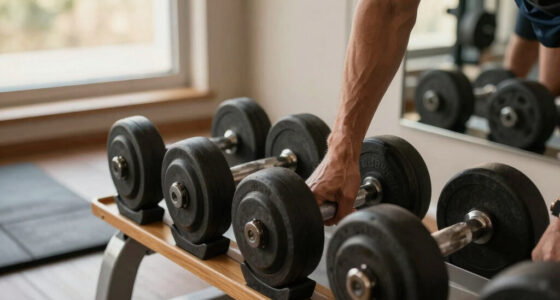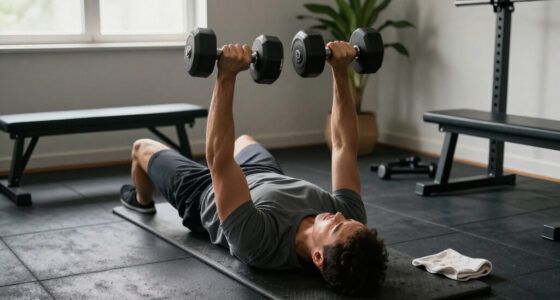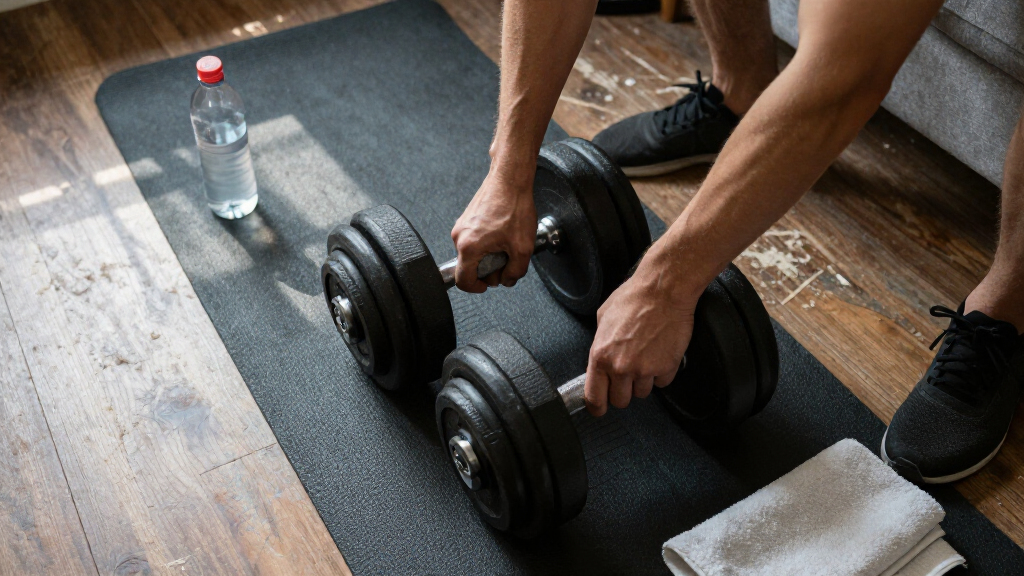
This guide shows beginners how to set up an adjustable dumbbell set, change the weight, and check that the dumbbell is ready to lift. You will learn the safe adjustment method for selector-style and plate-loaded models, which use different locking systems. Allow about 10-20 minutes for setup and practice, including time to read your model’s instructions. The finished dumbbell should have the intended weight selected, all plates or blocks fully seated, and its locking mechanism engaged.

Get workout gear delivered free with Prime
- Fast, free delivery on millions of items
- Prime Video, Amazon Music and more included
- Member-only deals all year

BowFlex Results Series SelectTech Adjustable Dumbbells (Pair)
- ✔ Set: Pair
- ✔ Weight range: 5–52.5 lb per dumbbell
- ✔ Adjustment: Quick-adjustment dials
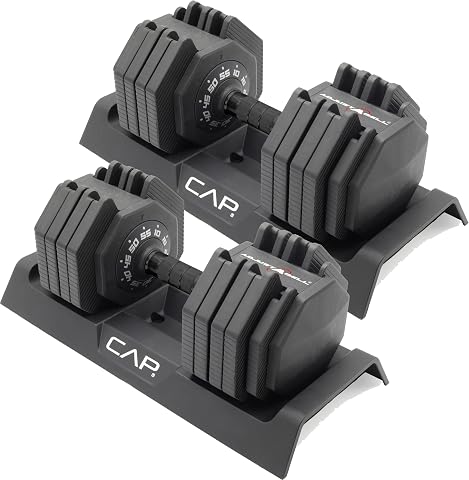
CAP ADJUSTABELL Adjustable Dumbbell Set, 10–55 lb
- ✔ Weight range: 10–55 lb
- ✔ Adjustment increments: 5 lb
- ✔ Adjustment mechanism: Full-rotation handle and cradle

UNNMIIY Adjustable 5-in-1 Dumbbell Set
- ✔ Set type: 5-in-1 multifunctional dumbbell set
- ✔ Exercise configurations: Dumbbells, barbell, kettlebells, push-up stands
- ✔ Adjustable weight per dumbbell: 2–22.5 lb
Difficulty: Beginner | Time: 10-20 minutes
What You’ll Need
Tools & Materials:
- Adjustable dumbbell set with its tray, stand, or weight plates
- Manufacturer’s instructions or model-specific weight chart
- A clear, level floor area
- A dry cloth for wiping the handles and adjustment parts
Knowledge:
- Basic ability to lift and place a dumbbell under control
- Ability to read the weight markings on the dumbbell or selector
Read the instructions for your exact model before adjusting it. Selector mechanisms, plate collars, maximum loads, and permitted adjustment methods vary. Do not mix plates or parts from different sets unless the manufacturer approves them. If the set is damaged, incomplete, or unfamiliar, do not lift it until you have confirmed the correct assembly method.
BowFlex Results Series SelectTech Adjustable Dumbbells (Pair)
For most buyers looking for one adjustable dumbbell pair to support a range of strength exercises, BowFlex is the most complete fit. Its 5-to-52.5-pound range per dumbbell starts lighter than CAP’s 10-pound minimum and extends much farther than UNNMIIY’s stated 22.5-pound maximum per dumbbell. Quick-turn dials make changing loads the defining advantage: we can move between exercises without handling separate plates and locking nuts.The pair is designed to replace 15 separate weights, and metal plates, a locking system, and storage trays give the setup a more contained, conventional home-gym feel than UNNMIIY’s multi-part kit. The non-slip ergonomic handles are another practical distinction for repeated dumbbell work. Compared with CAP, BowFlex offers a lower starting point and a dial-based selection system, while CAP has a slightly higher maximum and a knurled steel grip. That makes BowFlex the more flexible all-rounder, not an automatic choice for every lifter.There are limits. The top weight is 52.5 pounds per dumbbell, so people whose pressing, rowing, or leg-focused dumbbell work already exceeds that ceiling will need another solution. The pair also depends on its adjustment mechanism and storage trays to select and hold the chosen load; buyers who want several exercise formats will get more variety from UNNMIIY. JRNY access is included only for two months, so we would treat it as a temporary extra rather than a lasting reason to buy.
Pros:
- Broad 5-to-52.5-pound range per dumbbell
- Quick-turn dials simplify weight changes between exercises
- Metal plates, locking system, and storage trays are included
- Pair is designed to replace 15 separate weights
Cons:
- Maximum load is limited to 52.5 pounds per dumbbell
- Included JRNY access lasts only two months
- A dedicated dumbbell pair offers fewer workout configurations than UNNMIIY
Best for: Home lifters who want a wide stated range, lighter starting weights, quick dial changes, and a pair that replaces multiple fixed dumbbells.
Not ideal for: Lifters who need more than 52.5 pounds per hand, want a barbell or kettlebell configuration, or prefer an adjustment system that does not rely on the supplied trays.
Bottom line: We recommend BowFlex as the strongest all-round adjustable dumbbell pair here for its broad range and dial-based changes, provided 52.5 pounds per hand is enough.
“We recommend BowFlex as the strongest all-round adjustable dumbbell pair here for its broad range and dial-based changes, provided 52.5 pounds per hand is enough.”
CAP ADJUSTABELL Adjustable Dumbbell Set, 10–55 lb
CAP ADJUSTABELL suits buyers who want a dedicated adjustable dumbbell rather than a convertible workout kit. A rotating handle selects weights from 10 to 55 pounds in 5-pound increments, so it reaches the highest stated maximum in this group. That modest edge over BowFlex may matter to someone whose current dumbbell work is approaching 52.5 pounds, though neither option is intended to cover needs above its listed ceiling.Its knurled steel grip and anti-roll hex shape make the design feel more like a conventional dumbbell than BowFlex’s dial-selected pair. Nylon-coated plates are intended to add protection, while the locking system and included tray keep the adjustment setup organized. Compared with UNNMIIY, CAP is simpler: there are no barbell, kettlebell, or push-up-stand conversions, but the product is also not asking buyers to manage a cement-and-sand plate kit or interpret an unclear set-weight description.The main compromise is how adjustment works. The supplied cradle is required to change weights, so buyers cannot treat the dumbbell like a fully independent tool for rapid changes wherever they are exercising. Its 10-pound starting weight is also higher than BowFlex’s 5-pound entry and UNNMIIY’s stated 2-pound minimum. We would choose CAP for a focused dumbbell routine and a preference for a knurled steel handle, but skip it if low starting loads or multi-exercise conversions are priorities.
Pros:
- Highest stated maximum in this comparison at 55 pounds
- Rotating handle selects weight in 5-pound increments
- Knurled steel grip and anti-roll hex design
- Nylon-coated plates and storage tray are included
Cons:
- Weight adjustments require the included tray and cradle
- 10-pound minimum is higher than BowFlex and UNNMIIY’s stated minimums
- Does not convert into other exercise equipment
Best for: Lifters seeking a dedicated adjustable dumbbell with a knurled steel grip, a 55-pound maximum, and a straightforward 5-pound adjustment progression.
Not ideal for: Beginners who need loads below 10 pounds, people who want quick changes without a cradle, or buyers seeking barbell and kettlebell configurations.
Bottom line: Choose CAP ADJUSTABELL if we want a focused dumbbell setup and its 55-pound ceiling matters more than BowFlex’s lower starting weight and dial convenience.
“Choose CAP ADJUSTABELL if we want a focused dumbbell setup and its 55-pound ceiling matters more than BowFlex’s lower starting weight and dial convenience.”
UNNMIIY Adjustable 5-in-1 Dumbbell Set
UNNMIIY earns its place by doing something neither dedicated dumbbell option does: the set converts into dumbbells, a barbell, kettlebells, and push-up stands. That range makes it a better match for people setting up a varied home routine with limited room, rather than lifters who mainly want fast, repeated dumbbell weight changes. Its stated footprint of less than two square feet is particularly relevant when a full rack of separate equipment is not practical.The dumbbell adjustment range is listed as 2 to 22.5 pounds per dumbbell, a lower ceiling than BowFlex or CAP. This can suit lighter training and some accessory movements, but it is a significant limit for progressive strength work as loads rise. BowFlex offers more than twice that stated top load per dumbbell and uses quick-turn dials; CAP reaches 55 pounds and is purpose-built around a rotating handle and cradle. UNNMIIY’s selling point is breadth of exercise format, not the strongest conventional dumbbell range.Its plates use cement and iron sand with a PE exterior, unlike the metal plates in the BowFlex listing or CAP’s nylon-coated plates. The connecting rod has foam padding, while textured handles and locking nuts are intended to support grip and secure the assembled weights. Those components are worth weighing against the uncertainty in the listing: the product description does not clearly reconcile the title’s set weights with the per-dumbbell adjustment range. We would confirm the exact total and configuration before choosing it. Buyers who want a clear, higher-load dumbbell pair should choose BowFlex or CAP instead.
Pros:
- Converts to dumbbells, a barbell, kettlebells, and push-up stands
- Stated storage footprint is less than 2 square feet
- Adjustable range starts at a light 2 pounds per dumbbell
- Textured handles, foam padding, and locking nuts are specified
Cons:
- Stated maximum is 22.5 pounds per dumbbell, below BowFlex and CAP
- Weight pieces use cement and iron sand rather than solid metal
- Description does not clearly reconcile set weights with the per-dumbbell range
Best for: Space-conscious beginners and general home exercisers who value multiple equipment configurations more than a high dumbbell weight ceiling.
Not ideal for: Lifters needing heavy dumbbells, buyers who prefer solid metal weight plates, or anyone who needs unambiguous weight totals before purchase.
Bottom line: UNNMIIY is the best fit for variety and compact storage, but we would verify its weight configuration and avoid it if heavy dumbbell progression is the priority.
“UNNMIIY is the best fit for variety and compact storage, but we would verify its weight configuration and avoid it if heavy dumbbell progression is the priority.”
As an Amazon Associate we earn from qualifying purchases.
Before You Start
Place the dumbbell set on a stable, level surface with enough room to handle the weights without striking furniture or people. Keep children and pets away while you adjust it. Do not adjust a dumbbell while it is in your hand, and never lift it by a selector dial, collar, or adjustment lever. For selector-style dumbbells, keep the unit fully seated in its tray while changing the setting. For plate-loaded dumbbells, use only the supplied plates and locking collars, and follow the specified loading order. Stop if the selector resists, a plate will not sit flush, or a lock does not engage.
Step-by-Step Instructions
Step 1: Identify the adjustment system
Look at the handle, weight plates or blocks, and any dial, pin, lever, or threaded collar. Match these parts to the diagrams in your manufacturer’s instructions. Decide whether your set uses a selector mechanism that picks up weights from a tray, or a plate-loaded handle that you assemble by hand. Check the model’s minimum and maximum weights and its adjustment increments before choosing a setting.
Tip: Do not assume that two similar-looking dumbbells adjust in the same way. Some selectors must be turned only when the handle is fully docked; some models have a separate lock or orientation requirement.
Check: You can identify the adjustment method and locate the weight markings and the mechanism that locks the selected plates.
Step 2: Inspect the dumbbell and work area
Check the handle, plates or blocks, selector, collars, and tray for cracks, bent parts, missing pieces, or loose fittings. Wipe away sweat, dust, or oil that could make the handle or adjustment parts slippery. Set the tray or stand on a firm, level floor, and clear the surrounding area so the dumbbell can be lifted without obstruction.
Tip: Do not use a dumbbell with a cracked plate, damaged selector, or collar that will not tighten securely. Contact the manufacturer or replace the damaged part as directed by the product instructions.
Check: All parts look intact, the handle is dry, and the tray or loading area does not rock or slide.
Step 3: Choose a suitable starting weight
Select a weight that matches the exercise and your current ability. If you are new to the exercise, start with a light setting that lets you move smoothly and keep control through the full motion. Check the set’s weight chart to confirm whether the displayed number refers to one dumbbell or a pair; the marking usually identifies the weight of a single dumbbell, but product systems differ.
Tip: A weight that feels manageable for one exercise may be too heavy for another. Use a lighter setting when testing a movement or learning proper form.
Check: You have identified the intended weight for one dumbbell and confirmed that it falls within the set’s allowed settings.
Step 4: Set the weight on a selector-style dumbbell
Place the dumbbell fully into its matching tray and let it rest in the designed position. Keep your fingers clear of the plate gaps and selector parts. Turn the dial or move the selector to the chosen weight exactly as the instructions show. If the model has selectors on both ends, set both ends to the same weight unless the manufacturer explicitly permits another arrangement. Do not force a dial or pull the handle before the mechanism has settled.
Tip: Some models allow selection only at specific marked increments. If the dial does not reach a setting easily, return it to the tray and check alignment rather than forcing it.
Check: The selector markings show the same intended setting at both ends, and the dial or pin sits fully in its selected position.
Step 5: Load a plate-style adjustable dumbbell
Keep the handle supported on the floor or in the supplied cradle. Slide the required plates onto the handle in the order shown in the manual, keeping the load balanced from side to side. Push each plate inward so it sits flat against the adjoining plate or stop. Fit the supplied collars or locking nuts on both ends and tighten them using the prescribed method. Do not exceed the handle’s rated capacity or substitute an improvised lock.
Tip: If a plate has a shaped opening or a designated orientation, align it as shown in the instructions. A plate that looks close to flush may still be incorrectly seated.
Check: The plates are balanced, sit against one another without a visible gap, and each required collar is fully engaged.
Step 6: Check the locks before lifting
Keep the dumbbell low over its tray or the floor. For a selector model, lift the handle just enough to confirm that the selected plates rise with it and unselected plates remain in the tray. For a plate-loaded model, inspect both collars and confirm the plates cannot slide along the handle. Gently test for unexpected movement without shaking or dropping the dumbbell. If anything shifts, put it down and reset the weight.
Tip: Do not test a newly adjusted dumbbell by lifting it overhead or by deliberately shaking it. A small, controlled check close to the floor is safer.
Check: The chosen plates stay attached, the locks remain in place, and no selected plate shifts or hangs unevenly.
Step 7: Lift and return the dumbbell correctly
Grip the handle, not the selector or plates, and lift with a controlled motion. Keep the dumbbell away from your feet and other people. After the set, place it back into its tray or onto the floor gently. Dock a selector-style dumbbell fully before changing the setting again. For a plate-loaded model, support the handle before loosening a collar, then remove or add plates in a controlled order.
Tip: Never drop an adjustable dumbbell unless the manufacturer specifically rates it for drops. Impact can damage the selector, tray, plates, or locking parts even if no damage is immediately visible.
Check: The dumbbell is returned without impact, and the plates or selector parts remain seated in their proper positions.
Common Mistakes to Avoid
- Changing a selector setting while the dumbbell is partly out of its tray. — Dock the handle completely and confirm it is resting in the tray before moving the dial or pin.
- Leaving one side at a different weight from the other. — Check the markings at both ends before lifting; set both ends to the same load unless the manufacturer says otherwise.
- Using an incompatible plate, collar, or handle. — Use only parts approved for that model, and check the rated capacity and loading instructions.
- Forcing a selector or lifting before checking the locks. — Stop if the mechanism resists. Re-seat the dumbbell or plates, engage the lock, then perform a controlled low-height check.
Troubleshooting
Problem: The selector dial will not turn or stops between settings.
Solution: Return the dumbbell fully to its tray and check that the handle and plates are aligned. Remove dirt around the selector using the cleaning method in the manual. Try the setting again without force. If it still binds, stop using the unit and contact the manufacturer.
Problem: A selected plate stays in the tray when the handle is lifted slightly.
Solution: Set the handle back down immediately. Confirm the selector is on a supported setting, the handle is fully docked, and the selector is fully engaged. Follow the model’s reset procedure; do not lift the dumbbell for exercise until the plate attaches reliably.
Problem: A plate-loaded collar will not tighten or a plate moves on the handle.
Solution: Put the handle down and unload it as directed. Check for debris, damaged threads, or a collar installed the wrong way. Refit the correct collar and tighten it as instructed. Replace damaged parts rather than improvising a spacer or lock.
Problem: The dumbbell feels unbalanced or the displayed weight seems unexpected.
Solution: Put it down and compare both ends with the weight chart. Confirm that all selected plates are present and seated, and check whether the chart lists the weight per dumbbell or per pair. Do not continue if the load remains uneven.
What Success Looks Like
The dumbbell is set to the weight you intended, both ends match, and every selected plate or block is seated and secured. The selector or collars show no visible misalignment, no plate moves during a controlled check close to the floor, and the dumbbell can be returned to its tray without forcing or dropping it. If any of these checks fail, do not use the dumbbell until the issue is corrected.
Next Steps
After training, return the dumbbells to their stand or tray and wipe sweat from the handles and adjustment parts. Store the set in a dry location, away from walkways and children. Check the manual for cleaning, lubrication, inspection, and maintenance intervals; do not oil a mechanism unless the manufacturer permits it. Before each use, look for new cracks, loose collars, or selector problems. Ask the manufacturer for help if a lock is damaged or a plate does not engage consistently.
Frequently Asked Questions
Can I change an adjustable dumbbell while holding it?
No. Put the dumbbell fully into its tray or support the plate-loaded handle on a stable surface before adjusting it. This prevents the handle or plates from shifting while your fingers are near the mechanism.
How do I know what weight a selector number means?
Check the weight chart for your exact model. The number may represent the total weight of one dumbbell, and the selected settings may use increments that differ from another set. Do not estimate from the number of visible plates.
Why should both ends use the same setting?
Matching both ends keeps the load balanced and reduces unexpected movement during a lift. Use an uneven setting only if your model’s instructions specifically allow it and your exercise plan calls for it.
Can I drop adjustable dumbbells after a set?
Do not drop them unless the manufacturer explicitly states that the model is designed for drops. Impact can damage plates, selectors, collars, or trays. Lower the dumbbell under control and return it to its support.
What should I do if a plate does not lock in place?
Put the dumbbell down and stop using it. Re-seat the plate and follow the model’s locking procedure. If it still will not lock securely, inspect for damage and contact the manufacturer for approved repair or replacement parts.
Halloween Picks
halloween
As an affiliate, we earn on qualifying purchases.