
TL;DR

Get workout gear delivered free with Prime
- Fast, free delivery on millions of items
- Prime Video, Amazon Music and more included
- Member-only deals all year
Building a home gym doesn’t mean spending a fortune. You can start small with bodyweight and household items, then gradually add versatile equipment as your budget allows. Consistency and smart choices matter more than high-end gear.
Building a home gym doesn’t require deep pockets. In fact, you can get started with just a few simple tools or even household items. The secret lies in smart planning, creative solutions, and focusing on what truly matters—your goals and consistency.
Whether you have a tiny corner or a spacious garage, this guide will show you how to build a versatile workout space without overspending. Ready to transform your space and your fitness routine? Let’s dive in.
Start with bodyweight exercises and household items to build a foundation without spending much.
Prioritize versatile, durable equipment like resistance bands and adjustable dumbbells as your budget grows.
Use DIY hacks and space-efficient setups to maximize your area and keep costs down.
Expand your gym gradually—quality gear that matches your goals makes a big difference long-term.
Consistency, creativity, and smart choices matter more than expensive equipment.
How to Build a Home Gym on Almost Any Budget
Start with your body, a clear goal and a small patch of floor. Add versatile equipment only when your routine proves you need it. Consistency, technique and thoughtful choices outperform an expensive room full of unused gear.
Build the habit before the hardware
Bodyweight exercises and stable household items can develop beginner strength, endurance and mobility without a major investment. The real foundation is repeatable training with sound technique.
Bodyweight basics
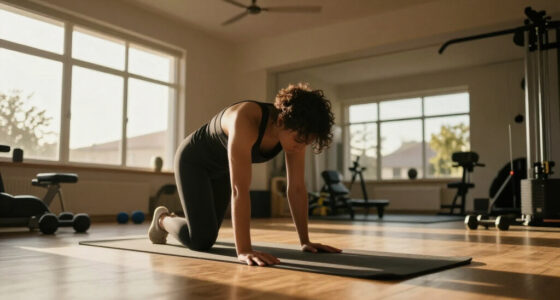
Combine push-ups, squats, lunges, planks and chair dips for a balanced starter routine requiring little more than floor space.
Household loads
Use canned goods, water bottles or a backpack filled with books to introduce manageable resistance without buying weights.
Free instruction
Follow free workout videos, apps or online classes to add structure, exercise variety and a sense of community.
Bodyweight training and household items can be effective for building initial strength and endurance. Their limitation is progression: as you improve, you will eventually need more load, range or exercise variety.
Buy versatility, not clutter
Match equipment to the training you actually do, your storage capacity and the next stage of progression. Durable multi-use gear typically creates more value than several specialized purchases.
| Budget | Best equipment mix | Best for | Space fit | Tradeoff |
|---|---|---|---|---|
| Under $100 | Resistance bands, jump rope, yoga mat and DIY weights | Foundational strength, mobility and conditioning | ✓ EXCELLENT | Load and progression are more limited |
| $100–$500 | Dumbbells, kettlebell, stability ball and adjustable bench | Progressive strength and broader exercise variety | ✓ STRONG | Requires planned storage and careful selection |
| Over $500 | Power rack, rowing machine, treadmill or compact cardio unit | Advanced lifting, dedicated cardio and long-term use | ~ VARIABLE | Higher cost, footprint and maintenance |
Creative equipment can still deliver real work
Repurposed objects make training accessible and adaptable. Treat every improvised tool like commercial equipment: inspect it, stabilize it and match its load to your current ability.
Loaded backpack
Fill a sturdy backpack with books or wrapped bottles for squats, carries, rows and step-ups.
DIY sandbag
Use a strong duffel with securely sealed filler for presses, lifts and carries.
Towel sliders
On a smooth surface, folded towels support controlled core slides and lower-body movements.
Stable chair
A non-slip chair can support incline push-ups, split squats, step-ups and controlled dips.
DIY loads must be stable, evenly distributed and free from sharp edges or loose parts. Inspect them before every session and stop using anything that shifts, leaks or flexes unexpectedly.
Less clutter. More focus.
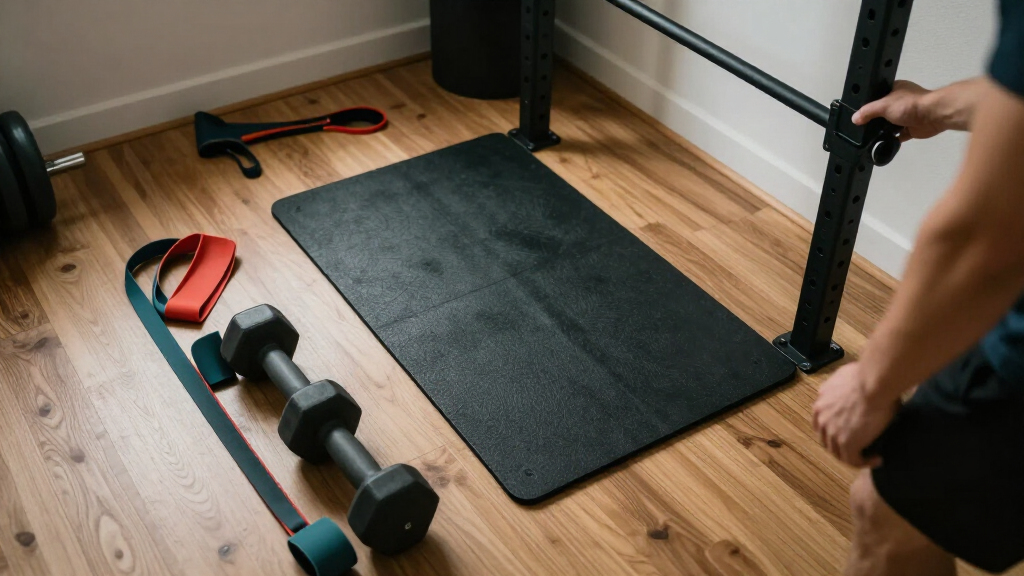
A living-room corner can become a practical gym with a foldable mat, wall hooks for bands and a small shelf for weights. Vertical storage clears the floor; foldable equipment returns shared rooms to everyday use.
Smart setup: define the workout zone, keep frequently used gear visible and place heavy items low. Clear walking paths improve safety and make starting a session feel easier.
Assess
Measure your available floor and storage space.
Define
Choose strength, cardio, mobility or a hybrid focus.
Prioritize
Select the smallest set of tools that supports that goal.
Organize
Keep the zone clear, safe and easy to start using.
Let consistency unlock the next purchase
Build your gym like a training plan: one purposeful progression at a time. Waiting helps you avoid impulse buys and reveals which equipment will genuinely improve your routine.
Use what you have
Master bodyweight movements and establish a weekly rhythm.
Add portable load
Introduce bands, a mat and a manageable dumbbell or kettlebell.
Enable progression
Choose adjustable resistance or a bench when basic loads become limiting.
Invest by goal
Add a rack or cardio machine only when commitment, space and goals justify it.
Buy when…
You train consistently, your current setup limits safe progression and the new item serves several exercises or a central goal.
Wait when…
The purchase depends on motivation alone, duplicates existing gear or creates a storage and maintenance burden you have not planned for.
The five rules that matter
A useful home gym is not defined by its price. It is defined by how safely, consistently and progressively you can train in it.
Start Small: The Cheapest Ways to Kick Off Your Home Gym
If you’re on a tight budget, the best first step is to focus on bodyweight exercises and household items. Resistance bands are affordable, versatile, and take up little space—often under $20. Think of a sturdy chair or a set of canned goods; these can become weights for your squats or shoulder presses.
For example, a simple routine might include push-ups, squats, lunges, planks, and dips—no equipment needed. You can find free workout videos online that guide you through effective routines using just your body and a little space.
Starting this way builds strength, improves mobility, and requires no investment beyond some motivation. It’s a smart move to lay a solid foundation before expanding your gear.
Why does this matter? Starting with bodyweight and household items allows you to focus on proper technique and consistency, which are critical for long-term progress. It also minimizes the risk of injury and helps you develop a routine without the pressure of expensive equipment. The tradeoff? While these methods are effective for building initial strength and endurance, they may limit progression in terms of load and variety until you add more equipment.
As an affiliate, we earn on qualifying purchases.
Build Your Arsenal: Essential Equipment for Every Budget Level
Choosing the right equipment depends on your budget. Here’s a quick rundown:
| Budget Range | Recommended Equipment |
|---|---|
| Under $100 | Resistance bands, jump rope, a yoga mat, DIY weights (water bottles, canned goods) |
| $100–$500 | Dumbbells, kettlebells, adjustable bench, stability ball |
| Over $500 | Treadmill, rowing machine, power rack, compact cardio equipment |
While higher-end equipment offers more variety and durability, it’s essential to understand the implications of investing in certain gear. For example, dumbbells and kettlebells provide adjustable resistance, allowing for progressive overload—an essential principle for strength gains. They also tend to be more versatile, supporting a wide range of exercises from different angles. Conversely, large machines like treadmills or rowing machines are excellent for cardio but take up significant space and can be costly, making them less practical for small or shared spaces.
For example, a beginner might start with resistance bands and a pair of 5-10 pound dumbbells, which allow for a broad spectrum of exercises and can be stored easily. As your commitment grows, investing in a versatile piece like an adjustable dumbbell set or a foldable cardio machine can offer long-term benefits. The key is to balance your current needs with future goals, understanding that investing in quality, multi-functional equipment often results in better motivation and sustained progress, even if it costs more upfront.
Remember: quality over quantity matters. Durable, versatile equipment lasts longer and keeps you motivated. Choosing equipment with multiple functions can save space and money in the long run, but always weigh the tradeoffs—more complex gear may require more maintenance or learning curves.
As an affiliate, we earn on qualifying purchases.
DIY and Creative Hacks to Save Big and Still Get Results
DIY solutions can turn household items into workout tools. Think of a sturdy backpack filled with books as a makeshift weighted vest or a stack of water bottles as dumbbells.
For example, a sandbag made from a duffel filled with old clothes or sand can be used for lifts or presses. Plyometric boxes can be built from sturdy wooden crates, and a towel can serve as a sliders for core moves.
These hacks are budget-friendly, customizable, and surprisingly effective. Just make sure DIY weights are stable and safe to lift.
Why does this matter? Repurposing household items not only saves money but also encourages creativity and adaptability in your workout routine. It allows you to tailor your exercises to your space and needs, fostering a sense of ownership and innovation. However, safety is paramount—DIY weights must be stable, evenly distributed, and free from sharp edges or loose parts to prevent injury. The tradeoff? While DIY solutions are economical and flexible, they may lack the durability and precision of commercial equipment, requiring more careful inspection and occasional replacement. Nonetheless, they can serve as effective stepping stones or supplementary tools in your fitness journey.
As an affiliate, we earn on qualifying purchases.
Maximize Space and Keep Costs Low with Smart Setup Tips
Space optimization is key, especially if your area is limited. Use vertical storage like wall-mounted racks for weights or resistance bands. Foldable or compact equipment like a treadmill that rolls away or collapsible weights can free up space when not in use.
For example, a corner in your living room can be transformed into a mini gym with a foldable yoga mat, wall hooks for resistance bands, and a small set of dumbbells on a shelf.
Organized space boosts motivation and safety, making workouts more enjoyable. Investing in multi-use gear—like an adjustable dumbbell—can maximize your dollar by providing multiple resistance levels in a single piece. Additionally, decluttering your workout area not only makes it safer but also more inviting, encouraging consistency. The tradeoff here is that compact or foldable equipment may have limitations in durability or maximum load capacity. However, thoughtful organization and multi-use gear help you get the most out of limited space, ensuring your workout area remains functional and motivating.
Remember: Less clutter, more focus.
As an affiliate, we earn on qualifying purchases.
Expand Gradually: When and How to Invest More
Building a home gym is a marathon, not a sprint. Once you’re consistent with bodyweight and basic gear, consider adding more advanced options. Think about a quality rowing machine or a power rack for strength training.
Take your time. For example, you might save over a few months for a treadmill instead of splurging immediately. Prioritize equipment that matches your goals—whether it’s cardio, strength, or flexibility.
Long-term investments pay off if they motivate you to work out regularly and last for years. Expand thoughtfully, and your gym will grow with you. Carefully selecting equipment that can serve multiple purposes or be upgraded over time ensures your investment remains relevant and motivating. Recognize that the initial choice of equipment influences your workout variety, progression, and overall engagement. A gradual approach allows you to assess your needs, avoid impulse purchases, and ensure each addition truly adds value to your space and routine.
Frequently Asked Questions
What is the cheapest way to start a home gym?
Use your body for resistance, along with household items like water bottles or canned goods as weights. Resistance bands and a yoga mat are inexpensive investments that make a huge difference. This approach requires little space and no big upfront costs.
How much space do I need for a home gym?
Even a small corner or closet can become a workout zone. For bodyweight routines, a 3×3 foot area is enough. If you add equipment like a treadmill or weights, aim for at least 6×6 feet, but clever organization can make smaller spaces work.
What equipment should I buy first?
Start with resistance bands, a good pair of dumbbells, and a yoga mat. These cover strength, flexibility, and core work. As you progress, you can add more specialized gear based on your goals and space.
Are DIY weights effective?
Yes, household items like water bottles, canned goods, or sandbags can be effective for many exercises. Proper technique is key. For beginners, they offer a safe, affordable way to build strength and confidence.
How can I stay motivated without a gym community?
Use online workout videos, fitness apps, or social media challenges to stay accountable. Setting small, achievable goals and tracking progress also helps keep motivation high.
Conclusion
Creating a home gym on almost any budget is about clarity and creativity. Focus on your goals, use what you have, and build gradually. Your best workout partner? Your commitment.
Imagine a space where every workout feels tailored and inviting—no fancy gear required. The real magic happens when you show up, no matter your budget.
Halloween Picks
halloween
As an affiliate, we earn on qualifying purchases.