TL;DR

Get workout gear delivered free with Prime
- Fast, free delivery on millions of items
- Prime Video, Amazon Music and more included
- Member-only deals all year
You can set up a beginner-friendly home gym in less than 24 hours by prioritizing affordable, multi-use equipment and optimizing your space. Even small areas can support effective workouts, making fitness accessible without complicated planning or huge expense.
Imagine transforming a corner of your home into a workout space in just a few hours. No fancy gym membership, no cluttered equipment. Just a simple, functional setup that gets you moving. The best part? You can do it all in under a day, even with a busy schedule.
This guide walks you through the essentials—what to buy, where to put it, and how to make it work. You’ll learn how to choose affordable gear, maximize your space, and start exercising immediately. Let’s turn that empty corner into your new fitness zone.
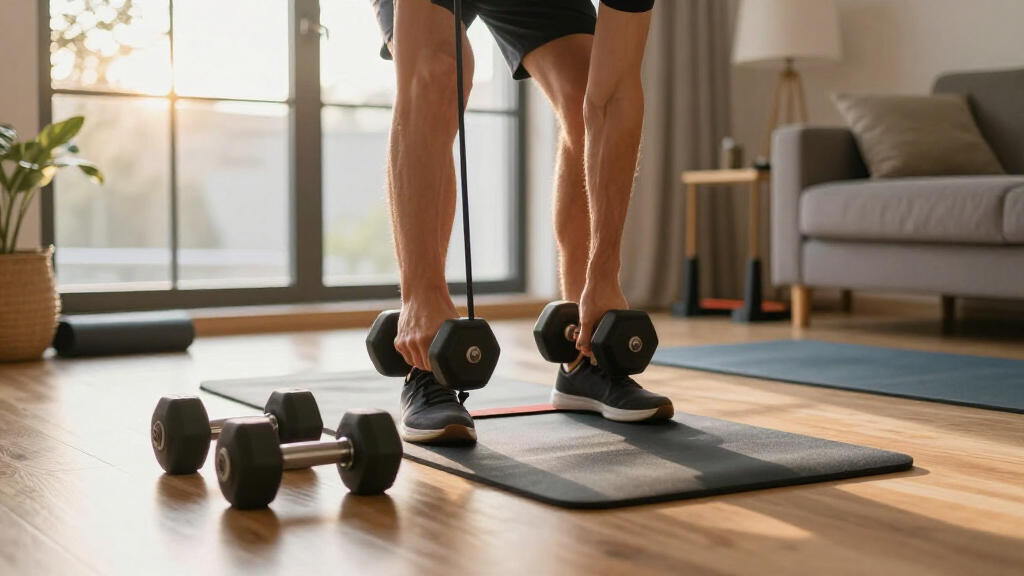
Focus on affordable, versatile equipment like resistance bands and adjustable dumbbells.
Use vertical storage and clear zones to maximize small spaces.
Start with a simple setup and a straightforward workout plan—no fancy gadgets needed.
Safety comes first: protect your floors, warm up, and use proper form.
Consistency and smart planning make a home gym setup quick and sustainable.
Beginner fitness field guide · one-day build
How to Build a Beginner Home Gym in Under a Day
Turn a spare corner into a practical fitness zone with affordable, multi-use gear, smart storage and a routine you can start today. The goal is not a perfect gym—it is a simple space you will actually use.
A minimal setup can begin around this price point.
Enough room for bodyweight work, mobility and light weights.
Plan, buy, organize and complete your first session in one day.
01 · Buy for versatility
Start with four tools, not a room full of machines.
Prioritize equipment that supports several movement patterns, stores easily and can progress with you. For most beginners, simplicity delivers more value than specialized gear.
Strength · mobility
Resistance bands
Train nearly every major muscle group with multiple resistance levels and almost no storage footprint.
$10–$30Strength · progression
Adjustable dumbbells
Replace several fixed-weight pairs and increase resistance gradually as your technique improves.
$50–$150Floor work · recovery
Yoga mat
Add grip and comfort for planks, stretching, mobility drills and bodyweight exercises.
$15–$40Cardio · coordination
Jump rope
Create an efficient cardio station without adding a treadmill-sized object to your room.
$10–$20Choose the budget tier that gets you moving now.
Relative investment scale02 · Compare before buying
What is worth the space and money?
Bands and adjustable dumbbells offer the strongest blend of versatility and compact storage. Add a mat for safety and a rope when your room has sufficient overhead clearance.
| Equipment | Cost range | Space needed | Versatility | Best for | Beginner value |
|---|---|---|---|---|---|
| Resistance bands | $10–$30 | Minimal | High | Full-body training and mobility | Excellent |
| Adjustable dumbbells | $50–$150 | Small footprint | High | Strength and progressive overload | Excellent |
| Yoga mat | $15–$40 | Small | Moderate | Stretching and floor exercises | Essential |
| Jump rope | $10–$20 | Minimal storage | High | Cardio and coordination | Strong |
Buying rule: choose multi-use equipment first. Add benches, kettlebells, machines or smart devices only after your routine proves that you need them.
03 · The one-day setup
Three decisions separate an empty corner from your first workout.
Keep the build deliberately small. A written list prevents impulse purchases, a defined zone removes friction, and an immediate first session converts planning into momentum.
Plan
Write the essentials list.
Choose bands, dumbbells, a mat and a rope. Set a firm budget before shopping online or locally.
Design
Clear and protect the zone.
Remove clutter, protect the floor, improve lighting and move equipment onto hooks or shelves.
Move
Complete a basic session.
Start with squats, push-ups, lunges and planks. Use a guided video if you need structure.
Confirm floor area, ceiling clearance and storage options.
Use local pickup or ready-to-use equipment for same-day setup.
Clean the zone, place flooring and install simple storage.
Warm up, practice form and finish a short foundational workout.
04 · Make six feet work harder
Your layout should protect movement, floors and motivation.
A dedicated 6 × 6 foot corner can support strength, cardio and mobility work when the floor stays clear. Use walls for storage and preserve the center as your movement zone.
Keep the center clear.
Allow enough room to squat, lunge, plank and extend your arms without hitting furniture.
Move storage upward.
Use wall hooks for bands and a stable shelf for weights so loose equipment never becomes a trip hazard.
Protect the surface.
Rubber flooring or a durable mat reduces noise, improves grip and protects the floor beneath your weights.
Check light, air and form.
Ventilation improves comfort, while good lighting and a securely mounted mirror make technique easier to monitor.
The consistency chain
Quick answers
Beginner home gym FAQ
The most effective setup is safe, affordable and easy to return to. Equipment matters less than a routine you can repeat consistently.
How much should I spend?
A minimal setup can cost less than $100. A broader beginner setup usually falls around $100–$300, while optional upgrades can take the total beyond $500.
What do I absolutely need?
Start with resistance bands, adjustable dumbbells, a yoga mat and a jump rope. Bodyweight exercises can cover the gaps.
Is a small corner enough?
Yes. A clear 6 × 6 foot area can support many bodyweight exercises, stretching and light strength work.
How do I train safely?
Warm up, protect the floor, maintain clear movement space, learn proper form and increase resistance gradually.
What if motivation fades?
Schedule short sessions, leave essential gear accessible and set achievable weekly goals. Fifteen to twenty focused minutes can be enough to preserve momentum. Consistency beats intensity—and the best gym is the one you actually use.
How to Pick the Right Equipment Without Breaking the Bank
Starting a home gym doesn’t mean spending a fortune. In fact, you can set up a solid space for less than $200. Focus on versatile gear that hits multiple muscle groups. Think resistance bands, adjustable dumbbells, a yoga mat, and a jump rope.
Choosing affordable, versatile equipment is about understanding what offers the most value for your space and budget. Resistance bands, for example, are lightweight and inexpensive but can target nearly every major muscle group through different exercises. Adjustable dumbbells replace several fixed-weight sets, saving space and money, and they allow you to progress as you get stronger. A yoga mat provides comfort for floor exercises and stretching, while a jump rope offers an intense cardio workout in a tiny footprint.
Tradeoffs exist: cheaper or smaller equipment might not support heavy lifting or advanced routines. But for beginners, these options provide enough variety to build strength, endurance, and flexibility without overwhelming costs or space constraints. Prioritize multi-use gear that can be adapted as you improve, ensuring your investment keeps pace with your progress.
resistance bands set for beginners
As an affiliate, we earn on qualifying purchases.
As an affiliate, we earn on qualifying purchases.
Maximize Your Space for a Functional Workout Zone
Your space matters more than size. Even a 6×6 foot corner can support bodyweight exercises, yoga, and light weights. But how you organize this space influences your motivation and safety. Clearing clutter isn’t just about aesthetics; it reduces the risk of accidents and makes your workout smoother. A cluttered space can lead to distractions or even injuries if equipment is misplaced or if there’s insufficient room to perform movements safely.
Designating a specific area not only helps with consistency but also conditions your mind to associate that space with exercise, making it easier to develop a routine. Proper organization—like using vertical storage—keeps your equipment accessible without cluttering the space. This is especially important in small areas where every inch counts. For example, wall-mounted hooks for resistance bands or shelves for weights keep items off the floor, reducing tripping hazards and making your workouts more efficient.
Installing a large mirror isn’t just about checking your form; it creates an illusion of more space and keeps you aware of your posture, which is critical for avoiding injuries. Good lighting and ventilation are equally vital—they boost your energy levels and make workouts more enjoyable, preventing you from feeling cramped or overheated. Think of your space as an extension of your motivation: a clean, well-organized, and inviting environment encourages consistency and helps you stay committed to your fitness journey.
Whether it’s a spare room, garage corner, or a nook in your living room, the goal is to make the most of what you have. Smart organization and a dedicated zone can turn even the smallest space into a highly functional gym that motivates you to stick with your routine.
As an affiliate, we earn on qualifying purchases.
The Simple 3-Step Setup to Get Started Today
- Plan your list: Pick your essential gear—resistance bands, dumbbells, yoga mat, jump rope. Write it down and shop smart.
- Design your space: Clear a corner, put down rubber mats, and hang a mirror if possible. Make it inviting and clutter-free.
- Start exercising: Use online videos or apps for guided routines. Focus on basic moves—squats, push-ups, lunges, planks—and build from there.
For example, you might spend a Saturday morning shopping online, then an hour setting up your space. By the afternoon, you’re ready to sweat.
This straightforward process means you’re working out within hours of starting planning. The key is to keep it simple and focused—overcomplicating your setup can delay your start and diminish motivation. Creating a dedicated, organized space makes it easier to develop a habit, and starting quickly helps you build momentum early on. Remember, consistency is more important than complexity; even a minimal setup can lead to significant progress if you’re committed to showing up regularly.
As an affiliate, we earn on qualifying purchases.
Compare Basic Equipment Options: What’s Worth Investing In?
| Equipment | Cost Range | Space Needed | Versatility | Best For |
|---|---|---|---|---|
| Resistance Bands | $10-$30 | Minimal | High | Full-body workouts, rehab |
| Adjustable Dumbbells | $50-$150 | Small footprint | High | Strength training, progression |
| Yoga Mat | $15-$40 | Small | Moderate | Stretching, bodyweight exercises |
| Jump Rope | $10-$20 | Minimal | High | Cardio, coordination |
compact jump rope for small spaces
As an affiliate, we earn on qualifying purchases.
As an affiliate, we earn on qualifying purchases.
Frequently Asked Questions
How much does it cost to set up a basic home gym?
A minimal beginner setup can cost less than $100, with essential gear like resistance bands and a yoga mat. More comprehensive options might run up to $500, but focus on what fits your budget and goals.What equipment do I absolutely need as a beginner?
Start with resistance bands, adjustable dumbbells, a yoga mat, and a jump rope. These cover most basic exercises and don’t take up much space.Can I build a functional gym in one day?
Yes. With a clear plan, online shopping, and quick setup, you can have a workout space ready to go in just a few hours.How small can my workout space be?
Even a 6×6 foot corner can support many bodyweight exercises, stretching, and light weights. Focus on decluttering and vertical storage for maximum use.What should I do if I run out of motivation?
Set small, achievable goals, schedule regular workouts, and use online resources for accountability. Remember, consistency beats intensity.Conclusion
Building a home gym in a day isn’t just a dream—it’s entirely doable with a little planning. Focus on the essentials, create a inviting space, and start moving. Your new workout corner is waiting—ready to support your goals, one small step at a time.
Remember, the best gym is the one you actually use. So grab your gear, find your space, and turn that empty corner into a place where fitness becomes a habit, not a hassle.
Halloween Picks
halloween
As an affiliate, we earn on qualifying purchases.