
TL;DR

Get workout gear delivered free — and shop member deals
- Fast, free delivery on millions of items
- Access to Prime Big Deal Days deals on October 6–7
- Prime Video, Amazon Music and more included
Smart scales estimate body fat using bioelectrical impedance, but their readings can fluctuate based on hydration and other factors. They’re useful for trend tracking but not precise diagnostics. Consistency and understanding their limits improve your monitoring.
Ever stepped on a smart scale and wondered if that number really reflects your body’s fat content? You’re not alone. These devices promise to give you a window into your body composition, but how much can you trust that number? Knowing how they work, their limits, and how to interpret their data can save you from chasing false precision while still leveraging their benefits. If you’re curious about whether your scale is giving you real insight or just a rough estimate, this guide is for you.
We’ll explore the tech behind these scales, what influences their accuracy, and practical tips to make the most of what they offer. Because understanding their strengths and weaknesses helps you stay grounded in your health journey—without falling for hype or false promises.
Smart scales use bioelectrical impedance (BIA) to estimate body fat, but results are influenced by hydration and other factors.
Consistency in measurement conditions is key to tracking true trends over time.
They are best for tracking progress, not providing precise body composition data.
Advanced features like multi-frequency BIA and machine learning improve estimates but don’t guarantee accuracy.
Always interpret your smart scale’s data as part of a bigger health picture, not a standalone diagnosis.
How Do Smart Scales Measure Body Fat? The Simple Science
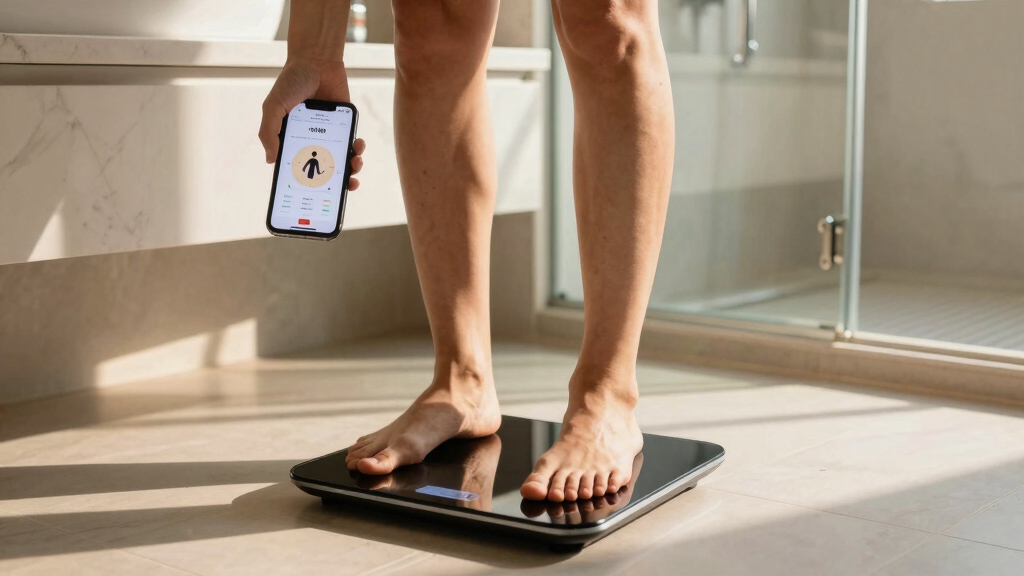
Smart scales use **bioelectrical impedance analysis (BIA)** to estimate body fat. When you step on the scale, a tiny, harmless electrical current travels through your body. Because fat, muscle, and water conduct electricity differently, the scale measures resistance to estimate your composition. Think of it like trying to hear a whisper in a noisy room—the resistance tells the scale what kind of tissue it’s passing through.
For example, if your body resists the current more, it suggests a higher fat percentage, since fat contains less water than muscle. But this method is sensitive to many factors—hydration, recent meals, or exercise can skew results. So, while BIA provides a quick snapshot, it’s more of a trend indicator than an exact science.
smart scale for body fat measurement
As an affiliate, we earn on qualifying purchases.
As an affiliate, we earn on qualifying purchases.
Why Your Body Fat Readings Fluctuate So Much (And Why That’s Normal)
Ever notice your body fat percentage jumping around from day to day? That’s common—and expected. Factors like hydration levels, time of day, recent food or drink, and even skin temperature can dramatically influence BIA estimates. For instance, if you drink a lot of water before weighing in, your reading might be lower because water increases conductivity.
Imagine stepping on your scale after a workout or a big meal—your results might be off. The key is consistency. Pick a regular time, ideally in the morning after bathroom use and before eating or drinking. This way, you minimize variables and see more reliable trends over time.
bioelectrical impedance body composition scale
As an affiliate, we earn on qualifying purchases.
As an affiliate, we earn on qualifying purchases.
Comparison: How Smart Scales Stack Up Against Clinical Methods
| Method | Accuracy | Accessibility | Uses |
|---|---|---|---|
| Smart Scale (BIA) | Rough estimates, varies by conditions | High, at home | Trend tracking, motivation |
| DEXA Scan | Very accurate, gold standard | Low, clinical setting | Precise body composition analysis |
| Hydrostatic Weighing | High accuracy | Low, specialized equipment | Research, detailed assessment |
| Skinfold Calipers | Moderate, skill-dependent | Moderate, at home or clinic | Field measurements, trend tracking |
While clinical methods like DEXA are more precise, they’re less practical for everyday use. Smart scales are more about noticing how your body changes over weeks or months, not pinpointing exact percentages.
As an affiliate, we earn on qualifying purchases.
Are Newer Tech Features Making Smart Scales More Reliable?
Recent advances aim to improve smart scale accuracy. Multi-frequency BIA uses different electrical signals to better differentiate water compartments, which can tighten estimates. Some brands incorporate **machine learning algorithms** that analyze large datasets to improve consistency.
For example, a scale with multi-frequency BIA might give you a slightly different reading than a single-frequency model, but over time, these differences tend to stabilize if you weigh yourself under similar conditions. While these upgrades help, they still don’t turn a BIA into a precise diagnostic tool.
best smart scales for accurate body fat
As an affiliate, we earn on qualifying purchases.
As an affiliate, we earn on qualifying purchases.
What You Can Do To Get The Most Reliable Data From Your Smart Scale
- Weigh yourself at the same time each day, ideally in the morning.
- Always be consistent: same clothing, same scale, same conditions.
- Measure after bathroom use, before eating or drinking.
- Avoid weighing during or right after exercise or dehydration.
- Track your data over weeks or months to see trends, not fixate on single readings.
By sticking to these habits, you reduce fluctuations and make smarter choices based on your data. Remember, these numbers are guides, not absolute truths.
The Bottom Line: Should You Trust Your Smart Scale for Body Fat?
Smart scales give you a ballpark figure—not an exact measurement. Their value lies in tracking **trends over time**, not relying on a single reading. If your goal is to monitor progress, they can be useful, especially when used consistently.
But don’t get discouraged if your numbers fluctuate wildly. Think of it like a weather forecast—good for getting a general idea, but not a precise prediction. Combining scale data with other health markers and professional advice creates a more complete picture of your well-being.
Frequently Asked Questions
Are smart scales accurate for measuring body fat?
Smart scales offer rough estimates of body fat, primarily using bioelectrical impedance. They’re best for tracking changes over time rather than providing exact measurements. Use them consistently to see your trends, not as a definitive diagnosis.
Why do my body fat readings fluctuate so much?
Fluctuations often come down to hydration, recent meals, exercise, and skin temperature. These factors influence BIA readings. Weighing at the same time each day under similar conditions minimizes variability.
Can I trust my smart scale to show my progress?
Yes, if you measure regularly under consistent conditions. While individual readings may vary, the overall trend offers valuable insight into your body’s changes over weeks or months.
Are there better ways to measure body fat?
Clinical methods like DEXA scans or hydrostatic weighing are more accurate but less convenient. For most people, tracking with a smart scale combined with other health habits is sufficient for monitoring progress.
How can I improve my smart scale readings?
Use the scale at the same time each day, avoid eating or exercising beforehand, and ensure proper hydration. Consistent measurement conditions help you interpret trends more reliably.
Conclusion
Smart scales are handy, but they’re not perfect. Use them to observe your body’s general trends, not to chase exact numbers. Think of them as a helpful compass—guiding you, but not giving you the entire map.
Next time you step on one, remember: consistency beats precision. Focus on how you feel, move, and progress. That’s the real story behind those digits.
Halloween Picks
halloween
As an affiliate, we earn on qualifying purchases.