
TL;DR

Get workout gear delivered free with Prime
- Fast, free delivery on millions of items
- Prime Video, Amazon Music and more included
- Member-only deals all year
Incline walking ramps up intensity and benefits, but proper technique and gradual increases matter. Recent tech and research show it improves cardiovascular health, muscle strength, and metabolic markers—safely and sustainably.
Imagine walking up a steep hill, feeling your legs burn and your heart pound. That’s the power of using incline — it turns a simple stroll into a tougher, more effective workout.
If you want to boost your endurance, burn more calories, and strengthen your muscles, understanding how to use incline wisely is essential. This guide will show you the best practices, recent breakthroughs, and practical tips to make incline walking safe and rewarding.
Start with low inclines (1-3%) and increase gradually to avoid injury.
Using 10-15% incline significantly boosts calorie burn and muscle engagement.
Pay attention to your posture and footwear for safe, effective workouts.
Incorporate interval training on inclines to maximize endurance and fat loss.
Leverage new tech like automatic incline adjustments and virtual trails for a smarter workout.
The Right Way to Use Incline for a Tougher Walk
Incline turns an ordinary walk into a low-impact cardiovascular and strength challenge. The winning formula is simple: start gently, maintain clean posture, and earn steeper grades through gradual progression.
Build the hill. Don’t attack it.
A moderate incline creates meaningful resistance without overwhelming unprepared joints and muscles. Progress only when you can hold an upright posture, steady breathing, and a controlled stride.
Walk for 5–10 minutes. Settle your breathing and establish relaxed, balanced form.
The ideal starting challenge for many walkers: demanding enough to notice, manageable enough to sustain.
Add time before steepness. Let calves, glutes, hamstrings, and cardiovascular capacity catch up.
Use brief, purposeful efforts—not an all-session default—to build endurance and intensity.
A walk that behaves like a workout
As the grade rises, every step requires more propulsion and stabilization. Your heart works harder, lower-body muscles contribute more, and intensity climbs without requiring a running stride.
More demand, less pounding
Incline elevates heart rate and challenges the lungs while maintaining walking’s lower-impact movement pattern.
Posterior-chain power
Glutes, hamstrings, calves, and quads work harder to lift and propel the body uphill.
Higher energy cost
Steeper walking raises calorie expenditure and may support insulin sensitivity and healthier metabolic markers.
Endurance and bone loading
Consistent weight-bearing incline work can build stamina, functional strength, and support bone health.
Actual calorie expenditure varies with pace, body size, fitness, treadmill calibration, and whether handrails are used.
Incline walking vs. running
Neither is universally “better.” Incline walking favors controlled, lower-impact intensity; running favors speed, sport specificity, and higher calorie burn per minute.
| Feature | Incline walking | Running |
|---|---|---|
| Joint impact | ✓Lower impact; generally easier on knees and hips | ~Higher repetitive impact and joint loading |
| Calorie burn | ✓Up to 50% above flat walking at a 10% grade | ✓Typically higher per minute at faster speeds |
| Muscle emphasis | ✓Glutes, hamstrings, calves, and quads | ✓Legs, core, and arms through a faster gait cycle |
| Best suited to | ✓Beginners, joint-conscious exercisers, hikers | ~Conditioned athletes, racers, speed-focused goals |
| Technique risk | ✗Holding rails or leaning forward can reduce benefit | ✗Fatigue can magnify impact and form breakdown |
Form first. Grade second.
The incline should challenge your fitness—not force compensations. If you need to hang from the rails, fold at the waist, or shorten your stride into a shuffle, lower the grade or pace.
Technology can manage the terrain
Newer tools make incline sessions more precise and engaging. The technology is most useful when it supports progression, effort control, and consistency.
Adaptive incline
Smart treadmills can raise and lower the deck according to programmed intervals or heart-rate zones.
Virtual trails
Simulated mountain routes translate changing terrain into automatic grade shifts and a stronger sense of purpose.
Gamified climbs
Challenges, milestones, and progress tracking can make difficult hill repeats more engaging and repeatable.
Incline walking FAQ
Use these ranges as practical starting points, then adjust for your current fitness, health, terrain, and recovery.
How steep should a challenging walk be?
Most walkers will find 5–15% challenging. Beginners should start at 1–3% and increase only as technique and comfort improve.
Can incline walking support weight loss?
Yes. It increases energy expenditure compared with flat walking and can support weight management alongside nutrition and consistent activity.
How long should an incline walk last?
Beginners can start with 10–20 minutes. Progress toward 30–60 minutes according to fitness, intensity, goals, and recovery.
Is it suitable for every fitness level?
It is highly adaptable, but the grade, duration, and pace must match the individual. Health conditions may warrant professional guidance.
How Incline Transforms Your Walk Into a Cardio Powerhouse
Walking on an incline makes your heart work harder without the jarring impact of running. At a 10% incline, you can burn about 50% more calories than walking on flat ground. This increased effort is significant because it challenges your cardiovascular system more intensely, pushing your heart and lungs to adapt and grow stronger. Additionally, the engagement of muscles like your glutes, hamstrings, and calves in a more pronounced way enhances muscle endurance and strength. These muscles play a crucial role in everyday movements and athletic performance, so strengthening them through incline walking can improve your overall functional fitness.
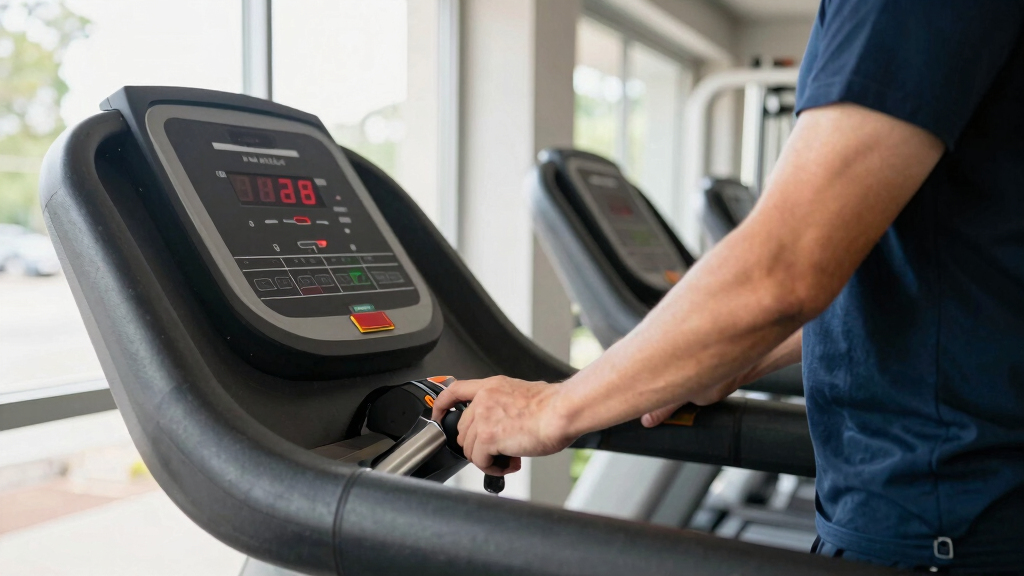
Picture yourself on a treadmill, gradually increasing the incline from 1% to 10%. As you do, your legs have to lift more weight with each step, your breathing becomes deeper, and your core stabilizes to maintain balance. This isn’t just about burning more calories; it’s about stimulating your body’s systems for better health. Recent studies also show that regular incline walking can improve insulin sensitivity — helping your body manage blood sugar better — and promote bone density, reducing the risk of osteoporosis. These benefits underscore why incorporating incline walking thoughtfully can have profound long-term health implications.
As an affiliate, we earn on qualifying purchases.
The Best Way to Set Your Incline for a Tougher Walk
Starting with a moderate incline (around 5%) is perfect if you’re new to incline walking. Think of this as the foundation; it’s enough to challenge your muscles without overwhelming your joints. As your body adapts, gradually increasing the incline to 10-15% can simulate walking uphill on a steep trail, forcing your muscles and cardiovascular system to work harder. This progressive approach helps prevent injury and overexertion, which can occur if you jump straight into high inclines.
Here’s a simple step-by-step example: Suppose you’re training for a hilly hike. Begin your session with a 1-3% incline for 5-10 minutes as a warm-up. Over the next few sessions, increase to 5-7%, allowing your muscles to adjust to the new demands. Once comfortable, push to 10-15% for intervals—say, walking briskly for 2 minutes at this incline, then lowering back to 5% for recovery. This interval strategy maximizes fat burning and endurance building. Remember, listen to your body: if you experience joint pain, excessive fatigue, or shortness of breath, scale back. For outdoor walks, seek out hilly terrain or incorporate stairs to mimic these inclines safely and effectively.
As an affiliate, we earn on qualifying purchases.
Comparison: Incline Walking vs. Running — Which Is Better for You?
| Feature | Incline Walking | Running |
|---|---|---|
| Impact on joints | Lower impact, easier on knees and hips | Higher impact, more stress on joints |
| Calorie burn | Up to 50% more than flat walking; less than running | Higher calorie burn per minute, especially at faster speeds |
| Muscle engagement | Targets lower body muscles, especially glutes, hamstrings, calves | Engages full body, including core, legs, and arms |
| Suitability | Ideal for beginners, those with joint concerns, or low-impact needs | Better for experienced athletes aiming for speed and intensity |
For example, if you’re recovering from an injury or have joint issues, incline walking offers a safer, less jarring way to stay active while still reaping significant health benefits. Conversely, if you’re training for a race or looking to maximize calorie burn in a short time, running might be more appropriate. Understanding these tradeoffs helps you tailor your workouts to your goals and physical condition.
As an affiliate, we earn on qualifying purchases.
Safety Tips for Incline Walking That Keep You Moving Without Injury
Incline walking is safe when you pay attention to your body and gear up properly. Always wear supportive shoes with good grip to prevent slips. Keep your posture upright, shoulders relaxed, and look forward, not down.
Start slow, especially if you’re new to incline. Gradually increase the incline and duration to allow your muscles and joints to adapt, reducing the risk of overuse injuries. Hydrate well before, during, and after your walk. Be attentive to signs of overexertion, such as dizziness, joint pain, or excessive fatigue—these signals mean it’s time to slow down or rest. If you have pre-existing joint issues or chronic pain, consult a healthcare professional before ramping up intensity to ensure your plan aligns with your health needs.
Outdoor terrain matters — choose paths with firm, even surfaces to avoid slips and falls. Avoid icy, muddy, or uneven trails that could increase injury risk. Using poles or handrails can also aid balance on steeper inclines, particularly if you’re new to this activity or have balance concerns.
As an affiliate, we earn on qualifying purchases.
Recent Tech and Research That Make Incline Walking Smarter
Modern treadmills now feature automatic incline adjustments, syncing with your workout plans for precise intervals. These smart systems can automatically increase or decrease the incline based on your heart rate or predefined routines, ensuring you stay within safe and effective effort zones. For example, during a HIIT session, the treadmill might raise the incline to 12% for 2-minute bursts, then lower to 4% for recovery, mimicking outdoor hill repeats.
Research shows that walking at a 10-15% incline boosts calorie burn and muscle activation significantly, especially when combined with interval training. These steep inclines force your muscles to work harder, stimulating growth and endurance while keeping the workout engaging. Additionally, new apps and virtual trail features allow you to simulate outdoor environments or participate in gamified challenges, making tough inclines feel more like an adventure than a chore. For instance, some virtual trails mimic steep mountain paths, motivating you to push through challenging sections.
These technological advances make incline walking not just more effective but also more engaging and personalized, encouraging consistent, long-term fitness habits.
Frequently Asked Questions
How steep should the incline be for a challenging workout?
Most effective challenge comes from 5-15%, but beginners should start at 1-3% and build up gradually. Listen to your body to avoid overexertion.Can incline walking help with weight loss?
Yes, it burns more calories than flat walking, making it a valuable part of a weight management plan. Combine with a balanced diet for best results.Is incline walking suitable for all fitness levels?
Generally yes, but adjust the incline and duration based on your fitness and health. Always start slow and increase intensity safely.How long should I walk on an incline to see benefits?
Beginners might aim for 10-20 minutes, gradually increasing to 30-60 minutes as your endurance improves.Are there risks with incline walking?
Risks include joint strain or fatigue if done improperly. Use supportive shoes, maintain good form, and progress gradually to minimize issues.Conclusion
Using incline properly turns a basic walk into a powerhouse of fitness gains. The key is gradual progression, good form, and safety.
Next time you hit the treadmill or hill, remember — a little challenge goes a long way. Your legs, heart, and muscles will thank you for it.
Fall Picks
fall essentials
As an affiliate, we earn on qualifying purchases.