

TL;DR
Full-body routines target all major muscle groups in each session, making them efficient and beginner-friendly. Split routines divide workouts by muscle groups, allowing higher volume but requiring more days. Your choice depends on your schedule, goals, and recovery capacity.
Imagine walking into a gym and deciding on your workout plan. Are you someone who wants to hit every big muscle in one go, or do you prefer focusing on specific areas each day? The choice between full-body and split routines isn’t just about preference — it shapes your progress, time, and energy levels.
Understanding the differences can help you craft a plan that fits your lifestyle, keeps you motivated, and supports your goals. Whether you’re pressed for time or craving more intensity, this guide breaks down what each approach offers — in plain language and real-world terms.
Full-body routines are time-efficient, making them ideal for beginners or busy schedules.
Split routines allow for higher volume and focus, better suited for experienced lifters aiming for muscle definition.
Mixing both can prevent plateaus and keep workouts engaging.
Choose your routine based on your schedule, goals, and recovery capacity.
Consistency beats the specific split — the best plan is the one you can stick with.
Which Training Plan Actually Fits Your Life?
TL;DR: Full-body routines train all major muscle groups in each session, making them efficient and beginner-friendly. Split routines divide workouts by muscle group, allowing higher volume and sharper focus, but usually requiring more training days.
The best routine is less about gym ideology and more about schedule, goals, consistency, and recovery capacity. Both can build strength and muscle when the weekly workload is planned well.
Consistency beats the split. The plan you can repeat is the plan that works.
Typical weekly frequency for busy lifters and beginners.
Common weekly commitment for higher-volume muscle focus.
Fewer sessions, broader coverage, simpler weekly planning.
More sets per target muscle in each focused workout.
Sleep, nutrition, stress, and soreness shape what you can handle.
Many lifters cycle both styles to avoid plateaus and boredom.
Two Roads to Stronger Training
Full-body and split routines are not opposites so much as different ways to distribute effort. One spreads stimulus across the week; the other concentrates attention on specific muscles.
All Major Muscles, One Session
Squats, presses, rows, hinges, and core work share the same workout. This supports balanced development and gives beginners repeated practice with foundational movements.
Focused Muscle Days
Chest and triceps, back and biceps, legs, shoulders, or push-pull-legs structures allow more exercises and sets for a specific target in each session.
Your Week Is the Filter
If you can train only three days, full-body keeps progress broad. If you can train five days and recover well, split routines create room for specialization.

Vibration Plate Exercise Chart for Beginners to Advanced, Fitness &Recovery
[Activate Your Entire Body ]:This workout guide targets different parts of the body, helping different groups of people…
As an affiliate, we earn on qualifying purchases.
As an affiliate, we earn on qualifying purchases.
Side-by-Side Comparison
Both approaches can build muscle and strength. The practical difference is how training frequency, volume, recovery, and time pressure are arranged across your week.
| Feature | Full-Body Routine | Split Routine | Fit Signal |
|---|---|---|---|
| Workout frequency | ✓ 2-3 times per week | 4-6 times per week | Choose full-body if your calendar is tight. |
| Muscle focus per session | All major muscle groups | ✓ Specific muscles or groups | Choose split if you want targeted detail work. |
| Volume per muscle | ~ Lower per session, repeated often | ✓ Higher per session | Higher volume favors experienced lifters. |
| Complexity | ✓ Simple to plan and repeat | ~ Requires more planning | Beginners benefit from simplicity. |
| Recovery risk | ~ Whole-body fatigue can build | ~ Muscle-specific overload can build | Recovery quality decides sustainability. |
| Best match | Beginners, busy schedules, general strength | Intermediate and advanced lifters, hypertrophy focus | ✓ Match the routine to your real life. |

Men's Health 6-Week Lean Muscle Level-Up: The Workout to Supercharge Muscle Growth Fast
Supercharge muscle growth in just 6 weeks with the ultimate 142-page plan that will help you emerge bigger,…
As an affiliate, we earn on qualifying purchases.
As an affiliate, we earn on qualifying purchases.
Where Each Routine Shines
The training effect comes from total weekly work, consistency, progressive overload, and recovery. The split is just the container.
Efficient Frequency
You stimulate each major muscle several times per week without needing daily gym time. This is useful for learning form, building balanced strength, and maintaining momentum during busy seasons.
Targeted Volume
You can push a muscle group harder with more sets, angles, and accessories. This suits lifters who have technique, recovery habits, and enough weekly availability.
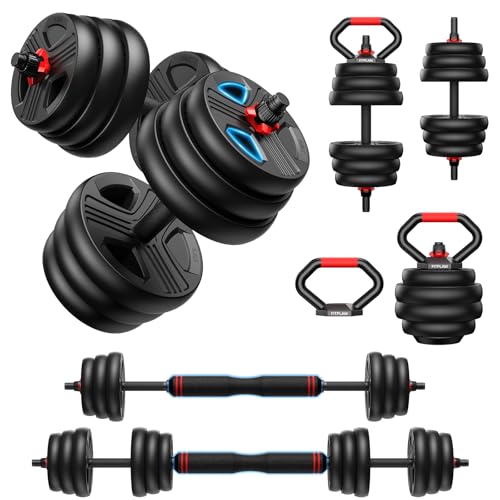
FDS1 Adjustable dumbbell set, 45lbs Free Weights set with upgraded nut, 5 in 1 Weight Set Used as Kettlebells, Barbell, Push up Stand, Fitness Exercise for Home Gym Suitable Men/Women
【5 in 1 Multifunctional Dumbbell Set】This versatile dumbbell set 45lb total (22.5lb each) quickly converts into dumbbells, barbells,…
As an affiliate, we earn on qualifying purchases.
As an affiliate, we earn on qualifying purchases.
Pick by Life Stage, Not Ego
A good routine should feel challenging, repeatable, and recoverable. Use your schedule and training age as the first screen, then refine based on goals.
Count Days
Two or three days usually points toward full-body training.
Name Goal
General strength favors full-body; detailed hypertrophy may favor split.
Check Recovery
Poor sleep or high stress means reduce total volume first.
Set Volume
Spread weekly sets so soreness does not block consistency.
Repeat
Track progress for several weeks before changing the plan.
Routine Fit Spectrum

New Smart Ring Health Tracker for Women & Men, Sleep Exercise Health Monitoring, Daily Tracking, iOS/Android Compatible, IP68 Waterproof, No Subscription Required, 5‑Day Battery Life (Rose Gold, 8)
【Check the Size Before Purchase】 Before buying the BIEMHA Smart Ring, we strongly suggest that you refer to…
As an affiliate, we earn on qualifying purchases.
As an affiliate, we earn on qualifying purchases.
The Hybrid Path
Mixing both approaches can keep training fresh. A lifter might use full-body days for compounds, then add split-style focus days for lagging muscles.
Bottom Line
Choose full-body if you want efficient, balanced training with fewer weekly sessions. Choose split routines if you have more days available and want higher volume for specific muscles. Choose a hybrid if your goals or schedule change across the month. The winning plan is the one you can perform well, recover from, and keep repeating.
What Exactly Is a Full-Body Routine and Why It Might Be Your Best Bet
A full-body workout hits all your major muscles in one session. Think squats for legs, push-ups for chest, rows for back, and some core work. These workouts usually happen 2–3 times a week, giving each muscle group plenty of time to recover.
For example, if you work out Monday, Wednesday, and Friday, you’ll hit all your big muscles each of those days. It’s like a balanced meal — every muscle gets a portion, and your progress stays steady. Beginners often love this approach because it teaches proper form and builds a solid foundation without overwhelming their schedule.
One reason this approach is effective is because it allows for frequent stimulation of muscle groups, which can be crucial for beginners or those looking to maintain overall balanced development. However, it requires careful planning to ensure you’re not overtraining, especially if you increase intensity. The tradeoff is that you get a comprehensive workout in less time, but the intensity per session needs to be managed to avoid fatigue.
How Split Routines Divide and Conquer Your Muscles
A split routine focuses on specific muscle groups each day. For instance, you might do chest and triceps on Monday, back and biceps on Tuesday, legs on Wednesday, and so on. This allows you to dedicate more time and volume to each area, often 4–6 days a week.
Think of it like a chef preparing a multi-course meal — focusing on perfecting each dish individually. This specialization means you can push each muscle group harder with more sets and exercises, which can lead to greater hypertrophy (muscle growth) and definition. The tradeoff is that split routines require more days in the gym, which might not fit everyone’s schedule. They also demand careful planning to avoid overtraining specific muscles while allowing adequate recovery.
For advanced lifters, this approach offers the opportunity to maximize volume and focus, which is harder to achieve with full-body routines. But for beginners, it can be overwhelming and risk injury if not structured properly. The key is balancing intensity and recovery for each muscle group to optimize growth without burnout.
Compare Full-Body and Split Routines Side-by-Side
| Feature | Full-Body Routine | Split Routine |
|---|---|---|
| Workout Frequency | 2–3 times/week | 4–6 times/week |
| Muscle Focus per Session | All major muscles | Specific muscles or groups |
| Volume per Muscle | Lower per session, but repeated often | Higher per session, less frequent |
| Time Commitment | Shorter, more intense | Longer, more focused |
| Recovery Needs | More recovery between sessions | Targeted recovery for specific muscles |
Which Routine Works Best for Beginners, Intermediates, and Advanced Lifters?
Beginners usually thrive on full-body routines. They can learn proper form, develop balanced strength, and see steady progress without the complexity of multiple workouts. For example, a beginner might do full-body sessions on Monday, Wednesday, and Friday, covering all their bases.
Intermediate and advanced lifters often opt for split routines. They have the experience to push specific muscles harder, increasing volume and intensity. Someone lifting for a year or more might dedicate Tuesdays to back, Thursdays to legs, and so on, focusing on hypertrophy and refinement.
Choosing the right routine at each stage depends on your ability to recover, your training goals, and how much time you can dedicate. For beginners, full-body routines help build a balanced foundation, but as you advance, splitting workouts allows for more targeted work and greater overload, which is necessary for continued growth. The tradeoff is that more complex routines require more planning and commitment.
Can You Mix Full-Body and Split Routines? Yes, and Here’s How
Mixing both can be a strategic way to optimize your training. Many athletes cycle between full-body days and split days to maximize recovery, prevent plateaus, and keep workouts engaging. For example, you might do a full-body workout on Monday and Thursday, then focus on specific muscles on other days.
This hybrid approach allows you to enjoy the benefits of both: the efficiency and frequency of full-body routines combined with the targeted volume and specialization of split routines. It also provides flexibility for busy schedules or fluctuating motivation levels. The key is understanding how to balance workload and recovery, ensuring that you don’t overtrain or neglect certain muscle groups.
Implementing this method requires planning, but it can help you adapt your program as your goals evolve or as your schedule changes, making your fitness journey more sustainable and less monotonous.
How to Pick the Right Routine for Your Life and Goals
- Assess your schedule: Do you have 2–3 days a week or more?
- Define your goals: Do you want overall strength, muscle size, or just staying active?
- Consider recovery: Are you well-rested and able to recover quickly?
- Match intensity with time: Short on time? Full-body might suit you best. Want more focus? Try split routines.
For example, if you work long hours and can only hit the gym three times a week, full-body routines keep you balanced and allow for consistent progress across all muscle groups. Conversely, if you have more days available and aim for detailed sculpting, split routines can provide the focus and volume needed for advanced development. The choice ultimately hinges on understanding your personal limits and goals, as well as how your body responds to training stress.
What Experts Say About Routine Choice
Experts agree that both routines can be effective, but the success largely depends on how you execute them. The critical factors are consistency, proper volume, and adequate recovery — these determine your progress more than the specific type of routine. Research indicates that with proper programming, both full-body and split routines can produce similar gains in muscle and strength over time.
Moreover, the choice should be aligned with your personal lifestyle and preferences. A routine that fits your schedule and keeps you motivated is more sustainable. When you’re consistent and committed, either approach can lead to impressive results. The real key is tailoring your plan to your unique needs and sticking with it long-term.
Frequently Asked Questions
Which routine is better for muscle growth?
Both full-body and split routines can promote muscle growth when planned correctly. The key is sufficient volume, intensity, and consistency, regardless of the split you choose.How many days per week should I train with each approach?
Generally, full-body routines work well with 2–3 days per week, while split routines often require 4–6 days to target specific muscles more frequently.Can I switch between routines as I progress?
Absolutely. Many people cycle between full-body and split routines to keep training fresh and avoid plateaus. Adjust based on your goals and how your body responds.What if I don’t have much time to work out?
Full-body routines are typically more time-efficient, giving you a comprehensive workout in less time. Focus on compound movements to maximize results.Are split routines better for advanced lifters?
Split routines often benefit advanced lifters because they allow for higher volume and targeted focus, which is harder to achieve with full-body sessions.Conclusion
The best workout routine is the one you can do consistently and enjoy. Whether you prefer hitting every muscle in one session or focusing on one group at a time, the key is to stay active and listen to your body.
Imagine your workout as a dance — find the rhythm that moves you, and keep dancing. That’s how progress becomes part of your lifestyle, not just a fleeting goal.