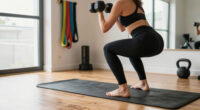
TL;DR
Start your home gym with five key pieces: dumbbells, resistance bands, an adjustable bench, a jump rope, and a pull-up bar. These tools offer versatility, space efficiency, and scalability, making full-body workouts accessible at home.
Start with adjustable dumbbells—they’re space-efficient and grow with your strength.
Resistance bands can replace multiple machines and are perfect for all fitness levels.
An adjustable bench adds variety and allows for a full range of exercises.
A jump rope provides an effective, low-cost way to boost cardio in minutes.
A pull-up bar is a simple, powerful tool for upper body strength, fitting in small spaces.
Why Dumbbells Are the Foundation of Your Home Gym
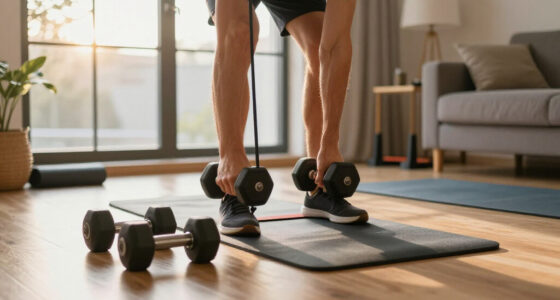
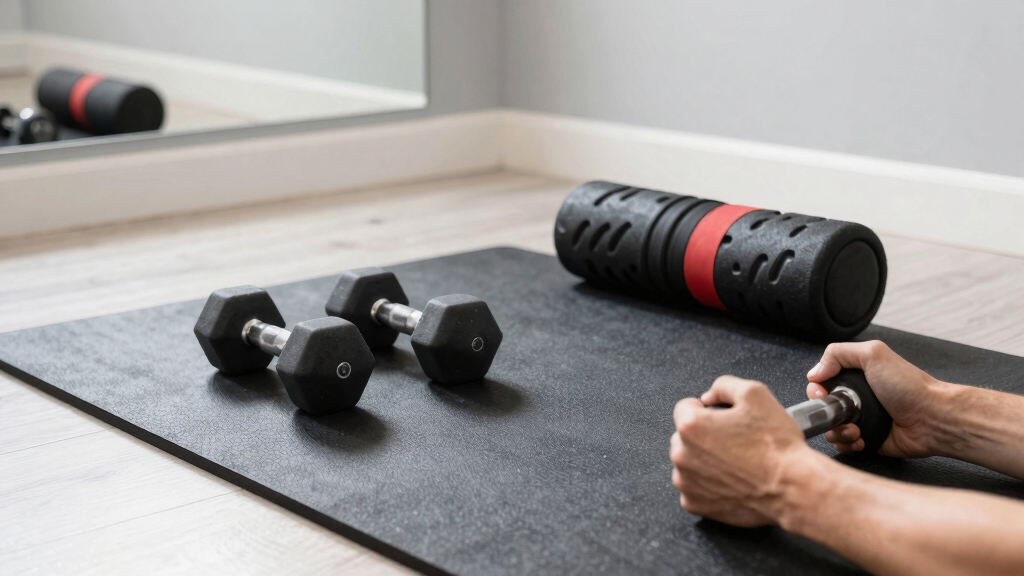
Dumbbells are the cornerstone of any home gym. These compact weights unlock endless exercise options, from bicep curls to goblet squats. An adjustable set saves space and money—imagine one pair that transforms from 5 to 50 pounds in seconds. Whether you’re a beginner or more advanced, dumbbells grow with you.
For example, you might start with lighter weights for shoulder presses and gradually add heavier options as your strength builds. They’re also quiet and easy to store. Plus, you can use them for both resistance training and functional movements, making them an all-in-one tool.
Investing in dumbbells means choosing a versatile piece that supports multiple training goals—strength, endurance, even balance. The tradeoff is that, while they are incredibly effective, they do require some space and initial investment, especially for adjustable models. But their adaptability often outweighs these considerations, making them a smart long-term choice.
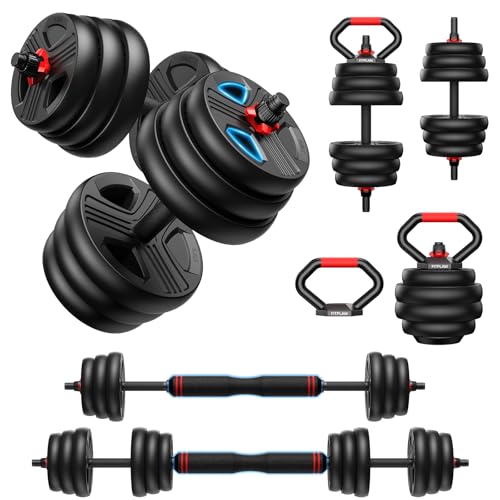
FDS1 Adjustable dumbbell set, 45lbs Free Weights set with upgraded nut, 5 in 1 Weight Set Used as Kettlebells, Barbell, Push up Stand, Fitness Exercise for Home Gym Suitable Men/Women
- Multifunctional 5-in-1 Design: Transforms into dumbbells, kettlebells, barbells, and more
- Dual-Lock Nut System: Red and black locks prevent weight shifting
- Adjustable Weight Options: Customize weights from light to heavy
As an affiliate, we earn on qualifying purchases.
As an affiliate, we earn on qualifying purchases.
Resistance Bands: Small but Mighty for Your Entire Body
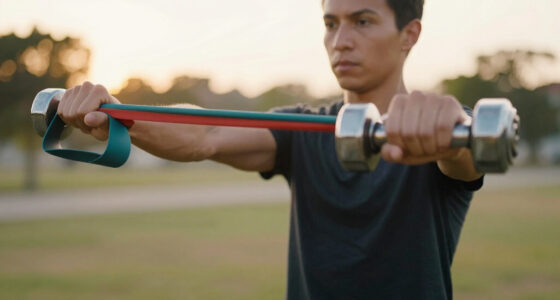
Resistance bands are the Swiss Army knives of home workouts. They’re lightweight, affordable, and fit easily into a drawer or bag. You can perform shoulder presses, glute bridges, or even stretching routines with bands of different resistance levels. The key is their versatility—no matter your fitness level, there’s a band that suits you.
Imagine doing leg lifts in front of your TV or using bands for gentle rehab exercises. A set of three to four resistance bands can replace an entire gym full of equipment, offering strength, mobility, and injury prevention all in one package.
Using resistance bands means embracing a tradeoff: while they are incredibly portable and cost-effective, the resistance they provide can vary with how you use them, requiring proper technique to maximize benefits. Their adaptability makes them invaluable for progressive training, rehab, or adding variety without clutter.

WHATAFIT Resistance Bands,Exercise Bands,Workout Bands with Handles,Door Anchor and Ankle Straps,5 Resistance Levels Fitness Bands,for Strength,Training, Physical Therapy, and Home Gym Equipment
- Five Adjustable Resistance Levels: 10 to 50 lbs per band, up to 150 lbs combined
- High-Quality Natural Latex Material: Durable, elastic, and resilient
- Includes Handles, Door Anchor, Ankle Straps: Complete workout accessory set
As an affiliate, we earn on qualifying purchases.
As an affiliate, we earn on qualifying purchases.
Adjustable Benches: Your Ticket to More Exercise Options
An adjustable bench transforms your workout possibilities. It’s not just for pressing weights; it’s the platform for rows, step-ups, and core exercises. Look for a sturdy, foldable model that adjusts from flat to incline and decline. This flexibility means you get multiple angles for targeting muscles.
Picture yourself doing incline presses for your chest or seated curls for your biceps. A good bench can be tucked away when not in use, saving space but opening the door to dozens of exercises. This piece helps you scale your workouts as you grow stronger.
However, it’s important to understand that the quality and adjustability of the bench can influence workout safety and effectiveness. A well-built, stable bench reduces injury risk and allows for heavier loads, but it may come at a higher price or require more space. Balancing durability and compactness is key when choosing the right model for your needs.

NICEPEOPLE Adjustable Weight Bench for Home Gym, 660LBS Capacity Workout Bench with 8 Backrests for Chest Shoulders Arms, Compact and Foldable Strength Bench for Small Space Apartment Room
- Ideal for Home Gym & Beginners: Supports versatile full-body workouts
- 8 Adjustable Backrest Angles: Allows incline, decline, and flat exercises
- Quick Adjustment Groove: Enables fast exercise transitions
As an affiliate, we earn on qualifying purchases.
As an affiliate, we earn on qualifying purchases.
Jump Rope: The Small, Powerful Cardio Tool
A jump rope is a tiny but mighty cardio powerhouse. It requires minimal space—just a few feet—and costs less than a coffee. Jumping rope boosts heart health, coordination, and endurance. It’s perfect for quick warm-ups or intense circuits.
Imagine a 10-minute session in the living room, feeling the rhythm of the rope and the burn in your calves. It’s a simple way to incorporate cardio without a bulky machine or long sessions. Plus, it’s portable enough to take outside or to the park.
While jump ropes are highly effective, they may not suit everyone, especially those with joint issues or balance concerns. Proper technique is essential to prevent injuries and maximize benefits. The tradeoff is that while jump ropes are simple, mastering rhythm and timing can take practice, but the payoff is a quick, efficient cardio workout that fits into any space or schedule.

Jump Rope, Tangle-Free Rapid Speed Jumping Rope Cable with Ball Bearings for Women, Men and Kids, Adjustable Foam Handles Steel Jump Ropes for Fitness
- Durable & Adjustable Rope: Steel wire with PVC coating, customizable length
- Fast & Tangle-Free Jumping: Ball bearings for smooth, quick jumps
- Ergonomic Foam Handles: Soft, non-slip, moisture-wicking handles
As an affiliate, we earn on qualifying purchases.
As an affiliate, we earn on qualifying purchases.
Pull-Up Bar: Upper Body Power in Your Doorway
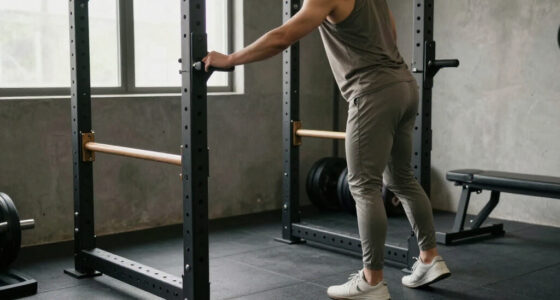
A pull-up bar is a straightforward way to build upper body strength. Mount it in a doorway or on the wall, and you instantly have access to pull-ups, chin-ups, and hanging leg raises. It’s a simple, sturdy piece that demands little space but offers big gains.
Visualize yourself effortlessly doing a pull-up, feeling your back and arms engage. Even if you’re a beginner, you can start with assisted versions or hanging holds. It’s a permanent fixture that grows with your strength.
Choosing the right pull-up bar involves considering safety and stability—an unstable or poorly mounted bar can pose risks. While installation might require some effort, the ability to perform a wide range of upper body exercises in a small space makes it a highly valuable investment. The tradeoff is that it’s primarily focused on upper body, so complementing it with other equipment is advisable for full-body training.
Comparison Table: The 5 Essential Home Gym Pieces
| Equipment | Primary Use | Space Needed | Cost Range | Growth Potential |
|---|---|---|---|---|
| Dumbbells | Strength, Functional Movements | Small, Stacked or Adjustable | $50-$300 | High |
| Resistance Bands | Strength, Flexibility, Rehab | Very Small | $10-$50 | High |
| Adjustable Bench | Varied Exercises, Incline/Decline | Moderate | $100-$250 | High |
| Jump Rope | Cardio, Warm-up | Very Small | $10-$30 | Moderate |
| Pull-Up Bar | Upper Body Strength | Doorway or Wall | $20-$60 | High |