TL;DR

Get workout gear delivered free with Prime
- Fast, free delivery on millions of items
- Prime Video, Amazon Music and more included
- Member-only deals all year
Both free weights and machines can build strength effectively—they serve different roles. Combining them often leads to better, more balanced results. The key is tailoring your approach to your goals and experience.
Ever wondered whether free weights or machines pack more punch? The debate has raged for decades, but recent insights suggest more of a partnership than a rivalry. Each method offers distinct advantages, and the real magic happens when you combine them.
If you want to build strength, muscle, or improve functional movement, understanding how each tool works can help you make smarter choices. Let’s break down what each brings to the table—and how to use both to your advantage.
Use free weights for functional, real-world strength and stabilizer muscle activation.
Incorporate machines for safe, targeted muscle isolation, especially for beginners or rehab.
Combine both methods in your routine for balanced, effective training.
Prioritize proper form and gradual progression, no matter the equipment.
Stay adaptable—your best results come from mixing tools based on your goals and comfort.
Free Weights vs Machines: The Debate Finally Settled
TL;DR: Both free weights and machines build strength effectively. Free weights train stabilizers and real-world movement; machines create safer, controlled overload. The smartest program uses both, matched to your goals, experience, and recovery.
Different tools, different jobs, stronger combined outcome.
Balance, coordination, stabilizer activation, natural paths.
Train like movement is messy, but progress like overload is measurable.
Many lifters benefit from a free-weight base plus machine finishers.
Machines reduce balance demands while technique develops.
Free weights better mimic non-fixed real-life movement paths.
Use the tool that fits the lift, the body, and the goal.
What Each Tool Brings to the Gym Floor
Free weights are not automatically superior, and machines are not “less serious.” They solve different training problems. The win is knowing when each one gives you the best stimulus with the least wasted risk.
Functional strength
Dumbbells, barbells, and kettlebells let your joints move through natural arcs, forcing your body to stabilize while producing force.
Controlled overload
Guided paths make it easier to target a muscle, adjust resistance quickly, and train hard when balance or coordination is the limiting factor.
Balanced results
Use free weights for skill, stability, and compound lifts. Add machines for isolation, rehab phases, fatigue management, and precise volume.
Side-by-Side: The Real Difference
The debate usually sounds emotional. The practical comparison is much simpler: movement freedom versus movement control.
| Feature | Free Weights | Machines | Training Read |
|---|---|---|---|
| Movement path | Unrestricted, natural, adaptable | Fixed, guided, predictable | ✓ Free weights transfer better to varied movement. |
| Muscle activation | High stabilizer demand | Higher target-muscle isolation | ✓ Use both for broad and precise loading. |
| Safety curve | Depends heavily on form | More beginner-friendly | ~ Skill and setup matter more than the tool. |
| Versatility | High exercise variety | Limited but efficient | ✓ Free weights win variety; machines win simplicity. |
| Weakness | ✗ Higher misuse risk | ✗ Less real-world movement carryover | ~ Program around the tradeoff. |
The Best Program Is a Chain, Not a Choice
Start with the movement pattern you want to improve, then select the tool that helps you load it well. A strong routine moves from skill to strength to targeted volume without turning one piece of equipment into a personality test.
Learn form
Use machines or light free weights to understand the pattern.
Build stability
Add free-weight squats, presses, rows, hinges, and carries.
Target gaps
Use machines to isolate quads, hamstrings, back, chest, or rehab needs.
Progress load
Increase weight, reps, sets, or control while preserving clean technique.
Adapt often
Shift the mix based on fatigue, goals, equipment, and comfort.
Performance Map: Where Each Method Scores
Recent training consensus favors hybrid programming because varied loading can support hypertrophy, strength, coordination, and safer progression across experience levels.
Control Spectrum
Machines sit closer to guided stability. Free weights sit closer to adaptive control. A complete strength plan trains both ends of the spectrum.
When to Use Each
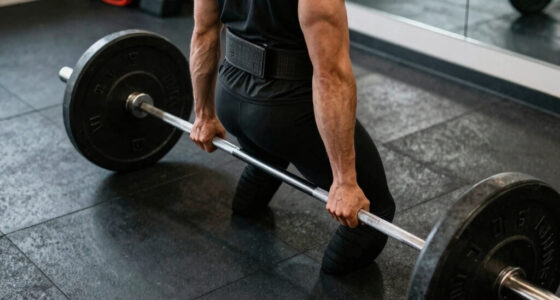
Free weights shine for squats, deadlifts, presses, rows, lunges, and loaded carries. Machines shine for leg presses, cable rows, hamstring curls, chest presses, rehab phases, and high-effort isolation after compound work.
You want transfer
Prioritize them for functional strength, coordination, athletic movement, core engagement, and learning how to control load through space.
You want precision
Use them for safer overload, muscle isolation, beginner confidence, rehab constraints, or extra volume when stabilizers are already fatigued.
Frequently Asked Questions
The final answer is less dramatic than the debate: choose based on the adaptation you want, then progress patiently.
Which is better for building muscle?
Both can build muscle effectively. Free weights add stabilizer demand; machines make it easier to target specific muscles with controlled fatigue.
Are machines safer?
Usually for beginners, yes. Guided movement reduces balance demands, but setup, range of motion, and load selection still matter.
Should beginners start with machines?
Often, yes, especially for confidence and learning basic patterns. Add light free weights early so coordination develops alongside strength.
What is the final word?
Use free weights for foundational movement and machines for targeted support. The combination is more resilient than either tool alone.
Why Free Weights Are Your Best Bet for Real-World Strength
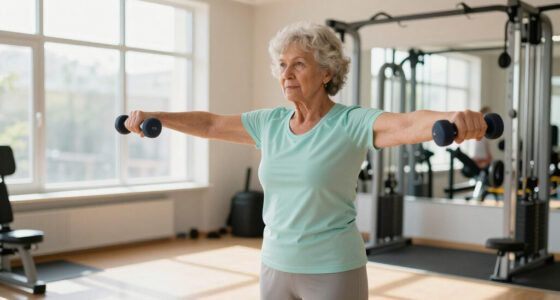
Free weights mimic everyday movements better than machines. When you lift a dumbbell to pick up a box or do a push-up, your body relies on stabilizer muscles that balance and support the movement. For example, doing a free-weight bench press activates your core and shoulder stabilizers alongside your chest.
Imagine trying to lift a heavy bag of groceries. Your body doesn’t move along a fixed path—so training with free weights prepares you for real-life tasks. Plus, they offer more exercise variety, from squats to deadlifts, without needing specialized equipment.
Pro tip: Start with lighter weights to focus on form, then gradually increase. This builds functional strength that translates outside the gym.
Understanding why free weights are effective for real-world strength is crucial. They engage stabilizer muscles that are often neglected with machines, which are essential for maintaining balance and coordination during daily activities. This comprehensive muscle engagement reduces injury risk and enhances overall movement quality. However, because free weights require proper technique, they can pose a higher injury risk if misused. Therefore, mastering form and progressing gradually are key to harnessing their full benefits without setbacks.
adjustable dumbbells for strength training
As an affiliate, we earn on qualifying purchases.
As an affiliate, we earn on qualifying purchases.
Why Machines Make Training Safer and Easier for Beginners
Machines guide your movement along a set path, which reduces the risk of improper form—especially if you’re just starting out. Think of it like training wheels on a bike; they keep you steady while you learn the basics. For example, a leg press machine keeps your legs moving in a controlled arc, lowering the chance of injury.
This makes machines ideal for beginners or those recovering from injury. They allow you to focus on muscle contraction without worrying about balance or coordination. Plus, adjusting resistance is quick—just turn a dial or select a weight.
However, be cautious: over-reliance on machines can make your movement patterns less adaptable. It’s like riding a bike with training wheels—great at first, but you need to practice balancing eventually.
From a deeper perspective, machines provide a controlled environment that isolates specific muscles, enabling focus on strength development without the complexity of balancing multiple muscles simultaneously. This can accelerate learning and help prevent form errors. Nevertheless, because they restrict movement to a fixed plane, they may not prepare you for the dynamic, multi-directional movements encountered in real life or sports. Therefore, integrating free weights as soon as possible ensures you develop the stability and coordination necessary for functional movement.
home weight machines for muscle building
As an affiliate, we earn on qualifying purchases.
As an affiliate, we earn on qualifying purchases.
Side-by-Side: Free Weights vs Machines — What’s the Real Difference?
| Feature | Free Weights | Machines |
|---|---|---|
| Movement Path | Unrestricted, natural | Fixed, guided |
| Muscle Activation | Engages stabilizer muscles | Focuses on target muscles |
| Safety | Depends on form, higher risk for beginners | Safer for novices due to controlled motion |
| Versatility | High — many exercises possible, adaptable to different movements | Limited but adjustable, mainly targeting specific muscles |
| Space & Cost | Requires more space & equipment, higher initial investment | More compact & often cheaper, suitable for limited spaces |
Think of free weights as a wild horse—powerful and versatile but requiring skill and awareness to control. Machines are like a train on rails—safe, predictable, and easy to operate. The choice depends on your goals: for functional, broad movement patterns, free weights excel; for targeted, safe, and beginner-friendly training, machines are ideal.
stabilizer muscle training free weights
As an affiliate, we earn on qualifying purchases.
As an affiliate, we earn on qualifying purchases.
When to Use Each (And Why Combining Is Best)
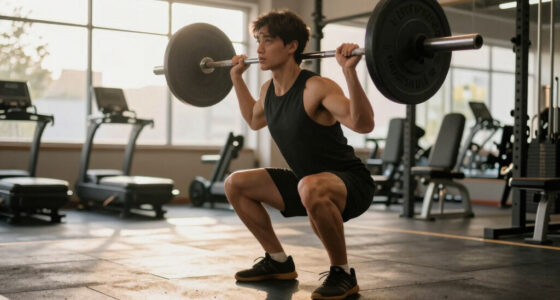
Free weights shine when you want functional strength, stability, and variety. Use them for squats, deadlifts, and presses. For example, doing a set of dumbbell lunges challenges your balance and activates core muscles, leading to better coordination and strength transfer to daily activities.
Machines are perfect for isolating specific muscles, rehab, or when you want a controlled environment. If you’re recovering from an injury or new to lifting, start here before progressing. They allow for safer overload and help build confidence in movement patterns.
Understanding the tradeoff: free weights promote overall stability and coordination but require proper technique and attention to form. Machines, while safer and easier for beginners, can sometimes create movement patterns that don’t translate perfectly to real-world situations. Combining both allows you to leverage the benefits of each—using free weights for foundational strength and stability, and machines for targeted, safe muscle isolation.
Most effective programs blend both. For instance, do free-weight squats for overall strength, then machine leg presses to target the quads after. This approach balances challenge with safety, maximizing gains and reducing injury risk. It also prepares your body for a variety of movement demands, making your training more resilient and functional.
Tip: Plan your workout to alternate between free weights and machines, depending on your goals and fatigue levels. This strategic combination ensures comprehensive development and reduces the risk of overtraining specific muscles or movement patterns.
guided resistance machine workouts
As an affiliate, we earn on qualifying purchases.
As an affiliate, we earn on qualifying purchases.
Recent Trends & What the Latest Science Says
Today’s training programs often mix free weights and machines to leverage their strengths. Research shows that combining both can lead to better muscle growth and strength gains than sticking to just one. Studies indicate that hybrid routines activate a broader range of muscles and prevent plateaus, as they challenge the body in varied ways.
According to recent scientific reviews, integrating machines with free weights not only enhances muscle hypertrophy but also improves neuromuscular coordination. Ergonomic machines now mimic natural movement patterns, which reduces injury risk and makes training more efficient. Furthermore, technological advances like digital resistance tracking enable personalized progression, ensuring consistent overload and adaptation over time. This scientific consensus underscores that a balanced approach—using both tools—is optimal for sustainable and effective training.
Frequently Asked Questions
Which is better for building muscle—free weights or machines?
Both can build muscle effectively. Free weights tend to activate more stabilizer muscles, aiding overall strength, while machines can target specific muscles more precisely. The best approach is to include both in your routine based on your goals.Are free weights safer than machines?
Machines are generally safer for beginners because they guide your movement, reducing injury risk. However, with proper technique, free weights can be just as safe and often more functional. Always prioritize good form.Can I mix free weights and machines in the same workout?
Absolutely! Combining both methods can maximize your gains by offering variety, safety, and functional strength. For example, start with free weights for compound lifts, then use machines for targeted work.What should a beginner focus on first?
Beginners should learn proper form, often starting with machines. Once comfortable, gradually introduce free weights to develop stability and functional strength. Taking it slow helps prevent injuries.How do I decide which to use?
Consider your goals, experience, and any physical limitations. If you want functional strength, lean toward free weights. For safety or rehab, machines are a good start. Mixing both often yields the best results.Conclusion
In the end, the choice isn’t about which is better—it’s about how you use both. Think of free weights and machines as partners, each filling in what the other lacks.
By blending them thoughtfully, you can build strength that’s functional, safe, and sustainable. Your best workout might just be the one that keeps your muscles guessing—and your mind engaged.
Halloween Picks
halloween
As an affiliate, we earn on qualifying purchases.