TL;DR

Get workout gear delivered free with Prime
- Fast, free delivery on millions of items
- Prime Video, Amazon Music and more included
- Member-only deals all year
Both free weights and machines can build strength and muscle, but free weights often activate more muscles and improve functional fitness. Combining both offers balanced, effective training tailored to your needs.
Ever wonder whether to stick with free weights or switch to machines? The truth is, both have their place, and recent research suggests there’s no one-size-fits-all answer. Instead, understanding their differences helps you craft a smarter, safer, and more effective workout plan.
In this guide, you’ll learn what makes each method unique, how they complement each other, and how to incorporate both into your routine for steady progress. No hype, no fluff—just practical advice to help you train smarter.
Free weights activate more muscles and improve functional strength, making them ideal for overall fitness.
Machines offer safer, guided movement, perfect for beginners or rehab scenarios.
A mix of both methods provides the most balanced, effective training—don’t choose one and ignore the other.
Progression is straightforward with both; use what matches your experience and goals.
Always prioritize proper form and safety, regardless of your equipment choice.
The Debate Finally Settled
Both free weights and machines can build strength and muscle. Free weights often win for whole-body activation and functional fitness, while machines shine for guided, targeted, and beginner-friendly training. The smartest answer is not either-or. It is a balanced program that uses both with intent.
No hype, no fluff: your goal decides the tool.
What Each Tool Does Best
Free weights ask your body to stabilize, balance, and coordinate. Machines reduce that demand by placing the lift on a guided path. That difference shapes safety, range of motion, and how well strength transfers outside the gym.
More muscles join the lift
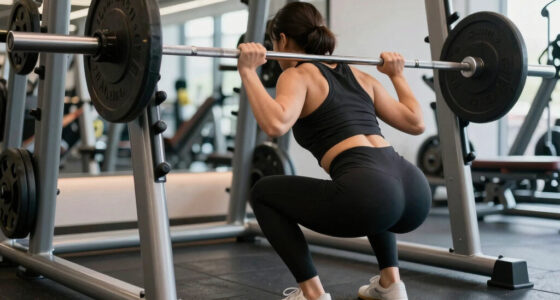
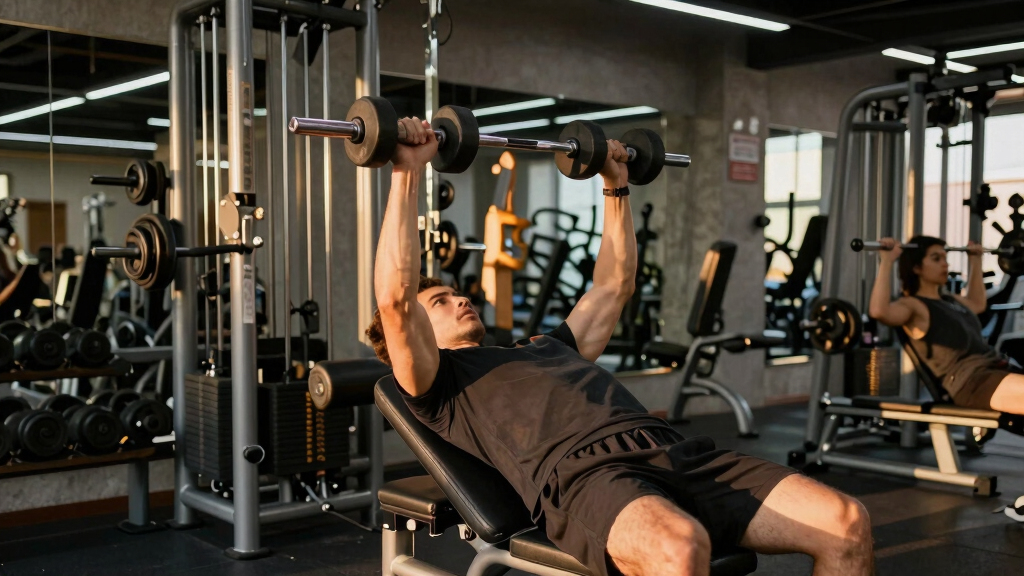
A dumbbell curl, barbell press, or deadlift forces stabilizers to help control the path. That extra coordination is why free weights often feel more demanding pound for pound.
Safer guided repetition
A seated chest press or leg press fixes the movement path, making setup easier and reducing balance demands. This can be ideal for beginners, joint limitations, or rehab scenarios.
The balanced answer
Start with compound free-weight work, then use machines to isolate muscles, add volume, and keep training productive when fatigue or joint stress climbs.
Head-to-Head Comparison
The debate only looks polarized when you ask one tool to solve every training problem. Read the table by goal: strength transfer, safety, isolation, progression, and comfort.
| Training Factor | Free Weights | Machines | Practical Verdict |
|---|---|---|---|
| Activation | ✓Greater stabilizer and core demand | ~More isolated target-muscle emphasis | Free weights lead for total-body recruitment. |
| Beginner Safety | ~Safe with coaching and light loads | ✓Guided paths reduce setup complexity | Machines are often the smoother entry point. |
| Natural Motion | ✓Adapts to body mechanics | ✗Fixed arcs may feel restrictive | Free weights usually feel more athletic. |
| Load Tracking | ✓Add plates, reps, or tempo | ✓Weight stacks make jumps obvious | Both are excellent for progressive overload. |
| Rehab Targeting | ~Useful when carefully controlled | ✓Easy to isolate and limit instability | Machines often win for controlled rebuilding. |
A Smarter Training Flow
For most people, the strongest routine follows a simple order: activate, lift, isolate, stabilize. It builds skill first, then adds targeted volume without turning every set into a balance test.
Prime movement
Use bodyweight drills or light dumbbells to wake up joints, muscles, and control.
Lift freely
Squats, deadlifts, presses, rows, and pull-ups build strength that transfers.
Use machines
Leg press, chest press, curls, and extensions help finish muscles safely.
Lock it in
Finish with core, carries, tempo reps, or controlled accessory work.
Training Priorities by Goal
This CSS-only scorecard translates the research pattern into practical emphasis. Higher bars mean the method is typically more useful for that goal, assuming proper form and progressive overload.
Free Weights
Machines
Movement Spectrum
Key Insight
Research and coaching practice point in the same direction: free weights often create greater overall muscle activation and functional strength gains, especially with correct technique and progressive loading. Machines remain highly valuable for safe practice, targeted hypertrophy, and training around limitations.
Traceability: From Tool to Result
The equipment choice matters because it changes the chain of demands placed on your body. The best routines deliberately connect stability, load, isolation, recovery, and progression.
Balance and coordination rise.
Target muscles get cleaner focus.
Weights, reps, and control increase.
Form and setup protect joints.
Stronger, steadier, smarter training.
Choose free weights when…
You want functional strength, athletic transfer, natural movement, and full-body coordination. Start lighter than your ego wants and let form drive progression.
Choose machines when…
You are new, rehabbing, managing joint stress, or adding focused volume after compound lifts. Adjust the seat, handles, and range before loading up.
Frequently Asked Questions
Short answer: both work. Better answer: match the tool to the job, your experience, and your body on that day.
Which is better for muscle growth?
Both can build muscle. Free weights often provide broader activation, while machines are excellent for targeted high-quality volume.
Are free weights safer?
Not automatically. Free weights require technique. Machines offer guided control, but poor setup or excessive load can still cause issues.
Can I use only one?
Yes, but a balanced mix usually gives better coverage: functional strength from free weights and focused isolation from machines.
What should beginners start with?
Machines can be easier at first. Add free weights gradually once basic movement control and confidence improve.
What’s actually happening inside your muscles with free weights and machines?
When you lift free weights, your muscles work harder to stabilize and control the movement. Imagine trying to balance a heavy barbell overhead—you need core engagement, balance, and coordination. This mimics real-life actions, making your muscles more versatile and functional.
Machines, on the other hand, follow a guided path. They isolate specific muscles, like focusing a spotlight on your biceps. This reduces the need for stabilization, making them safer and easier to control, especially for beginners or rehab work.
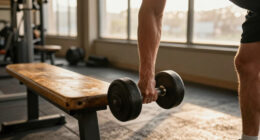
For example, doing a dumbbell curl requires you to balance and control the weight through the entire range. Using a preacher curl machine keeps your arm fixed, targeting just the biceps without extra effort on stabilizers.
adjustable dumbbells for strength training
As an affiliate, we earn on qualifying purchases.
As an affiliate, we earn on qualifying purchases.
Safety first: Why some prefer machines over free weights—and what that really means
Safety is often the deciding factor for beginners. Machines provide a controlled, guided movement, reducing the risk of improper form and injury. If you’re new or have joint issues, machines help you lift without stressing vulnerable areas.
Picture a person with knee pain doing squats—using a leg press machine might feel safer than free-weight squats, which require balance and proper technique. But, even with machines, improper use can lead to overloading or misalignment.
For instance, a seated chest press machine guides your arms, making it easier to lift safely, but overdoing it without proper form can still cause issues. The key: always start light and focus on controlled movement.
guided weight machines for beginners
As an affiliate, we earn on qualifying purchases.
As an affiliate, we earn on qualifying purchases.
How range of motion and natural movement shape your results
Free weights offer a natural, unrestricted range of motion. Imagine lowering a dumbbell in a bicep curl—your wrist, elbow, and shoulder all move together naturally, adapting to your body’s biomechanics.
Machines restrict movement to a fixed path, which can sometimes feel unnatural. Think of a leg extension machine—your knee moves in a fixed arc, which might not match your actual joint movement, especially if your hips or ankles aren’t aligned perfectly.
For example, athletes often prefer free weights because they mimic real-world motions, like lifting groceries or climbing stairs. Machines can help isolate muscles, but sometimes at the cost of joint comfort or naturalness.
home gym free weights and machines
As an affiliate, we earn on qualifying purchases.
As an affiliate, we earn on qualifying purchases.
Progression and overload: Which method makes increasing weight easier?
Progressive overload is key to building strength. Free weights make it simple: add a small plate or increase reps as you get stronger. For example, moving from 20 to 25 pounds on a dumbbell curl is straightforward and flexible.
Machines often have numbered weight stacks, allowing precise, incremental increases—like stepping from 50 to 55 pounds. This can make tracking progress easier, especially for beginners or during rehab.
Imagine someone progressing from 10 to 20 reps with a machine. It’s clear and measurable. With free weights, it might be more intuitive—adding a little more weight or reps as your muscles adapt.
As an affiliate, we earn on qualifying purchases.
Which builds real-world strength better: free weights or machines?
Free weights tend to develop functional strength because they force your muscles to stabilize and coordinate. Imagine lifting a heavy box—you need core and limb control, just like during a free weight deadlift.
Machines focus on isolated muscle groups, which is great for targeting specific weaknesses or rehab. But their movements don’t always translate directly to everyday tasks.
For example, athletes and active individuals often prefer free weights because they mimic sport-specific motions. If you want strength that transfers to daily life, free weights usually have the edge.
The best of both worlds: How to combine free weights and machines for serious gains
The most effective training routines blend the strengths of both. Start with free weights to build functional strength and stability. For example, doing deadlifts and pull-ups helps you develop core and total-body strength.
Then, add machines to target specific muscles or work around joint pain. For instance, after heavy squats, use a leg press to continue leg work without overloading your knees.
Here’s a simple plan:
- Warm up with bodyweight or light free weights to activate muscles.
- Perform compound free weight lifts—squats, deadlifts, presses.
- Follow with machine exercises—leg extensions, chest presses—for targeted work.
- Finish with core and stabilization exercises, mixing both methods.
This balanced approach reduces plateaus and keeps your training versatile and sustainable.
Frequently Asked Questions
Which is better for muscle growth: free weights or machines?
Both can promote muscle growth, but free weights often provide more comprehensive activation. They challenge multiple muscles at once, especially stabilizers, leading to more balanced development.
Are free weights safer than machines?
Not necessarily. Free weights require proper technique to avoid injury, but machines provide guided, controlled movements that can reduce risk—especially for beginners or those with joint issues.
Can I use only free weights or only machines?
Yes, but a balanced mix tends to produce the best results. Combining both helps build functional strength while targeting specific muscles, keeping your routine fresh and effective.
What should a beginner start with?
Beginners often find machines easier and safer to learn with. Once comfortable, gradually incorporate free weights to enhance stability and functional strength.
How do I decide which to include in my workout?
Consider your goals, experience, and any physical limitations. Consulting a fitness professional can help tailor a routine that balances both for maximum benefit.
Conclusion
Both free weights and machines hold valuable spots in your workout arsenal. The secret lies in combining them—leveraging free weights for real-world strength and stability, and machines for targeted, safe muscle work.
Picture your routine as a balanced meal: a little of everything for best results. Your muscles will thank you, and your progress will stay steady. Ready to lift smarter?
Halloween Picks
halloween
As an affiliate, we earn on qualifying purchases.