
TL;DR

Get workout gear delivered free with Prime
- Fast, free delivery on millions of items
- Prime Video, Amazon Music and more included
- Member-only deals all year
Workout tracking turns each session into information you can use: a record of exercises, sets, repetitions, load, time, distance, or effort helps you plan sensible next steps and spot patterns over several weeks. A notebook is enough, and the log works best when it supports training without making every fluctuation feel like a verdict.
You finish a set of squats, rack the bar, and think, “That felt easier.” But was it easier than last week, or did you just sleep better? A workout log helps you answer with something more useful than a passing impression.
Tracking your workouts can speed up progress because it gives you a clear next move: repeat a load, add a rep, ease off, or adjust the plan. You do not need a smartwatch or a wall of charts. A few consistent notes can turn “I’m getting stronger” into information you can use.
This guide shows you what to record, how to spot real patterns, and how to keep tracking simple. Progress varies, and writing numbers down cannot guarantee results; your training, recovery, nutrition, health, and consistency all matter too.
Record the measures tied to your goal: load, sets, and reps for lifting; time, distance, and effort for cardio.
Compare several similar sessions before deciding that you have improved or stalled.
Use your program and suitable technique to guide gradual increases in challenge; a log does not set one universal progression rule.
Add brief context such as poor sleep or soreness when it helps explain an unusual workout.
Choose a notebook, spreadsheet, or app you can keep using, and simplify tracking if it starts creating stress.
Why Tracking Your Workouts Speeds Up Progress
A simple workout log turns each session into information you can use. Compare similar workouts over time to choose a sensible next step.
What to record
Choose details that match your training goal.
| Training focus | Useful details | Example |
|---|---|---|
| Strength | Exercise, load, sets, repetitions, effort | Goblet squat, 12 kg, 3 × 8 |
| Running or cycling | Activity, duration, distance, pace or effort | Easy run, 25 minutes, 3.2 km |
| General fitness | Activity, time, brief context | Brisk walk, 30 minutes |
Build a useful routine
A few repeatable steps make tracking easier to sustain.
Use it to set a suitable target for today.
Note the measures tied to your goal.
Look for patterns before changing your plan.
Read progress in context
One workout is a snapshot; several similar sessions can reveal a clearer pattern.
- A hard day may reflect poor sleep or a busy week.
- One slower run does not prove fitness has dropped.
- Compare similar exercises, routes, or conditions.
- Brief notes on sleep or soreness can explain an unusual session.
Choose a measured next step
Use your program and suitable technique to guide gradual changes in challenge.
Progress with a plan
A log can help you decide whether to repeat a load, add a repetition, or adjust as your program directs.
Track time or distance
Record duration, distance, pace, or effort to make gradual changes visible.
Use what you will keep using
A notebook, spreadsheet, or notes app can be enough; an app or wearable is optional.
See progress that daily memory tends to miss
Tracking your workouts helps you notice small changes by putting sessions side by side. An extra repetition, a slightly longer walk, or the same run at a steadier effort may feel ordinary in the moment. Written down, those changes can add up to a clearer picture over several weeks.
Memory is a foggy training partner. You may remember the hard final set from Tuesday and forget that you completed one more rep than you did the week before. Say you pressed a pair of 10-kilogram dumbbells for three sets of eight in early March, then completed three sets of nine later that month. That is a concrete change, even if the mirror and your energy feel much the same.
A log also helps you interpret a flat day. If your usual five-kilometre route feels slow after a poor night’s sleep, one entry does not tell you that your fitness has dropped. Look across several runs. If the same pace feels easier over time, that pattern may tell you more than any single finish time.
Keep the comparison fair: use similar exercises, routes, or conditions when you can, and add a short note if a session was unusual. One workout is a snapshot; a series is a story. Your record does not need to prove that every week was better than the last. It needs to help you see what is changing and what deserves a closer look.
Products Worth Considering

Fitbit Versa 2 Health and Fitness Smartwatch with Heart Rate, Alexa, Music, Sleep and Swim Tracking

Garmin Venu® 3 Premium Fitness Smartwatch 45mm Black

Garmin Forerunner 570 GPS Running Smartwatch, 47mm, Aluminum, Black
As an affiliate, we earn on qualifying purchases.
Use your log to raise the challenge gradually
Workout tracking turns last session’s numbers into a sensible starting point for the next one. In strength training, gradual increases in load, repetitions, sets, or exercise difficulty can help you keep a workout challenging as you adapt. A record lets you make those changes deliberately instead of guessing or adding weight whenever you feel impatient.
Suppose your plan calls for three sets of eight goblet squats with a 12-kilogram weight. Your log shows that you completed all three sets with steady technique and an effort that matched the plan. At your next session, you can follow your program’s progression rule, perhaps aiming for another repetition per set or moving up slightly in weight when appropriate. The small step is the point.
There is no universal number that says when every person should add weight. It depends on the exercise, your experience, your technique, and the program you follow. A heavier load is not automatically a better workout, especially if it makes your movement rushed or unstable. If you are new to lifting or unsure about technique, guidance from a qualified fitness professional can help you choose a suitable plan.
For cardio, the same idea can apply to time, distance, pace, or perceived effort. If you are building toward a 30-minute easy bike ride and your notes show that 20 minutes feels manageable, your plan might increase duration gradually. A log makes progression visible and measured. It gives you a better question than “Can I do more?”: “What small step fits my plan and how I feel today?”
Find out what may be behind a plateau
A workout log can make a plateau easier to investigate because it shows what your training has actually looked like. Instead of assuming you need to push harder, you can check whether your routine changed, whether you completed the planned sessions, or whether recovery has been inconsistent. The record gives you clues, not a diagnosis.
Imagine you have felt stuck on a set of push-ups for a few weeks. Your notes show that you have done the same number of sets and repetitions each time, but also that you missed several sessions during a busy month. That pattern suggests your training exposure was uneven; it does not prove that one specific adjustment will fix everything. A steady return to your planned routine may be a more useful first step than adding a punishing extra workout.
Brief context can help explain why performance moves around. You might note “short sleep,” “legs sore,” or “hard workday” beside a session. If a run feels unusually tough after a late shift, that note keeps you from treating the pace as a clean test of fitness. Over time, the page can reveal how your schedule and energy tend to interact with training.
When a pattern persists, review your plan as a whole: effort, exercise choice, recovery, technique, and whether the measure you track matches your goal. A trainer may help with programming or movement questions; a qualified health professional can advise on health concerns. Tracking narrows the questions you need to ask. It cannot answer every one by itself.
Choose a few numbers you will actually use
The best workout record is the smallest one that helps you make a better next decision. What to track depends on your goal: a lifter may need sets and load, while a walker may care about time and distance. If every session takes ten minutes to document, your system may be too fussy to last.
A notebook, spreadsheet, or notes app can all work. A phone app may make entries easier to sort, and a wearable may collect activity data in the background, but neither is required. For many training goals, the basic details you can act on matter more than a long list of device estimates.
| Training focus | Useful details to record | Example |
|---|---|---|
| Strength | Exercise, load, sets, repetitions, effort | Goblet squat, 12 kg, 3 × 8, moderate effort |
| Running or cycling | Activity, duration, distance, pace or effort | Easy run, 25 minutes, 3.2 km, conversational effort |
| General fitness | Activity, time, completed or missed, brief context | Brisk walk, 30 minutes, felt energetic |
For instance, if you walk for general fitness, a row saying “Tuesday, 30-minute walk, felt comfortable” may be more useful than a calorie estimate. If you are following a lifting plan, the exercise, sets, reps, and load can help you prepare your next session. Track what connects to your goal. Add sleep, soreness, or energy only when the note helps explain a meaningful change.
Build a tracking habit that fits inside your workout
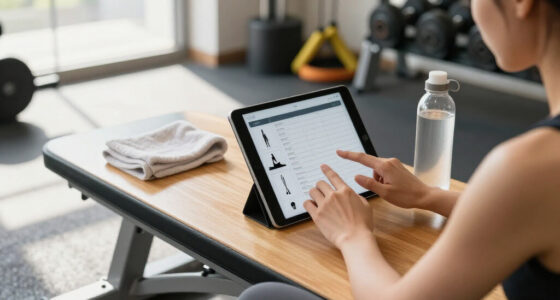
A simple routine makes workout tracking easier to keep up with: check the last entry before you start, record what you complete, then review the pattern every few weeks. This gives the log a job at both ends of the session. It helps you set a reasonable target before training and remember what happened afterward.
- Before you train: Look at the last comparable session and your plan. Choose the planned target rather than improvising a big jump.
- During or right after: Write the sets, repetitions, load, time, or distance you actually completed. Keep it factual and brief.
- Add context if it helps: Note something like “poor sleep” or “stiff after sitting all day” when it could explain an unusual session.
- Review after several weeks: Look for repeated changes or gaps, then decide whether the next step fits your program and recovery.
For example, you could leave a small notebook beside your water bottle. After a session, jot down “row: 3 × 10 at 20 kg; last set challenging.” The next time you train, you can see where you left off without scrolling through a complicated dashboard.
This approach also makes missed workouts easier to handle. Marking a session as missed can help you notice that Wednesday meetings keep disrupting your plan. It is a practical clue, not a reason to scold yourself or cram two sessions into one day. Consistency means returning to your plan over time. The log should make that return simpler.
Use technology as a helper, not a scorekeeper
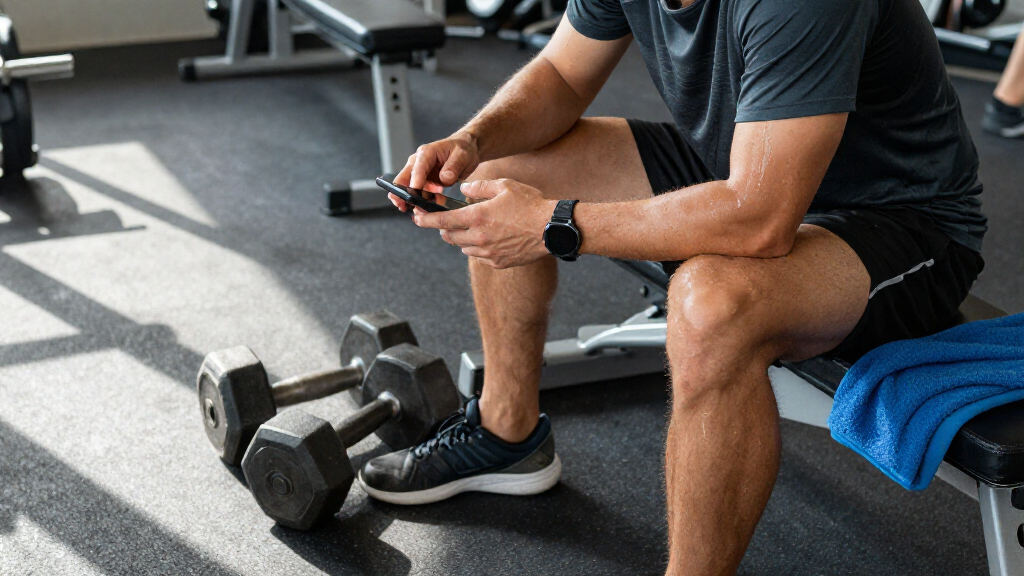
Fitness apps and wearables can make workout tracking convenient, but the numbers they estimate do not all carry the same weight. Your watch may count steps or record a heart-rate trend, while its calorie and sleep estimates can be less precise. Treat those outputs as rough context, not exact measurements or instructions.
Imagine your watch says you burned 420 calories on a 40-minute walk. That number can vary with the device and its assumptions, so it is a poor basis for exact food decisions or for deciding you must exercise again. If your goal is to build a regular walking routine, the entry “40 minutes, brisk, felt comfortable” may be more actionable.
Technology can still help when it reduces friction. A phone app might remind you what exercise comes next; a connected bike may save ride duration; a spreadsheet may show your weekly sessions in one view. Pick the tool that makes the useful information easy to capture. More metrics do not automatically mean better decisions.
Check how the data affects your mood as well as your planning. If a recovery score makes you anxious even when you feel ready for an easy session, consider setting it aside and using your plan and personal experience. You can also take a break from recording if it becomes stressful or compulsive. A tracking tool is meant to serve your training, not turn every day into a score.
Keep the numbers in perspective on hard days
Progress is not a straight line. A difficult session or one lower number does not automatically mean your fitness is slipping. Sleep, stress, soreness, schedule changes, and ordinary variation can all affect how a workout feels, so compare several sessions before you draw a conclusion.
Say you usually cycle for 30 minutes at a comfortable pace, but this week you stop at 22 minutes because your legs feel heavy after a long shift. Record what happened if that helps you spot patterns, then follow the plan’s guidance for your next session. You do not need to “make up” those eight minutes with a harder ride the next day.
Body weight, heart rate, and wearable recovery scores can also fluctuate. If you choose to track any of them, interpret them in context and avoid treating a single reading as a measure of your worth or effort. For general workout decisions, performance notes and perceived effort may tell you more about that particular session than an isolated device number.
A healthy tracking system leaves room for flexibility. If the log starts creating guilt, anxiety, or pressure to exercise despite illness or injury, simplify it or take a break. For pre-existing health conditions or concerns about exercising safely, seek guidance from a qualified health professional. Your record should support a sustainable relationship with movement. It does not have to be complete to be useful.
Frequently Asked Questions
What should I track in my workout log?
Track the details that help you plan the next session. For strength training, that often means exercises, load, sets, and repetitions; for cardio, it may mean activity, time, distance, pace, or effort. Add a short note about sleep or soreness only when it helps explain how the workout felt.
Do I need an app or a fitness watch to track workouts?
No. A notebook, spreadsheet, or phone note is enough to keep a useful record. Apps and wearables can save time, but choose one only if it makes your tracking easier and the information helps with your training.
How often should I review my workout log?
Check your last entry before a workout so you can follow your plan, then record the session afterward. Review trends over several weeks rather than judging one entry in isolation; a hard day may reflect poor sleep or a busy schedule.
When should I increase the weight or difficulty?
Follow a suitable program and increase the challenge gradually when you can complete the planned work with good technique and an appropriate effort. The right step depends on the exercise, your experience, and your program. If you are unsure about technique or progression, a qualified fitness professional can help.
Why am I not progressing even though I track everything?
A log provides information; it does not create progress by itself. Check whether your training has been consistent and suitably challenging, and consider recovery, nutrition, stress, technique, and whether you are tracking a measure that matches your goal. If health concerns affect your exercise, consult a qualified health professional.
Should I track calories burned during exercise?
You usually do not need calorie estimates to guide a workout, and wearable estimates can be imprecise. For many goals, recording the activity, time, distance, and effort gives you clearer information. Avoid using an estimated calorie number as an exact guide for food or exercise decisions.
What should I do after a missed or difficult workout?
Record what happened if it helps you understand your routine, then continue with your plan. One missed session or a lower performance day rarely tells the whole story. You do not need to punish yourself or cram extra exercise into the next day.
Can tracking workouts become unhealthy?
Yes, especially if recording creates anxiety, guilt, or pressure to exercise when you are ill or injured. Try simplifying your log or taking a break. If exercise tracking is affecting your well-being, consider speaking with a qualified health professional.
Conclusion
Start with one simple record of the details that matter to your goal. Check it before your next workout, write down what you actually did, and look for patterns over several weeks before changing your plan.
Your log is not a report card. Think of it as a small trail of footprints: enough to show where you have been and help you choose the next steady step.