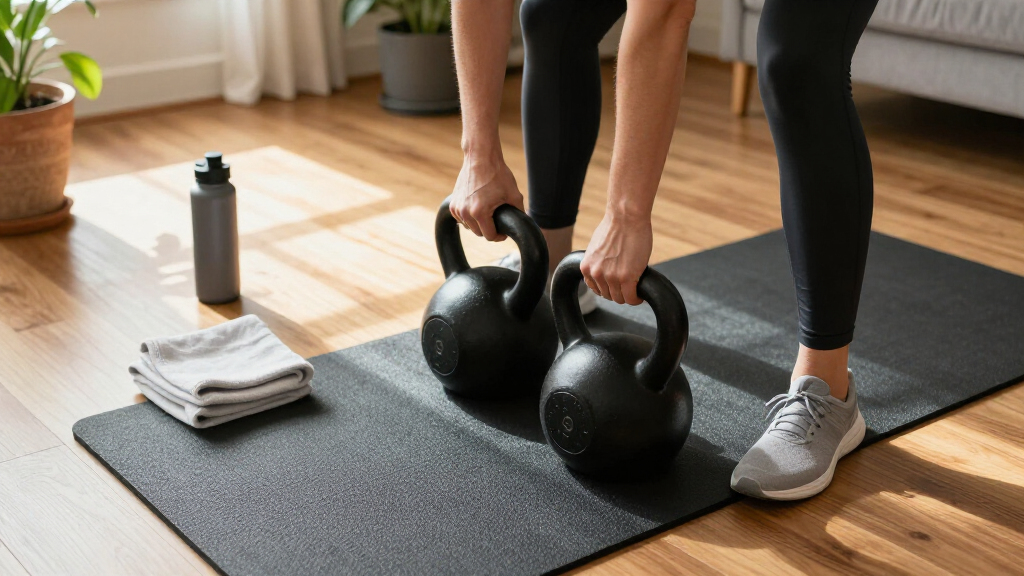
For most home workouts, I’d start with the Bowflex SelectTech 840: its dial-based adjustments make changing loads straightforward between exercises. The REP Fitness 40 lb is a stronger fit for lifters who want a heavier top end, while the Apex Adjustable Kettlebell can use standard 1-inch plates for more loading flexibility. The main tradeoff is between quick, tidy weight changes and a simpler design that may offer a wider or heavier loading range. Light-duty models can suit beginners and compact routines, but they may not leave much room to progress. Read on for how all 11 options compare and which style best fits your space, training, and strength goals.

Get workout gear delivered free with Prime
- Fast, free delivery on millions of items
- Prime Video, Amazon Music and more included
- Member-only deals all year
Complete the kit


Key Takeaways
- Bowflex SelectTech 840 leads for convenience: its dial-adjustment format is a strong match for home routines that move between exercises and loads.
- REP Fitness and Apex address heavier training differently: REP offers a 40 lb adjustable unit, while Apex’s plate-loaded design can reach 50 lb with compatible standard 1-inch plates.
- Stamina X and Lifepro offer broader ranges than the light-duty group: their listed maximums are 36 lb and 44 lb, respectively, but buyers should weigh range against adjustment and storage preferences.
- Several options cluster at 5–12 lb: the 3-in-1, Yes4All 5–12 lb, and Polyfit models suit lighter work, but offer less headroom for strength progression than heavier picks.
- Dual-purpose designs trade specialization for flexibility: the KDMURNVS combines kettlebell and dumbbell use, which may help in a small home gym but adds a different setup choice than a dedicated kettlebell.
| Bowflex SelectTech 840 Adjustable Kettlebell |  | Best Overall for Quick Weight Changes | Weight range: 8–40 lb | Weight settings: 8, 12, 20, 25, 35, and 40 lb | Adjustment method: Dial | VIEW LATEST PRICE | See Our Full Breakdown |
| REP Fitness Adjustable Kettlebell, 40 lb | 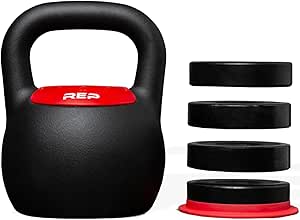 | Best for a More Traditional Feel | Listed weight: 40 lb | Weight settings: 5 | Adjustment method: Press and twist the handle | VIEW LATEST PRICE | See Our Full Breakdown |
| Stamina X Kettle Versa-Bell Adjustable Kettlebell, 16–36 lb |  | Best for Steady, Small-Step Progression | Weight range: 16–36 lb | Weight settings: 16, 20, 24, 28, 32, and 36 lb | Weight increments: 4 lb | VIEW LATEST PRICE | See Our Full Breakdown |
| Lifepro Powerflow Plus 7-in-1 Adjustable Kettlebell, Up to 44 lb |  | Best for Wide Load Range | Weight settings: 5, 11.5, 18, 24.5, 31, 37.5, and 44 lb | Weight range: 5–44 lb | Adjustment method: Twist handle with locking click | VIEW LATEST PRICE | See Our Full Breakdown |
| KDMURNVS 2-in-1 Adjustable Kettlebell and Dumbbell Set, 15–45 lb |  | Best Multi-Use Home Set | Kettlebell weight range: 15–45 lb | Dumbbell weight range: 5.9–30.9 lb | Main body weight: 15 lb | VIEW LATEST PRICE | See Our Full Breakdown |
| 3-in-1 Adjustable Kettlebell, 5–12 lb |  | Best for Beginners | Weight settings: 5 lb, 8 lb, 12 lb | Adjustment mechanism: Press clasp and twist counterclockwise | Outer material: PE shell | VIEW LATEST PRICE | See Our Full Breakdown |
| Apex Adjustable Kettlebell, 20 lb Base, Loads up to 50 lb with Standard 1-Inch Plates |  | Best for Plate Owners | Starting weight: 20 lb | Maximum weight: 50 lb | Handle weight: 15 lb | VIEW LATEST PRICE | See Our Full Breakdown |
| Yagud Adjustable Kettlebell, 2.5–22.5 lb, 7 Weight Levels |  | Best for Varied Light Training | Stated weight range: 2.5–22.5 lb | Weight levels: 7 | Listed increments: 3.5 lb, 7 lb, 10 lb, 13 lb, 16 lb, 19.5 lb, 22.5 lb | VIEW LATEST PRICE | See Our Full Breakdown |
| Yes4All Adjustable Kettlebell, 5–12 lb |  | Best Compact Pick | Weight options: 5–12 lb | Item weight: 12 lb | Dimensions: 12 × 7 × 7 in | VIEW LATEST PRICE | See Our Full Breakdown |
| Yes4All Adjustable Cast Iron Kettlebell, 10–40 lb |  | Best Heavy-Duty Range | Weight range: 10–40 lb | Weight settings: 6 | Plate count: 6 | VIEW LATEST PRICE | See Our Full Breakdown |
| Polyfit Adjustable Kettlebell, 5–12 lb |  | Best for Lightweight Home Workouts | Brand: Polyfit | Weight settings: 5 lb, 8 lb, 12 lb | Included weights: 5 lb main unit, 3 lb plate, 4 lb plate | VIEW LATEST PRICE | See Our Full Breakdown |
| adjustable kettlebells for home workout | Weight settings |
|---|---|
| Bowflex SelectTech 840 Adjusta | 8, 12, 20, 25, 35, and 40 lb |
| REP Fitness Adjustable Kettleb | 5 |
| Stamina X Kettle Versa-Bell Ad | 16, 20, 24, 28, 32, and 36 lb |
| Lifepro Powerflow Plus 7-in-1 | 5, 11.5, 18, 24.5, 31, 37.5, and 44 lb |
| KDMURNVS 2-in-1 Adjustable Ket | — |
| 3-in-1 Adjustable Kettlebell | 5 lb, 8 lb, 12 lb |
| Apex Adjustable Kettlebell | — |
| Yagud Adjustable Kettlebell | — |
| Yes4All Adjustable Kettlebell | — |
| Yes4All Adjustable Cast Iron K | 6 |
| Polyfit Adjustable Kettlebell | 5 lb, 8 lb, 12 lb |
More Details on Our Top Picks
Bowflex SelectTech 840 Adjustable Kettlebell
The Bowflex SelectTech 840 is the strongest fit for home workouts where fast changes matter more than fine-grained loading. Its dial selects from six settings between 8 and 40 lb, so a single unit can move from lighter rows to heavier swings without swapping plates. Compared with the Stamina X Kettle Versa-Bell, which requires plate changes, the Bowflex is more convenient when exercises are performed back-to-back. Its compact footprint also takes less storage space than keeping several fixed kettlebells on hand.
The tradeoff is its plastic handle, which may feel less reassuring than the REP Fitness model’s iron construction, and its weight jumps are uneven rather than consistent. The listed JRNY membership requirement after the free trial is another drawback for buyers who want app-based features without an ongoing commitment. I’d choose it for convenience, not for the most traditional kettlebell feel.
Pros:- Six settings from 8 to 40 lb cover light-to-moderate home strength and conditioning work.
- Dial adjustment is quicker than changing plates on the Stamina X Kettle Versa-Bell.
- One compact unit replaces several separate kettlebells.
- Supports swings, rows, squats, and twists.
Cons:- Plastic handle may feel less substantial than the iron construction of the REP Fitness model.
- Weight settings have uneven gaps, limiting precise progression between some loads.
- JRNY membership is required after the free trial.
Best for: Home exercisers who alternate between several movements and want quick, dial-based changes across a useful 8–40 lb range.
Not ideal for: Lifters who prioritize a metal handle, small and even weight increments, or workouts that avoid JRNY-related membership requirements.
- Weight range:8–40 lb
- Weight settings:8, 12, 20, 25, 35, and 40 lb
- Adjustment method:Dial
- Item weight:19.7 kg
- Dimensions:8.82 × 7.01 in (L × W)
- Handle diameter:28 mm
- Materials:Composite body; plastic handle
- Warranty:2 years
Our verdict“Choose the Bowflex if quick dial changes and a broad home-workout range matter more to you than a metal handle or evenly spaced increments.”
REP Fitness Adjustable Kettlebell, 40 lb
The REP Fitness Adjustable Kettlebell suits buyers who want an adjustable design without giving up the feel of a metal training tool. Its iron construction, powder-coated surface, and 1.3-inch ergonomic handle make it the more traditional-feeling choice beside the plastic-handled Bowflex SelectTech 840. Five settings let one kettlebell cover multiple loads, while the rubber base is useful in a home gym where floor protection and stable storage matter.
Its main limitation is also clear from the listed weight: this model weighs 40 lb, a demanding starting point for many beginners and for lighter movements. The adjustment uses a press-and-twist handle rather than the Bowflex’s dial, and the available description does not list the five individual loads. I’d favor REP for users already comfortable with heavier kettlebell work, not for households seeking a light entry point or a wide beginner-friendly range.
Pros:- Iron construction offers a more traditional feel than the Bowflex SelectTech 840’s composite body and plastic handle.
- Five settings let one unit replace multiple kettlebells.
- Powder-coated surface is designed to support a secure grip and resist rust.
- Rubber base helps protect floors and provides a stable resting point.
Cons:- The listed 40 lb weight may be too heavy for beginners or lighter movements.
- The available product data does not identify the five individual weight settings.
- Press-and-twist adjustment is less immediate than the Bowflex’s dial.
Best for: Experienced home lifters who want an iron adjustable kettlebell for heavier strength and conditioning sessions, with a rubber base for home-gym storage.
Not ideal for: Beginners or people who need light starting loads; the listed model weighs 40 lb, while the Bowflex SelectTech 840 starts at 8 lb.
- Listed weight:40 lb
- Weight settings:5
- Adjustment method:Press and twist the handle
- Material:Iron
- Handle diameter:1.3 in
- Surface:Powder-coated
- Color:Red
- Model number:KB-4100-40
Our verdict“Pick REP if you’re already comfortable training heavy and prefer iron construction; skip it if you need a genuinely light starting weight.”
Stamina X Kettle Versa-Bell Adjustable Kettlebell, 16–36 lb
The Stamina X Kettle Versa-Bell is the progression-focused pick: six settings move in consistent 4 lb increments from 16 to 36 lb. That regular spacing makes it easier to increase loads gradually than with the Bowflex SelectTech 840, whose listed settings have larger, uneven gaps. Its cast-iron handle and steel plates also give it a more conventional kettlebell build than the Bowflex’s composite body and plastic handle.
The cost of that straightforward setup is slower adjustment. You change the load by swapping plates, so it is less convenient during circuits than either the Bowflex or Lifepro Powerflow Plus, which use twist-based selection. The 36 lb ceiling may also limit progression for stronger lifters. A square base pad stores unused plates and keeps them together, while the included müüv app access offers guided workouts and assembly help; neither removes the hands-on plate changes. I’d choose this for controlled progression over rapid workout transitions.
Pros:- Six settings progress in consistent 4 lb increments from 16 to 36 lb.
- Cast-iron handle and steel plates provide a traditional material feel.
- Square base pad stores unused plates together.
- Includes müüv app access for guided workouts and assembly help.
Cons:- Changing weight requires swapping plates, making it slower than the Bowflex SelectTech 840’s dial.
- Maximum weight of 36 lb may restrict progression for stronger users.
- Starts at 16 lb, so it is not suited to very light training.
Best for: Home trainees who want regular 4 lb progression steps, a cast-iron handle, and a place to keep unused plates together.
Not ideal for: Circuit-training users who change loads often, or stronger lifters who expect to need more than 36 lb.
- Weight range:16–36 lb
- Weight settings:16, 20, 24, 28, 32, and 36 lb
- Weight increments:4 lb
- Adjustment method:Swap plates
- Handle material:Cast iron
- Weight plate material:Steel
- Included accessory:Square base pad
- App access:müüv smart audio coaching app
Our verdict“Choose the Stamina X if evenly spaced 4 lb increases matter more than fast adjustments or a heavier maximum load.”
Lifepro Powerflow Plus 7-in-1 Adjustable Kettlebell, Up to 44 lb
For buyers who want more load choices in one home-workout tool, the Lifepro Powerflow Plus offers seven settings from 5 to 44 lb. That range reaches lighter starting work than the REP Fitness Adjustable Kettlebell and extends beyond the Stamina X Kettle Versa-Bell’s 36 lb limit. Its twist handle and locking click let you change loads without manually exchanging plates, while enclosed steel plates avoid the exposed edges associated with plate-based designs.
The settings rise by 6.5 lb, which is a less gradual progression than Stamina’s 4 lb steps. Its base also needs a dedicated storage spot: the base dimensions are 10.08 × 14.17 inches, and unused plates are stored there rather than disappearing into the handle. The 44 lb maximum may still fall short for stronger lifters. I’d put this ahead of narrower-range models for variety, but not for users who prioritize compact storage or small loading increments.
Pros:- Seven settings span 5–44 lb, covering a wider range than the Stamina X Kettle Versa-Bell.
- Twist handle with a locking click changes weight without swapping plates.
- Enclosed steel plates avoid exposed edges.
- Base stores unused plates together.
Cons:- The 6.5 lb gaps between settings offer less gradual progression than Stamina’s 4 lb steps.
- The storage base requires a dedicated footprint.
- Maximum weight of 44 lb may not satisfy stronger lifters.
Best for: Home exercisers who need a broad range from light training to moderate-heavy work and prefer twist-handle changes over swapping plates.
Not ideal for: Lifters who need loads above 44 lb, small progression steps, or storage that does not require keeping a separate base.
- Weight settings:5, 11.5, 18, 24.5, 31, 37.5, and 44 lb
- Weight range:5–44 lb
- Adjustment method:Twist handle with locking click
- Handle material:Die-cast aluminum
- Weight plate material:PP-reinforced steel
- Base dimensions:10.08 × 14.17 in
- Model number:LP-PWRSTN-BLDR-BLK
Our verdict“Choose Lifepro for a broad 5–44 lb range and quick twist adjustment, provided its base and larger weight jumps suit your space and training plan.”
KDMURNVS 2-in-1 Adjustable Kettlebell and Dumbbell Set, 15–45 lb
The KDMURNVS 2-in-1 set earns its place by doing more than serving as a kettlebell: it converts into a dumbbell and includes plates that can be used independently. Its kettlebell range reaches 45 lb, just above the Lifepro Powerflow Plus’s 44 lb maximum, while its dumbbell mode adds another format for presses, curls, and other home strength work. The quick-lock mechanism allows tool-free adjustment, and the rubber surface is designed to help protect floors.
That flexibility comes with more setup than a dedicated dial-adjustable kettlebell. Unlike the Bowflex SelectTech 840, the KDMURNVS changes weight by adding or removing plates, so switching modes or loads is less seamless. Its dumbbell range tops out at 30.9 lb, and the locking mechanism needs wiping after workouts to limit residue buildup. I’d select it when workout variety and space savings outweigh the simplicity of a single-purpose kettlebell.
Pros:- Converts between kettlebell and dumbbell modes, unlike the dedicated Bowflex SelectTech 840.
- Kettlebell range extends to 45 lb, slightly above the Lifepro Powerflow Plus’s 44 lb maximum.
- Quick-lock system allows tool-free weight changes.
- Rubber surface is designed to help protect floors.
Cons:- Plate-based changes take more handling than the Bowflex SelectTech 840’s dial.
- Dumbbell mode is limited to 30.9 lb.
- Locking mechanism should be wiped after workouts to limit residue buildup.
Best for: Home exercisers with limited storage who want one adjustable set for kettlebell movements, dumbbell exercises, and standalone plate work.
Not ideal for: People who change loads repeatedly during fast circuits or want a dedicated kettlebell with a simple dial adjustment.
- Kettlebell weight range:15–45 lb
- Dumbbell weight range:5.9–30.9 lb
- Main body weight:15 lb
- Handle weight:0.9 lb
- Included plates:Two 2.5 lb, two 5 lb, and two 7.5 lb plates
- Adjustment increment:One plate
- Handle diameter:1.18 in
- Surface:TPR rubber
Our verdict“Pick KDMURNVS if you want kettlebell and dumbbell formats in one space-saving set, but choose a dedicated adjustable model for faster load changes.”
3-in-1 Adjustable Kettlebell, 5–12 lb
Three simple weight choices make this compact model a sensible starting point for new kettlebell users or lighter home sessions. The 5, 8, and 12 lb settings cover introductory swings, squats, and presses without requiring several separate weights, while the wide 6.5-inch handle accommodates one- and two-handed movements. Its flat base also gives it a tidy storage footprint. Compared with the Yagud Adjustable Kettlebell, this one offers fewer settings and less room to progress, but its stated weight steps are clear and the design is less bulky. The tradeoff is a firm ceiling at 12 lb, so stronger users may outgrow it quickly. Changing loads also means pressing and twisting the locking mechanism rather than making an adjustment with a simple dial.
Pros:- Three settings replace several light fixed-weight kettlebells
- Wide handle supports both one- and two-handed exercises
- Flat base stands upright for compact storage
- Smooth PE surface can be wiped clean
Cons:- 12 lb maximum limits progression for stronger users
- Press-and-twist adjustment takes more effort than a simple selector
Best for: Beginners and lighter-strength trainees who want a compact kettlebell with a few clearly defined loads for home workouts.
Not ideal for: Experienced lifters or anyone building toward heavy swings, since its maximum load is 12 lb.
- Weight settings:5 lb, 8 lb, 12 lb
- Adjustment mechanism:Press clasp and twist counterclockwise
- Outer material:PE shell
- Core:Solidified sand-based core
- Height:Approximately 10.5 in
- Handle width:6.5 in
- Base width:6 in
- Included:Illustrated workout guide
Our verdict“Choose this if you are starting with lighter kettlebell workouts and value compact storage over a high weight ceiling.”
Apex Adjustable Kettlebell, 20 lb Base, Loads up to 50 lb with Standard 1-Inch Plates
The Apex’s 20 lb starting weight and 50 lb capacity put it in a different training bracket from the lighter 5–12 lb models in this roundup. Its cast-iron handle and bottom plate form the base; adding compatible standard 1-inch plates lets lifters scale resistance for swings, squats, presses, and rows. That makes it a practical option for someone who already owns plates and wants fewer separate kettlebells around the home. Unlike the Yes4All Adjustable Cast Iron Kettlebell, the Apex depends on the buyer supplying compatible plates, so the listed capacity does not mean the full range is ready out of the box. Its plate compatibility is also limited to the 1-inch standard, and changing loads with spacers and a locking pin is less streamlined than a selector-style adjustment.
Pros:- Can be loaded from a 20 lb base up to 50 lb
- Uses standard 1-inch weight plates
- U-shaped handle supports one- and two-handed movements
- Cast-iron construction has a powder-coated finish
Cons:- Additional weight plates are sold separately
- Only standard 1-inch plates are compatible
- Spacers and a locking pin make load changes less immediate
Best for: Home lifters who already own standard 1-inch plates and want a kettlebell that can handle heavier strength work.
Not ideal for: Buyers without compatible plates or those who want quick, tool-free weight changes between exercises.
- Starting weight:20 lb
- Maximum weight:50 lb
- Handle weight:15 lb
- Bottom plate:5 lb
- Plate compatibility:Standard 1-inch plates; 2.5 lb, 5 lb, or 10 lb
- Included components:Four plastic spacers, kettlebell base, kettlebell handle, locking pin
- Material:Cast iron with powder-coated finish
- Warranty:2 years
Our verdict“Pick the Apex if you own standard 1-inch plates and want a higher-capacity kettlebell without storing multiple fixed weights.”
Yagud Adjustable Kettlebell, 2.5–22.5 lb, 7 Weight Levels
With seven listed weight levels and a stated range reaching 22.5 lb, the Yagud gives home exercisers more room to vary loads than the 5–12 lb 3-in-1 Adjustable Kettlebell. Its aluminum handle is designed for one- or two-handed work, while steel plates inside an ABS shell keep several resistance options in one unit. Internal fasteners are intended to limit plate movement and rattling, a useful detail for workouts in shared living spaces. There is, however, a data mismatch: the stated minimum is 2.5 lb, but the listed increments begin at 3.5 lb. The large 12.6-inch height may also feel cumbersome for exercises where a smaller kettlebell body is easier to position. It suits varied light-to-moderate sessions better than heavy strength training.
Pros:- Seven weight levels offer more choices than basic three-setting models
- Steel plates provide adjustable resistance in one unit
- Aluminum handle supports one- and two-handed exercises
- Internal fasteners are designed to limit plate movement and rattling
Cons:- Stated 2.5 lb minimum conflicts with listed increments that start at 3.5 lb
- Large body may feel bulky for some movements
- 22.5 lb maximum may not suit heavier strength training
Best for: Home exercisers who want several lighter-to-moderate settings in one unit and have room for a taller, larger-bodied kettlebell.
Not ideal for: Buyers who need a clearly verified lowest setting or a compact bell for exercises where body size affects positioning.
- Stated weight range:2.5–22.5 lb
- Weight levels:7
- Listed increments:3.5 lb, 7 lb, 10 lb, 13 lb, 16 lb, 19.5 lb, 22.5 lb
- Handle material:Aluminum
- Core material:Steel plates
- Shell material:ABS
- Dimensions:8.3 in diameter × 12.6 in height
- Item weight:22.5 lb
Our verdict“Choose the Yagud for multiple light-to-moderate settings, but skip it if the conflicting minimum weight or bulky body is a concern.”
Yes4All Adjustable Kettlebell, 5–12 lb
The 5–12 lb range and compact 12 × 7 × 7-inch body suit small home workout areas where a heavier, larger adjustable bell would be awkward to store. Plastic locks secure the plates, while the wide contoured handle gives the grip a more shaped feel than the 3-in-1 Adjustable Kettlebell, 5–12 lb, which instead highlights a smooth PE shell and flat base. Both are aimed at lighter training, but neither offers much room for progression once 12 lb is no longer enough. The Yes4All’s cement-and-plastic construction keeps it distinct from the Yes4All Adjustable Cast Iron Kettlebell, which reaches 40 lb but takes up more space. This model’s strongest case is portability and modest storage needs, not heavy resistance.
Pros:- Compact dimensions suit limited workout and storage space
- Adjustable options cover light home workouts from 5 to 12 lb
- Wide contoured handle provides a shaped gripping surface
- Plastic locks resist rust
Cons:- 12 lb maximum limits use as strength increases
- Cement-and-plastic construction differs from a cast-iron training bell
Best for: Apartment dwellers and beginners who need a portable, light-load kettlebell for indoor or outdoor home workouts.
Not ideal for: Lifters who need more than 12 lb for swings or progressive strength work, or who want a cast-iron build.
- Weight options:5–12 lb
- Item weight:12 lb
- Dimensions:12 × 7 × 7 in
- Handle diameter:1.2 in
- Material:Cement, plastic
- Recommended use:Indoor and outdoor
- Warranty:1 year
- Return period:30 days
Our verdict“Choose this compact Yes4All model for portable light workouts, not for long-term progression into heavier kettlebell training.”
Yes4All Adjustable Cast Iron Kettlebell, 10–40 lb
For buyers who have outgrown light adjustable bells, this model’s 10–40 lb range covers a wider strength-training span than the Apex’s 20–50 lb setup, which reaches its upper range only when compatible plates are added. The Yes4All arrives with six cast-iron plates and uses a lock-and-slide mechanism to change loads, so the full range comes from the set rather than a separate plate collection. A textured, wide-grip handle and flat base support practical training and upright storage. The tradeoffs are its 40 lb full-set weight, which can be awkward to move or store, and the fact that the package contains just one kettlebell. Compared with the lighter Yes4All 5–12 lb model, this is the more capable choice for progressive strength work, but it demands more space and effort.
Pros:- Six weight settings span 10–40 lb
- Six cast-iron plates are included
- Textured wide-grip handle supports a secure hold
- Flat base and lock-and-slide mechanism support upright storage and plate changes
Cons:- The full set weighs 40 lb and can be cumbersome to move
- Only one kettlebell is included
- Larger dimensions need more storage space than the 5–12 lb models
Best for: Home strength trainees who want one included kettlebell spanning lighter practice loads through heavier exercises, with room to store a substantial unit.
Not ideal for: People with limited storage, those needing a pair of kettlebells, or beginners who only need a light compact option.
- Weight range:10–40 lb
- Weight settings:6
- Plate count:6
- Material:Cast iron
- Handle diameter:1.2 in
- Dimensions:10.62 × 9.06 × 13.39 in
- Item weight:40 lb
- Warranty:1 year
Our verdict“Pick this Yes4All if you want an included, cast-iron adjustable bell for heavier home strength work and can accommodate its size.”
Polyfit Adjustable Kettlebell, 5–12 lb
The Polyfit Adjustable Kettlebell is aimed at beginners and home exercisers who want a small range of manageable weights without storing several kettlebells. Its 5, 8, and 12 lb settings suit light strength work, core exercises, and learning movement patterns; the included laminated guide gives new users a place to start. Compared with the Yagud Adjustable Kettlebell, which offers more weight levels and a higher maximum, the Polyfit keeps the setup simpler but gives you less room to progress. Its two-hand grip can help with controlled movements, while the PE coating adds a non-slip surface. The main tradeoff is the 12 lb ceiling: it may be limiting for swings and lower-body exercises as strength improves. Choose it for light training, not as a long-term heavy-lifting option.
Pros:- Three settings—5, 8, and 12 lb—replace several light kettlebells.
- Two-hand grip supports controlled exercises and varied holds.
- PE outer coating provides a non-slip surface.
- Laminated workout guide offers a useful starting point for home sessions.
Cons:- 12 lb maximum is too light for many strength-focused kettlebell workouts.
- Only three weight settings provide less progression than options such as the Yagud Adjustable Kettlebell.
- The product data does not specify a locking mechanism or adjustment time.
Best for: Beginners, smaller-framed exercisers, or home users focused on light strength and core training who want three settings in one compact unit.
Not ideal for: People planning to build strength with heavier swings, squats, or deadlifts; the 12 lb maximum leaves little room for progression.
- Brand:Polyfit
- Weight settings:5 lb, 8 lb, 12 lb
- Included weights:5 lb main unit, 3 lb plate, 4 lb plate
- Coating:PE outer layer
- Grip:Two-hand grip
- Number of items:1
- Model number:850017268968
Our verdict“Choose the Polyfit for accessible, lightweight home training, but pick a higher-capacity model if you expect to progress to heavier lifts.”
How We Picked
I compared these adjustable kettlebells for the demands of home workouts: how far the load can grow, how practical adjustments appear for changing exercises, and how each design fits limited storage. I also looked at whether a model is dedicated to kettlebell training or adds another format, such as dumbbell use, and whether its loading system depends on separate plates.
The ranking favors useful range and everyday usability over feature count alone. Models with broader stated ranges or a clear convenience advantage rank ahead of options capped at 12 lb, which can still make sense for lighter training or a first kettlebell. Plate compatibility, adjustment format, and intended buyer all affect the order: no single loading system is best for every home setup, so the picks are ranked by how well their tradeoffs fit common training needs.
Factors to Consider When Choosing Adjustable Kettlebells For Home Workouts
Choosing an adjustable kettlebell is less about finding the biggest number on the label and more about matching the mechanism and load range to how you train at home. I’d think through these five factors before choosing, especially if this will be your only kettlebell.
Match the Weight Range to Your Next Training Stage
Choose a range that covers both the lightest movements you plan to do and the loads you are likely to need as your strength improves. A 5–12 lb model may suit lighter exercise, but can become restrictive for lower-body moves or two-handed swings. On the other hand, a higher maximum is not useful if the starting load is too heavy for controlled practice. Think about your intended exercises, not just your current lifting level. A useful rule is to avoid buying solely for today’s comfort if you expect to train consistently. If you need separate loads for different movements, check whether the adjustment steps give you useful choices between the minimum and maximum.
Choose Adjustment Speed for Your Workout Style
Fast adjustments are helpful when a session alternates between movements that call for different loads or when more than one person shares the kettlebell. A mechanism that takes longer to change may be perfectly workable for straight sets, where you finish one exercise before resetting the load. The tradeoff is not simply convenience: extra parts and a more involved setup can affect how willingly you change weights during a workout. Consider how often you will switch loads, and whether you can pause to make adjustments safely. Before using any model, follow its locking and assembly instructions rather than changing parts while it is in motion. A simpler loading routine can be a better fit than a feature-rich design if it matches your training habits.
Check Plate Compatibility Before Choosing a Plate-Loaded Model
Plate-loaded designs can offer a practical route to heavier training, particularly if you already own compatible weight plates. Compatibility means more than plate diameter: confirm the required hole size and any limits on plate thickness or total loading. Standard 1-inch plates are not interchangeable with every plate system, and buying a handle without accounting for extra plates can leave you short of your intended range. Plate loading also means more pieces to store and handle between sets. If you value a compact, self-contained setup, a selector-style design may be easier to live with. If you already have the right plates and accept the setup, a plate-based system can make better use of existing home-gym equipment.
Think About Handle Feel and Movement Clearance
A kettlebell’s handle and balance affect how comfortable it feels during carries, presses, and repeated swings. Adjustable construction can create a different shape or balance from a fixed kettlebell, so the stated weight alone cannot tell you how it will move. Check the product’s dimensions and handle description, then compare them with the grip and movement space you prefer. At home, leave enough room for the bell to travel without striking furniture, walls, or stored equipment. Buyers who mainly do controlled strength exercises may tolerate a bulkier design more easily than those who plan frequent dynamic movements. When handle measurements are not listed, avoid assuming that two models with the same maximum weight will feel alike.
Plan Storage, Noise, and Shared Use
An adjustable kettlebell can save space compared with keeping several fixed weights, but its components still need a safe place when not attached. Loose plates or adjustment pieces can clutter a small workout area and interrupt a session if they are hard to reach. If you share a room, consider how quickly you can put the equipment away and whether the setup is easy for another household member to operate correctly. Noise can also matter in apartments or early-morning workouts, particularly when parts are handled or set down carelessly. Use a suitable floor surface and follow the manufacturer’s handling guidance. A model that is easy to store and reset may be more useful than one with a higher maximum that is awkward in your space.
Frequently Asked Questions
Is one adjustable kettlebell enough for a home workout?
One adjustable kettlebell can cover many home exercises if its range suits the movements you plan to do. Different exercises often call for different loads, so check that the model offers useful settings across its range rather than only a high maximum. A single bell also works best when your routine can accommodate changing the load between sets. If you plan paired kettlebell exercises, one unit may limit those movements unless you buy a second matching bell. For general strength work, start by listing your regular exercises and the loads you expect each to need.
Should I choose a dial-adjustable model or a plate-loaded kettlebell?
A dial-adjustable design is a natural fit if you value quick changes and a self-contained setup. A plate-loaded option may suit you better if you already own compatible plates or want to add weight using a familiar loading system. Compare the full setup, including any separate plates and the space needed to store them. Also think about whether your workouts use frequent load changes or longer blocks at one weight. Neither format is automatically better; the right choice depends on whether convenience or loading flexibility matters more in your routine.
Are 5–12 lb adjustable kettlebells suitable for strength training?
They can work for lighter strength exercises, movement practice, and users who need modest resistance. Their main limitation is the low ceiling: many people will outgrow that range for exercises that use the legs and hips or for continued progressive training. A low maximum does not make a model a poor choice if it matches your needs, but it can make it a short-lived choice if you expect to increase loads. Compare the top weight with the exercises you plan to keep in your routine over the coming months. If you are uncertain, a broader range can provide more room to adapt, provided its starting weight is manageable.
What should I check before buying an adjustable kettlebell for an apartment?
Check the unit’s footprint, where its removable parts will go, and whether you can set it down without disturbing neighbors or damaging flooring. A compact adjustable design can reduce the need for several fixed weights, but loose components still require organized storage. Consider how much open floor space you need for swings and other movements, not just the space occupied by the bell at rest. If you train at different times of day, a straightforward adjustment process can reduce setup noise and interruptions. Follow the maker’s guidance for securing parts and use a stable surface for storage and exercise.
Is a kettlebell-and-dumbbell combination worth choosing over a dedicated kettlebell?
A combination model may make sense if you want more than one training format from a single home-gym purchase and have limited storage. The tradeoff is that switching forms may add setup steps, and a combined design may not feel like a dedicated kettlebell during every movement. If kettlebell swings and carries are the center of your routine, prioritize a design and handle that suit those movements. If you also want dumbbell exercises and value fewer separate pieces of equipment, a dual-purpose option could be a practical compromise. Check the assembly process and the supported loads in each format before deciding.
Conclusion
For most people building a home setup, I’d choose the Bowflex SelectTech 840 as the best overall for its quick-adjust format. The best value for existing plate owners is the Apex, since its standard 1-inch plate compatibility can make use of equipment already on hand; without compatible plates, the REP Fitness 40 lb is a more straightforward heavier-range alternative. For beginners focused on light loads, the 3-in-1, Yes4All 5–12 lb, or Polyfit may fit, though I’d favor a wider range if progression is a priority. The Lifepro Powerflow Plus suits buyers seeking a listed range up to 44 lb, while the KDMURNVS is the specific-use pick for someone who wants a kettlebell-and-dumbbell format in one set. Choose by training range and adjustment preference first; those choices matter more than having the most features.
Halloween Picks
halloween
As an affiliate, we earn on qualifying purchases.