
TL;DR

Get workout gear delivered free with Prime
- Fast, free delivery on millions of items
- Prime Video, Amazon Music and more included
- Member-only deals all year
A Fit&Well personal trainer describes a four-exercise dumbbell circuit intended to work the upper body, lower body and core in about 15 minutes. The trainer recommends 12 repetitions per exercise and repeating the circuit, while advising readers to rest as needed and prioritize form over speed.
Fit&Well has published a personal trainer’s four-exercise dumbbell circuit for readers who have about 15 minutes to work out. The routine pairs lower- and upper-body movements and is presented as a time-efficient strength session, though the trainer says beginners may need longer and should take rest breaks as needed.
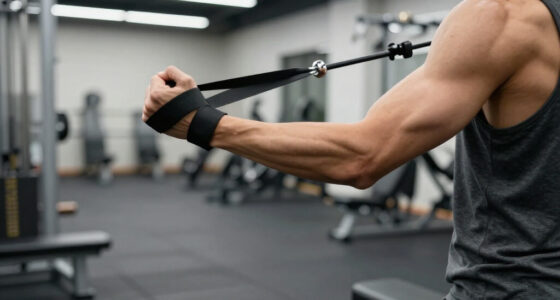
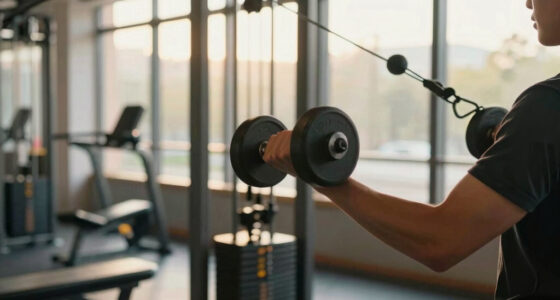
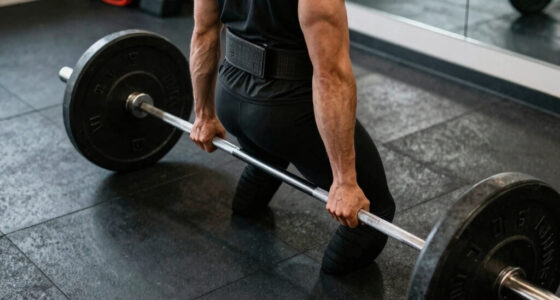
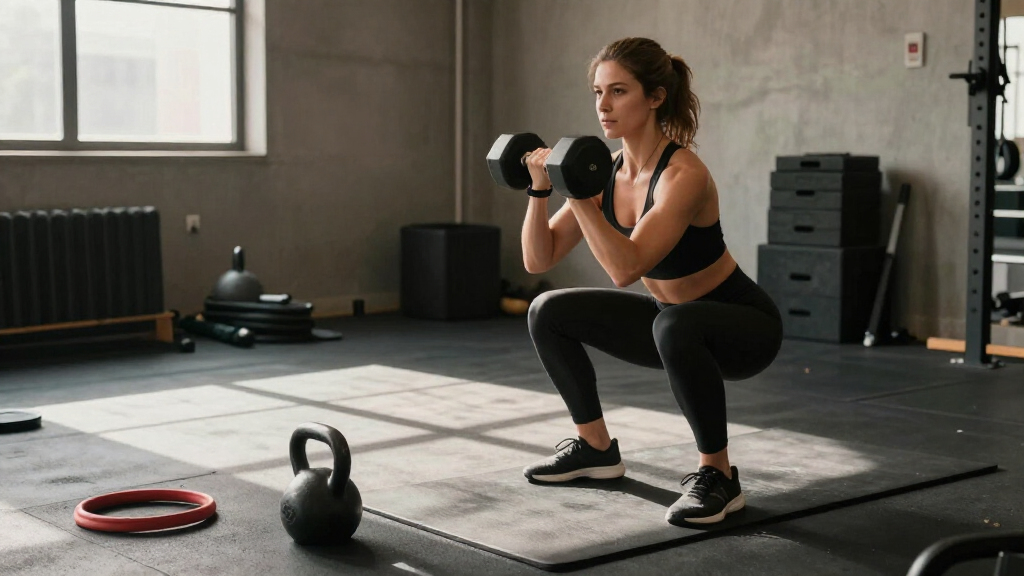
The circuit combines a dumbbell squat to press, a deadlift to row, a lateral lunge to curl and a glute bridge to chest press. Each movement links two actions, so the routine includes squatting, hinging at the hips, stepping sideways, pressing weights overhead or away from the chest, and rowing. The trainer says these compound movements are intended to target the upper body, lower body and core.
The instructions call for 12 repetitions of each exercise, followed by a repeat of the sequence from the beginning. The exercise descriptions list three sets of 12 repetitions for each movement. The article does not specify the dumbbell weight or whether the 15-minute estimate includes rest periods. That means readers may finish in more or less time depending on their pace, experience and breaks.
Fit&Well’s trainer says people new to regular exercise can move at a comfortable pace and rest when needed. As strength and endurance improve, the trainer suggests reducing rest periods or moving at a quicker tempo, while keeping proper form ahead of speed. The source advises stopping if pain goes beyond ordinary muscle fatigue and checking with a doctor. It also suggests beginners practice the deadlift movement without weights before adding dumbbells.
A Short Session With Several Movement Patterns
The routine offers a practical format for readers who find it hard to fit exercise around work and family commitments. Combining movements into a circuit can place several exercises in one short session, and the trainer’s advice to scale pace and rest makes clear that completing it within 15 minutes is not the only measure of success.
Its potential usefulness depends on a reader’s fitness level, available equipment and ability to perform the movements comfortably. The source presents the workout as a trainer’s recommendation; it does not report a study showing that this particular sequence builds strength or that 15 minutes is sufficient for every person. Readers should treat the time estimate as a guide and adjust the routine to their circumstances.
The form cues also matter because the exercises combine several actions. The trainer advises keeping a neutral spine during the deadlift and row, avoiding excessive forward leaning during the lateral lunge, and limiting lower-back arching during the bridge and chest press. Those instructions emphasize controlled movement and manageable resistance as the routine becomes more familiar.
How the Circuit Is Set Up
The article frames the workout around a common constraint: the trainer says many clients have limited time because of work and family obligations. The proposed response is a circuit-style session, in which participants complete one exercise and move to the next before repeating the sequence. The instructions do not set a fixed rest interval, so the session is not a precisely timed protocol.
Each exercise joins movements that involve different parts of the body. The squat to press combines a squat with an overhead press. The deadlift to row pairs a hip hinge with a pull toward the hips. The lateral lunge to curl alternates side lunges and biceps curls, while the glute bridge to chest press combines hip lifting with a press from the floor. Together, the four exercises provide the article’s full-body framing.
The source includes technique notes for each move rather than a prescribed weight. For the squat to press, it recommends lighter dumbbells if the back rounds or the torso tips forward. For the deadlift to row, it advises avoiding shrugged shoulders and practicing the hinge without weights if needed. These are the trainer’s cues, not a substitute for individualized coaching.
Time and Training Effects Vary
The published guidance does not identify the trainer by name in the supplied material, give a publication date, or state how the 15-minute estimate was calculated. It also does not provide a recommended dumbbell weight, rest duration, or warm-up. The trainer suggests reducing rest periods or moving at a quicker tempo as strength and endurance improve. Readers therefore cannot tell from the article alone how closely their session should match the time estimate.
The source does not present research measuring the routine’s effects on strength, fitness or injury risk. The claim that the exercises target multiple body areas is the trainer’s description of the movements; individual results will depend on factors such as resistance, technique and training history. The article also does not address whether every exercise is suitable for people with existing injuries or health conditions.
The source advises stopping if pain exceeds muscle fatigue and checking with a doctor. Sharp or unusual pain should not be treated as a reason to push through the circuit.
Adjust the Routine to Your Pace
The trainer’s guidance supports taking longer than 15 minutes, resting when needed and practicing the deadlift pattern without weights if needed. For the squat to press, the article recommends lighter dumbbells if form falters. For anyone who already knows the movements, the article suggests gradually shortening rest or increasing pace as strength and endurance develop, while maintaining steady technique.
The source does not announce a follow-up study, a new version of the routine or a scheduled update. Its practical direction is to use the sequence as a trainer’s suggested workout and stop and check with a doctor if pain goes beyond muscle fatigue. How long it takes and whether it fits a reader’s needs remain individual questions.
Key Questions
What exercises are in the 15-minute workout?
The circuit lists a dumbbell squat to press, deadlift to row, lateral lunge to curl, and glute bridge to chest press.
How many repetitions does the trainer recommend?
The instructions specify 12 repetitions per exercise and say to repeat the sequence. The descriptions list three sets of 12 for each movement, but the source does not state a fixed number of circuit rounds for the 15-minute estimate.
Does the workout have to take exactly 15 minutes?
No. The trainer says the routine may take beginners longer and advises moving at a comfortable pace and resting when needed. The source does not define rest periods or explain how the time estimate was set.
What should someone do if an exercise hurts?
The trainer advises stopping if pain goes beyond muscle fatigue and checking with a doctor. People with existing health conditions or uncertainty about an exercise can seek professional guidance before continuing.
Source: rss
Fall Picks
fall essentials
As an affiliate, we earn on qualifying purchases.