
TL;DR
Physical therapist Devin Trachman recommends the sit-to-stand exercise as a way to build strength used in walking and other daily movements. Her suggested routine is two to three sets of eight to 10 repetitions, with chair arms or other support available for people who need it. The source does not report clinical trial results or evidence that the exercise alone improves walking for everyone.
Physical therapist Devin Trachman recommends the sit-to-stand exercise as a practical way to strengthen muscles used in walking and everyday movement, according to a Fit&Well report. She suggests two to three sets of eight to 10 repetitions, with support from chair arms or a sturdy surface if needed; the report presents this as expert guidance, not as a result from a cited trial.

Get workout gear delivered free with Prime
- Fast, free delivery on millions of items
- Prime Video, Amazon Music and more included
- Member-only deals all year
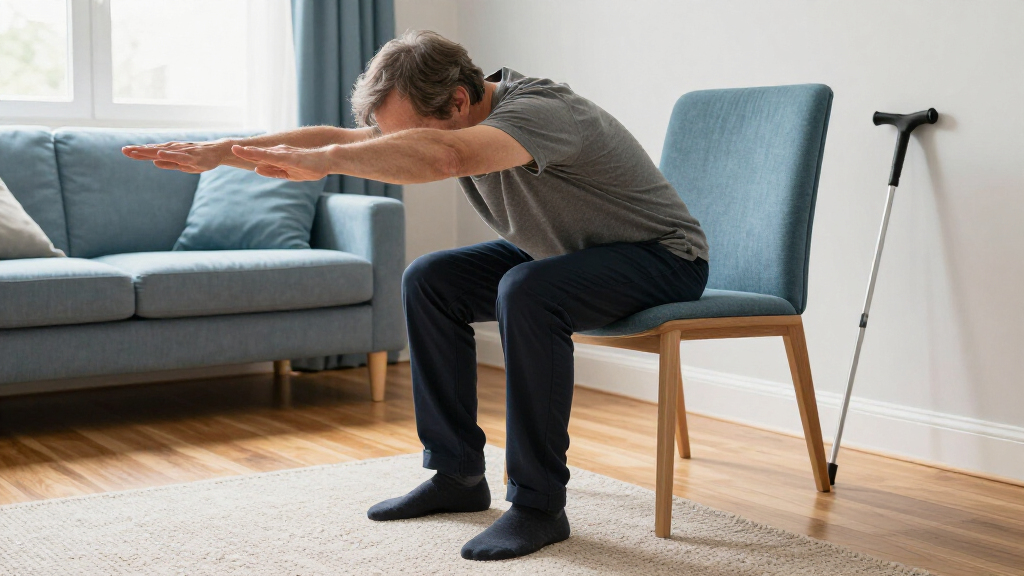
The exercise involves sitting near the front of a sturdy chair, placing both feet flat and about shoulder-width apart, then leaning the chest slightly forward while keeping the back straight. The person pushes through the heels to stand fully upright and lowers back into the chair with control. Trachman says it works the quadriceps, gluteus maximus and core stabilizers.
Fit&Well lists a target of two to three sets of eight to 10 repetitions, with 60 seconds of rest. Its instructions say to avoid using the hands if possible. For people who need help rising, the report recommends using a chair with armrests for light support or a sturdy table or support in front. The suggested modification makes the movement more accessible while a person builds strength.
Trachman, identified in the report as a clinical director and physical therapist at Physical Therapy Central in West Edmond, links declining activity with weaker muscles, reduced balance and lower endurance. She argues that these changes can make walking feel harder and that strength work may help people feel more capable. Those statements are her professional perspective as quoted by the outlet; the article does not provide measurements of outcomes or a study evaluating this particular routine.
Strength for Everyday Walking
Sit-to-stands rehearse a movement people need to get out of chairs, and the lower-body strength involved also supports tasks such as walking and climbing stairs, according to Trachman. A chair-based exercise may offer a manageable starting point for people who find a general instruction to walk more difficult to act on. The report’s central point is that building strength can complement walking practice rather than replace it.
The recommendation also speaks to a cycle described by Trachman: when walking becomes tiring or uncomfortable, people may move less, which can further reduce strength and endurance. She says even small gains in strength can contribute to walking endurance and quality of life. That is an attributed professional claim, not a quantified promise. The source gives no specific estimate of how much the exercise changes walking ability, or how quickly any change might occur.
The report provides a clear setup, repetition range and supported modification. It does not discuss how the exercise may suit people with different needs or circumstances.
Products Worth Considering

Garmin Venu 4 GPS Smartwatch, 45 mm, Slate with Black Silicone Band

Withings Body Smart Wi-Fi and Bluetooth Body Composition Scale

Garmin Venu 3S GPS Fitness Smartwatch, 41 mm, French Gray
As an affiliate, we earn on qualifying purchases.
Why Walking Can Feel Harder
The Fit&Well report frames its advice around changes that can accompany aging, including a decline in muscle mass and mobility. It also notes that reduced walking is not necessarily a direct result of age alone. Trachman says people may walk less because life gets busy, pain develops or walking feels more tiring than it once did. The outlet does not provide population data or research findings to quantify how common these reasons are.
Trachman’s approach is to build physical capacity and confidence, rather than simply tell people to increase their walking. The featured exercise uses a chair and does not require specialist equipment. Her professional background, as described by Fit&Well, includes a Doctor of Physical Therapy degree and board certification as an orthopaedic clinical specialist in 2024. That information identifies the source of the recommendation; it does not make the article a personalized assessment.
““If I could only prescribe one exercise to improve walking, this would be it.””
— Devin Trachman, physical therapist, as quoted by Fit&Well
Evidence and Individual Fit
The report does not cite a clinical study comparing sit-to-stands with other exercises, nor does it establish that this routine improves walking for all age groups or health conditions. It provides no outcome data, timeframe for results, or comparison group. Trachman’s phrase about prescribing one exercise is an expert recommendation, not evidence that sit-to-stands are uniquely effective.
The source offers armrests and a sturdy support as modifications, but it does not assess an individual’s balance, strength, pain or fall risk. It also does not provide advice about when to stop the movement or seek professional guidance.
How Readers Can Apply the Advice
The source does not announce a follow-up study, clinical program or scheduled update. Its immediate guidance is to start with a stable chair and use support when needed, rather than force a hands-free version. Readers who want to try the routine can follow the listed range of eight to 10 repetitions for two to three sets, resting for 60 seconds, while adjusting the movement to their abilities.
The report does not state how often to perform the exercise or give a timeline for expected improvement, so those decisions should not be inferred from the recommendation alone.
Key Questions
Which exercise does Devin Trachman recommend for walking?
She recommends sit-to-stands: rising from a chair and lowering back down with control. She describes the movement as a way to build strength used in walking and other daily tasks.
How many sit-to-stands does the report suggest?
Fit&Well lists two to three sets of eight to 10 repetitions, with 60 seconds of rest. The source does not say this dosage is suitable for everyone.
Can I use my hands or a chair for support?
Yes. The report suggests using a chair with armrests for light help or placing a sturdy support in front if needed. It advises avoiding hand support only if possible, not at the expense of safety.
Is this exercise proven to improve walking for everyone?
The source does not cite a trial or provide outcome data showing that sit-to-stands improve walking for everyone. It reports Trachman’s professional recommendation, so results and suitability may vary.
What if standing from a chair causes pain or feels unsafe?
Do not force the movement. Consider stopping and asking a physical therapist or qualified clinician for guidance, particularly if you have pain, balance concerns or a pre-existing condition.
Source: rss