
TL;DR

Get workout gear delivered free with Prime
- Fast, free delivery on millions of items
- Prime Video, Amazon Music and more included
- Member-only deals all year
A quality weight bench should be adjustable, stable, and durable. Look for models supporting at least 600 lbs, with space-saving features and multi-functionality for versatile workouts. Staying informed about recent design improvements helps you pick the best fit for your needs.
Imagine your perfect home gym. You want equipment that’s sturdy, versatile, and fits into your space without sacrificing safety or comfort. The truth is, choosing a weight bench isn’t just about price or brand—it’s about understanding what features truly matter for your workouts and your safety. With so many options, knowing what to look for can save you money and frustration down the line.
In this guide, you’ll learn how to spot a quality weight bench, the latest innovations that can boost your workout experience, and practical tips to find a model that will last. Whether you’re upgrading your current setup or starting fresh, these insights will help you make an informed choice that supports your fitness journey.
Prioritize adjustable features for maximum exercise versatility and safety.
Choose a bench with at least 600 lbs weight capacity to support heavy lifts and ensure longevity.
Stable construction with wide, non-slip feet prevents wobbling and accidents.
Opt for high-density, sweat-resistant padding for comfort during longer sessions.
Consider foldable or space-efficient designs if your workout area is limited.
Home gym buyer’s field guide
What to Look For in a Quality Weight Bench
A good bench is more than a padded platform. It should create a stable, adjustable and durable foundation for training—without overwhelming your room or introducing avoidable safety risks.
The features that earn their floor space
Prioritize engineering that supports safe movement and frequent use. Cosmetic details matter far less than secure locks, frame geometry and materials that remain dependable under load.
Secure adjustability
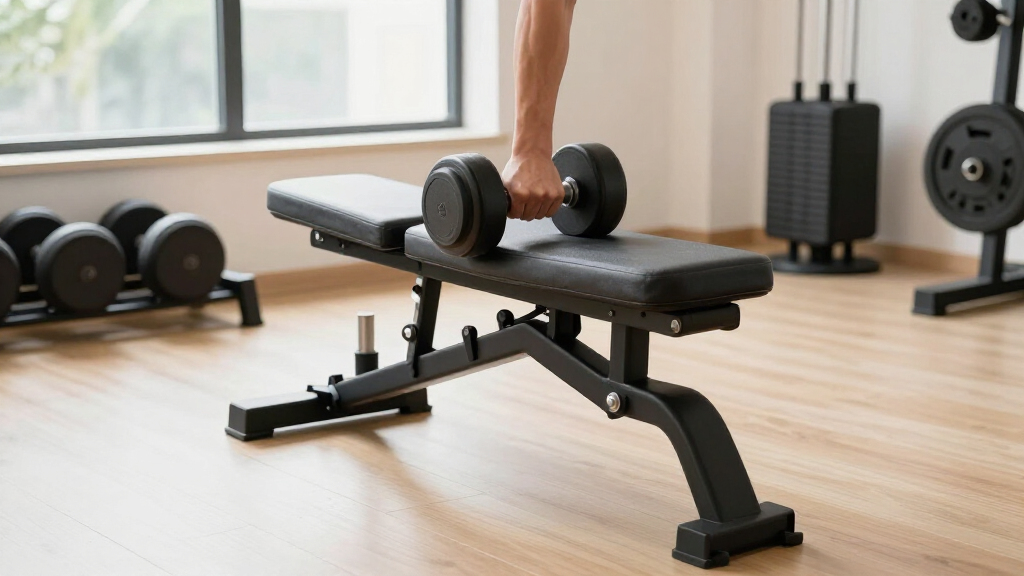
Multiple flat, incline and decline positions expand exercise variety. Quick-release pins or ratchet systems should engage cleanly with no slipping.
Test every lockA planted frame
Wide rubberized feet, reinforced joints and balanced geometry prevent shifting, rocking or tipping during presses and transitions.
Zero visible wobbleReal load capacity
The rating must include both your body weight and the load you lift. A 600-pound minimum provides a useful safety and progression buffer.
600 LB minimumSupportive padding
High-density foam helps distribute pressure without collapsing. A textured, sweat-resistant cover improves grip and cleanability.
About 2″ dense foamUsable dimensions
The back pad should support your torso without restricting shoulder movement. Check both training clearance and stored dimensions.
Measure before buyingEquipment compatibility
Confirm rack height, barbell clearance and attachment fit. Wheels, leg rollers and curl accessories add value only when they match your routine.
Routine over extrasWhich bench type fits your training?
Adjustable models offer the broadest exercise range, while flat benches trade versatility for simplicity. Foldable benches suit compact rooms but demand extra scrutiny at hinges and locks.
| Decision factor | Flat bench | Adjustable bench | Foldable bench |
|---|---|---|---|
| Exercise variety | ~ Focused | ✓ Broadest range | ✓ Often broad |
| Maximum simplicity | ✓ Few moving parts | ~ More mechanisms | ✗ Hinges add complexity |
| Compact storage | ✗ Fixed footprint | ~ Model dependent | ✓ Primary advantage |
| Heavy-lift stability | ✓ Usually excellent | ✓ With strong locks | ~ Inspect carefully |
| Best match | Power basics | Most home gyms | Small spaces |
From steel frame to confident rep
Stability is a system. Strong materials mean little if narrow feet, weak joints or loose adjustment hardware allow the bench to shift.
Heavy-duty steel resists flex under combined body and lifting load.
Reinforced welds and tight hardware distribute force through the structure.
Wide non-slip feet keep the frame planted across common flooring.
A bench must fit your body and your room
Comfort supports consistency, while thoughtful storage keeps the gym usable. Map the full workout zone—not just the bench’s listed dimensions.
Reference dimensions
These are practical shopping cues, not universal standards. Confirm the manufacturer’s exact specifications.
The showroom test
Five checks to perform before purchase or during the return window.
Useful innovation—not novelty
Newer designs can make transitions faster and storage easier. The best improvements reinforce the bench’s core job rather than distracting from it.
Fast adjustment
Ratchets, quick-release pins and pneumatic systems can shorten transitions while improving position confidence.
High practical valueFold-flat storage
Collapsible frames, vertical storage and transport wheels reclaim living space between training sessions.
Space essentialMulti-function add-ons
Leg developers, curl pads and resistance anchors expand options when attachment points remain rigid and secure.
Routine dependentSmart integration
Digital tracking and app compatibility are emerging, but remain niche compared with proven structural features.
Optional extraThe quality chain
Buy the foundation, not the feature list.
The strongest choice combines secure adjustability, at least 600 pounds of capacity, stable construction, dense padding and a footprint that fits your life. Extra attachments and digital features come after those essentials.
Why Adjustability Matters More Than You Think
Adjustability is the secret sauce of a versatile weight bench. A bench that can tilt to multiple angles—flat, incline, and decline—opens up hundreds of exercises. Think about doing a bench press, shoulder press, or core work—all on one piece of equipment. For example, a bench that easily shifts from flat to a 45-degree incline with a quick pin makes transitions smooth and safer.
Modern benches often include ratchet systems or quick-release pins, letting you change positions in seconds. This is especially handy if you work out alone and need to switch between exercises quickly. Plus, adjustable benches support your progress—what’s challenging today might be too easy in a few months, and adjustability makes scaling simple.
Beyond convenience, adjustability enhances safety by allowing proper positioning tailored to each exercise. For instance, incline settings can reduce shoulder strain during presses, and decline positions can target lower chest muscles more effectively. However, tradeoffs include potential wobbling if the locking mechanisms aren’t secure or added weight and complexity, which might make the bench less portable. The key is choosing a model with sturdy locking systems that won’t slip during heavy lifts, ensuring safety and longevity.
Deeply understanding why adjustability matters helps you see its value beyond just convenience. It allows you to customize your workouts for better muscle engagement and reduces the risk of injury caused by improper angles or unstable positions. The tradeoff with added complexity is worth it if it means safer, more effective training, but always prioritize quality locking mechanisms to avoid safety hazards.
adjustable weight bench for home gym
As an affiliate, we earn on qualifying purchases.
As an affiliate, we earn on qualifying purchases.
How to Pick a Bench That Won’t Wobble or Break
Stability is king when it comes to safety and performance. A quality weight bench is made from thick, high-grade steel—think 11-gauge or thicker—to handle heavy lifts without wobbling. For example, a bench supporting at least 600 lbs typically uses reinforced steel and wide, non-slip feet to stay put during even your most vigorous reps. This stability translates directly into safer workouts, reducing the risk of accidents caused by shifting or tipping over.
Check the construction: do the joints look welded solid? Are the legs wide enough? For instance, a bench with rubberized, wide feet can prevent slipping on hardwood floors or carpet, giving you confidence during heavy presses or dips. The design of the frame also matters—triangular or reinforced joint structures distribute weight more evenly, increasing durability and stability under load.
Remember, a wobbly bench isn’t just annoying—it’s dangerous. Invest in one with a solid frame and secure locking mechanisms for adjustable parts. This ensures your equipment remains stable throughout your workout, maintaining safety and performance, especially as you increase weight or intensity. The tradeoff is often a slightly higher cost and weight, but the added safety and durability are well worth it.
Deeply evaluating the construction quality and stability features of your bench is crucial because even minor wobbles can compromise form, cause injury, or limit your lifting capacity. A stable bench supports your progress and keeps you safe from accidents, which is why investing in well-made frames with reinforced joints and non-slip feet is essential for long-term use and peace of mind.
heavy-duty weight bench 600 lbs capacity
As an affiliate, we earn on qualifying purchases.
As an affiliate, we earn on qualifying purchases.
What Makes a Bench Comfortable Enough to Keep You Going
Comfort isn’t just about feeling good—it’s about staying consistent. Thick, high-density foam padding—at least 2 inches—provides cushioning during long sessions. For example, a bench with durable, sweat-resistant upholstery can withstand frequent use without tearing or flattening.
Imagine doing a set of 15 reps on a bench with hard, thin padding—your shoulders and back will pay the price. Good padding absorbs some of the impact, reducing fatigue and discomfort, so you can focus on your form and results. Proper cushioning also helps prevent pressure points that can cause numbness or soreness, especially during extended workouts.
Look for surfaces that are easy to clean, resistant to sweat, and won’t leave you slipping. A textured, non-slip cover adds extra grip, especially when your hands are sweaty. Choosing quality padding and coverings means fewer distractions and more focus on your lifts, which ultimately leads to better results and fewer injuries caused by slipping or discomfort.
Understanding the importance of comfort helps you stay motivated and maintain proper form over time. When your padding is inadequate, you’re more likely to experience discomfort or even develop joint or muscle strain, which can derail your progress. High-quality, supportive padding reduces these risks, enabling you to train longer and more consistently, ultimately accelerating your gains.
space-saving multi-function weight bench
As an affiliate, we earn on qualifying purchases.
As an affiliate, we earn on qualifying purchases.
Size, Space, and Storage: Finding a Bench That Fits Your Life
You want a bench that fits comfortably in your space but isn’t so small you limit your exercises. Consider the footprint—most adjustable benches range from 50 to 70 inches long and about 20 inches wide. For example, a foldable model that folds in half can slip into a closet or behind a door when not in use.
If space is tight, look for compact, multi-use designs. Some benches come with wheels for easy movement, or fold flat for storage. For instance, a fold-up bench can go from standing upright to tucked away in seconds, perfect for small apartments or shared spaces. This flexibility allows you to maximize your workout area without sacrificing functionality.
Deeply considering your space constraints and workout routine helps prevent frustration and makes your gym setup more inviting. A bench that’s too large or cumbersome can discourage regular use, while one that’s too small might limit your exercise options. Think about your typical exercises—if you do leg presses or core work, ensure the size supports these movements comfortably. Proper sizing and smart storage solutions can make your home gym more functional and motivating, encouraging consistent workouts.
sturdy workout bench with non-slip feet
As an affiliate, we earn on qualifying purchases.
As an affiliate, we earn on qualifying purchases.
Latest Tech and Features Making Modern Benches Better
Recent innovations have transformed weight benches into multi-tasking tools. Quick-release adjustment pins, ratchet mechanisms, or pneumatic systems let you change angles faster and more securely. For example, a bench with a ratchet system can lock into multiple positions with a simple click, saving time and effort.
Foldable, space-saving designs are now common—perfect for home gyms with limited space. Some models even include attachments like preacher curl pads, leg extension/curl stations, or resistance band hooks, making your bench a multi-functional powerhouse. These features expand the range of exercises, allowing you to target muscles more effectively and diversify your workouts.
Materials have also improved—rust-resistant coatings, eco-friendly upholstery, and high-density foam make these benches last longer and feel better under your hands. While some high-end models incorporate digital features like workout tracking, most focus on durability and usability. These technological advances mean you can enjoy a safer, more comfortable, and more efficient workout experience, with equipment that adapts to your evolving needs.
Understanding these technological improvements helps you choose a bench that not only lasts longer but also enhances your workout efficiency. Features like space-saving designs and attachment options make your gym more versatile, while durable materials ensure your investment stands the test of time. Recognizing these innovations can help you select a bench that truly complements your fitness journey and adapts as your goals evolve.
Frequently Asked Questions
What is the most important feature to look for in a weight bench?
Stability and durability come first. Look for a bench with a solid steel frame, wide non-slip feet, and secure locking mechanisms to keep you safe during lifts.How much weight should my bench support?
Aim for a capacity of at least 600 lbs. This supports heavy lifts safely and allows room to grow as your strength increases.Are adjustable benches worth the extra cost?
Absolutely. They offer greater exercise variety, better support for different angles, and more value over time compared to flat-only models.Can I use a weight bench for other exercises?
Yes. Many benches support bodyweight exercises, core work, and circuit routines. Multi-function models expand your options even further.How do I know if a bench fits my space?
Measure your area first. Look for benches with foldable or compact designs, and consider models that can be stored upright or easily moved.Conclusion
Picking a quality weight bench isn’t just about saving money. It’s about investing in your safety, variety, and long-term progress. Focus on stability, adjustability, and durability—these are the pillars of a good bench that will serve your fitness goals for years to come.
Next time you shop, picture yourself confidently lifting, knowing your equipment is supporting you every step of the way. A well-chosen bench is more than just a tool; it’s a partner in your fitness journey.
Columbus Day / Indigenous Peoples' Day Picks
long weekend sales
As an affiliate, we earn on qualifying purchases.