TL;DR
Compact adjustable dumbbells combine multiple weight settings in one pair of handles, helping you store less equipment while training with different loads. Before buying, compare the full weight range and increments, check whether listed weights apply to one dumbbell or the pair, and make sure the size, adjustment system, and care instructions fit how you plan to lift.
A single pair of handles can take the place of several dumbbell pairs, which is handy when your “home gym” is a corner beside the sofa. Compact adjustable dumbbells let you change the load with a dial, selector, pin, or removable plates, then return the weights to a tray or storage area. That can clear floor space without limiting you to one weight.

Get workout gear delivered free with Prime
- Fast, free delivery on millions of items
- Prime Video, Amazon Music and more included
- Member-only deals all year
The trade-off is that adjustable designs do not all feel or work alike. A set may have a broad weight range but large jumps between settings, or store neatly while feeling long in your hands. You’ll learn what to compare, how to check the adjustment system, and which details matter for your space and workouts, with key facts and practical checks to help you shop with care.
Think of the set like a small toolbox: fewer things to store, but each part needs to suit the job. A beginner doing rows and presses in a spare room may value easy changes and light starting weights. Someone lifting heavier may care more about the top weight, balance, and how the manufacturer says to set the dumbbells down.
Compare the lightest setting, maximum load, and size of each weight increase; the maximum alone does not tell you whether a set suits your workouts.
Check whether product weights refer to one dumbbell or the pair, and whether the package includes one handle or two.
Compact storage does not guarantee a compact feel: compare length, grip, balance, and plate position.
Before every lift, confirm the selected plates are engaged and seated as the manufacturer instructs.
Compare the total price with the fixed weights you would use, storage space gained, warranty, and replacement-part availability.
What Do Compact Adjustable Dumbbells Actually Replace?
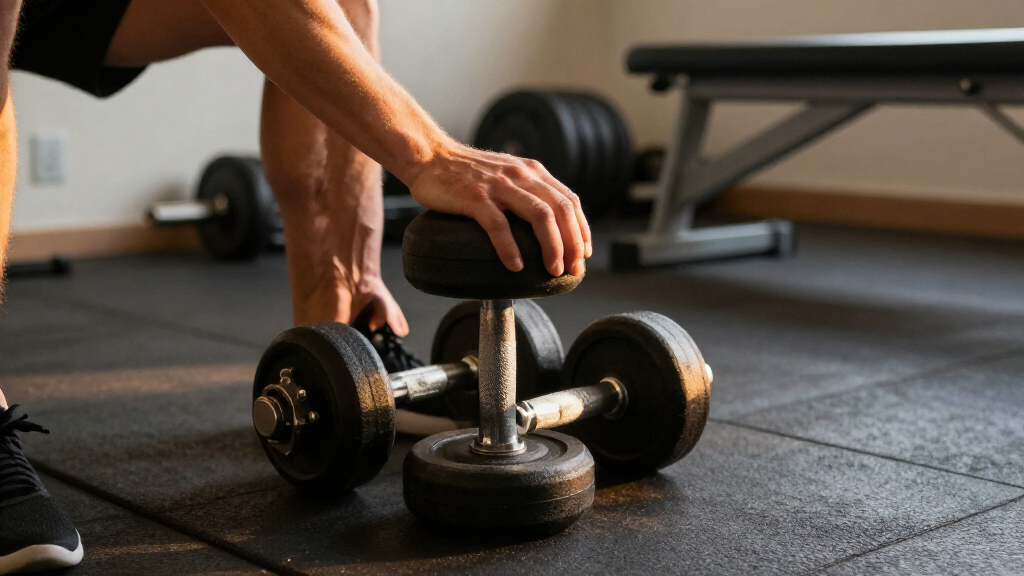
Compact adjustable dumbbells are a pair of handles with changeable weight settings, designed to replace several pairs of fixed dumbbells within the set’s stated range. You select the load by using a mechanism such as a dial or pin, or by adding and removing plates. The central benefit is less equipment to store, though the handles may still feel larger than fixed weights.
For example, if you alternate curls, rows, and presses, you may want different loads for each movement. One set could let you change weights between exercises instead of keeping a row of individual pairs on the floor. That is useful in a small room where every spare patch of floor matters, but the dumbbells still need a stable place to sit between sets.
Think of adjustable weights as a pocket-sized spice rack: one container holds several choices, but you still need the right option for each recipe. A set only replaces fixed weights up to its maximum load and within its available increments. If you regularly need a weight beyond that range, you may still need other equipment.
Read the product listing closely before you compare prices. Some brands give the weight of one dumbbell, while others describe the combined weight of the pair. Check the full range, starting weight, and number of settings, and confirm what the box includes.
Products Worth Considering

Withings BPM Vision Blood Pressure Monitor with Wi-Fi and Bluetooth

Therabody Theragun Prime Plus Heated Deep Tissue Massage Gun, Black

Oura Ring 5 Smart Ring, Gold, Size 8
As an affiliate, we earn on qualifying purchases.
Choose a Weight Range That Matches Your Next Workout
Choose a weight range by checking both its lightest setting and its heaviest setting, then look at how much each adjustment changes the load. Smaller increments give you more options for gradual progress, while a higher maximum matters if your current lifts already require heavy weights. There is no single best range for every user or exercise.
Imagine you can complete your curls with good control at one setting, but the next available setting feels like a sudden jump. That larger jump may make it harder to find a comfortable working load. For a newer lifter, more modest increases can make a set easier to use across a variety of movements.
Meanwhile, the weight that suits a floor press may be too heavy for a lateral raise. A useful set should cover the exercises you plan to do, not just advertise an impressive maximum. Write down a few movements you expect to train and the loads you currently use, then compare that list with the product’s exact increments.
Check the units and sales format as well. A listing that says “up to 50 pounds” may describe each dumbbell or the pair, depending on the seller. Confirm the weight per handle before deciding that the maximum fits your plans.
Compare Adjustment Systems Before You Picture Fast Changes
Adjustment speed depends on the dumbbell’s mechanism and how it fits your routine. Dial and selector designs can make changing loads quick, while spin-lock handles or removable plates may take longer to adjust but have a more hands-on setup. Look for clear instructions and a locking system you can operate without forcing it.
Say you plan a circuit of rows, presses, and curls, with a different load for each. A selector system may save fiddling between movements, while plate-loaded handles may ask you to pause and change the plates. That pause can be fine if you train at a steady pace; it may frustrate you if you prefer to move quickly through a session.
Before lifting, set the dumbbell down as directed and check that the selected plates are seated and locked. If the selector does not turn smoothly or the plates do not sit correctly, do not force it or lift the handle anyway. Secure engagement comes first, whether the mechanism uses a dial, pin, or lock collar.
If possible, try the selector before you buy or watch the manufacturer’s demonstration. A smooth mechanism and instructions you can follow matter more than a product page’s promise of quick changes. Check the warranty and care guidance too, since mechanisms and coverage vary by model.
Check How the Dumbbells Feel in Your Hands
A compact adjustable dumbbell can save storage space without feeling compact during a lift. Its length, handle thickness, balance, and plate placement all affect how it sits in your hand. “Compact” often describes the space needed to put the set away more reliably than the shape you feel while exercising.
Picture holding a long dumbbell close to your shoulder for a curl. If the plates extend far beyond your grip, the weight can feel awkward even when the stated load suits you. On a press or row, that same shape may work well—or bump your arm or torso, depending on the movement and the dumbbell’s dimensions.
Look for the handle diameter, overall length, grip texture, and any available product photos showing the dumbbell at different settings. If you can visit a showroom or borrow a set, try familiar movements with a light load. A short test can tell you more than a polished listing photo.
For example, a person with smaller hands may find a thick handle harder to grip securely, while a longer handle may feel unwieldy during a close-grip exercise. Fit depends on your hands and movements, so compare dimensions where the manufacturer provides them and use a controlled load to judge the feel.
Weigh the Storage and Cost Trade-Off
Adjustable dumbbells often cost more upfront than a small number of fixed pairs, but they can replace many pairs and reduce clutter. Whether that trade-off makes sense depends on the set’s build, weight range, warranty, and how many fixed weights you would otherwise buy. Space saved has real value when you have nowhere to store a rack.
For instance, a renter who trains beside a desk may prefer one tray that slides under a bench to several pairs scattered across the room. Someone with a dedicated garage gym and heavy lifting goals may prefer fixed dumbbells for certain exercises or higher loads. Your room, budget, and training habits shape the better choice.
Compare the price of the complete set with the cost of fixed pairs covering the weights you actually use. Check whether the set includes one or two handles, a storage tray, or any extras. App workouts or subscriptions sometimes appear alongside equipment, but they are separate features and may add recurring costs; they do not change the dumbbell’s weight range or feel.
Replacement parts and warranty terms also affect value over time. A lower sticker price can be less appealing if the maker gives little guidance about repairs or care. Count the storage space you gain and the equipment you still may need before you settle on a price comparison.
Use a Simple Buying Checklist to Narrow Your Options
To choose compact adjustable dumbbells, compare the details that affect fit, training options, safe use, and total cost. Start with the weights you use now, then check the product specifications against your space and the movements you plan to do. A short list can cut through a page full of shiny features.
- Check the range: Note the lightest and heaviest settings and every increase between them.
- Confirm the listing: Find out whether the stated weight is per dumbbell or for the pair, and whether you buy one or two handles.
- Compare the shape: Look at handle diameter, dumbbell length, grip, balance, and plate position.
- Try the adjustment: Read the instructions and check how the selector, pin, or plate locks into place.
- Review the care terms: Look for guidance on storage, cleaning, dropping, warranty coverage, and replacement parts.
Suppose two sets cover similar loads. One offers smaller increments but takes more time to adjust; the other changes quickly but has a shape that feels bulky in your hands. Your buying list helps you choose based on your training, instead of assuming the quickest mechanism or highest maximum is automatically the best fit.
Keep the checklist handy while comparing manufacturer pages. If a detail you care about—such as replacement parts or exact dimensions—is missing, contact the seller or maker before purchase. Clear specifications make a better comparison than a broad “all-in-one” claim.
Keep Your Set Ready With Careful Setup and Storage
Keep adjustable dumbbells in good working order by following the manufacturer’s instructions, setting the tray on a stable surface, and checking that the selected weight is fully engaged before each lift. Many selector-style models are meant to be returned to their trays rather than dropped. A drop can damage parts or loosen components, and may affect warranty coverage.
Picture finishing a set of presses and letting the dumbbells fall to the floor. With fixed weights, that may be a familiar sight; with some selector designs, the impact can reach the adjustment mechanism. Set them down under control and return them to the storage position the way the instructions show.
Inspect the handles, plates, and selector from time to time, especially if you notice unusual movement or resistance. Keep the adjustment area free from debris, and use only cleaning methods the manufacturer recommends. If something does not seat properly, stop using that setting until you have checked the instructions or contacted the maker.
Someone training in a shared living room can put the tray away after a session and reclaim the floor. That small routine helps keep the weights easy to find and reduces clutter around the workout area. Store the tray securely, leave room to lift and return each dumbbell, and follow the product’s specific care guidance.
Frequently Asked Questions
Are compact adjustable dumbbells worth buying?
They can be a good fit if you have limited storage and want several weight settings in one set. Compare the upfront price with the fixed pairs you would otherwise buy, and consider whether the shape and maximum load suit your workouts.
What weight range should I choose?
Start with the weights you use for your planned exercises and check the set’s lightest and heaviest settings. Also compare the size of each increase: smaller increments offer more choices as you build strength gradually.
Are adjustable dumbbells sold individually or as a pair?
Both formats exist, and product listings may state a weight per dumbbell or for the pair. Check the listing and package contents so you know how many handles you are buying and what each can weigh.
Can I drop compact adjustable dumbbells?
Many selector-style models are designed to be returned to their trays, not dropped. Check the manufacturer’s instructions and warranty, then lower the dumbbells under control after each set.
Do compact adjustable dumbbells replace a full rack?
They can replace multiple fixed pairs within their stated range, which can free up floor space. They may not match a full rack’s maximum load or the size and feel of fixed dumbbells, so compare the set with your actual training needs.
Conclusion
Choose a set that matches the weights you use, the movements you enjoy, and the space you have. Check its increments, dimensions, adjustment instructions, and care terms before buying, then set each dumbbell down with control and follow the maker’s guidance.
The best set for a small home gym is the one you can store easily, grip comfortably, and use safely—ready in its tray when the next workout calls.