TL;DR

Get workout gear delivered free with Prime
- Fast, free delivery on millions of items
- Prime Video, Amazon Music and more included
- Member-only deals all year
Cable machines offer guided, safer workouts ideal for beginners, while free weights promote muscle stabilization and are more budget-friendly. Combining both can maximize your home gym’s effectiveness.
If you’re setting up a home gym, you’ll quickly notice two main options: cable machines and free weights. Each brings its own set of strengths and challenges. Knowing what they do best helps you choose what fits your space, budget, and goals.
In this guide, you’ll learn the real differences—what they’re good at, what they’re not, and how recent innovations make both more accessible. Whether you want targeted muscle work, full-body strength, or something in between, understanding these tools will keep your workouts effective and safe.
Free weights activate more stabilizer muscles, boosting functional strength.
Cable machines are safer for beginners due to guided movement paths.
Combining both tools creates a more balanced, versatile home workout.
Free weights are usually more budget-friendly and space-efficient.
Recent innovations make cable systems more accessible and adaptable for home use.
Cable Machines vs Free Weights at Home
One offers guided control. The other demands total-body stability. The smartest home gym is not built around hype—it is built around your space, budget, experience, and training goals.
Cable machines offer guided, confidence-building workouts that suit beginners and isolation work. Free weights activate more stabilizer muscles, cost less, and fit more easily into small spaces. A thoughtful combination creates the most balanced home gym.
Guided precision or unrestricted strength?
Both systems support progressive overload and muscle growth. Their real difference is how much control the equipment provides—and how much control your body must create.
Controlled resistance
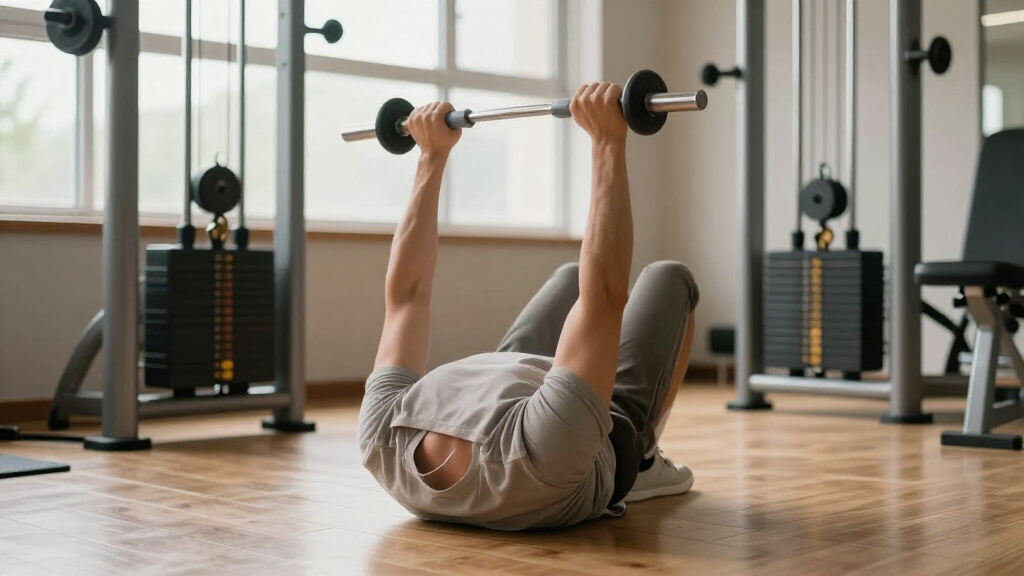
Adjustable pulleys keep tension through a smooth, guided path. This makes cables approachable for new lifters and effective for precise muscle targeting.
- Guided motion reduces balance demands
- Excellent for isolation and rehabilitation-style work
- Multiple pulley heights expand exercise angles
- Usually needs dedicated clearance and a larger budget
Self-stabilized movement
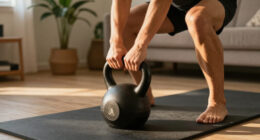
Dumbbells, kettlebells, and barbells move freely through space. Your body must coordinate the load, creating strength that transfers well to sport and daily life.
- Greater stabilizer and core involvement
- Natural options for squats, presses, and deadlifts
- Compact, durable, and typically more affordable
- Technique and load management matter more
Where each system earns its place
These qualitative bars summarize the research-backed tradeoffs. They compare relative strengths, not clinical performance scores.
Cable machines
Best when control, targeted tension, and beginner confidence lead the decision.
Free weights
Best when functional strength, flexible movement, value, and compact storage lead.
Key insight · Free weights generally demand greater stabilizer-muscle activation; cables provide a more controlled resistance path.
The home-gym comparison
Choose according to the constraint that matters most today. You can always expand the system as your confidence, strength, or available space grows.
| Decision factor | Cable machines | Free weights |
|---|---|---|
| Exercise variety | ✓ StrongAdjustable pulleys create many controlled angles for isolation and full-body movements. | ✓ StrongWide freedom for compound lifts, isolation work, grip changes, and natural movement paths. |
| Beginner safety | ✓ AdvantageGuided resistance reduces balance demands and helps users focus on technique. | ~ Learn firstSafe with suitable loads, but coordination and form require more attention. |
| Stabilizer demand | ~ ModerateExcellent targeted tension, but the machine handles part of the stabilization. | ✓ AdvantageThe lifter controls the load in multiple directions, recruiting more stabilizers. |
| Space needed | ✗ MoreEven compact stations need a fixed location plus safe operating clearance. | ✓ LessDumbbells and kettlebells store easily; a barbell setup needs additional floor space. |
| Upfront cost | ✗ HigherQuality frames, pulley hardware, weight stacks, and installation raise the entry price. | ✓ LowerA modest dumbbell set can cover the whole body and expand incrementally. |
| Best use | ✓ PrecisionIsolation, controlled volume, confidence building, and constant-tension exercises. | ✓ FunctionCompound strength, coordination, athletic carryover, and budget-conscious training. |
A practical progression path
Start with the smallest system that keeps you consistent. Add complexity only when it supports a clear training need.
Define the goal
General strength, muscle growth, rehabilitation, or sport performance.
Measure space
Include storage, exercise clearance, ceiling height, and safe walkways.
Set the budget
Account for plates, bench, flooring, attachments, and maintenance.
Choose the base
Pick cables for guidance or free weights for value and stabilization.
Fill the gap
Add a compact pulley or dumbbells to create a balanced hybrid system.
Compact cable stations
Foldable and wall-mounted formats bring multi-angle training into smaller home spaces.
Adjustable systems
Customizable pulley positions and modular attachments improve access and versatility.
Hybrid equipment
Pulley attachments and plate-loaded designs bridge cables and existing free weights.
Digital integration
Connected resistance products add guided sessions, progress tracking, and coaching.
Modular design
Expandable platforms let the gym evolve without replacing the entire setup.
Smarter storage
Adjustable dumbbells and vertical racks reduce clutter while preserving load options.
How equipment becomes useful strength
No tool creates results alone. The meaningful chain runs from the right equipment choice to repeatable training and progressive challenge.
Match your biggest constraint
Choose cables when guided movement, isolation, and confidence matter most. Choose free weights when budget, storage, compound lifting, and functional strength lead the decision.
Build a hybrid toolbox
Use free weights as the flexible strength foundation, then add cables for targeted work and new resistance angles. The combination covers more needs without forcing every exercise into one system.
Frequently asked questions
The best equipment is the setup you can use safely, progress consistently, and keep accessible at home.
Which builds more muscle?
Both can build muscle effectively. Free weights add stabilization demands, while cables excel at controlled tension and isolation. Programming and progressive overload matter most.
Are cables safer for beginners?
Generally, yes. Guided paths reduce balance demands and make it easier to learn muscle control, though appropriate loading and good setup still matter.
Can free weights train the whole body?
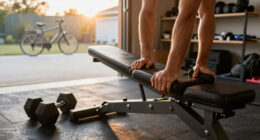
Yes. Dumbbells, a barbell, and a bench can cover every major muscle group through compound and isolation exercises.
Which is more affordable?
Free weights usually have a lower entry cost and long service life. Cable machines require more upfront investment but offer extensive exercise variety.
Which needs less space?
Free weights are typically easier to store. Cable machines need a fixed footprint and movement clearance, although compact wall-mounted models reduce the gap.
What should a beginner buy first?
Start with equipment that supports safe consistency. Adjustable dumbbells offer value; a compact cable setup may suit anyone who prioritizes guidance and targeted training.
What makes cable machines a safe choice for beginners?
Cable machines are built with guided tracks that help control your movements. This means less chance of losing balance or using improper form, especially when lifting heavier weights. For example, doing a pulldown on a cable station feels natural and controlled, even if you’re new to strength training.
Many beginners find that the guided path reduces the intimidation factor. Plus, adjustable pulleys let you target specific muscles without complex setup. For a home gym, a compact cable station can fit into a corner, providing a variety of exercises without taking over your entire space.
Moreover, the controlled nature of cable machines allows beginners to focus on proper technique and muscle engagement without the risk of sudden, uncontrolled movements. This focus on safety and form is crucial early on because it helps build a solid foundation, reducing injury risk and ensuring effective training. As users gain confidence and strength, they can gradually incorporate more complex free-weight exercises, knowing they have a safe base to progress from.
home cable machine for strength training
As an affiliate, we earn on qualifying purchases.
As an affiliate, we earn on qualifying purchases.
How do free weights help you build real-world strength?
Free weights challenge your muscles to work in all directions, just like moving objects in daily life. Think of lifting a heavy box or picking up groceries—these actions rely on stability and coordination. Using dumbbells or a barbell, you engage more muscles to keep your balance and control the weight.
This multi-directional engagement means you’re training your body to handle unpredictable forces and stabilize your joints, which is crucial for functional strength. For example, performing a squat with a barbell not only targets your thighs and glutes but also activates your core and stabilizer muscles to maintain posture. This comprehensive activation translates well into everyday activities, reducing injury risk and improving overall movement quality.
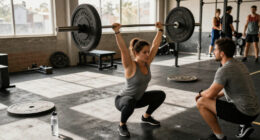
However, this comes with tradeoffs: free weights require proper technique and supervision to avoid injury, especially as weights increase. They demand more coordination and balance, which can be challenging for beginners. The upside is that mastering these skills develops a resilient, adaptable strength that is applicable in real-world situations and athletic endeavors. But it also means investing time in learning correct form and gradually progressing to heavier loads, which might be intimidating at first but pays off in long-term functional benefits.
As an affiliate, we earn on qualifying purchases.
Comparison table: Cable Machines vs Free Weights
| Feature | Cable Machines | Free Weights |
|---|---|---|
| Exercise Variety | Controlled, precise movements ideal for isolation and rehab exercises, but limited for compound, multi-directional motions. This precision helps target specific muscles and correct imbalances, but may restrict natural movement patterns necessary for athletic performance. | |
| Space Needed | Moderate to large; compact models can save space but still require clearance for movement. This means planning your setup carefully to ensure safe, unrestricted movement without cluttering your home gym. | |
| Cost | Typically higher upfront cost, especially for quality models with multiple features, and potential maintenance expenses. Consider whether the investment aligns with your long-term goals and budget, as cheaper models may lack durability or versatility. | |
| Safety for Beginners | High; guided paths minimize improper form and injury risk, making them especially suitable for novices. This safety aspect can boost confidence and help establish proper technique early on, reducing the likelihood of developing bad habits or injuries. | |
| Muscle Engagement | Excellent for targeting specific muscles and controlled movements; less effective for developing stabilization muscles. While great for focusing on particular areas, they might not challenge your core and stabilizers as much as free weights do, which can limit overall functional strength development. |
Understanding these tradeoffs helps you decide which tool aligns with your training priorities. If your main goal is safe, targeted training with minimal risk, cable machines are a solid choice. Conversely, if you aim for comprehensive, functional strength that prepares you for real-world activities, incorporating free weights is essential. Ideally, a balanced approach leveraging both can provide a well-rounded fitness foundation.
As an affiliate, we earn on qualifying purchases.
Frequently Asked Questions
Is one better for building muscle than the other?
Both can build muscle effectively, but free weights often promote more functional and stabilizer muscle activation. Cable machines excel at isolating specific muscles and controlled movements. Combining both provides the best results.
Are cable machines safer for beginners?
Yes, because guided paths reduce improper form and injury risk. They’re especially helpful when you’re still learning proper lifting techniques.
Can I do everything with just free weights?
Yes, with a good set of dumbbells, a barbell, and a bench, you can target all major muscle groups. Adding cables can expand your options and help with isolation exercises.
Which is more affordable long-term?
Free weights tend to be more budget-friendly upfront and last many years. Cables might require a bigger initial investment but offer more exercise variety in a smaller space.
How much space do I need for each?
Free weights take up minimal space—dumbbells can fit in a small corner. Cable machines need more room to operate safely, especially for larger models.
As an affiliate, we earn on qualifying purchases.
Conclusion
Both cable machines and free weights can serve your home gym well—especially when you understand their strengths. A mix of both keeps your workouts fresh, effective, and suited to your goals. Think of your home gym as a toolbox: choosing the right tools makes all the difference.
Remember, consistency beats fancy equipment. Focus on what motivates you, and your strength will grow—no matter which setup you pick.
Halloween Picks
halloween
As an affiliate, we earn on qualifying purchases.