
TL;DR

Get workout gear delivered free with Prime
- Fast, free delivery on millions of items
- Prime Video, Amazon Music and more included
- Member-only deals all year
Your smartwatch’s VO2 Max estimate gives a general idea of your aerobic capacity based on heart rate and activity data. While useful for tracking trends, it’s not a precise measurement and can be influenced by external factors. Use it as a motivational tool, not a diagnostic test.
Have you ever glanced at your smartwatch after a run and seen that number — your VO2 Max estimate? It’s tempting to think of it as a precise snapshot of your cardiovascular health, but the truth is more nuanced. These numbers are derived from complex algorithms that analyze your heart rate, pace, and even GPS data. They give you a glimpse into your aerobic capacity — a key marker of fitness — but they aren’t foolproof.
Understanding what your watch’s VO2 Max estimate actually means can help you make better use of it. Are you getting fitter? Or just seeing a rough approximation? This guide breaks down how these estimates work, their limitations, and how to interpret them without falling for hype or confusion.
Your smartwatch’s VO2 Max estimate provides a useful trend, not a precise measurement. Expect variability and external influences.
Consistently tracking VO2 Max over months reveals your fitness trajectory better than individual readings.
External factors like weather, hydration, or stress can skew the numbers. Focus on long-term patterns.
Use VO2 Max estimates as motivation and guidance, not as a health diagnosis or exact figure.
Combine VO2 Max data with other health metrics for a fuller picture of your fitness and recovery.
Wearable Tech · Fitness Data Decoded
What “VO2 Max Estimate” on Your Watch Actually Means
Your smartwatch’s VO2 Max number is derived from algorithms analyzing heart rate, pace, and GPS data. It’s a powerful trend indicator for your aerobic capacity — not a precise lab measurement. Here’s how to read it the right way.
01 · The Foundation
What Is VO2 Max, and Why Should You Care?
VO2 Max is the maximum amount of oxygen your body can use during intense exercise — think of it as the engine power of your cardiovascular system. The higher it is, the more efficiently your heart, lungs, and muscles work together.
Imagine two runners over a 5K: one with a VO2 Max of 50 ml/kg/min, the other at 35. The first sustains higher intensities longer because their body delivers and uses oxygen more efficiently. For athletes, it measures endurance; for everyone else, it’s a strong indicator of overall heart health.
Labs measure it with specialized equipment. Your watch estimates it from real-world data — which is exactly why context matters.
Same 5K · Different Engines
Values in ml/kg/min · higher = better aerobic capacity
02 · The Pipeline
How Your Watch Comes Up With the Number
Sensors Collect Data
Heart rate, pace, movement and GPS streams recorded during steady running or cycling.
Heart Rate Response
How fast your HR climbs at a given pace — and how quickly it recovers afterward.
Proprietary Algorithm
Pace, terrain and HR data feed a model trained against lab-derived VO2 Max values.
Your Estimate
An educated guess at your aerobic capacity — best read as a trend, not a verdict.
03 · Reality Check
Watch vs. Lab Test — It’s a Forecast, Not a Verdict
| Dimension | Smartwatch Estimate | Laboratory Test |
|---|---|---|
| Accuracy | ~ Varies by 10–15% or more | ✓ Accurate within 2–3% |
| Conditions | ~ Real-world: weather, terrain, altitude | ✓ Controlled treadmill / cycle ergometer |
| Cost & Access | ✓ Free, continuous, on your wrist | ✗ Expensive, requires a clinic visit |
| Frequency | ✓ Updated after every workout | ✗ Occasional snapshots |
| Influenced By | Hydration, fatigue, stress, watch fit | Oxygen sensors, precise measurement |
| Best Use | Trend tracking & motivation | Diagnosis & precise assessment |
04 · Smart Usage
How to Use Your Estimate Without Getting Obsessed
Trend / Monthly
Track, Don’t Stare
Check your VO2 Max monthly or quarterly. Is it moving upward over months? That’s the signal that matters.
Context / Combined
Merge Your Metrics
Pair it with resting heart rate, sleep quality, and perceived effort for a full picture of fitness and recovery.
Mindset / Long Game
Skip Single Numbers
Don’t fixate on one reading or chase a score. Consistency and effort beat any single data point.
Motivation / Goals
Celebrate Small Wins
Reward incremental improvements and set realistic goals anchored to your own baseline.
Caution / External
Expect Blips
A dip after a stressful week isn’t lost fitness — weather, stress, or fatigue can temporarily skew the number.
Bottom Line
One Piece of the Puzzle
A rising trend means your heart and lungs are adapting. A sudden sustained drop is your cue to rest more — or check in with a professional.
05 · The Payoff
The Real Benefits of Tracking It
Seeing your VO2 Max trend upward over months can boost motivation more than counting steps or calories — it’s a tangible measure of aerobic progress. When numbers improve, your heart and lungs are adapting, which builds confidence and consistency.
Tracking also identifies plateaus and declines: a cue to add interval work, focus on recovery, or — if a drop is sudden and significant — consider a check-up. It’s a supportive, motivating tool, not a definitive verdict on your health.
Training Tip
HIIT Moves the Needle
Consistent aerobic exercise — especially high-intensity interval training — produces measurable VO2 Max improvements over time. Progress varies by starting point and effort.
FAQ
Frequently Asked Questions
Q1How accurate are smartwatch estimates?
Good general trends, but variability can reach 10–15% versus lab tests due to external factors and device limitations. Use them as a motivational guide.
Q2Can I improve my VO2 Max?
Yes — regular aerobic training, particularly HIIT, leads to measurable improvements. Results depend on your starting point and consistency.
Q3What’s a “good” score for my age and gender?
“Good” varies by age, sex, and fitness level. Roughly 40–50 ml/kg/min is average for many adults; consult demographic charts for precise benchmarks.
Q4Should I rely on my watch alone?
No — use it as a trend indicator. For health concerns or precise assessment, consult a healthcare professional for proper testing.
Q5How often should I check it?
Monthly or quarterly works well for tracking progress. Avoid obsessing over daily fluctuations; focus on the overall trend.
What Is VO2 Max, and Why Should You Care?
VO2 Max is the maximum amount of oxygen your body can use during intense exercise. Think of it as the engine power of your cardiovascular system. The higher your VO2 Max, the more efficiently your heart, lungs, and muscles work together. For athletes, it’s a reliable measure of endurance; for everyday folks, it’s a helpful indicator of overall heart health.
Imagine two runners, both running a 5K. One has a VO2 Max of 50 ml/kg/min, the other 35 ml/kg/min. The first can sustain higher intensities longer because their body uses oxygen more efficiently. This number isn’t just about fitness — it’s about how well your body can deliver and use oxygen during activity.
While labs measure VO2 Max with specialized equipment, your watch estimates it based on real-world data. That’s why understanding this estimate helps you gauge progress over time, even if it’s not perfectly precise.
As an affiliate, we earn on qualifying purchases.
How Your Watch Comes Up With a VO2 Max Estimate
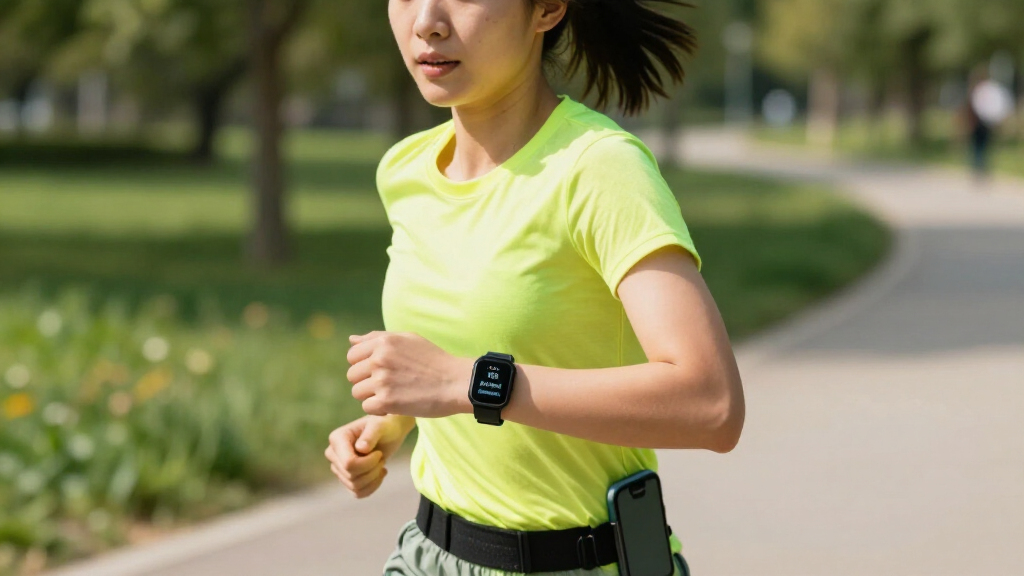
Every smartwatch uses a mix of heart rate data, movement, and sometimes GPS to estimate VO2 Max. When you run or cycle, your device tracks how your heart rate responds to effort. If your heart rate climbs rapidly and recovers quickly, the watch interprets that as a sign of good aerobic fitness.
For example, during a brisk run, your watch analyzes how high your heart rate gets at a given pace and how quickly it drops afterward. Combining this with your pace and terrain data, it plugs those numbers into a proprietary algorithm that estimates your VO2 Max.
Think of it like a chef tasting a soup — they can’t see every ingredient, but they can make an educated guess about the overall flavor based on what they taste and smell. Similarly, your watch makes educated guesses based on the data it gathers.
Most devices focus on steady-state running or cycling because these activities produce consistent data, making estimates more reliable. But even then, external factors can skew results.
fitness tracker with VO2 Max estimation
As an affiliate, we earn on qualifying purchases.
As an affiliate, we earn on qualifying purchases.
Why Your Watch’s VO2 Max Is Not a Lab Test — But That’s Okay
Think of your watch’s VO2 Max estimate as a weather forecast. It’s a good general indicator but not an exact science. Lab tests measure VO2 Max in controlled conditions using a treadmill or cycle ergometer, with oxygen sensors and precise measurements. These tests can be accurate within 2-3%.
Your watch, on the other hand, relies on algorithms that approximate this value, which can vary by 10-15% or more. Factors like hydration, fatigue, stress, or even how snug your watch sits can influence the reading.
For example, if you’re dehydrated or running at altitude, your heart rate response might differ from normal, slightly skewing the estimate. That’s why it’s better to see these numbers as a trend — are they improving over months or not?
Remember, these estimates are designed to motivate and track progress, not diagnose health conditions. If you’re concerned about your heart health, consult a medical professional for proper testing.
As an affiliate, we earn on qualifying purchases.
How to Use Your VO2 Max Estimate Without Getting Obsessed
- Track trends over time: Check your VO2 Max monthly or quarterly to see if it’s moving upward or downward.
- Combine with other metrics: Look at resting heart rate, sleep quality, and perceived effort to get a full picture.
- Avoid fixating on a single number: Focus on consistency and effort rather than chasing a specific score.
- Use it as motivation: Celebrate small improvements and set realistic goals based on your baseline.
- Remember external influences: Weather, stress, or fatigue can temporarily affect your VO2 Max estimate. Don’t overreact to daily fluctuations.
For example, if your VO2 Max dips after a stressful week, don’t assume your fitness declined. It might just be a temporary blip caused by external factors.
Most importantly, use this data to guide your training, not to define your worth or health. It’s one piece of the puzzle.
As an affiliate, we earn on qualifying purchases.
The Real Benefits of Tracking Your VO2 Max (Even If It’s Not Perfect)
Seeing your VO2 Max trend upward over months can boost motivation more than just counting steps or calories. It provides a tangible measure of your aerobic progress. When you notice improvements, it’s a sign your heart and lungs are adapting, which can boost confidence and consistency.
Plus, tracking VO2 Max helps identify plateaus or declines. That’s a cue to tweak your training — maybe add more interval work or focus on recovery.
Remember, these estimates aren’t a health diagnosis, but they can alert you if your fitness or recovery patterns change significantly. A sudden drop might mean you need more rest or a check-up.
In short, your VO2 Max estimate is a supportive, motivating tool — not a definitive verdict. Use it to stay curious about your progress and to fine-tune your training.
Frequently Asked Questions
How accurate are VO2 Max estimates from my smartwatch?
They provide a good general trend but aren’t as precise as lab tests. Variability can reach 10-15% due to external factors and device limitations. Use them as a motivational guide rather than an exact measurement.
Can I improve my VO2 Max with training?
Yes, consistent aerobic exercise, especially high-intensity interval training (HIIT), can lead to measurable improvements in your VO2 Max over time. Just remember, progress varies based on your starting point and effort.
What’s considered a good VO2 Max score for my age and gender?
“Good” scores depend on age, sex, and fitness level. Generally, higher is better. For example, a VO2 Max of 40-50 ml/kg/min is average for many adults, but check online charts for specific benchmarks based on your demographics.
Should I rely solely on my watch’s VO2 Max estimate?
Use it as a helpful trend indicator, but don’t depend on it exclusively. For health concerns or precise assessment, consult a healthcare professional for proper testing and advice.
How often should I check my VO2 Max?
Monthly or quarterly checks work well for tracking progress, especially if you’re actively training. Avoid obsessing over daily fluctuations; focus on overall trends.
Conclusion
Your watch’s VO2 Max estimate is a helpful snapshot of your aerobic fitness — a motivator, not a medical test. Think of it as a weather forecast for your cardiovascular engine: useful for planning your day, but not an absolute. When you see it improve over time, celebrate that progress.
Remember, real fitness isn’t just a number — it’s steady effort, consistency, and listening to your body. Keep training smart, stay curious, and let your wearable guide you without obsessing over every fluctuation.
Halloween Picks
halloween
As an affiliate, we earn on qualifying purchases.