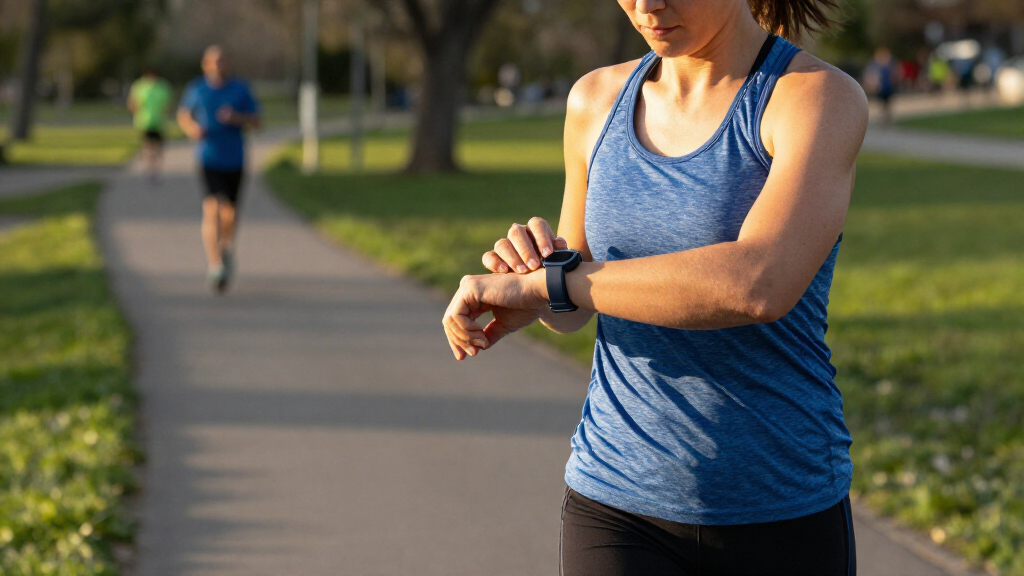

Beginners choosing between the Fitbit Inspire 3 and Garmin vívosmart 5 are weighing two ways to build a tracking habit: Fitbit keeps everyday activity and sleep approachable, while Garmin provides more workout detail and performance context. Both are slim wristbands with small displays, heart-rate tracking, sleep data, and phone-connected GPS for outdoor activity. Neither has built-in GPS, so a phone is needed to map outdoor routes.

Get workout gear delivered free with Prime
- Fast, free delivery on millions of items
- Prime Video, Amazon Music and more included
- Member-only deals all year

Fitness Tracker with 24/7 Heart Rate, Blood Oxygen, Blood Pressure, Sleep Monitor, 5 ATM Waterproof, Step and Calorie Counter – S…
- ✔ Display: 1.1-inch AMOLED HD touch screen
- ✔ Battery life: 10–14 days typical use; standby up to 30 days
- ✔ Water resistance: 5 ATM

Fitbit Air Screenless Activity Tracker – Obsidian
- ✔ Display: Screenless
- ✔ Battery life: Up to 7 days
- ✔ Fast charging: 5 minutes for one day of battery life
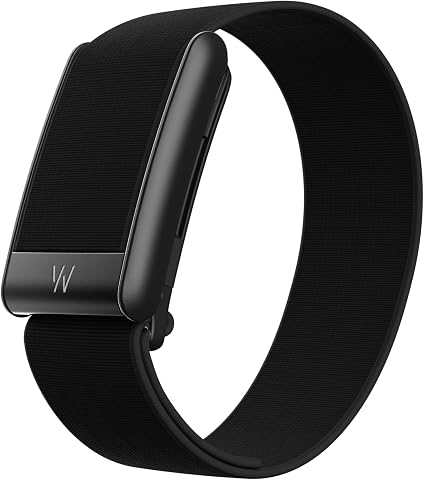
WHOOP 5.0 Screenless Fitness, Health & Sleep Wearable – 12‑Month Membership
- ✔ Membership: 12-month WHOOP One membership included
- ✔ Battery life: 14+ days
- ✔ Water resistance: IP68 up to 10 m for 2 hours
The practical choice is how much guidance you want from your tracker. The Inspire 3 is the easier entry point for someone who wants steps, sleep, and gentle nudges without much setup. The vívosmart 5 makes more sense for a beginner who already exercises regularly and wants richer training metrics, even if that means learning a denser app. The differences are moderate overall, but the better fit depends on whether ease or exercise detail will keep you engaged.
At a Glance
| Criteria | Fitbit Inspire 3 | Garmin vívosmart 5 | Winner |
|---|---|---|---|
| Ease for beginners | Simple interface and clear daily goals | More data and settings to learn | A |
| Workout and training data | Core workout modes and heart-rate tracking | Broader activity insights, including Body Battery and training context | B |
| Sleep and wellness tracking | Sleep stages, overnight metrics, and wellness features | Sleep score, stress tracking, and Body Battery energy estimates | Depends |
| Battery life | Up to 10 days, depending on use | Up to 7 days, depending on use | A |
| Outdoor activity tracking | Connected GPS uses your phone | Connected GPS uses your phone | Tie |
| Smart features | Notifications, alarms, and basic controls | Notifications and limited phone controls; no onboard music or payments | Tie |
| Cost and value | Usually the lower-cost option; some features may require Fitbit Premium | Often costs more, with Garmin Connect data available without a subscription | Depends |
Fitness Tracker with 24/7 Heart Rate, Blood Oxygen, Blood Pressure, Sleep Monitor, 5 ATM Waterproof, Step and Calorie Counter – S…
The Zeacool earns the top spot for beginners because it makes feedback visible right on the wrist. Its 1.1-inch AMOLED touch display can show activity and time without opening an app, which is a practical advantage over the screenless Fitbit Air and WHOOP 5.0. For someone still deciding whether tracking is useful, that quick access can make steps, workouts, and daily movement feel less abstract.It also covers familiar starting points: heart rate, sleep, steps, calories, and 25 sport modes. The advertised 10–14 days of typical battery life is competitive with Fitbit Air’s seven days, although WHOOP claims 14+ days. Its 5 ATM water resistance is suitable for swimming and everyday water exposure according to the listing, giving it a broader casual-use profile than a tracker that must be removed for every splash.The tradeoff is that this is a basic watch-style tracker rather than a polished coaching system. It has no built-in GPS, so outdoor route tracking is not its strength, and the ABS housing may feel less refined than a dedicated band. Its listed blood pressure, oxygen, and temperature metrics can look comprehensive, but we should treat them as general wellness indicators, not clinical measurements. Compared with Fitbit Air, Zeacool wins on immediate visibility; compared with WHOOP, it asks less of us in the way of recovery-focused interpretation.
Pros:
- The AMOLED screen makes everyday stats easy to check without reaching for a phone.
- Includes 25 sport modes for trying different activities.
- Listed battery life of 10–14 days reduces frequent charging.
- 5 ATM water resistance supports swimming and routine water exposure.
Cons:
- No built-in GPS; outdoor tracking depends on connected phone functionality.
- ABS construction may feel less premium than the screenless bands.
- Wellness readings such as blood pressure should not replace medical devices.
Best for: Beginners who want an affordable-feeling, watch-style starting point with a screen, basic activity categories, and phone-app syncing.
Not ideal for: Runners who need built-in GPS, or buyers who want established coaching and polished recovery guidance rather than a simple set of readings.
Bottom line: For most first-time buyers, Zeacool offers the clearest on-wrist feedback and the gentlest introduction to daily tracking.
“For most first-time buyers, Zeacool offers the clearest on-wrist feedback and the gentlest introduction to daily tracking.”
Fitbit Air Screenless Activity Tracker – Obsidian
Fitbit Air makes the most sense for beginners who want a band they can mostly forget they are wearing. Its lightweight, micro-adjustable fit and screenless design favor all-day and overnight wear, while Google Health provides a place to review activity and coaching. That differs from Zeacool’s watch-like approach: Fitbit trades glanceable wrist stats for a quieter form factor.The sensor set goes beyond steps and heart rate, with SpO2 and skin temperature tracking, and GPS works through a connected smartphone. For a beginner, phone-assisted GPS can be enough for walks or runs if carrying a phone is already part of the routine. The five-minute charge for a day of battery is useful when we forget to top up, though the claimed seven-day battery life is shorter than the Zeacool and WHOOP estimates.We should choose it with its screenless limitations in mind. Checking real-time stats means taking out a phone, and GPS is not independent of that phone. Fitbit Air has a more everyday health and coaching orientation than WHOOP’s stronger focus on recovery and strain, but the listed 64 MB storage may constrain offline logging. Compared with Zeacool, it is more comfortable and discreet for sleep; compared with WHOOP, it has a shorter stated battery life but avoids the stated 12-month membership package structure.
Pros:
- Micro-adjustable band is designed for comfortable daytime and overnight wear.
- Tracks heart rate, SpO2, skin temperature, and movement.
- Five minutes of charging is listed to provide a day of battery.
- Water resistant to 50 meters and compatible with recent Android and iOS versions.
Cons:
- Screenless design means stats are not visible on the wrist.
- GPS requires a connected smartphone.
- Seven-day stated battery life is shorter than the other two picks.
Best for: Beginners who prioritize a low-profile tracker for continuous wear and are comfortable reviewing activity and coaching in a smartphone app.
Not ideal for: Anyone who wants a screen for quick checks, phone-free GPS, or the longest stated battery life in this comparison.
Bottom line: Fitbit Air is the better choice when comfortable, unobtrusive wear matters more than seeing stats at a glance.
“Fitbit Air is the better choice when comfortable, unobtrusive wear matters more than seeing stats at a glance.”
WHOOP 5.0 Screenless Fitness, Health & Sleep Wearable – 12‑Month Membership
WHOOP 5.0 is the most specialized pick here. It centers the experience on sleep, recovery, and strain, with continuous tracking of heart rate, HRV, respiratory rate, resting heart rate, and other metrics. For a beginner who wants help understanding how training and rest fit together, that emphasis can be more instructive than a step counter alone. The screenless format and CoreKnit band are designed for continuous wear, including overnight monitoring.Its stated 14+ day battery life is the longest of these three listings, and the charger is designed to allow on-wrist charging. That can reduce interruptions to sleep tracking. WHOOP also lists IP68 water resistance and a 12-month WHOOP One membership with the device, so we should read the membership terms and understand what ongoing access entails before making it our first tracker.This depth comes with a steeper learning curve and a narrower appeal. Unlike Zeacool, it does not provide a display for quick checks; unlike Fitbit Air, it foregrounds recovery and strain rather than a lighter everyday activity experience. It also requires a subscription for full functionality, which is a significant ongoing commitment for someone who is still testing whether wearable tracking fits their life. The listed accuracy claim is a manufacturer specification, not independent validation. Choose WHOOP when recovery insights are the goal, and skip it if simple on-wrist feedback is what will keep us engaged.
Pros:
- Tracks sleep, recovery, strain, and a broad set of health metrics.
- Screenless band is intended for continuous and overnight wear.
- Listed battery life of 14+ days is longest among these options.
- IP68 water resistance and on-wrist charging support uninterrupted wear.
Cons:
- Full functionality requires a subscription after the included 12-month membership.
- No display for quick activity checks or real-time stats.
- Recovery-focused insights may feel more involved than a beginner needs.
Best for: Beginners with a specific interest in sleep, training load, and recovery who are comfortable using an app and considering a membership.
Not ideal for: First-time buyers seeking a simple screen-based step tracker, or anyone who wants full functionality without an ongoing subscription.
Bottom line: WHOOP 5.0 suits beginners who want recovery coaching as their main reason to track, and can accept membership costs and app dependence.
“WHOOP 5.0 suits beginners who want recovery coaching as their main reason to track, and can accept membership costs and app dependence.”
As an Amazon Associate we earn from qualifying purchases.
Key Differences
The Inspire 3’s advantage is a lower-friction start. Its daily goals, compact design, and simple presentation make it easy to check progress without turning exercise into a data project. Garmin’s vívosmart 5 offers more ways to interpret activity and recovery, but those metrics are useful only if you want to review them and understand how they relate to your routine.
Neither tracker is a full smartwatch or a strong choice for phone-free route recording: both rely on connected GPS. Battery life favors Fitbit on paper, though frequent notifications, screen use, and tracking settings affect real results. Value comes down to whether the Garmin’s added exercise context will change your decisions. If you mainly want to move more and establish consistency, the Inspire 3 is usually the sensible buy. If training insight matters, Garmin can justify its higher typical price.
Detailed Comparison
Ease for beginners (Fitbit Inspire 3 wins — moderate)
Winner: Fitbit Inspire 3; moderate difference. Fitbit presents daily activity and sleep in a more approachable way, which helps new users build a habit before learning a large set of metrics. Garmin’s screens and Garmin Connect app provide plenty of information, but can feel busy at first. Choose Fitbit if you want quick answers; choose Garmin if exploring data is part of the appeal.
Workout and training data (Garmin vívosmart 5 wins — moderate)
Winner: Garmin vívosmart 5; moderate difference. Both track workouts and heart rate, but Garmin adds more context, including Body Battery estimates that combine activity, stress, and recovery signals. That can help an active beginner notice patterns across the day. It is not a substitute for medical advice or a precise measure of readiness, and the extra detail offers little value if you only want to count walks.
Sleep and wellness tracking (minor difference)
Winner: Depends; minor difference. Both provide sleep insights and everyday wellness tracking. Fitbit’s presentation is easier to scan, while Garmin connects sleep and stress information to its Body Battery feature. For a beginner who wants a simple overnight summary, Fitbit is more accessible. Someone who likes connecting recovery and daily activity may prefer Garmin. Treat both as estimates for spotting patterns rather than clinical measurements.
Battery life (Fitbit Inspire 3 wins — minor)
Winner: Fitbit Inspire 3; minor difference. Fitbit rates the Inspire 3 for up to 10 days, compared with up to 7 days for the vívosmart 5. Actual life varies with screen settings, notifications, and tracking use. The longer interval means fewer charging interruptions, a small but useful advantage for beginners trying to wear a tracker consistently.
Outdoor activity tracking (moderate difference)
Winner: Tie; moderate limitation for both. Neither tracker has built-in GPS, so route and pace tracking outdoors depends on carrying a compatible phone and maintaining its connection. Both can suit casual walks and runs when your phone is with you. If you want to leave the phone at home and still record a mapped route, skip both and look for a tracker or watch with onboard GPS.
Smart features (minor difference)
Winner: Tie; minor difference. Both can show phone notifications and offer a modest set of connected features, but neither replaces a smartwatch for apps, payments, or music. The Inspire 3 is focused on tracking rather than broad phone control, and the vívosmart 5 also keeps its smart functions limited. For beginners who want a simple band, that may be enough; users seeking wrist-based convenience should shop elsewhere.
Cost and value (moderate difference)
Winner: Depends; moderate difference. The Inspire 3 is typically the less expensive purchase, making it a lower-risk way to test whether you will wear a tracker. Fitbit places some advanced content behind its Premium subscription, so check whether the features you want are included. Garmin generally offers its core app insights without a subscription, which can make the higher initial price worthwhile for regular exercisers who use the extra data.
Fitbit Inspire 3: Pros and Cons
Pros:
- Approachable daily activity and sleep presentation
- Typically costs less upfront
- Rated for up to 10 days of battery life
- Slim, lightweight design suited to all-day wear
Cons:
- No built-in GPS
- Some advanced Fitbit content requires Premium
- Limited smartwatch functions
- Less training context than the Garmin
Garmin vívosmart 5: Pros and Cons
Pros:
- More activity and recovery context, including Body Battery
- Core Garmin Connect insights do not require a subscription
- Useful for people who already exercise regularly
- Comfortable slim-band format
Cons:
- More information can make the learning curve steeper
- Typically costs more than the Inspire 3
- Rated for up to 7 days of battery life
- No built-in GPS, onboard music, or contactless payments
Who Should Choose What
Choose Fitbit Inspire 3 if:
- You are new to tracking and want clear daily activity and sleep summaries.
- You want to spend less while finding out whether you will wear a tracker.
- Longer time between charges matters more than detailed training metrics.
Choose Garmin vívosmart 5 if:
- You exercise regularly and want more context about activity, stress, and recovery.
- You are willing to learn a more data-rich app and will use its added information.
- You prefer Garmin’s core tracking insights without an ongoing subscription.
Skip both if: You need built-in GPS for phone-free mapped workouts, or want a full smartwatch with apps, payments, and music.
Value for Money
Pay more for the Garmin vívosmart 5 only if its additional activity and recovery context will affect how you train or plan your day. For a new exerciser focused on consistency, the Fitbit Inspire 3 usually offers better value: it covers everyday movement, sleep, and basic workouts at a lower typical upfront cost. Factor in Fitbit Premium if a feature you want sits behind the subscription. Garmin’s stronger value case is for users who will use Garmin Connect regularly and prefer those insights without paying a monthly fee.
Final Verdict
For most beginners, choose the Fitbit Inspire 3. It makes the basic habit of wearing a tracker and checking daily progress easier, costs less in many markets, and lasts longer between charges on its rated battery life. Choose the Garmin vívosmart 5 if you already exercise several times a week and want more training and recovery context; its extra data is worth the higher price only when you will act on it. The deciding factor is simple: pick Fitbit for approachable consistency, Garmin for richer exercise insight. If phone-free GPS or full smartwatch features are requirements, neither is the right fit.
Frequently Asked Questions
Which tracker is better for someone who has never used one?
The Fitbit Inspire 3 is usually easier to start with because its daily activity and sleep summaries are straightforward. The Garmin vívosmart 5 is a better match if you are curious about training and recovery data and do not mind a busier app.
Does either tracker have built-in GPS?
No. Both use connected GPS, which means you need to carry your phone for route tracking during an outdoor walk or run. Pick a device with onboard GPS if you want mapped workouts without your phone.
Is the Garmin vívosmart 5 worth paying more for?
It can be for someone who regularly exercises and will use its additional activity and recovery context. If your main goals are counting steps, tracking sleep, and building a routine, the Inspire 3 is generally the better value.
Do these trackers require subscriptions?
Garmin Connect provides core tracking insights without a subscription. Fitbit offers some advanced content through Premium, so check current plan details and the specific features you want before buying.