For home fitness, the WELLFIT Foldable Treadmill with 12% Auto Incline and Handrails is my best overall pick on paper because it pairs adjustable incline with added support. The YESOUL Treadmill for Seniors stands out for its long handrails and emergency stop, while the DeerRun Under-Desk Walking Pad suits buyers seeking a simpler walking setup with manual incline. The main tradeoffs are between compact storage and a larger supported frame, as well as fixed or manual incline and more adjustable options. Compare each model’s intended use, controls, and support features before choosing. Read on for the full breakdown and guidance for matching a walking pad to your home and routine.

Get workout gear delivered free with Prime
- Fast, free delivery on millions of items
- Prime Video, Amazon Music and more included
- Member-only deals all year
Complete the kit


Key Takeaways
- Incline options differ in both range and effort: the WELLFIT auto-incline model offers adjustment during use, while several picks, including the Cybergoing T10, use a fixed incline and others require manual adjustment.
- Handrails define a different kind of walking pad: the YESOUL emphasizes long rails and an emergency stop, while under-desk-oriented models such as the Superun and DeerRun focus on a lower-profile walking setup.
- Foldable does not mean identical storage: the list includes foldable designs, detachable handlebars, and compact models, so buyers should check the stored footprint and moving requirements rather than relying on the label alone.
- More incline often comes with a more involved setup: models featuring handrails or manual incline adjustment may suit structured workouts better than quick, unobtrusive desk walking.
- The strongest choice depends on the routine, not the longest feature list: supported walking, desk use, beginner-friendly controls, and portability point to different products in this lineup.
| HCOIW Walking Pad Treadmill with 5% Incline, Remote and LED Display |  | Best for Adjustable Under-Desk Walking | Motor: 2.5 hp | Speed range: 1–5 mph | Maximum incline: 5% | VIEW LATEST PRICE | See Our Full Breakdown |
| Cybergoing T10 Walking Pad Treadmill with Fixed 7% Incline |  | Best for a Set Uphill Walking Routine | Motor: Bosch motor; maximum horsepower 1 hp | Speed range: 0.6–4 mph | Incline: Fixed 7% manual incline; set before use | VIEW LATEST PRICE | See Our Full Breakdown |
| WELLFIT Foldable Treadmill with 12% Auto Incline and Handrails |  | Best for Supported Hill and Jogging Workouts | Motor: 3.5 HP brushless | Speed range: 0.6–7.6 mph | Maximum incline: 12% automatic | VIEW LATEST PRICE | See Our Full Breakdown |
| Superun Under-Desk Walking Treadmill with 6% Incline, 2.5 HP Motor |  | Best for Quiet, Ready-to-Use Walking | Motor: 2.5 HP | Speed range: 0.6–3.8 mph | Maximum incline: 6% manual | VIEW LATEST PRICE | See Our Full Breakdown |
| SUOUER V300-PYY Portable Walking Pad Treadmill with Handle Bar and Incline |  | Best Compact Pick for Light Running | Motor: Up to 3 hp | Speed range: 0.6–7.6 mph | Maximum weight recommendation: 350 lbs | VIEW LATEST PRICE | See Our Full Breakdown |
| Rayspace 4-in-1 Foldable Walking Pad with 12% Incline |  | Best for Incline Variety | Motor: 3.5 HP | Speed range: Up to 6 mph | Incline settings: 0%, 6%, and 12% | VIEW LATEST PRICE | See Our Full Breakdown |
| Lacuffy Walking Pad with 6% Manual Incline and Detachable Handlebar |  | Best for Desk-to-Treadmill Flexibility | Motor: 2.5 HP | Speed range: 0.6–3.8 mph | Incline: 6% manual | VIEW LATEST PRICE | See Our Full Breakdown |
| Vyrqenoxi Foldable Walking Pad Treadmill with Manual Incline |  | Best for Programmed Variety | Motor power: 480 W | Speed range: 0.6–6.2 mph | Running area: 35 × 14.4 in | VIEW LATEST PRICE | See Our Full Breakdown |
| YESOUL Treadmill for Seniors with Long Handrails and Emergency Stop |  | Best for Supported Walking | Speed range: 0.6–3.8 mph | Maximum horsepower: 2.5 hp | Weight capacity: 300 lb | VIEW LATEST PRICE | See Our Full Breakdown |
| KASSADIN 380TM-DYG Folding Walking Pad Treadmill with Incline and Handle Bar |  | Best for Faster Running | Motor: 3.5 HP | Speed range: 0.6–10 mph | Maximum weight capacity: 400 lb | VIEW LATEST PRICE | See Our Full Breakdown |
| Vhorilix Compact Walking Pad Treadmill with Remote |  | Best for Tight Spaces | Motor: 2.5 HP (480+ W) | Speed range: 0.6–4 km/h | Maximum user weight: 120 kg (264 lb) | VIEW LATEST PRICE | See Our Full Breakdown |
| CURSOR FITNESS Foldable Walking Pad Treadmill with Handrails and 15% Manual Incline |  | Best for Incline Variety | Motor: 3.0 HP brushless; under 45 dB | Speed range: 0.6–6.2 mph | Manual incline: 0%, 10%, and 15% | VIEW LATEST PRICE | See Our Full Breakdown |
| DeerRun Under-Desk Walking Pad Treadmill with 6% Manual Incline |  | Best for Home Offices | Speed range: 0.6–3.8 mph | Motor: Up to 2.5 hp | Maximum incline: 6%, manual | VIEW LATEST PRICE | See Our Full Breakdown |
| WELLFIT Folding Treadmill with Incline and Handlebar |  | Best for Connected Workouts | Speed range: 0.6–6.2 mph | Motor: Up to 3 hp | Maximum incline: 10%, manual | VIEW LATEST PRICE | See Our Full Breakdown |
| Lifepro PacerMini Walking Pad with Adjustable Incline |  | Best for Gentle Incline Walking | Speed range: 0.5–3 mph | Motor: 0.5 HP; rated below 60 dB | Incline settings: 5% and 7%, manual | VIEW LATEST PRICE | See Our Full Breakdown |
| walking pads for home fitness | Speed range | Motor | Weight |
|---|---|---|---|
| HCOIW Walking Pad Treadmill wi | 1–5 mph | 2.5 hp | — |
| Cybergoing T10 Walking Pad Tre | 0.6–4 mph | Bosch motor; maximum horsepower 1 hp | 36.4 lb |
| WELLFIT Foldable Treadmill wit | 0.6–7.6 mph | 3.5 HP brushless | — |
| Superun Under-Desk Walking Tre | 0.6–3.8 mph | 2.5 HP | 41.3 lbs |
| SUOUER V300-PYY Portable Walki | 0.6–7.6 mph | Up to 3 hp | — |
| Rayspace 4-in-1 Foldable Walki | Up to 6 mph | 3.5 HP | — |
| Lacuffy Walking Pad with 6% Ma | 0.6–3.8 mph | 2.5 HP | — |
| Vyrqenoxi Foldable Walking Pad | 0.6–6.2 mph | — | — |
| YESOUL Treadmill for Seniors w | 0.6–3.8 mph | — | — |
| KASSADIN 380TM-DYG Folding Wal | 0.6–10 mph | 3.5 HP | 40.3 lb |
| Vhorilix Compact Walking Pad T | 0.6–4 km/h | 2.5 HP (480+ W) | 16 kg (36.4 lb) |
| CURSOR FITNESS Foldable Walkin | 0.6–6.2 mph | 3.0 HP brushless; under 45 dB | 39.7 lb |
| DeerRun Under-Desk Walking Pad | 0.6–3.8 mph | Up to 2.5 hp | 36.6 lb |
| WELLFIT Folding Treadmill with | 0.6–6.2 mph | Up to 3 hp | 43.5 lb |
| Lifepro PacerMini Walking Pad | 0.5–3 mph | 0.5 HP; rated below 60 dB | 47 lb |
More Details on Our Top Picks
HCOIW Walking Pad Treadmill with 5% Incline, Remote and LED Display
The HCOIW is a flexible pick for home walkers who want to switch between level walking and a modest uphill challenge without moving to a full-size treadmill. Its adjustable speed up to 5 mph gives it more pace range than the Cybergoing T10, which tops out at 4 mph, while the 5% incline adds some variety for brisk walking. A remote and LED display make speed changes and basic workout tracking straightforward, and the unit arrives assembled.
The tradeoff is that this is still a walking-focused machine, not a running treadmill. Its 15-inch belt width may feel constrained for users who want more lateral room, and its 265-pound capacity is lower than the Cybergoing’s 300 pounds. I’d choose it for a compact home setup with occasional incline work, but not for fast running or users who need a wider deck.
Pros:- Adjustable speed from 1 to 5 mph accommodates leisurely walks and brisker sessions.
- 5% incline offers more workout variation than a flat walking pad.
- Remote and LED display provide convenient adjustments and basic workout metrics.
- Arrives assembled and has a compact profile for home use.
Cons:- The 15-inch belt may feel narrow for users who want extra room to move.
- The 5 mph ceiling rules out faster running.
- Its 265-pound capacity is lower than the Cybergoing T10’s 300-pound limit.
Best for: Home and under-desk walkers who want a selectable incline and a little more speed range than a basic walking-only pad.
Not ideal for: Taller or wider-striding users who want a broad belt, and runners who need speeds beyond 5 mph.
- Motor:2.5 hp
- Speed range:1–5 mph
- Maximum incline:5%
- Maximum weight capacity:265 lbs
- Belt dimensions:15 × 35.4 in
- Overall dimensions:48.7 × 22.4 × 4.5 in
- Item weight:28.7 lbs
- Display metrics:Speed, time, distance, and calories
Our verdict“Choose the HCOIW for compact home walking with adjustable incline and speed, but skip it if you need a wide belt or running pace.”
Cybergoing T10 Walking Pad Treadmill with Fixed 7% Incline
The Cybergoing T10 suits buyers who want an uphill walking challenge built into a compact, rail-free pad. Its fixed 7% incline is steeper than the HCOIW’s 5% setting, but it cannot be adjusted during a workout: the incline must be set before use. That makes this a more focused choice for users who are happy to keep their sessions on a consistent grade, rather than those who want to alternate between flat walking and hills.
Its 300-pound capacity exceeds the HCOIW’s, and app and remote controls offer more than one way to manage a session. The limits are clear: the 4 mph maximum keeps it to walking and brisk walking, while the 15-inch belt may not suit users who want a wider stride area. I’d favor it over the HCOIW for a fixed-grade routine and higher capacity, not for pace flexibility.
Pros:- Fixed 7% incline provides a steeper uphill challenge than the HCOIW’s 5% incline.
- 300-pound maximum capacity is higher than the HCOIW’s 265-pound limit.
- App and remote controls offer flexible ways to manage workouts.
- Compact, rail-free design suits under-desk and small-room setups.
Cons:- The incline is fixed and must be set before the workout.
- Maximum speed of 4 mph limits use to walking and brisk walking.
- The 15-inch belt may feel narrow for some users.
Best for: Walkers who prefer a consistent uphill workout, need a rail-free compact pad, and want a 300-pound capacity.
Not ideal for: Users who want to change incline during a session, need running speeds, or prefer a wider walking surface.
- Motor:Bosch motor; maximum horsepower 1 hp
- Speed range:0.6–4 mph
- Incline:Fixed 7% manual incline; set before use
- Maximum weight capacity:300 lb
- Belt dimensions:15 × 36 in
- Overall dimensions:5.7 × 19.3 × 42.3 in (D × W × H)
- Weight:36.4 lb
- Connectivity and display:Bluetooth; LED display
Our verdict“Pick the Cybergoing T10 for compact, consistent uphill walking and higher capacity, but choose the HCOIW if you want adjustable incline and more speed.”
WELLFIT Foldable Treadmill with 12% Auto Incline and Handrails
The WELLFIT is the most workout-oriented option in this group: unlike the rail-free Cybergoing T10, it has extended handrails, a foldable frame, and speeds up to 7.6 mph for walking, jogging, or running. Its automatic incline up to 12% gives users a broader range of hill work than the HCOIW’s 5% incline or the Superun’s 6% manual setting, with adjustments available without stopping to change the setup.
The 375-pound capacity and multiple controls—including console, remote, voice, and app—make it a more feature-rich choice for varied home workouts. That flexibility comes with a larger, heavier machine: at 57 pounds, it is less convenient to move than the 28.7-pound HCOIW, even with transport wheels. Its 40-inch belt may also feel short for longer strides. I’d choose it for supported, varied sessions, not for a very light or easy-to-store pad.
Pros:- Automatic incline adjusts up to 12%, giving more hill range than the other incline figures in this batch.
- Extended handrails provide extra balance and support.
- Speeds up to 7.6 mph support jogging and running as well as walking.
- Foldable frame, transport wheels, and multiple control options add flexibility for home workouts.
Cons:- At 57 lb, it is heavier to move than the HCOIW and other compact pads here.
- The 40-inch belt may feel short for users with longer strides.
- Its larger handrail-equipped format is less suited to under-desk use than rail-free models.
Best for: Home exercisers who want handrail support, automatic hill adjustment, and room to progress from walking to jogging.
Not ideal for: Buyers who need a lightweight under-desk pad or have a long stride that benefits from a longer running belt.
- Motor:3.5 HP brushless
- Speed range:0.6–7.6 mph
- Maximum incline:12% automatic
- Maximum weight capacity:375 lb
- Running belt dimensions:40 × 16 in
- Folded dimensions:50.4 × 18.5 × 5.5 in
- Item weight:57 lb
- Controls and connectivity:Console buttons, remote, voice commands, and Wellfit app; Bluetooth
- Workout metrics:Calories, distance, incline, speed, and time
Our verdict“Choose the WELLFIT for supported workouts with automatic incline and jogging capability, but not if portability or under-desk fit matters most.”
Superun Under-Desk Walking Treadmill with 6% Incline, 2.5 HP Motor
The Superun makes sense for buyers who want a walking pad they can use straight away: it requires no assembly and is listed below 45 dB, making it a practical fit for home or desk walking where setup and noise matter. Its 6% manual incline adds an uphill option, though it is less steep than the Cybergoing T10’s fixed 7% grade and must be handled as a preset rather than an in-session automatic adjustment.
The Superun’s 300-pound capacity matches the Cybergoing, while its 3.8 mph top speed is slightly lower than that model’s 4 mph ceiling. The deck is also relatively narrow at about 15 inches, and the listed overall dimensions include a 41.28-inch height despite its under-desk positioning; check the intended fit for your setup. I’d favor it for straightforward, quieter walking, not for running or a roomy stride.
Pros:- No assembly required, so it can be put into use without a setup step.
- Listed noise level below 45 dB suits quieter home walking.
- 6% manual incline adds an uphill option.
- 300-pound maximum capacity matches the Cybergoing T10.
Cons:- Maximum speed of 3.8 mph limits it to walking and light jogging.
- Deck width of about 15 inches may feel narrow to some users.
- The incline is manual rather than automatically adjustable.
Best for: Desk walkers who want a ready-to-use machine, a moderate manual incline, and a stated noise level below 45 dB.
Not ideal for: Users who want to jog faster than a light pace, need a wider belt, or require automatic incline changes.
- Motor:2.5 HP
- Speed range:0.6–3.8 mph
- Maximum incline:6% manual
- Maximum weight capacity:300 lbs
- Deck dimensions:35.4 × 14.96 in
- Overall dimensions:42.5 × 24.5 × 41.28 in
- Weight:41.3 lbs
- Noise level:Less than 45 dB
- Assembly:No assembly required
Our verdict“Choose the Superun for quiet, no-assembly walking with a moderate incline, but pick a faster or wider model for jogging and extra stride room.”
SUOUER V300-PYY Portable Walking Pad Treadmill with Handle Bar and Incline
The SUOUER V300-PYY is the best fit here for buyers who want a compact machine that can move beyond walking pace. Its 7.6 mph maximum speed matches the WELLFIT’s top speed and exceeds the HCOIW, Cybergoing, and Superun, so it can support light running as well as walking and jogging. The detachable handles give it more support than rail-free pads such as the Cybergoing T10, while built-in wheels and a folded height under four inches help with storage.
This portability comes with less workout detail in the supplied specs: no incline percentage is stated, so I would not choose it specifically for hill training. The product lists a 41.34 × 18.5-inch deck, but those dimensions do not clarify the belt area, so buyers should verify the usable running surface. At 36.7 pounds, it is easier to move than the 57-pound WELLFIT, though the corded power connection still limits placement.
Pros:- Top speed of 7.6 mph supports light running, unlike the walking-limited Superun and Cybergoing T10.
- Detachable handles offer support while allowing a more compact folded setup.
- Built-in wheels and a folded height of 3.94 inches aid storage.
- At 36.7 pounds, it is lighter than the WELLFIT.
Cons:- The supplied specifications do not state an incline percentage, making hill-training capability unclear.
- The listed deck dimensions do not clarify the usable belt area.
- Corded electric power limits where the treadmill can be placed.
Best for: Small-home users who want a portable pad with detachable handles and enough speed for walking, jogging, and light running.
Not ideal for: Buyers focused on a verified incline range or those who need a clearly specified, spacious running belt.
- Motor:Up to 3 hp
- Speed range:0.6–7.6 mph
- Maximum weight recommendation:350 lbs
- Deck dimensions:41.34 × 18.5 in
- Folded size:42.13 × 18.5 × 3.94 in
- Item weight:36.7 lbs
- Display:18 in LED
- Power source:Corded electric
Our verdict“Choose the SUOUER for compact storage and light-running speed, but favor the WELLFIT if automatic incline and clearly listed workout features matter more.”
Rayspace 4-in-1 Foldable Walking Pad with 12% Incline
The Rayspace is the most versatile choice here for households that want more than steady walking: its three incline levels reach 12%, and its speed range extends to 6 mph for light jogging. Compared with the Lacuffy, it offers a higher incline and more room to increase workout intensity, while the KASSADIN reaches a much higher top speed for users focused on running. The six-level adjustable handlebar can better accommodate different heights, and the deck folds to about 4.4 inches for storage. That flexibility comes with limits: 6 mph is not a fast-running pace, and the product information gives slightly different folded-height figures. I’d choose it for varied home workouts, not for serious run training.
Pros:- Three incline settings, including a 12% maximum, offer more workout variation than the Lacuffy’s 6% incline.
- Supports walking and light jogging at speeds up to 6 mph.
- Six-position handlebar adjustment suits users of different heights.
- Folds to roughly 4.4 inches and has transport wheels for storage.
Cons:- The 6 mph maximum is less suitable for faster running than the KASSADIN’s 10 mph ceiling.
- The listed folded height varies slightly between 4.4 and 4.43 inches.
Best for: Home exercisers who want adjustable incline, light jogging, and a handlebar that can fit different user heights.
Not ideal for: Runners who need speeds above 6 mph or shoppers who want a single, consistent folded-height specification.
- Motor:3.5 HP
- Speed range:Up to 6 mph
- Incline settings:0%, 6%, and 12%
- Weight capacity:350 lb
- Handlebar adjustment:35–47 in; 6 levels
- Display metrics:Time, calories, speed, and distance
- Belt and cushioning:7-layer anti-slip belt; 10 silicone shock absorbers and 4 shock cushions
- Dimensions:42.5 × 22.4 × 4.4 in
- Storage and setup:Folds to about 4.4 in tall; tool-free assembly
Our verdict“Choose the Rayspace if incline range and adaptable support matter more than high-speed running.”
Lacuffy Walking Pad with 6% Manual Incline and Detachable Handlebar
The Lacuffy’s clearest advantage is its detachable handlebar: keep it attached for supported walking, then remove it to use the pad under a desk. That two-mode setup makes it more adaptable to a home office than the YESOUL, whose long handrails are built around supported walking and whose frame does not fold. The tradeoff is a narrower exercise range: the Lacuffy tops out at 3.8 mph, while the Rayspace can reach 6 mph and offers a steeper incline. Its 6% incline is also manual, so changing the grade is less convenient than selecting a setting during a workout. I’d favor this model for walking-focused users who value a convertible setup over running speed or powered incline changes.
Pros:- Detachable handlebar supports both upright treadmill use and under-desk walking.
- Manual 6% incline adds a hill-walking option.
- Remote and app provide workout controls and tracking.
- Wheels and a slim profile support moving and storage.
Cons:- The 3.8 mph maximum is geared to walking rather than faster jogging.
- Incline adjustment is manual, unlike selectable incline settings on the Rayspace.
- At 42.8 lb, it may not feel especially light to move frequently.
Best for: Home-office users who want to switch between supported walking and under-desk walking without keeping a fixed handlebar in place.
Not ideal for: People planning to jog at higher speeds or who want to adjust incline electronically during a workout.
- Motor:2.5 HP
- Speed range:0.6–3.8 mph
- Incline:6% manual
- Weight capacity:300 lb
- Deck size:42.6 × 19.16 in
- Dimensions:42.6 × 24.49 × 39.76 in
- Item weight:42.8 lb
- Controls and display:Remote control, smartphone app, and LED display
- Warranty:1 year
Our verdict“Pick the Lacuffy for a flexible home-office walking setup, provided its walking-focused speed range is enough.”
Vyrqenoxi Foldable Walking Pad Treadmill with Manual Incline
The Vyrqenoxi stands out for offering 12 preset programs and countdown modes for time, distance, and calories, giving workouts more structure than the simpler Lacuffy controls. Its stated top speed of 6.2 mph also edges past the Rayspace’s 6 mph limit, though the Vyrqenoxi’s manual incline means grade changes are less convenient than the Rayspace’s selectable settings. The compact folded size and transport wheels help it fit a home where floor space is shared, and a device holder keeps a screen within reach. The main compromise is capacity: its 220 lb limit is below both the Lacuffy and YESOUL at 300 lb. I’d choose it for a lighter user who wants built-in workout prompts, not for buyers who need higher weight support or frequent incline changes.
Pros:- Twelve preset programs and three countdown modes add structure to home workouts.
- Folds to 40.5 × 18 × 4.7 inches for compact storage.
- Speed reaches 6.2 mph, slightly above the Rayspace’s 6 mph maximum.
- Transport wheels and a device holder add practical home-use convenience.
Cons:- The 220 lb maximum capacity is lower than the Lacuffy and YESOUL limits.
- Manual incline requires stopping to adjust rather than selecting a setting during exercise.
- The 35 × 14.4-inch running area may feel narrow or short for some users.
Best for: Users up to 220 lb who want a foldable home treadmill with preset sessions, countdown targets, and a device holder.
Not ideal for: Users over 220 lb or anyone seeking a powered incline and a wider, more spacious running surface.
- Motor power:480 W
- Speed range:0.6–6.2 mph
- Running area:35 × 14.4 in
- Maximum user weight:220 lb
- Programs:12 preset programs
- Countdown modes:Time, distance, and calories
- Incline:Manual
- Folded dimensions:40.5 × 18 × 4.7 in
- Display and extras:LCD; tracks speed, time, distance, and calories; device holder and transport wheels
Our verdict“Choose the Vyrqenoxi for compact storage and guided workouts if its capacity and running area fit your needs.”
YESOUL Treadmill for Seniors with Long Handrails and Emergency Stop
The YESOUL puts walking support ahead of compact storage. Its long handrails, safety key, and one-tap emergency stop provide a more safety-focused setup than the Lacuffy, whose handlebar detaches to suit under-desk use. The belt’s six shock absorbers are designed to soften walking impact, and the remote keeps speed adjustments simple. At up to 3.8 mph, it shares the Lacuffy’s walking-oriented ceiling rather than the jogging range of the Rayspace. The major cost in convenience is the fixed frame: this model is not foldable, and its listed dimensions take up more room than a compact walking pad. I’d shortlist it for someone prioritizing hand support and straightforward controls, but skip it if the treadmill must disappear after each session.
Pros:- Long handrails provide more support than the detachable-handlebar design of the Lacuffy.
- One-tap emergency stop and safety key add safety-focused controls.
- Six shock absorbers and a six-layer belt are designed to cushion walking.
- Remote control and LED display provide simple access to speed and workout metrics.
Cons:- The treadmill does not fold, making it a poor fit for rooms where equipment must be stored away.
- The 3.8 mph maximum is limited to walking and slower-paced exercise.
- At 48 lb, moving it may be difficult for some users despite the wheels.
Best for: Older adults or cautious walkers who want extended handrails, a safety key, and a simple remote-controlled setup.
Not ideal for: People in small homes who need to store the treadmill under furniture or users seeking jogging speeds above 3.8 mph.
- Speed range:0.6–3.8 mph
- Maximum horsepower:2.5 hp
- Weight capacity:300 lb
- Deck size:50 × 16 in
- Dimensions:49.4 × 22.6 × 5.2 in
- Item weight:48 lb
- Safety features:Long handrails, emergency stop button, and safety key
- Display and controls:LED display and remote control
- Cushioning:Six-layer running belt and six shock absorbers
Our verdict“Choose the YESOUL when steady support and safety controls matter more than folding storage or jogging speed.”
KASSADIN 380TM-DYG Folding Walking Pad Treadmill with Incline and Handle Bar
The KASSADIN has the broadest speed range in this group: it reaches 10 mph, making it the clear choice for buyers who expect to run as well as walk. That ceiling is a substantial step beyond the Rayspace’s 6 mph maximum and the Vyrqenoxi’s 6.2 mph, while the 400 lb capacity is also the highest among these five models. Twelve workout modes add variety, and the frame folds to just over four inches tall for storage. The compromise is deck length: at 41.54 inches, it may feel short for some users running at higher speeds. Its incline is listed without a grade or adjustment method, so shoppers wanting a clearly specified incline range may prefer the Rayspace. I’d pick it for speed and capacity, not for a long running deck.
Pros:- 10 mph maximum speed supports faster running than the other listed models in this batch.
- 400 lb weight capacity is higher than the Rayspace, Lacuffy, Vyrqenoxi, and YESOUL.
- Twelve preset modes offer workout variety.
- Folds to 4.21 inches tall for compact storage.
Cons:- The 41.54-inch deck may feel short for some users during running.
- Incline is mentioned, but the supplied specifications do not state its grade or adjustment method.
- Corded electric power limits placement to locations near an outlet.
Best for: Home users who want a foldable machine with a high weight capacity and the option to run at speeds up to 10 mph.
Not ideal for: Taller runners who need a longer deck or buyers who want clearly specified incline settings and adjustment details.
- Motor:3.5 HP
- Speed range:0.6–10 mph
- Maximum weight capacity:400 lb
- Workout programs:12 preset modes
- Deck dimensions:41.54 × 20.47 in
- Folded size:41.54 × 20.47 × 4.21 in
- Weight:40.3 lb
- Noise level:Below 45 dB
- Additional features:Incline, handlebar, folding design, and shock reduction
Our verdict“Choose the KASSADIN for higher-speed workouts and greater weight capacity, unless you need a longer running deck.”
Vhorilix Compact Walking Pad Treadmill with Remote
The Vhorilix is the most space-conscious choice here: at 109 × 50 × 11 cm and 16 kg, it is easier to slide under furniture and move aside than the larger WELLFIT Folding Treadmill. Its transport wheels and ready-to-use setup suit a home office where the walking pad needs to disappear between sessions. The remote and small LED display cover basic control and workout tracking, while the cushioned absorbers and textured belt add comfort and grip for steady walking.
The tradeoff is a modest 4 km/h maximum speed and a relatively short, narrow walking area, so it is aimed at gentle movement rather than brisk, long-stride workouts. Choose it for compactness, not training range; the CURSOR FITNESS offers a much higher speed ceiling and incline options.
Pros:- Slim 11 cm profile and compact footprint suit under-furniture storage.
- At 16 kg, it is relatively easy to reposition, with transport wheels for assistance.
- Cushioned shock absorbers and a textured anti-slip belt support comfortable walking.
- Remote and LED display make basic speed and workout tracking convenient.
Cons:- The 4 km/h top speed limits workouts to gentle walking.
- The 38.5 × 94 cm walking area may feel cramped, especially for longer strides.
- No incline option for adding hill-style effort.
Best for: Apartment dwellers and home-office users who want a lightweight pad for easy walking that can be stored under furniture.
Not ideal for: Taller users with a long stride or anyone seeking brisk walking, jogging, or incline training.
- Motor:2.5 HP (480+ W)
- Speed range:0.6–4 km/h
- Maximum user weight:120 kg (264 lb)
- Dimensions:109 × 50 × 11 cm
- Walking area:38.5 × 94 cm
- Weight:16 kg (36.4 lb)
- Display:1.4-inch LED; speed, distance, time, and calories
- Controls and setup:Remote control; ready to use without assembly
Our verdict“Choose the Vhorilix if easy storage and low-speed walking matter more than a roomy belt or challenging workouts.”
CURSOR FITNESS Foldable Walking Pad Treadmill with Handrails and 15% Manual Incline
For buyers who want walking to feel more like a workout, the CURSOR FITNESS stands apart with three manual incline settings—0%, 10%, and 15%—and a speed range reaching 6.2 mph. Its handrails and shock-absorbing deck give it a more supported, treadmill-like feel than the under-desk DeerRun, while the brushless motor is listed at under 45 dB for a less disruptive home routine. The foldable design and wheels help it fit into a smaller room when the session is over.
That added range comes with compromises: the incline must be set manually, so it cannot be changed mid-walk, and the belt is only 15 × 38 inches. The stated weight capacity also conflicts between 330 and 350 lb, so I would confirm the limit with the seller before buying. It makes more sense for varied workouts than the slower Vhorilix, but is less suited to effortless under-desk use.
Pros:- Manual 0%, 10%, and 15% incline settings allow more workout variety than flat walking pads.
- Handrails and a shock-absorbing deck add support for treadmill-style sessions.
- Brushless motor is specified at under 45 dB.
- Folds to 43.3 × 21.7 × 4 inches and has transport wheels for storage.
Cons:- Incline adjustment is manual and requires stopping to change settings.
- The 15 × 38-inch belt may feel short or narrow for some users.
- Weight capacity is inconsistent in the supplied information: 330 lb in specifications and 350 lb in the description.
Best for: Home exercisers who want handrail support and steep walking options in a foldable machine, and who can set the incline before each session.
Not ideal for: People who need a verified weight limit, a long running surface, or incline changes during a workout.
- Motor:3.0 HP brushless; under 45 dB
- Speed range:0.6–6.2 mph
- Manual incline:0%, 10%, and 15%
- Maximum weight capacity:Conflicting listing: 330 lb in specifications; 350 lb in description
- Running belt:15 × 38 in
- Folded dimensions:43.3 × 21.7 × 4 in
- Weight:39.7 lb
- Display and controls:LED workout display; remote control; phone holder included
Our verdict“Pick the CURSOR FITNESS for handrails and substantial incline options, provided its belt dimensions and confirmed capacity fit you.”
DeerRun Under-Desk Walking Pad Treadmill with 6% Manual Incline
The DeerRun is a practical pick for people who want to add movement to desk hours without bringing a full treadmill into the room. Its 42.6 × 19.61 × 3.94-inch frame is designed to fit under a desk and tuck beneath a bed or sofa, while app and remote controls let users track or adjust activity without a console taking over the workspace. A manual incline up to 6% adds some effort beyond flat walking, a useful distinction from the Vhorilix, which has no incline.
Its 3.8 mph ceiling still keeps it in the walking category, and the incline cannot be changed electronically while moving. That makes it a better match for steady office steps than interval training. Compared with the CURSOR FITNESS, it is more desk-oriented and compact, but gives up handrails and a higher speed range.
Pros:- Low 3.94-inch profile is designed for under-desk use and storage under furniture.
- Speeds up to 3.8 mph accommodate steady walking.
- Manual incline up to 6% adds intensity beyond flat walking.
- PitPat app and remote support activity tracking and control.
Cons:- The 3.8 mph maximum is not suited to running or faster training.
- Incline must be adjusted manually rather than during a walk.
- No handrails for users who want extra support.
Best for: Remote workers who want a low-profile pad for walking during desk breaks and value app-based activity tracking.
Not ideal for: Users who want to jog, need handrails, or expect to adjust incline without stopping.
- Speed range:0.6–3.8 mph
- Motor:Up to 2.5 hp
- Maximum incline:6%, manual
- Maximum user weight:300 lb
- Dimensions:42.6 × 19.61 × 3.94 in
- Weight:36.6 lb
- Connectivity:PitPat app and remote control
- Warranty:1 year
Our verdict“Choose the DeerRun for desk-friendly walking and app tracking, not for running or hands-on incline changes.”
WELLFIT Folding Treadmill with Incline and Handlebar
The WELLFIT makes sense for buyers who want more than remote-only controls: it offers handlebar buttons, a remote, and app control, with Bluetooth links to WELLFIT, KINOMAP, and Apple Health. Its 0.6–6.2 mph range and manual incline up to 10% give it more workout flexibility than the DeerRun, while the 36 × 16-inch cushioned belt and handlebar suit users who prefer a supported setup over an under-desk pad. The self-aligning belt is designed to stay centered, reducing the need for manual tracking adjustments.
The belt is still relatively narrow, and its incline must be set manually. At 43.5 lb, it is also heavier than the Vhorilix, despite folding and having wheels. I would choose it for connected, varied home walking rather than compact storage or a hands-free desk routine.
Pros:- Connects with WELLFIT, KINOMAP, and Apple Health via Bluetooth.
- Handlebar buttons, remote, and app provide several control options.
- Manual incline up to 10% and speeds to 6.2 mph support varied walking workouts.
- Five-layer cushioned, self-aligning belt is designed to absorb impact and stay centered.
Cons:- The 36 × 16-inch belt may feel narrow for some users.
- Incline is manual, not adjustable from the controls during a workout.
- At 43.5 lb, it is heavier than compact options such as the Vhorilix.
Best for: Home walkers who want app and health-platform connectivity, handlebar controls, and a folding treadmill with moderate incline.
Not ideal for: Buyers needing a particularly wide walking surface, automatic incline changes, or a very light pad to move frequently.
- Speed range:0.6–6.2 mph
- Motor:Up to 3 hp
- Maximum incline:10%, manual
- Belt dimensions:36 × 16 in
- Overall dimensions:49.21 × 21.25 × 6.1 in
- Weight:43.5 lb
- Maximum weight recommendation:350 lb
- Controls and connectivity:Handlebar buttons, remote, app, voice control, and Bluetooth
- Support:3-year frame support; 1-year motor or parts support; lifetime technical support
Our verdict“Choose the WELLFIT if connected tracking and multiple controls matter more than a wider belt or the lightest storage setup.”
Lifepro PacerMini Walking Pad with Adjustable Incline
The Lifepro PacerMini keeps its purpose straightforward: it offers a 0.5–3 mph speed range and two manually set incline levels, 5% and 7%, for users who want gentle, controlled walking with a little extra effort. Its remote and LED display cover basic workout adjustments and metrics, and the included safety key adds a simple stop option. Compared with the DeerRun, it has a slower top speed and a lower 220 lb capacity, but its 5% and 7% settings give buyers defined incline choices rather than a single maximum figure.
This is not the pick for brisk workouts: the small 27.6 × 15.7-inch walking area and 3 mph ceiling limit pace and stride room. The 47 lb weight also makes it less convenient to move than the Vhorilix, and the motor is not silent. It suits gentle routines better than workday walking at a faster pace.
Pros:- Two manual incline settings, 5% and 7%, add walking variety.
- Remote control and LED display provide straightforward operation and tracking.
- Safety key is included.
- Compact footprint suits home or office use.
Cons:- The 3 mph maximum speed limits workouts to slow walking.
- The 220 lb capacity is lower than the DeerRun and several alternatives.
- The 27.6 × 15.7-inch walking area may restrict stride, and operating sounds are normal rather than silent.
Best for: Smaller users seeking slow, low-impact home walking with fixed manual incline choices and simple remote controls.
Not ideal for: People over the 220 lb capacity, users with longer strides, or anyone seeking brisk walking or quiet operation.
- Speed range:0.5–3 mph
- Motor:0.5 HP; rated below 60 dB
- Incline settings:5% and 7%, manual
- Maximum user weight:220 lb
- Walking area:27.6 × 15.7 in
- Dimensions:32.7 × 25 × 41 in
- Weight:47 lb
- Display and controls:LED display and remote control
- Included components:Power cord, remote control, safety key, and user manual
Our verdict“Choose the Lifepro PacerMini for slow walking with simple incline options, but skip it if you need more speed, room, or capacity.”
How We Picked
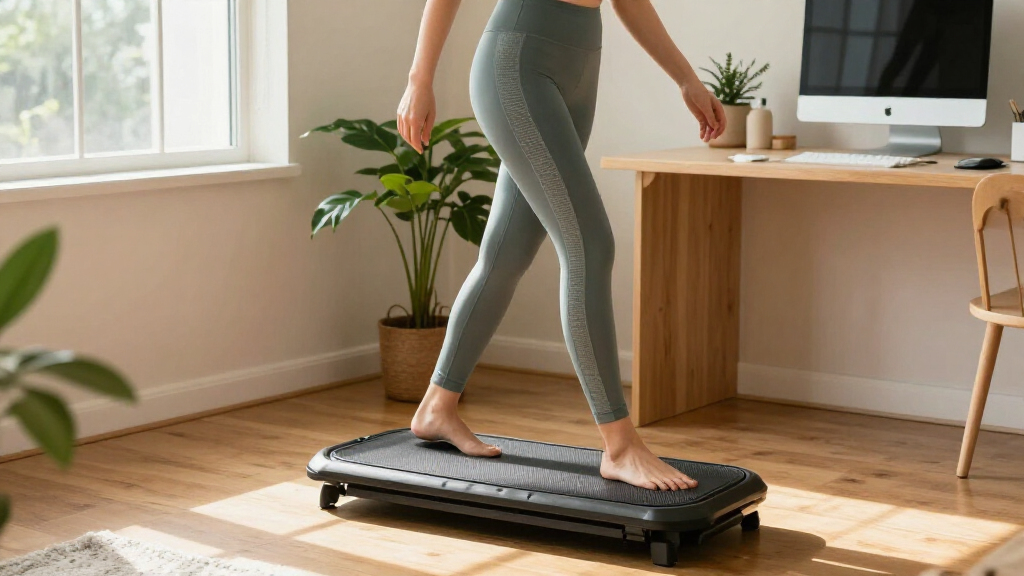
I compared these walking pads as home-fitness tools, prioritizing the features that shape daily use: incline type and range, handrail support, controls, folding or detachable components, and whether the model is presented for under-desk walking or more active sessions. Product names and stated features provide useful clues, but they do not replace checking the full specifications for belt dimensions, weight limits, noise information, warranty, and storage footprint before purchase.
The ranking logic favors models whose stated feature mix supports a clear, useful role without relying on a single headline spec. Adjustable incline and handrails give the WELLFIT 12% auto-incline model broad appeal; the YESOUL’s long rails and emergency stop make it a distinct support-focused choice. Compact and under-desk picks rank well for space-conscious routines, while fixed or manual incline models are better matches for buyers willing to accept less adjustment. I treat each product as a candidate based on its listed features, not as a personally tested machine.
Factors to Consider When Choosing Walking Pads For Home Fitness
Before picking a model, decide what you want the pad to do in your home. A walking pad used during desk work has different demands from one used for planned incline sessions or supported exercise. These checks can help prevent a mismatch between the machine’s design and your space, routine, or comfort needs.
Choose the Use Pattern Before the Feature Set
Write down when and how you expect to walk: slow sessions during work, dedicated daily workouts, or a mix of both. Under-desk models can be a practical fit for low-key movement, but their setup may not suit someone who wants a supported workout with rails. A more feature-rich model may take up more room and require extra setup, even if it offers a broader workout range. Avoid choosing by the number of advertised modes alone; ask which modes you will use consistently. If more than one person will use the pad, agree on a routine and support needs before prioritizing compactness.
Check Incline Operation, Not Just the Percentage
An incline figure says how steep a walking surface can be, but not how convenient that setting is to use. Fixed incline limits adjustment, while manual incline typically means stopping to change the setup; auto incline can make changes easier during a session. If you prefer simple, repeatable walking, fixed incline may be enough. For varied workouts, consider whether adjustments can be made without interrupting your routine. Do not assume a larger incline number guarantees a better workout: comfort, stability, and a pace you can sustain matter more.
Match Handrails to Your Support Needs and Room
Handrails can offer a reassuring point of contact, but their length, position, and construction matter more than their presence in a product title. Buyers seeking extra support should check the rail layout and the location of any emergency stop in the manufacturer’s specifications. Rails also change the machine’s footprint and may affect how easily it fits beneath or beside a desk. A detachable handlebar can offer flexibility, though removing and reinstalling it may be an inconvenience for frequent mode changes. If you expect to hold the rails throughout a session, confirm that the design suits that use rather than assuming every pad handle is intended for continuous support.
Measure the Full Working and Stored Footprint
Measure where the pad will sit during use, then measure the route it must travel to reach storage. The belt area, handrails, and nearby furniture all affect usable space, while folded dimensions matter only if the machine can be moved into that storage spot. Check the product’s weight and any transport details before assuming you can relocate it easily. A compact model can save room but may offer fewer support or workout features than a larger frame. Leave clear space around the unit and follow the manufacturer’s placement guidance instead of planning around the machine’s bare dimensions.
Verify Fit, Controls, and Safety Details
Before ordering, check the manufacturer’s listed user weight limit, walking surface dimensions, speed range, and control method. A remote may be convenient, but small controls can be awkward if you need to adjust them while walking; confirm whether the machine also has accessible onboard controls. Read the instructions for starting, stopping, and using any safety key or emergency stop. If more than one person will use the pad, compare their needs with the stated limits rather than relying on a general claim of home use. Do not treat a product title or a feature label as a substitute for the detailed manual and specifications.
Compare Ownership Needs, Not Only Setup Features
Motor details and incline features can attract attention, but long-term ownership also depends on maintenance instructions, warranty coverage, and access to support. Check how the manufacturer describes belt care, lubrication, and troubleshooting before buying, especially if you expect frequent use. A foldable frame may simplify storage without making maintenance simpler. Look for clear information about replacement parts and service channels, rather than assuming those details are the same across brands. Paying more makes sense only when the added support, adjustment, or build details solve a need you actually have.
Frequently Asked Questions
Is an auto-incline walking pad worth choosing over a manual or fixed incline?
Auto incline is most useful if you plan to vary the challenge during a walk and want to make those changes without stopping. Manual incline can suit a routine where you set one level before starting, while fixed incline is simplest when you are happy with a consistent slope. In this roundup, the WELLFIT 12% auto-incline model offers a different adjustment experience from the fixed-incline Cybergoing T10 and manual-incline options. Compare the adjustment method with your actual routine, not just the maximum incline. Also check the model’s full instructions to understand how incline changes affect setup and use.
Can I use a walking pad under a standing desk if it has handrails?
It depends on the pad’s dimensions and whether its rails can be folded, detached, or positioned clear of the desk. A rail-equipped model may offer support but can make the setup taller or wider than a low-profile under-desk design. Measure the desk opening and the walking area with the machine in its working configuration before buying. Models presented for under-desk use, such as the Superun and DeerRun, may be more aligned with that setup, but their listed dimensions still need to match your desk. Keep enough clearance to step on and off safely.
What should I check if I need extra support while walking?
Start with the handrails’ length and placement, then review the emergency-stop arrangement and the manufacturer’s guidance for safe use. The YESOUL is the clearest support-focused option in this lineup because its name specifies long handrails and an emergency stop. That does not mean every rail-equipped pad offers the same level of support or suits every user. Check whether the rails are designed for the way you intend to walk and whether the controls are reachable. If balance or mobility is a concern, ask a qualified health professional which exercise setup is appropriate before choosing equipment.
How can I tell whether a foldable walking pad will fit my home?
Compare both the machine’s in-use dimensions and its folded dimensions with your room, desk, and storage location. Include space to approach the belt, step off, and operate any rails or incline controls. Then check the unit’s weight and transport features: folding the frame does not automatically make a pad easy to move. Some models in this lineup use detachable handlebars or compact designs, but the listing should state how those parts affect storage. If those dimensions or moving details are unavailable, contact the manufacturer before purchase rather than guessing.
Should I choose a walking pad with a motor listed as 2.5 HP?
A motor rating is only one piece of the fit decision and does not, by itself, tell you whether a pad will suit your walking pace, routine, or household. The Superun listing specifies a 2.5 HP motor, but you should compare that detail with the manufacturer’s stated speed range, user weight limit, and intended use. Also check the product’s warranty and maintenance guidance, since those affect ownership beyond the headline rating. If you plan short, gentle walks, other factors such as dimensions and controls may matter more to you. For frequent or longer sessions, look for clear performance and service information rather than relying on a single number.
Conclusion
For a broadly useful home workout setup, I would start with the WELLFIT Foldable Treadmill with 12% Auto Incline and Handrails as the best overall candidate, based on its combination of adjustable incline and support. The best value choice depends on what features you need; the DeerRun Under-Desk Walking Pad is a straightforward candidate for desk-oriented walking, while the simpler compact models may suit buyers who prioritize a smaller setup. For a best premium pick, look for the most complete fit among the models with auto incline, rails, and folding features, then verify warranty and build details before paying more. Beginners who want extra support may prefer the YESOUL, while buyers seeking varied incline workouts should compare the WELLFIT auto-incline model with manual-incline alternatives. For desk use, favor a low-profile design; for support needs, prioritize rail layout and safety controls; for tight storage, measure the folded footprint. Choose the model whose features match your routine and room, rather than the one with the longest feature list.