TL;DR

Get workout gear delivered free with Prime
- Fast, free delivery on millions of items
- Prime Video, Amazon Music and more included
- Member-only deals all year
In a six-month trial involving 123 healthy older adults, both high- and moderate-intensity exercise groups reduced fat mass. The moderate-intensity group also had a small decline in lean mass, while the HIIT group did not experience the same decline, according to the report. Researchers described the changes as modest.
A six-month exercise trial of 123 healthy adults with an average age of 72 found that high-intensity interval training (HIIT) reduced fat mass, an outcome relevant to building muscle safely in older adults. The moderate-intensity group had a small decline in measured lean tissue, while the HIIT group did not experience the same decline, according to the report. Published in Maturitas by researchers from the University of the Sunshine Coast, the study described the changes as modest and not clearly clinically meaningful.
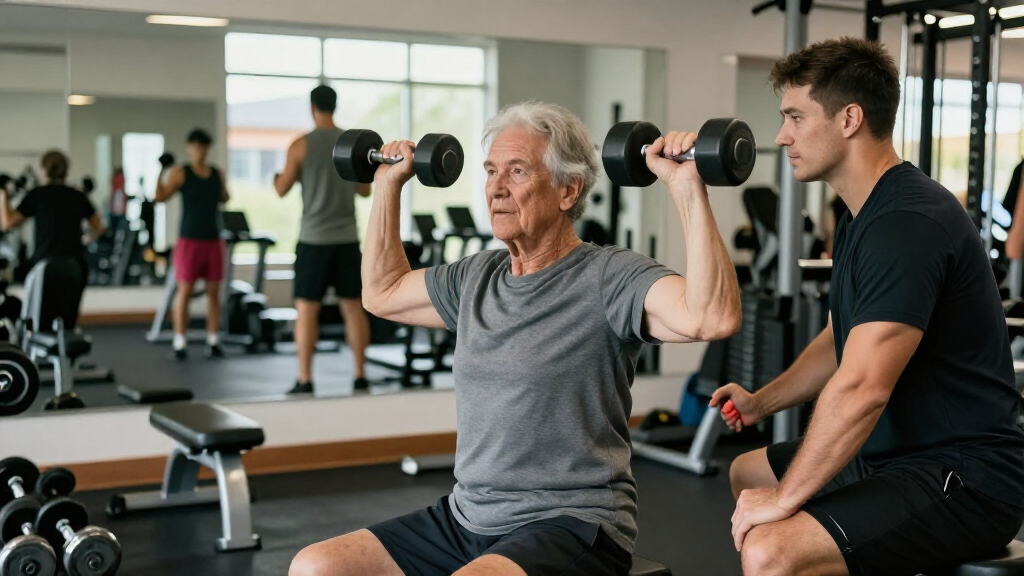
Participants from the Greater Brisbane region took part in high-, moderate- or low-intensity exercise groups. They attended three supervised gym sessions a week for six months, with each session lasting 45 minutes. Researchers measured body composition using scans at three points during the study.
Both the HIIT and moderate-intensity groups significantly reduced fat mass, according to the report. The moderate-intensity group also had a small decline in lean mass; the HIIT group did not experience the same decline. The report describes the changes as modest but does not provide the size of each change in the material supplied.
The study also reported improvements in fat around the middle in the high- and moderate-intensity groups, including changes in visceral adipose tissue. That fat is stored deeper in the abdomen around internal organs. The report says further analysis is needed for the low-intensity group’s abdominal-fat results. It does not establish that the exercise changes reduced disease risk.
Why Lean Tissue Matters With Age
The report discusses the difference between losing weight and changing body composition: weight alone does not show which types of tissue have changed. A person may lose fat while also losing lean tissue. Muscle supports everyday tasks such as standing from a chair, climbing stairs and carrying objects.
The results do not establish that HIIT is the best or safest choice for every older adult. The study measured lean tissue, not strength directly, and lean mass includes more than muscle. The researchers described the changes as relatively small and not clearly clinically meaningful compared with lower-intensity exercise, particularly when measurement uncertainty is considered.
As an affiliate, we earn on qualifying purchases.
How the Six-Month Trial Worked
The study compared three levels of exercise intensity in adults whose average body mass index was about 26 kg/m². The report describes this as within the typical range for adults over 65. Participants exercised under supervision three times weekly, and body-composition scans were taken at three points during the trial.
In this study, HIIT consisted of repeated short periods of very hard exercise alternating with easier recovery periods. University of the Sunshine Coast Associate Professor of Physiology and co-author Mia Schaumberg said that during the hard intervals, breathing was heavy and conversation difficult. She suggested that the greater demand on muscles may provide a stronger signal to retain tissue. That is a proposed explanation, not a mechanism proven by the trial.
“We found that high, medium and low intensity exercises all led to modest fat loss but only HIIT retained lean muscle.”
— Dr. Grace Rose, lead author and exercise physiologist at the University of the Sunshine Coast
As an affiliate, we earn on qualifying purchases.
Limits of the Body-Composition Results
The report does not provide the exact changes in fat or lean mass for each group in the supplied material, making it difficult to judge the size of the differences. It also notes that the findings were not clearly clinically meaningful relative to lower-intensity exercise after measurement uncertainty was considered.
Scans estimated lean tissue; they did not directly establish changes in muscle strength or physical independence. The material does not say whether the differences persisted after the six-month program, whether results apply to less healthy older adults, or how participants tolerated the high-intensity sessions. Further analysis of the low-intensity group’s abdominal-fat results is also pending.
As an affiliate, we earn on qualifying purchases.
Questions for Future Exercise Research
The source says further analysis is needed for the low-intensity group’s results on fat carried around the middle. Longer follow-up would also be needed to determine whether body-composition changes last after supervised sessions end and whether they translate into measurable differences in strength or everyday function. Those outcomes are not established by this report.
The trial tested a supervised program in healthy older adults, not a universal exercise prescription. Anyone considering vigorous intervals should take their current fitness and health into account and seek advice from a qualified health professional if they have existing conditions or concerns. The next evidence to watch for includes fuller reporting of group-level changes, safety and longer-term outcomes.
As an affiliate, we earn on qualifying purchases.
Key Questions
What did the study find about HIIT?
In a six-month trial, the HIIT group reduced fat mass without the decline in measured lean tissue reported for the moderate-intensity group. The changes were described as modest.
Did the study prove HIIT builds or preserves muscle strength?
No. Researchers measured lean tissue, not strength directly. Lean mass includes muscle as well as other tissues and water, so the scan results do not establish equivalent changes in strength.
How often did participants exercise?
Participants completed three supervised 45-minute gym sessions each week for six months. The trial involved 123 healthy older adults with an average age of 72.
Does the report show that HIIT is right for every older adult?
No. The trial studied healthy older adults in a supervised program, and the supplied report does not establish that HIIT is suitable for everyone. People with existing health conditions or concerns should consult a qualified health professional before starting vigorous exercise.
Source: rss
Halloween Picks
halloween
As an affiliate, we earn on qualifying purchases.