
TL;DR

Get workout gear delivered free with Prime
- Fast, free delivery on millions of items
- Prime Video, Amazon Music and more included
- Member-only deals all year
Low-impact cardio exercises raise your heart rate while minimizing joint stress. They’re ideal for people with joint concerns, providing safe, sustainable ways to stay active and healthy.
Imagine a workout that gets your heart pumping without pounding your knees or hips. Sounds too good to be true? It’s not. Low-impact cardio gives you all the benefits of traditional cardio—like better endurance and weight control—without the joint pain or risk of injury. Whether you’re managing arthritis, recovering from injury, or just looking for a gentler way to stay active, this approach can fit seamlessly into your life.
In this guide, you’ll learn what low-impact cardio is, why it’s so gentle on your joints, and how you can incorporate it into your routine with practical tips. Plus, we’ll compare popular options and bust some myths along the way. Ready to find your new favorite way to move?
Low-impact cardio raises your heart rate effectively without stressing your joints, making it suitable for all ages.
Activities like swimming, cycling, and using an elliptical are especially gentle and easy to incorporate into daily life.
Regular low-impact exercise can support joint health, reduce stiffness, and slow degeneration, especially for those with arthritis.
You don’t have to sacrifice calorie burn—many low-impact options burn as many calories as high-impact activities.
Mixing different low-impact exercises keeps routines enjoyable and sustainable, boosting long-term health.
The Low-Impact Cardio Secret Your Joints Will Thank You For
Low-impact cardio raises your heart rate without pounding your knees, hips, or ankles. It supports endurance, weight control, mobility, and long-term consistency while reducing the joint stress that can derail a routine.
Big fitness gains. Smaller joint bill.
Walking, cycling, swimming, rowing, and elliptical training can build cardiovascular fitness while keeping impact forces low enough for many beginners, older adults, and people managing stiffness.
Enough intensity to improve cardio fitness and endurance.
Reduced pounding helps limit irritation and recovery setbacks.
Gentler sessions are easier to repeat week after week.
Low-impact options can still support weight loss and heart health.
What Makes Cardio Low Impact?
Low impact means the movement raises your pulse while avoiding harsh landings, sudden jolts, or repeated pounding. Your joints still work, but they are not absorbing the same shock load as running or jumping.
Swimming
Water buoyancy reduces joint load while still challenging your lungs, shoulders, core, and legs.
Cycling
A bike lets you build steady cardio output with less impact on knees and hips than running.
Elliptical
The machine keeps motion continuous, helping avoid the repeated foot strike of high-impact training.
Brisk Walking
Simple, scalable, and beginner-friendly, walking can become a real workout with pace, hills, or intervals.
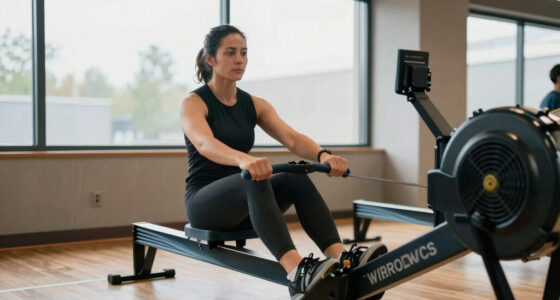
Rowing
Rowing combines legs, back, arms, and core with a seated movement pattern and controlled resistance.
Daily Movement
Short walking breaks, gentle classes, and stationary cycling can make cardio part of ordinary life.
Choose gentle motion
Pick a movement that feels smooth and repeatable.
Raise the pulse
Use pace, resistance, or intervals to build intensity.
Protect joints
Keep impact low and avoid sudden overload.
Repeat often
Build consistency before chasing harder sessions.
Progress slowly
Add minutes, hills, resistance, or variety over time.
Low Impact Does Not Mean Low Results
Research-backed guidance points to a simple truth: when the heart rate is high enough and the routine is consistent, low-impact cardio can deliver serious fitness benefits without the extra pounding.
| Activity | Joint Load | Cardio Value | Beginner Fit | Best Use |
|---|---|---|---|---|
| Swimming | ✓ Very low | ✓ High | ✓ Strong | Joint relief, full-body endurance |
| Cycling | ✓ Low | ✓ High | ✓ Strong | Steady stamina, intervals, weight control |
| Elliptical | ✓ Low | ✓ High | ~ Moderate | Gym-based cardio without foot strike |
| Brisk walking | ~ Low to moderate | ~ Moderate | ✓ Excellent | Daily consistency and easy progression |
| Running or jumping | ✗ Higher | ✓ High | ~ Depends | Useful for some, risky for irritated joints |
The Joint-Stress Equation
Your routine becomes sustainable when intensity rises faster than impact. The sweet spot is movement that feels challenging for your heart but calm for your knees, hips, ankles, and back.
Impact Profile
A practical comparison of how common cardio choices tend to feel on sensitive joints.
Progress Without Pounding
Start with manageable volume, then add challenge through duration, resistance, incline, or intervals instead of abrupt impact.
For many people, the best training zone sits in the middle: breathing harder, moving smoothly, and finishing with joints that feel ready for tomorrow.
Resistance, pace, hills, water drag, and intervals can make low-impact cardio demanding.
Calorie burn depends on effort and duration, not just whether your feet leave the ground.
It works for beginners, athletes, older adults, and anyone who wants durable fitness.
Build a Routine Your Body Can Keep
The goal is not to suffer through one heroic workout. The goal is to create a movement rhythm you can repeat, adapt, and enjoy without turning joint pain into the price of fitness.
Key Takeaways
- Low-impact cardio can improve heart health while reducing joint stress.
- Swimming, cycling, elliptical training, walking, and rowing are strong starter options.
- Variety helps prevent boredom and spreads workload across different joints and muscles.
- Strength and flexibility work make cardio safer by supporting stability and range of motion.
- Consistency matters more than extreme intensity, especially when joints are sensitive.
Start small
Try 20 minutes of brisk walking, cycling, or swimming three times per week.
Add minutes
Increase one or two sessions by 5 minutes if your joints feel calm afterward.
Add variety
Alternate activities, such as cycling one day and water aerobics the next.
Add challenge
Use gentle intervals, light resistance, or hills while keeping motion controlled.
The Joint-Friendly Cardio Chain
Choose smooth, supported motion.
Work hard enough to train the heart.
Progress through pace and resistance.
Reduce flare-ups and stiffness risk.
Make movement sustainable for years.
What Exactly Is Low-Impact Cardio? And Why Should You Care?
Low-impact cardio is any activity that elevates your heart rate without putting excessive stress on your joints. Think of it as a gentle dance—your feet stay on the ground, but your heart still races. The importance of understanding this lies in its implications: it allows you to maintain cardiovascular fitness while minimizing the risk of joint damage or aggravation of existing issues. For example, high-impact activities like running can cause micro-tears or inflammation in joint tissues, especially if performed excessively or with improper technique. In contrast, low-impact activities distribute forces more evenly across joints or avoid jarring motions altogether, reducing wear and tear over time. This means you can sustain your exercise routine longer, avoid setbacks due to injury, and even adapt as you age or recover from injury. Choosing low-impact options becomes a strategic choice for longevity and joint health, ensuring that physical activity remains a sustainable part of your life rather than a source of pain or injury.
Examples include walking, cycling, swimming, elliptical training, and rowing. These activities not only elevate your heart rate effectively but also allow your joints to recover quickly, making consistent exercise more achievable. The key is that they offer a balanced approach—enough intensity to improve fitness, but with safeguards that prevent joint overload. This balance is crucial because it supports long-term adherence and reduces the risk of chronic joint conditions worsening over time.
Research indicates that low-impact cardio can be just as effective as high-impact for improving heart health and aiding weight loss [2]. This means you don’t have to choose between joint safety and fitness gains—both can be achieved simultaneously. Moreover, because these exercises are accessible across all ages and fitness levels, they lay the foundation for lifelong healthy habits that evolve with your changing needs. Essentially, the choice of low-impact cardio is a proactive strategy to maximize health benefits while protecting your joints for the future.
low impact cardio exercise equipment
As an affiliate, we earn on qualifying purchases.
As an affiliate, we earn on qualifying purchases.
Why Your Joints Will Thank You for Low-Impact Workouts
When you choose low-impact cardio, you’re making a conscious decision to safeguard your joints while still reaping vital health benefits. High-impact activities like running, jumping, or plyometric exercises generate significant force with each movement, which over time can accelerate joint wear, cause inflammation, or exacerbate existing conditions like osteoarthritis. These impacts are especially problematic if your joints are already compromised or if you engage in high-frequency or high-intensity workouts without proper recovery. Conversely, low-impact exercises focus on reducing these forces, distributing weight more evenly, and avoiding sudden jarring motions. For example, cycling on a smooth, flat surface or using an elliptical trainer minimizes shock absorption demands on your knees and hips, which are common trouble spots. This approach not only protects your joints from immediate strain but also prevents cumulative damage that could lead to chronic pain or mobility issues. Over time, consistently choosing low-impact workouts can slow the progression of joint degeneration, improve joint lubrication, and enhance overall flexibility and strength. For individuals with existing joint problems, this means maintaining an active lifestyle without the fear of worsening pain or damage, ultimately supporting independence and quality of life. It’s a strategic way to stay active, avoid setbacks, and promote joint longevity.
elliptical machine for joint health
As an affiliate, we earn on qualifying purchases.
As an affiliate, we earn on qualifying purchases.
Progression and Building Your Low-Impact Routine
Starting with low-impact exercises is just the beginning. As your fitness level improves, you can gradually increase the duration, intensity, or frequency of your workouts to continue challenging your body safely. For example, if you begin with 20 minutes of brisk walking three times a week, you might add a few minutes or incorporate hills or intervals over time. Similarly, once you’re comfortable with swimming laps, you could increase the number or intensity of your sessions or try advanced techniques like water aerobics. It’s essential to listen to your body and progress at a pace that feels sustainable, avoiding sudden jumps that could strain your joints. Incorporate variety by alternating between different low-impact activities—cycling one day, swimming the next, and using an elliptical another—so your routine remains engaging and balanced. Additionally, complement your cardio with strength training and flexibility exercises to support joint health and overall fitness. Remember, the goal is consistent, gradual progress that enhances your endurance without risking injury or joint pain. Over time, this approach helps you build a resilient, sustainable routine that adapts to your evolving health and fitness needs.
As an affiliate, we earn on qualifying purchases.
Applying Low-Impact Cardio in Your Daily Routine
Integrating low-impact cardio into your daily life can be simple and highly effective. Start by identifying activities you enjoy and can do consistently. For example, replace your usual short drive with a brisk walk around the neighborhood or park. Swap out high-impact gym routines for swimming or cycling on your days off. If you work at a desk, consider short walking breaks or using a stationary bike while watching TV. The key is to make these activities a regular part of your schedule, gradually increasing time and effort as your body adapts. Setting achievable goals, like 30 minutes of activity three times a week, can help you stay motivated. Additionally, consider incorporating social elements—like walking with friends or joining a gentle water aerobics class—to boost adherence and enjoyment. Remember, consistency is more important than intensity, especially when protecting your joints. With a little planning, low-impact movement can become a natural, enjoyable part of your lifestyle that supports your health today and in the years to come.
As an affiliate, we earn on qualifying purchases.
Frequently Asked Questions
What are the best low-impact cardio exercises for beginners?
Walking briskly, swimming, and using an elliptical trainer are perfect starting points. They’re simple, gentle, and easy to adapt to your fitness level. Start slow, gradually increase duration, and always listen to your body.
How often should I do low-impact cardio for health benefits?
Aim for at least 3-4 sessions of 20-30 minutes each week. Consistency is key. Over time, you can increase duration or intensity as your fitness improves, but always prioritize how your joints feel.
Can low-impact cardio help with weight loss?
Yes. Many low-impact activities burn enough calories—comparable to high-impact workouts—to support weight management. Pair it with good nutrition for best results.
Is low-impact cardio effective for improving cardiovascular fitness?
Absolutely. Activities like swimming or cycling elevate your heart rate effectively, helping improve your heart health without risking joint pain.
What equipment or activities are best for someone with joint problems?
Water aerobics, stationary cycling, and elliptical trainers are excellent choices. They reduce joint load while providing a full-body workout. Always check with a healthcare professional if you have specific concerns.
Conclusion
Choosing low-impact cardio isn’t about doing less. It’s about doing smarter—protecting your joints while still reaping all the health benefits. Find what feels good, stay consistent, and watch your endurance grow without the pain.
Imagine a future where your joints feel strong, your heart stays healthy, and exercise is a joy, not a chore. That’s the power of gentle, effective movement—your joints will thank you for it.
Halloween Picks
halloween
As an affiliate, we earn on qualifying purchases.