TL;DR

Get workout gear delivered free with Prime
- Fast, free delivery on millions of items
- Prime Video, Amazon Music and more included
- Member-only deals all year
Proper ventilation and cooling improve air quality, maintain comfortable temperatures, and prevent mold in your garage gym. Combining natural methods with energy-efficient systems offers the best results.
Ever tried working out in a garage that feels like a sauna? It’s tough to focus when sweat drips down your face, and the air feels thick and stale. Your garage gym doesn’t have to be a sweatbox.
In this guide, you’ll learn practical, no-nonsense ways to get fresh air flowing and keep things cool — so you can crush your workouts without melting or choking on humidity. Whether you’re starting from scratch or just looking to upgrade, these tips will help you create a space that’s comfortable, safe, and ready for action.
Combining natural ventilation with mechanical fans offers the best airflow for a garage gym.
A ductless mini-split system provides efficient, year-round cooling and heating, often using less energy than traditional units.
Sealing gaps and adding reflective insulation can drop indoor temperatures by up to 10°F without extra energy use.
Maintaining humidity between 30-50% prevents mold, improves comfort, and preserves gym equipment.
Smart sensors and automated vents can optimize airflow and temperature without constant manual adjustments.
Why Good Airflow Matters for Your Garage Gym
Proper airflow isn’t just about comfort — it’s about health and performance. Stale, humid air can cause fatigue, headaches, and even mold growth. A well-ventilated space refreshes the air, helping you breathe easier and stay motivated.
Imagine finishing a set of deadlifts and feeling like you’ve just run a marathon — that’s the effect of poor air quality. By increasing air circulation, you’ll notice better focus, less fatigue, and a more inviting space.
Simple fixes like opening your garage door or installing exhaust fans can make a huge difference. Think of it as giving your space a much-needed breath of fresh air.
As an affiliate, we earn on qualifying purchases.
Top 3 Ways to Air Out and Circulate Your Garage
- Open the garage door during workouts. It’s the easiest way to let in fresh air, especially on breezy days. Just make sure it’s safe and noise won’t bother neighbors.
- Install exhaust fans. These remove hot, humid air and can be mounted on walls or ceilings. A high-quality exhaust fan can replace stale air every 2-3 minutes, keeping your space fresh.
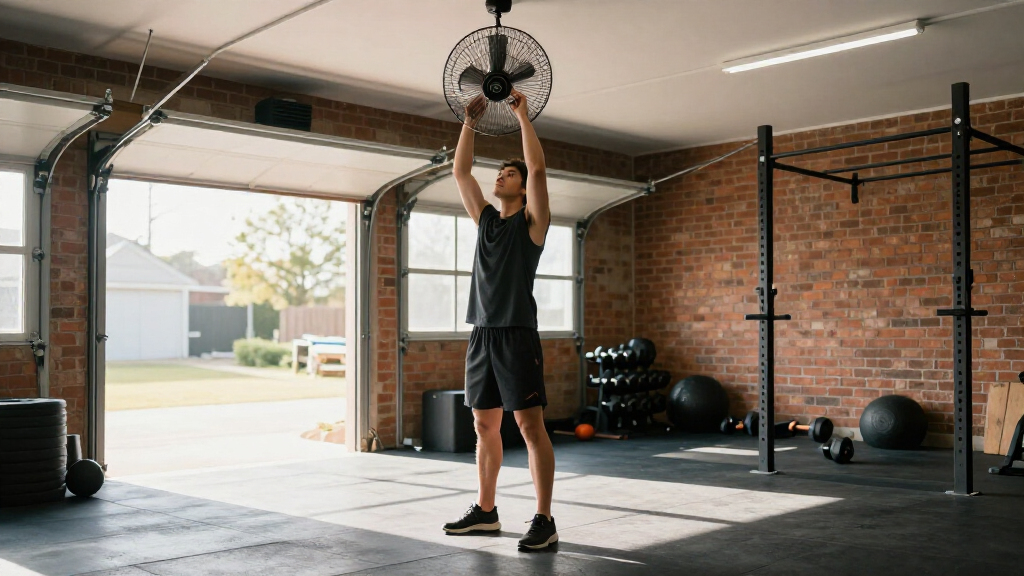
- Use oscillating fans or ceiling fans. These circulate air inside your garage, preventing hot pockets and making the space feel cooler even if the temperature stays the same.
Combine these methods based on your garage’s layout and climate. A good rule of thumb: keep moving air constantly for the best results.
ductless mini split air conditioner for garage
As an affiliate, we earn on qualifying purchases.
As an affiliate, we earn on qualifying purchases.
Cooling Strategies That Actually Work — No Hype, Just Results
Cooling a garage gym isn’t about instant miracles but choosing the right tools for your space and budget. Here’s how to do it:
First, assess your garage size and insulation. A small, well-insulated space might only need a portable fan, while a larger or poorly insulated garage benefits from a ductless mini-split system.
Here’s a quick comparison:
| Method | Ease of Installation | Cost | Cooling Power |
|---|---|---|---|
| Portable fan | Very easy | Low | Limited, best for small spaces |
| Window AC unit | Moderate | Moderate | Good for small to medium garages |
| Ductless mini-split | Requires professional install | Higher initial cost | Excellent, adjustable cooling |
For consistent comfort, a mini-split often wins. It’s quiet, energy-efficient, and doubles as a heater in winter. Plus, it keeps the air dry, which helps prevent mold and mildew.
As an affiliate, we earn on qualifying purchases.
How to Keep Your Garage Cooler Without Breaking the Bank
Want to stay cool without spending a fortune? Here are some practical, budget-friendly tips:
- Use reflective insulation on garage walls and ceiling. It bounces heat away, reducing indoor temperature by up to 10°F.
- Seal gaps and cracks. Prevent hot air from sneaking in around doors, windows, and the garage door seal.
- Install a ceiling or oscillating fan. It’s cheaper than AC and creates a breeze that tricks your brain into feeling cooler.
- Open windows during cooler times of day. Early mornings and evenings offer natural cooling that can lower indoor temps significantly.
Combine these tactics for a cooler, more comfortable space that doesn’t drain your wallet.
oscillating ceiling fan for garage
As an affiliate, we earn on qualifying purchases.
As an affiliate, we earn on qualifying purchases.
Smart Ventilation Tricks for Climate Control and Air Quality
Smart ventilation isn’t just a fancy term — it’s about automating airflow to match your needs. Installing sensors and smart controls can turn your garage into a climate-smart zone.
For example, a smart exhaust fan connected to temperature and humidity sensors can activate only when needed. That way, you keep the air fresh and dry without wasting energy.
Natural ventilation tricks include automated window vents that open and close based on weather conditions, or using solar-powered exhaust fans that run during sunny days to pull out heat and humidity.
These tech-savvy solutions help keep your garage comfortable year-round, with less manual effort.
Don’t Forget the Humidity — Why It Matters and How to Manage It
High humidity can make your workout feel sticky and uncomfortable. It also invites mold and mildew, which no one wants in their gym.
Keep humidity levels between 30-50% for comfort and safety. Using a dehumidifier is the best way to do this, especially in humid climates or if your garage tends to stay damp.
For example, a 30-pint dehumidifier can handle a 400-square-foot garage, reducing moisture and preventing that damp smell that can make your space feel uninviting.
Good airflow combined with dehumidification keeps your gym dry and fresh, making workouts more enjoyable and safer.
Your Quick Checklist to Keep Your Garage Cool and Breezy
- Open the garage door or windows during cooler parts of the day.
- Install exhaust fans to remove hot, humid air.
- Use oscillating or ceiling fans to circulate air inside.
- Invest in a ductless mini-split for reliable cooling.
- Seal gaps around doors and windows.
- Use reflective insulation on walls and ceiling.
- Maintain a humidity level of 30-50% with a dehumidifier.
Follow this checklist, and your garage will feel more comfortable and less like a sweat sauna.
Frequently Asked Questions
What is the most cost-effective way to cool a garage gym?
Using a high-quality fan combined with natural ventilation, like opening windows during cooler times, often costs the least. For more consistent cooling, a portable AC unit or ductless mini-split can be more efficient in the long run, especially for larger spaces.How can I improve ventilation without major renovations?
Install exhaust fans, use portable oscillating fans, and open doors or windows during cooler hours. These simple steps boost airflow without needing to tear down walls or hire contractors.What temperature and humidity levels should I aim for?
Keep your garage between 68°F and 77°F (20°C to 25°C). Humidity should stay between 30-50% to prevent mold, keep things dry, and stay comfortable during workouts.Are eco-friendly options available for ventilation and cooling?
Yes. Solar-powered exhaust fans and natural ventilation strategies reduce energy use. Combining these with energy-efficient appliances makes your garage greener and more cost-effective.How do I prevent mold and mildew in my garage gym?
Maintain proper humidity levels with a dehumidifier, improve airflow through fans and open windows, and seal gaps around doors and windows. These steps keep moisture out and the air dry.Conclusion
Your garage gym doesn’t have to be a sweatbox or a stuffy cave. With a mix of simple strategies and smart tech, you can create a space that’s cool, fresh, and inviting — no matter the season.
Remember: a well-ventilated gym is safer, more comfortable, and more motivating. All it takes is a little planning, some DIY fixes, and maybe a smart upgrade or two. Now, go turn that hot, humid garage into your favorite workout spot.
Halloween Picks
halloween
As an affiliate, we earn on qualifying purchases.