
TL;DR

Get workout gear delivered free — and shop member deals
- Fast, free delivery on millions of items
- Access to Prime Big Deal Days deals on October 6–7
- Prime Video, Amazon Music and more included
Lifting safely means maintaining a neutral spine, engaging your core, and using proper technique. Gradual progress and strength training further protect your lower back from injury.
Ever felt that sharp twinge in your lower back after lifting? It’s a common fear, but one you can avoid. Protecting your lower back while lifting isn’t about avoiding all effort; it’s about smart, safe habits. You’ll learn the key moves, tools, and routines to keep your spine safe while building strength.
Whether you lift at the gym or move furniture at home, understanding how to lift correctly can save you from months of discomfort or worse. Let’s break down the simple, practical steps to keep your lower back happy and healthy.
Maintain a neutral spine and engage your core during every lift.
Gradually increase weights to allow your muscles and ligaments to adapt safely.
Use supportive gear only as an aid, not a crutch for poor form.
Strengthen your core and stretch regularly to support your lower back long-term.
Always warm up before lifting and cool down afterward to prevent stiffness and injury.
Master the Perfect Lifting Technique to Keep Your Spine Safe
The first step to protecting your lower back while lifting is mastering proper form. Keep your back straight, shoulders back, and core tight. Imagine your spine as a sturdy straw — no bending or rounding it. Proper technique isn’t just about avoiding immediate pain; it’s about reducing the risk of long-term damage that can result from repetitive poor form.
For example, when picking up a heavy box, bending at your hips and knees distributes the load across your strongest muscles — your hips and legs — rather than overloading your lower back. Engaging your abs as if preparing for a punch creates intra-abdominal pressure that stabilizes your spine, much like a built-in brace. Keeping the load close to your body minimizes leverage forces that can strain your back muscles and discs. Using the hip hinge movement correctly shifts effort away from vulnerable spinal structures, decreasing the likelihood of injury. Practicing this movement with a broomstick or dowel along your back helps develop muscle memory for maintaining proper alignment and understanding the biomechanics involved.
Why does this matter? Because improper lifting form can create uneven stress on your spinal discs and ligaments, leading to injuries that might not manifest immediately but can cause chronic pain or disability over time. The tradeoff is between short-term effort and long-term spinal health; investing time in learning proper technique now prevents costly, painful injuries later.
As an affiliate, we earn on qualifying purchases.
Use the Right Equipment and Support to Add Extra Safety
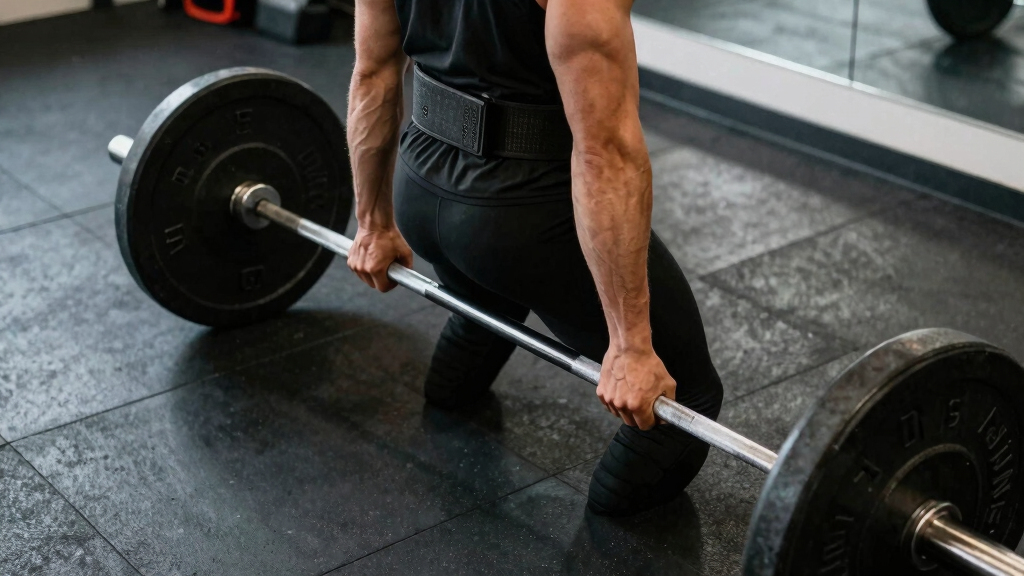
Gear can make a significant difference in how safely you lift, but it’s essential to understand why and when to use it. Supportive shoes with good grip and stability help maintain balance, especially on uneven surfaces or when lifting heavy weights, reducing the chance of slips or missteps that could compromise your form. When lifting very heavy weights, a well-fitting weightlifting belt can provide additional intra-abdominal pressure, acting like a corset that stabilizes your lumbar spine during maximal efforts. However, the belt’s effectiveness depends on proper use: it should be tightened around your core during the lift, not worn loosely or constantly, as over-reliance can weaken your natural stabilizers.
Straps or pads can also improve grip and reduce hand fatigue, but they should not compensate for poor technique. Remember, equipment is an aid meant to support good form, not a substitute for it. Overusing gear or relying on it excessively can lead to complacency and increased injury risk if your technique suffers.
Why is this important? Because the right equipment, used appropriately, enhances your body’s natural capacity to stabilize and distribute loads effectively. The tradeoff involves balancing dependence on gear with maintaining proper technique; over-reliance can lead to weakened stabilizer muscles, making injuries more likely when equipment isn’t available or used improperly.
core strengthening exercise equipment
As an affiliate, we earn on qualifying purchases.
As an affiliate, we earn on qualifying purchases.
Gradually Increase Weight to Strengthen Safely
Jumping to heavy weights too quickly can cause microtrauma to muscles, ligaments, and discs, increasing injury risk and delaying progress. Increasing your load gradually — about 5-10% per week — allows your musculoskeletal system to adapt effectively, strengthening tissues in a controlled manner. This slow progression is crucial because it gives your body time to rebuild and reinforce the connective tissues that support your spine, reducing the likelihood of overuse injuries or acute strains.
Think of your muscles and connective tissues as a garden that needs time to grow strong; pouring too much water at once can cause damage instead of growth. Focusing on perfect form with lighter weights before adding more weight ensures that your technique remains solid, which is essential because improper form under heavy loads is a common cause of injury. The tradeoff here is between speed of progress and safety; rushing increases injury risk, while patience leads to sustainable gains. By respecting your body’s limits and progressing gradually, you build resilience and strength that lasts, preventing setbacks caused by injury or burnout.
dumbbell or kettlebell for strength training
As an affiliate, we earn on qualifying purchases.
As an affiliate, we earn on qualifying purchases.
Strengthen Your Core and Improve Flexibility for Long-Term Back Safety
Your core muscles — abs, obliques, lower back — act as a natural brace for your spine. Regularly doing planks, bridges, and bird-dogs can boost stability. Picture your core as a corset holding everything in place; a strong, stable core reduces the load on your lower back during lifts and daily movements, decreasing injury risk. Why does this matter? Because a weak core means your spine is less supported, making it more vulnerable to sudden strains or overuse injuries. Conversely, a strong core distributes forces more evenly across your entire torso, reducing stress on vulnerable spinal structures.
However, strength alone isn’t enough; flexibility plays a vital role. Tight hamstrings or hip flexors pull on your pelvis and lower back, creating abnormal stresses that compromise alignment and increase the chance of injury during lifting. Incorporating gentle stretching routines for these muscles helps maintain proper posture and movement mechanics, which are essential for safe lifting. For example, a simple hamstring stretch not only improves your range of motion but also ensures that your pelvis is in a more neutral position, reducing strain on your lumbar spine during lifts. This dual focus on strength and flexibility creates a resilient, well-balanced system that supports your long-term back health. Neglecting either aspect can lead to compensatory movements, overuse injuries, or chronic pain, undermining your lifting progress and overall mobility.
As an affiliate, we earn on qualifying purchases.
Warm Up and Cool Down to Prepare and Recover Your Back
Always start with a few minutes of light cardio or dynamic movements to warm your muscles. Think jumping jacks, leg swings, or brisk walking. Warming up increases blood flow, enhances joint lubrication, and elevates muscle temperature, making tissues more pliable and less prone to tears or strains. A proper warm-up prepares your nervous system for the upcoming effort and improves coordination, which is crucial for maintaining proper form during lifts. After lifting, spend time stretching and cooling down. Focus on the lower back, hamstrings, and hips; this helps reduce muscle stiffness, improve flexibility, and promote circulation, aiding recovery. Gentle stretching also helps prevent post-workout soreness and stiffness that can compromise your next session. For example, spending five minutes on yoga poses like cat-cow or child’s pose can gently mobilize your spine and hips, reducing tension and supporting healthy movement patterns. Incorporating these routines consistently can significantly lower injury risk and enhance overall back resilience.
Listen to Your Body and Know When to Rest
Pushing through pain is a quick way to injury. If your lower back feels strained or sore, it’s a signal that your tissues may be overstressed or damaged. Ignoring these signals and continuing to lift can exacerbate minor issues into chronic problems, such as herniated discs or ligament strains. Rest, ice, and gentle movement are essential for healing, allowing inflammation to subside and tissues to repair. Why is this important? Because persistent or worsening pain can indicate serious injury that may require medical intervention. Over time, neglecting these warning signs can lead to long-term mobility issues and chronic pain, significantly impairing your ability to perform everyday activities or lifts safely. Think of your back as a delicate garden; overwatering or overworking it leads to weeds and damage. Respect signals from your body — sharp pain, tingling, or numbness are clear signs that you need to pause and seek professional advice. Adequate sleep, proper hydration, and avoiding lifting when fatigued are crucial habits that support recovery. Listening to your body ensures that you’re not just avoiding immediate injury but also preventing long-term issues that can hinder your strength and mobility in the future.
Frequently Asked Questions
What is the most important thing to remember when lifting heavy objects?
The most important thing is to keep your back straight and neutral, engaging your core muscles. This alignment protects your spine and distributes the load evenly.
How can I tell if I’m lifting incorrectly?
You might feel pain, discomfort, or strain during or after lifting. If your lower back feels sore or you experience tingling or numbness, it’s a sign to reassess your form or rest.
Are there exercises that help prevent back injuries?
Yes, core-strengthening exercises like planks and bridges, as well as flexibility routines for hamstrings and hips, help support your lower back and reduce injury risk.
If pain persists beyond a few days, worsens, or is accompanied by numbness, tingling, or weakness, consult a healthcare provider for tailored advice.
Can lifting lighter weights more often protect my back better than lifting heavy occasionally?
In general, lifting moderate weights with proper form regularly is safer and reduces injury risk more than infrequent heavy lifts done improperly.
Conclusion
Protecting your lower back while lifting isn’t about avoiding effort — it’s about smart effort. Think of your spine as a delicate tower. With proper support, technique, and patience, you can build strength without risking damage.
Remember: your back is a long-term partner in strength, not a one-time project. Treat it with care, and it will serve you well for years to come.
Fall Picks
fall essentials
As an affiliate, we earn on qualifying purchases.