
TL;DR
Listen free for 30 days with Audible
Thousands of audiobooks and originals — cancel anytime.
Start your free trialAs an affiliate, we earn on qualifying purchases.
Rowing delivers a full-body workout that boosts heart health, burns calories, and develops strength—all in one low-impact exercise. It’s versatile, engaging, and suitable for every fitness level.
Imagine a workout that not only gets your heart pounding but also works every major muscle group at once. That’s the magic of rowing. It’s more than just a way to burn calories—rowers get stronger, more endurance, and a clearer mind—all in one session. If you’re looking for a workout that’s efficient, low-impact, and adaptable, rowing might just be your new best friend.
In this guide, you’ll learn why rowing is called the most complete cardio exercise, how it benefits your body and mind, and practical tips to get started. Whether you’re a gym junkie or a beginner, rowing has something to offer—no matter your fitness level.
Rowing engages over 86% of your muscle mass, making it a full-body workout.
It improves VO2 max—your body’s ability to use oxygen—more effectively than many other cardio routines.
Rowing is low-impact, reducing joint stress while still delivering a high-calorie burn.
Modern tech makes indoor rowing engaging with virtual courses and real-time metrics.
Start slow, learn proper technique, and gradually build endurance to maximize benefits.
Why Rowing Is the Most Complete Cardio Workout
One fluid stroke recruits nearly the entire body, challenges the heart and lungs, develops muscular endurance, and keeps impact low. It is cardio, strength, coordination, and focus compressed into one efficient session.
Six benefits. One movement.
The rowing stroke links the lower body, trunk, and upper body into a repeatable power sequence. The result is a rare blend of aerobic work, resistance, coordination, and low-impact movement.
Muscles work together
Legs create the drive, the core transfers force, and the back, shoulders, and arms complete each stroke.
Heart and lungs adapt
Sustained rowing challenges oxygen delivery and can improve aerobic capacity, endurance, and recovery.
High effort, low impact
The seated, gliding pattern avoids the repeated landing forces associated with running and jumping.
Efficient calorie burn
Because large muscle groups work at once, rowing can create a substantial energy demand in limited time.
Strength meets stamina
Every drive works against resistance, developing muscular endurance through the legs, trunk, and back.
Rhythm clears the mind
The repeating stroke and measured breathing can feel meditative while aerobic exercise supports mood.
Power travels through the body.
Rowing is not an arm pull. A strong stroke begins with the legs, moves through a braced torso, and finishes with the upper body. The return reverses that sequence under control.
of muscle mass can be involved across the stroke, creating a full-body strength-endurance challenge.
Rowing vs. running vs. cycling
Running may produce a higher peak calorie burn, while cycling excels at lower-body endurance. Rowing stands apart for combining substantial cardio with broad muscular engagement and low impact.
| Feature | Rowing | Running | Cycling |
|---|---|---|---|
| Full-body engagement | ✓ High | ✗ Low | ~ Moderate |
| Impact on joints | ✓ Low | ✗ High | ✓ Low |
| Calories per hour | 400–800 | 600–1,000 | 400–700 |
| Muscular development | ✓ Broad | ✗ Minimal | ~ Lower body |
| Beginner adaptability | ✓ High | ~ Moderate | ✓ High |
Context matters: calorie estimates vary with body weight, machine settings, fitness, duration, and intensity. Technique quality matters more than chasing a display number.
Four phases. One fluid chain.
Efficient rowing is a coordinated sequence, not a simultaneous tug. Build pressure with the legs, transfer it through the torso, finish with the arms, then recover in reverse order.
Catch
Shins near vertical, torso tall, arms long, shoulders relaxed, and heels connected to the footplates.
Drive
Push the machine away with the legs while keeping the arms straight and the trunk controlled.
Finish
Open the hips slightly, draw the handle toward the lower ribs, and keep wrists flat.
Recovery
Send arms away, hinge the torso forward, then bend the knees and glide back smoothly.
Build technique before intensity.
The fastest route to better rowing is controlled practice. Begin with short sessions, use moderate resistance, and make every stroke smooth enough to repeat.
Set up the machine
Secure the foot straps across the widest part of the feet and choose a manageable resistance.
Practice the sequence
Drive with legs, hinge through the hips, then pull. Recover with arms, body, then legs.
Begin with 10 minutes
Keep the pace conversational and stop before technique becomes rushed or the lower back rounds.
Progress one variable
Add a few minutes, a little pace, or an interval—not all three in the same workout.
Use metrics as feedback
Track stroke rate, split time, distance, and consistency without sacrificing smooth movement.
Before you take the first stroke
Rowing is broadly adaptable, but comfort and technique should guide progression. Anyone managing pain, injury, or a medical condition should seek individualized guidance.
Is rowing suitable for beginners?
Yes. Start with short, easy sessions and learn the movement sequence before increasing speed or resistance.
Can rowing support weight loss?
Yes. Regular rowing increases energy expenditure and can support weight management alongside nutrition and recovery.
Is rowing safe for sensitive joints?
Often. Its low-impact pattern reduces pounding, though existing knee, hip, or back concerns warrant professional advice.
What is the biggest technique risk?
Rushing the pull. Overusing the arms or rounding the back can create strain; let the legs initiate each drive.
How Rowing Engages Your Whole Body in One Fluid Motion
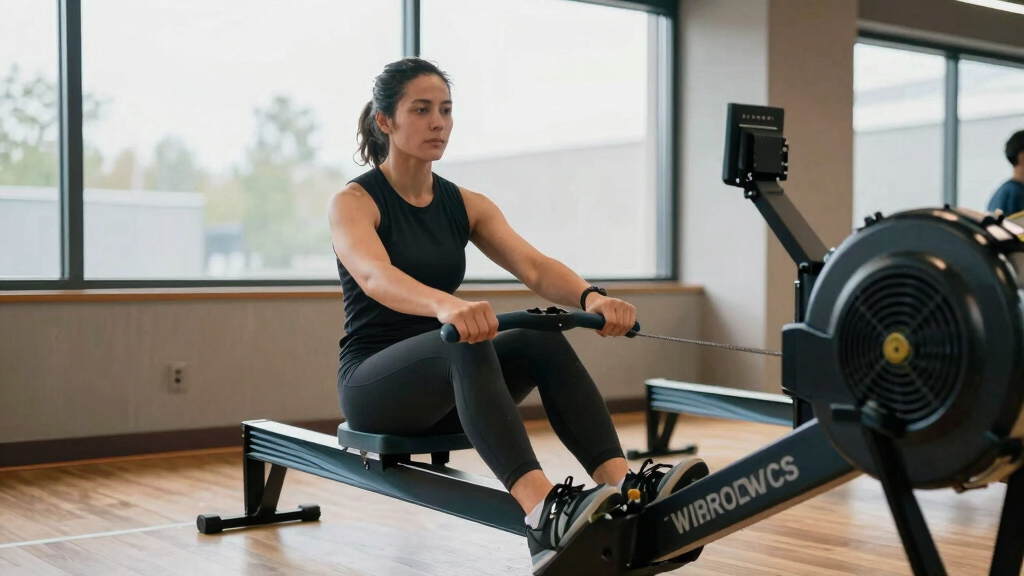
Rowing is a full-body activity. When you sit on a rowing machine, your legs push against the footrests, powering the drive. Your core stabilizes, your back and shoulders pull the handle, and your arms finish the motion. This seamless movement activates muscles from your calves to your shoulders.
For example, during a 20-minute row, you’ll engage around 86% of your muscle mass, according to recent studies. That’s like doing a full-body strength session combined with cardio, all in one.
Imagine you’re on the water, rowing a boat on a calm lake. That rhythmic, flowing motion isn’t just soothing—it’s incredibly efficient at building muscular endurance and burning calories.
indoor rowing machine with adjustable resistance
As an affiliate, we earn on qualifying purchases.
As an affiliate, we earn on qualifying purchases.
Why Rowing Is Better for Your Heart and Lungs Than Running or Cycling
Rowing is a cardiovascular powerhouse. When you row, your heart and lungs work together to deliver oxygen, pushing your aerobic capacity to new levels. Research from Easy Fitness Results shows that regular rowing improves VO2 max by up to 15%, often more than running or cycling.
Picture yourself during a steady 30-minute rowing session. Your breathing deepens, your heart rate climbs, and you feel that satisfying, rhythmic pulse—like a well-tuned engine running smoothly. That’s the sign of a resilient cardiovascular system.
Compared with running, rowing is lower impact, meaning less stress on your joints while still delivering a comparable—if not greater—cardio benefit.
full-body rowing workout equipment
As an affiliate, we earn on qualifying purchases.
As an affiliate, we earn on qualifying purchases.
How Rowing Protects Your Joints While Giving You a Killer Workout
One of rowing’s biggest advantages? It’s gentle on your joints. Unlike running, which can jar your knees and hips, rowing’s smooth, gliding motion minimizes impact. That means you can work out longer and more frequently without risking joint pain.
Think of it like gliding across a lake in a boat—your joints move in a natural, fluid pattern. Even if you have knee or hip issues, rowing can be a safe way to stay active.
Many rehab programs incorporate rowing because it strengthens muscles around vulnerable joints without the pounding of other high-impact exercises.
As an affiliate, we earn on qualifying purchases.
Calories Burned in a Rowing Session—How It Adds Up Fast
In just 30 minutes, a person weighing 155 pounds can burn around 300-400 calories on a moderate rowing pace. Push harder, and that number climbs to 600 or more. For comparison, cycling at a moderate pace burns roughly 250 calories in the same time, and running can burn over 400.
Imagine a quick 20-minute interval session—alternating high-intensity sprints with recovery—your calorie burn can hit 250-300 calories. It’s efficient for weight management and fat loss.
Plus, because rowing involves the entire body, it keeps your metabolic rate elevated long after your workout ends.
virtual rowing machine with real-time metrics
As an affiliate, we earn on qualifying purchases.
As an affiliate, we earn on qualifying purchases.
Strength and Endurance: How Rowing Builds Muscles and Stamina Simultaneously
Rowing isn’t just cardio; it also builds muscle. The resistance from the machine makes your muscles work against a gentle but consistent force. Over time, you’ll notice increased muscle tone, especially in your back, shoulders, and legs.
For example, after just four weeks of rowing three times a week, many users report noticeable improvements in core strength and muscular endurance—like being able to row for 10 minutes longer without fatigue.
It’s a dual-threat: you’re boosting your cardiovascular health while sculpting muscles—perfect for those who want a lean, strong physique.
Mental Clarity and Stress Relief—Why Rowing Feels Like Therapy
Beyond the physical, rowing offers mental health benefits. The rhythmic motion and repetitive sound of water or the machine’s hum create a calming effect. Many rowers describe it as meditative—like a moving mindfulness session.
Picture yourself on a quiet morning, the sun rising, your muscles working in harmony. Endorphins flood your system, lifting your mood and reducing stress.
Research indicates that aerobic exercise like rowing can reduce anxiety and depression symptoms, making it a powerful mental health booster.
Latest Tech and How They Make Rowing More Fun and Effective
Modern rowing machines come with digital screens, interactive challenges, and virtual courses. Imagine rowing through a scenic river or competing against friends in real time—all from your living room.
Features like real-time stats—distance, split time, calories—keep you motivated. Some apps even offer live coaching or gamified workouts, turning exercise into a game.
This tech makes rowing not just effective but also engaging, helping you stick with your routine longer.
How to Get Started with Indoor Rowing: Your Simple Step-by-Step Guide
- Choose the right machine: Look for one with adjustable resistance and a comfortable seat.
- Learn proper form: Keep your back straight, drive with your legs, then pull with your arms.
- Start slow: Begin with 10-minute sessions, focusing on technique over intensity.
- Progress gradually: Increase time and intensity as your strength and endurance improve.
- Mix it up: Incorporate intervals or different programs to prevent boredom and challenge your body.
Remember, consistency beats intensity. Even 3 sessions of 20 minutes a week can make a difference.
Comparison: Rowing Versus Running and Cycling—Which Is Better?
| Feature | Rowing | Running | Cycling |
|---|---|---|---|
| Full-Body Engagement | High | Low | Moderate |
| Impact on Joints | Low | High | Low |
| Calorie Burn (per hour) | 400-800 | 600-1000 | 400-700 |
| Suitability for Beginners | High | Moderate | High |
| Muscle Building | Yes | Minimal | Minimal |
While running burns more calories per session, rowing offers a balanced mix of strength and cardio with less joint stress. Cycling is great for endurance but doesn’t activate as many muscles as rowing does.
Frequently Asked Questions
Is rowing suitable for beginners?
Absolutely. Start with short sessions focusing on proper form. Gradually increase duration and intensity as your confidence and endurance grow. Many gyms and online tutorials can help you learn the basics safely.
How many calories can I burn on a typical rowing session?
Depending on your weight and effort level, you can burn between 300-600 calories in 30 minutes. High-intensity intervals push that number even higher.
Can rowing help me lose weight?
Yes. Combined with a balanced diet, regular rowing can support weight loss by burning calories and building muscle, which boosts your metabolism.
Are there risks or injuries associated with rowing?
Proper technique minimizes injury risk. Focus on maintaining good posture and gradually increasing intensity. If you have pre-existing joint or back issues, consult a professional before starting.
How often should I row for health benefits?
Most beginners benefit from 3-5 sessions per week of 20-30 minutes. Adjust based on your fitness level and goals, and always listen to your body.
Conclusion
Rowing isn’t just a workout—it’s a complete fitness experience. It combines strength, endurance, and mental clarity in a low-impact package that anyone can adapt. If you’re after a workout that hits every mark, grab a oar—or better yet, a rowing machine—and get moving.
Imagine feeling stronger, more energized, and mentally refreshed—all from a simple, rhythmic motion. That’s what makes rowing the most complete cardio workout you can do.
NFL season / tailgating Picks
team gear
As an affiliate, we earn on qualifying purchases.