
TL;DR
Listen free for 30 days with Audible
Thousands of audiobooks and originals — cancel anytime.
Start your free trialAs an affiliate, we earn on qualifying purchases.
Smart scales estimate body fat using electrical signals, but their accuracy varies with hydration and other factors. Use them mainly to monitor progress over time, not for exact figures.
Smart scales are everywhere—glossy gadgets in bathrooms promising to reveal your body fat, muscle, and water weight with a tap. But how much trust should you put in these numbers? Do they truly measure body fat, or are they just rough estimates? If you’ve ever wondered whether those readings reflect reality, you’re not alone. This article digs into what smart scales do, how accurate they are, and how best to use them for your health goals.
Understanding the limits of this technology can save you from chasing false precision. After all, no device is perfect, especially when measuring something as complex as body composition. But if you know what to look for, you can turn your smart scale into a reliable trend tracker—helping you stay motivated and informed without relying solely on the numbers.
Smart scales estimate body fat using bioelectrical impedance, which is influenced by hydration and other factors.
They are best used to track progress over time, not for exact body fat percentages.
Consistency in measurement conditions greatly improves reliability.
Emerging tech aims to improve accuracy, but estimates will always have some margin of error.
For precise body composition data, professional testing methods are more reliable.
Do Smart Scales Actually Measure Body Fat?
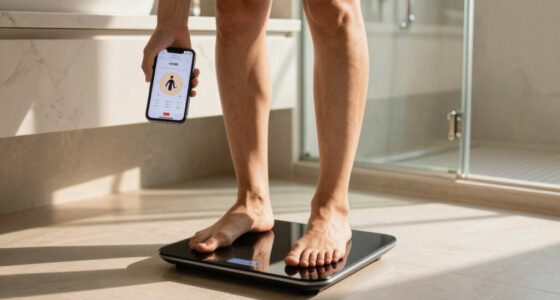
Short answer: they estimate it. Smart scales send a tiny electrical signal through the body, then use resistance, personal details, and an algorithm to calculate body fat. The number is imperfect—but repeated consistently, it can become a useful progress signal.
How the scale makes its guess
Bioelectrical impedance analysis, or BIA, measures how strongly the body resists a small, harmless electrical current. Water-rich lean tissue conducts the signal more easily than fat tissue.
Resistance becomes an estimate
Think of a wet sponge versus dry clay. The water-rich sponge conducts electricity more readily. The scale combines measured impedance with height, age, sex, weight, and proprietary equations to estimate body composition.
Signal
A tiny current enters through the feet.
Resistance
The scale records electrical impedance.
Algorithm
Profile data shapes the calculation.
Estimate
An inferred body-fat percentage appears.
Why today’s number can move
Your body fat does not jump several points after a glass of water—but a BIA estimate can. The current responds strongly to body water, so measurement conditions matter almost as much as the device.
The variability zone
Normal changes in hydration and skin temperature can produce a surprisingly wide swing.
5–10% Potential BIA variation| Method | Best role | Precision | Access |
|---|---|---|---|
| Smart scale BIA | ✓ Trend tracking | ~ Estimate | At home |
| Multi-frequency BIA | ✓ Refined trends | ~ Improved estimate | Home / clinic |
| DEXA scan | ✓ Detailed snapshot | ✓ High | Specialist facility |
| Hydrostatic weighing | ✓ Precise assessment | ✓ High | Specialist facility |
| Air displacement | ✓ Precise assessment | ✓ High | Specialist facility |
Use the scale without fooling yourself
Standardize the conditions and zoom out. A slow movement across several weeks carries more meaning than any isolated reading.
Measure in the morning
Step on after waking and using the bathroom, before eating or drinking.
Keep conditions alike
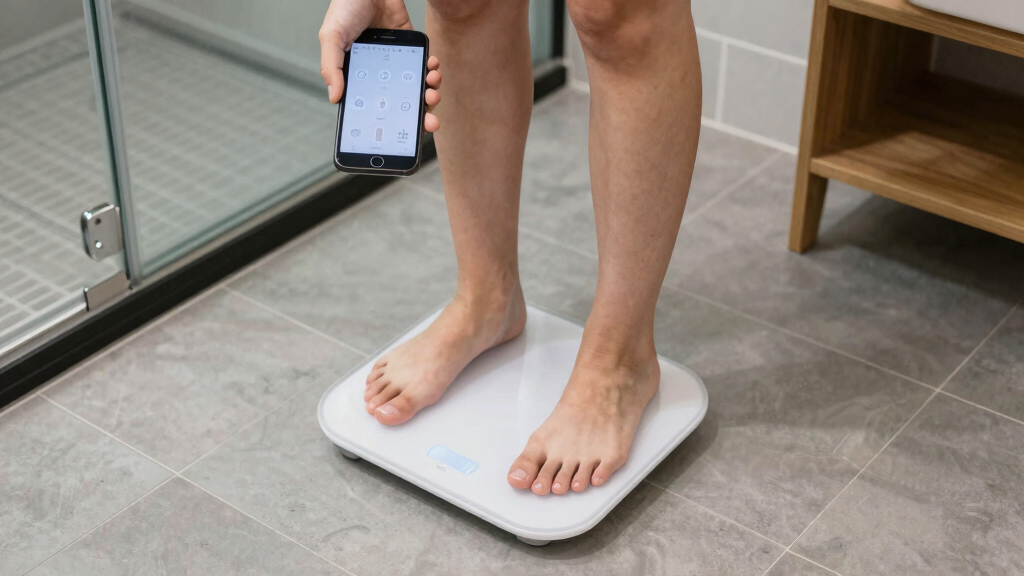
Use the same scale, hard surface, bare feet, and body position.
Avoid post-workout checks
Exercise redistributes fluids and can distort impedance readings.
Watch weeks, not days
Weekly or bi-weekly comparisons reduce the noise of daily swings.
Use more than one signal
Include strength, energy, waist measurements, and clothing fit.
One reading is noise.
A pattern is information.
A gradual decline across a month is more credible than a sudden overnight drop. Consistency improves comparability—not absolute accuracy.
Choose the tool for the decision
At-home tracking and clinical assessment solve different problems. If body-composition data will guide medical care or high-level athletic decisions, seek a professional method.
Smart scale
Convenient, repeatable, inexpensive, and useful for long-term direction.
Best for: habits and trendsDEXA
Uses low-dose X-rays to estimate fat, lean tissue, and bone mineral density.
Best for: detailed snapshotsHydrostatic weighing
Infers composition from body density measured through water displacement.
Best for: specialist testingAir displacement
Uses changes in air pressure and body volume to estimate body density.
Best for: non-water testingThe trustworthy interpretation chain
The bottom line: smart scales measure signals, not fat directly.
They turn electrical resistance into a body-fat estimate using assumptions and population-based equations. That estimate may be wrong in absolute terms while still being helpful for showing whether your measurements are generally moving up, down, or staying stable.
Use consistent conditions. Ignore daily drama. Seek professional testing when precision could change a medical or performance decision.
How Do Smart Scales Guess Your Body Fat? The Simple Science
Smart scales primarily use a technique called bioelectrical impedance analysis (BIA). When you step on, a tiny, harmless electrical current travels through your body. Because fat, muscle, and water conduct electricity differently, the scale measures resistance and estimates your body composition based on these differences.
Imagine passing a small, invisible wave through a sponge versus a block of clay. The water-filled sponge conducts electricity better, so the resistance is lower. The scale uses this principle to give you a body fat percentage—roughly. But just like a sponge’s resistance changes if it’s wet or dry, your body’s hydration level influences the readings.
Why does this matter? Because hydration levels can fluctuate throughout the day due to factors like exercise, diet, or climate. These fluctuations can cause the scale to over- or underestimate your body fat temporarily. Recognizing this helps you understand that a single reading may not represent your true body composition, but consistent measurements under similar conditions can reveal meaningful trends over time.
As an affiliate, we earn on qualifying purchases.
Can You Trust These Numbers? The Accuracy You Can Expect
When it comes to smart scales measuring body fat, accuracy varies widely. Factors like hydration, recent meals, skin temperature, and even the time of day can swing the results by several percentage points. For example, drinking a glass of water before weighing can lower your body fat percentage reading by a few points, even though your actual fat hasn’t changed. This variability means that relying on a single measurement can be misleading, especially if you’re trying to make precise health decisions.
Compared to clinical tools like DEXA scans, which are highly precise and considered the gold standard, smart scales are more like rough sketches—useful for seeing if you’re trending in the right direction but not for pinpoint accuracy. An important implication is that if you want to track progress, consistency in measurement conditions is crucial. Fluctuations caused by hydration or other factors can mask true changes in body composition, so interpreting data requires understanding these limitations. Recognizing that a 5-10% fluctuation is normal helps you avoid overreacting to daily variations and instead focus on long-term patterns.
As an affiliate, we earn on qualifying purchases.
What’s New in Smart Scale Tech? Are They Getting Better?
Recent smart scales are smarter—literally. Multi-frequency BIA uses several electrical signals at different frequencies to better differentiate between water compartments and improve measurement accuracy. Some incorporate additional sensors—like skin temperature or impedance at various body sites—or use machine learning algorithms that analyze your past data to refine estimates. These advancements aim to reduce variability and provide more consistent readings, especially when you calibrate the device using your age, gender, and activity level.
Furthermore, some brands are integrating data from fitness apps or wearable devices, giving you a more comprehensive view of your health. However, despite these technological improvements, the fundamental limitation remains: these tools generate estimates, not exact measures. Think of them as a weather forecast—sometimes spot-on, sometimes a little off, but generally useful for tracking trends rather than precise body composition. The tradeoff is that increased complexity and technology can improve reliability, but they can’t eliminate the inherent variability of bioelectrical impedance measurements.
As an affiliate, we earn on qualifying purchases.
Tracking Your Progress Without Faking It: How to Use Smart Scales Wisely
- Pick a consistent time—preferably mornings after waking up and using the bathroom. This minimizes fluctuations caused by food intake, activity, and hydration.
- Use the same scale, bare feet, and similar conditions every time. Small changes in footwear or surface can affect readings.
- Don’t weigh yourself immediately after exercise or a big meal, as hydration and glycogen stores influence readings. Allow your body to stabilize for more reliable comparisons.
- Focus on the trend over weeks or months rather than daily fluctuations. Recognize that minor day-to-day changes are normal and don’t necessarily reflect actual body composition shifts.
- Combine scale data with other measures—like how your clothes fit, your energy levels, or strength gains—to get a fuller picture of your health. This multi-faceted approach helps you interpret the numbers more meaningfully and stay motivated.
For example, if you notice your body fat percentage slowly drops over a month, that’s a more reliable sign of progress than a single, fluctuating reading. Consistency and context matter more than obsessing over daily numbers.
digital bathroom scale for body fat
As an affiliate, we earn on qualifying purchases.
As an affiliate, we earn on qualifying purchases.
Are There Better Ways to Measure Body Fat? When to Seek More Accurate Tests
If you need precise data—say, for medical reasons or athletic performance—more advanced methods exist. DEXA scans, hydrostatic weighing, and air displacement plethysmography offer higher accuracy because they directly measure body composition by assessing bone density, water displacement, or tissue density. These tests often require specialized equipment and trained technicians, making them less accessible and more costly, but they provide a detailed and reliable snapshot of your body’s makeup.
For most of us, smart scales are enough to see if we’re heading in the right direction. Think of them as a daily weather report—useful for trends, not exact forecasts. If your goal is body composition precision, especially for medical or athletic reasons, consulting a professional for more detailed testing is wise. These precise methods help you understand the actual distribution of fat, muscle, and bone, which can influence training and health decisions more accurately than a scale reading alone.
Frequently Asked Questions
Are smart scales accurate for measuring body fat?
They provide useful trend data but are not highly accurate compared to clinical methods. Hydration and other factors can cause significant fluctuations.Can I rely on smart scale readings for health decisions?
Use them mainly to monitor progress over time. For specific health concerns, consult a healthcare professional and consider more precise tests.What factors influence the accuracy of smart scale measurements?
Hydration level, recent meals, skin temperature, time of day, and physical activity all impact readings.Are there better ways to measure body fat?
Yes, methods like DEXA scans, hydrostatic weighing, and air displacement plethysmography offer higher accuracy but are less accessible and more costly.How often should I check my body fat with a smart scale?
Once a week or every two weeks is enough to track meaningful trends without overemphasizing daily fluctuations.Conclusion
Smart scales are handy tools for monitoring general trends, but don’t treat their numbers as gospel. Use them consistently, interpret the data as rough estimates, and always complement with other health indicators. When in doubt, consult a professional for detailed analysis—your body is more complex than a number on a screen.
Remember: your worth isn’t defined by a scale or a body fat percentage. Focus on how you feel, move, and thrive. That’s the real measurement of health.
NFL season / tailgating Picks
team gear
As an affiliate, we earn on qualifying purchases.