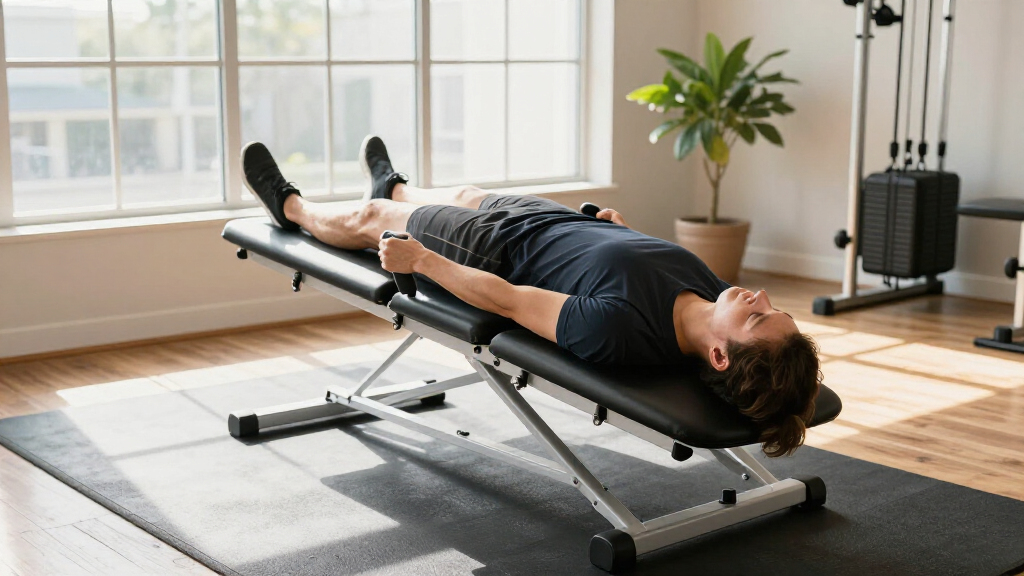

When managing sciatica, the Teeter FitSpine LX9 stands out as the best overall choice due to its superior angle control and secure ankle lock system, which minimizes risk during decompression. While it commands a higher price, the YOLEO Gravity Inversion Table offers a compelling budget-friendly alternative for those who need basic relief without premium accessories. The primary tradeoff in this category involves stability versus portability; heavier steel-frame units provide the rigid support necessary for consistent spinal traction, whereas lighter models may compromise safety at steep inversion angles. For most users seeking reliable relief from nerve pain, investing in a table with graduated angle adjustment is more beneficial than opting for a cheaper unit with limited control. Continue reading to see how these seven models compare in build quality, ease of use, and long-term durability.

Get workout gear delivered free with Prime
- Fast, free delivery on millions of items
- Prime Video, Amazon Music and more included
- Member-only deals all year
Complete the kit



Key Takeaways
- Angle Control is Critical for Sciatica: Models with precise, incremental angle adjustments (like the Teeter FitSpine LX9) allow for safer partial inversions, which are often more effective for acute sciatica than full inversions.
- Ankle Lock Security Varies Widely: The difference between a comfortable fit and a dangerous slip often comes down to the locking mechanism; padded, adjustable locks on premium models offer far better safety than basic pin-and-hole systems.
- Weight Capacity Correlates with Stability: Tables rated for higher user weights (300+ lbs) generally feature wider bases and thicker steel, reducing wobble and increasing confidence during use.
- Assembly Complexity Impacts Usability: Several high-value options require significant assembly time and tools, which can be a barrier for users with limited mobility or strength before they even begin therapy.
- Integrated Therapy vs. Standalone: Tables with built-in heat or massage (like the Innova Advanced) provide a dual-therapy approach, but may sacrifice some structural rigidity compared to dedicated, minimalist inversion frames.
| YOLEO Gravity Inversion Table |  | Best Budget Entry-Level | Weight Capacity: 265 lbs | User Height Range: 4’1″ to 6’2″ | Safety System: Ratchet ankle lock and safety pin | VIEW LATEST PRICE | See Our Full Breakdown |
| Teeter FitSpine LX9 Inversion Table |  | Best Overall for Sciatica Relief | Weight Capacity: 300 lbs | User Height Range: 4’8″ to 6’6″ | Suspension System: 8-point floating suspension | VIEW LATEST PRICE | See Our Full Breakdown |
| Innova Advanced Heat and Massage Inversion Table |  | Best for Combined Heat Therapy | Weight Capacity: 300 lbs | User Height Range: 4’10” to 6’6″ | Therapy Type: Heat and Massage | VIEW LATEST PRICE | See Our Full Breakdown |
| Teeter EP-560 Inversion Table |  | Best for Safety and Certification | Weight Capacity: 300 lbs | FDA Status: FDA-registered 510(k) medical device | Safety Certification: UL Safety Certified | VIEW LATEST PRICE | See Our Full Breakdown |
| Verakare ITX9550 Heavy Duty Inversion Table |  | Best for Heavy-Duty Stability | Weight Capacity: 300 lbs | User Height Range: 4’10” to 6’6″ | Adjustable Positions: Six-angle pin system | VIEW LATEST PRICE | See Our Full Breakdown |
| Teeter FitSpine X3 Inversion Table with Accessories |  | Best Premium Integration | Maximum Weight Capacity: 300 pounds | Item Weight: 66 pounds | User Height Range: 4 ft 8 in–6 ft 6 in | VIEW LATEST PRICE | See Our Full Breakdown |
| Innova Health and Fitness ITX9600 Inversion Table with Adjustable Headrest |  | Best Budget-Friendly Utility | Model: ITX9600 | Weight Capacity: 300 lbs | User Height Range: 4 ft 10 in to 6 ft 6 in | VIEW LATEST PRICE | See Our Full Breakdown |
| inversion tables for sciatica | Weight Capacity | User Height Range | Warranty | Item Weight |
|---|---|---|---|---|
| YOLEO Gravity Inversion Table | 265 lbs | 4’1" to 6’2" | — | — |
| Teeter FitSpine LX9 Inversion | 300 lbs | 4’8" to 6’6" | 5 years | — |
| Innova Advanced Heat and Massa | 300 lbs | 4’10" to 6’6" | One Year Limited | 60 lbs |
| Teeter EP-560 Inversion Table | 300 lbs | — | 5-year manufacturer warranty | 65 lbs |
| Verakare ITX9550 Heavy Duty In | 300 lbs | 4’10" to 6’6" | 1 year manufacturer warranty | — |
| Teeter FitSpine X3 Inversion T | — | 4 ft 8 in–6 ft 6 in | 5 years | 66 pounds |
| Innova Health and Fitness ITX9 | 300 lbs | 4 ft 10 in to 6 ft 6 in | One year limited | 52 lbs |
More Details on Our Top Picks
YOLEO Gravity Inversion Table
This model stands out as the most accessible entry point for those testing inversion therapy without a heavy financial commitment. Compared with the Teeter FitSpine LX9, which offers advanced suspension and app integration, the YOLEO strips features back to the core function: safe, controlled inversion. The triple protection system—combining a steel frame, ratchet ankle locks, and a safety pin—provides adequate stability for beginners who may be wary of gravity-assisted movements. However, the memory foam backrest lacks the ergonomic contouring and traction accessories found in premium models, meaning users with severe sciatica may find the support less targeted. It is a functional tool for mild relief but lacks the refinement of higher-tier competitors.
Pros:- Triple safety system with steel frame and pin locks
- Foldable design saves significant storage space
- Affordable entry point into inversion therapy
- Adjustable ratchet system accommodates various heights
Cons:- Basic backrest lacks advanced ergonomic contouring
- No integrated stretching accessories or traction aids
- Build quality feels less robust than premium competitors
Best for: First-time users wanting to try inversion therapy with minimal upfront investment
Not ideal for: Users with severe chronic pain who need advanced lumbar traction and precise angle control
- Weight Capacity:265 lbs
- User Height Range:4’1″ to 6’2″
- Safety System:Ratchet ankle lock and safety pin
- Frame Material:Heavy-duty integrated steel
- Backrest Material:Memory foam
- Storage Type:Foldable
Our verdict“The YOLEO is the sensible choice for beginners testing the waters of inversion therapy on a budget.”
Teeter FitSpine LX9 Inversion Table
This table earns the top spot for sciatica sufferers because its 8-point floating suspension actively decompresses the spine during inversion, a feature absent in the simpler YOLEO Gravity model. The inclusion of acupressure nodes and a lumbar bridge allows for targeted lower-back traction, addressing the specific nerve compression associated with sciatica rather than just general stretching. While the Teeter Move app provides guided routines that help users avoid improper form, the table’s complexity requires a learning curve. Unlike the Innova Advanced, which focuses on heat, the LX9 prioritizes mechanical decompression and safety certification, making it the more medically robust option for consistent pain management.
Pros:- 8-point suspension system enhances spinal decompression
- UL Safety Certified for peace of mind
- Includes lumbar bridge and acupressure nodes
- 5-year warranty reflects high build confidence
Cons:- Requires significant floor space for setup
- Complex accessory setup takes time to master
- Higher price point than basic models
Best for: Individuals with chronic sciatica seeking targeted lumbar traction and guided therapy
Not ideal for: Users with limited floor space or those who prefer simple, no-frills equipment
- Weight Capacity:300 lbs
- User Height Range:4’8″ to 6’6″
- Suspension System:8-point floating suspension
- Safety Certification:UL Safety Certified
- Warranty:5 years
- Included Accessories:Acupressure nodes, lumbar bridge, stretch handles
- Angle Settings:20, 40, and 60 degrees
Our verdict“The Teeter FitSpine LX9 is the superior choice for those prioritizing medical-grade decompression and safety.”
Innova Advanced Heat and Massage Inversion Table
This unit differentiates itself by integrating heat and massage therapy directly into the inversion process, a feature missing from the Teeter EP-560. For sciatica patients whose pain is exacerbated by muscle tension, the patented vertical massage pad can help relax the paraspinal muscles before and during inversion, potentially improving decompression effectiveness. However, this added complexity comes at a cost: the table is heavier and bulkier, making it less convenient than the foldable YOLEO. The six adjustable pin positions offer good customization, but the reliance on electrical components for heat means it requires a nearby outlet and more maintenance than purely mechanical tables.
Pros:- Integrated heat and massage pad for muscle relaxation
- High weight capacity of 300 lbs
- Ergonomic ankle holders reduce pressure points
- Wide height adjustment range for most adults
Cons:- Large footprint limits placement options
- Complex assembly due to electrical and mechanical parts
- Heavier than non-electric models
Best for: Users who find that heat and massage significantly relieve their muscle tension before inversion
Not ideal for: People with small apartments or those who dislike electrical components in fitness equipment
- Weight Capacity:300 lbs
- User Height Range:4’10” to 6’6″
- Therapy Type:Heat and Massage
- Item Weight:60 lbs
- Adjustable Positions:Six pin positions
- Warranty:One Year Limited
- Dimensions:46″ H x 28″ W x 61″ D
Our verdict“The Innova Advanced is ideal for those who want to combine thermal therapy with spinal decompression.”
Teeter EP-560 Inversion Table
The EP-560 is the go-to recommendation for users who prioritize medical credibility over extra features. Unlike the Innova Advanced, which is a general fitness product, the EP-560 is an FDA-registered 510(k) medical device, offering a level of regulatory assurance that appeals to cautious buyers. Its ComforTrak backrest flexes to follow the spine’s natural curve, providing a safer inversion experience than the rigid frames found in budget models like the YOLEO. While it lacks the app integration of the LX9, its simplicity makes it easier to maintain. However, its 65 lb weight makes it difficult to move, so it is best left in a permanent position.
Pros:- FDA-registered 510(k) medical device status
- ComforTrak backrest adapts to spinal curvature
- UL Safety Certified for structural integrity
- 5-year warranty covers major components
Cons:- Heavy at 65 lbs, making relocation difficult
- Lacks digital guidance or app integration
- Requires substantial floor space when deployed
Best for: Risk-averse users who want FDA-registered medical device certification
Not ideal for: Those who need to move the table frequently or want smart app connectivity
- Weight Capacity:300 lbs
- FDA Status:FDA-registered 510(k) medical device
- Safety Certification:UL Safety Certified
- Item Weight:65 lbs
- Backrest Type:ComforTrak flexible backrest
- Warranty:5-year manufacturer warranty
- Dimensions:84 x 29 x 86 inches
Our verdict“The Teeter EP-560 is the safest bet for users demanding medical-grade certification and simplicity.”
Verakare ITX9550 Heavy Duty Inversion Table
This model focuses on robust construction and a True Balance System that allows for fine-tuned adjustments to the headrest and footrest. Compared to the Teeter FitSpine LX9, which uses a floating suspension, the ITX9550 relies on a solid, heavy-duty frame that many users find more reassuring during inversion. The reversible ankle holders are a thoughtful touch, reducing the risk of discomfort for users with sensitive ankles. However, the one-year warranty is significantly shorter than the five-year coverage offered by Teeter models, suggesting less long-term confidence in durability. It is a solid, no-nonsense machine for those who value physical stability over technological features.
Pros:- Heavy-duty frame supports up to 300 lbs securely
- True Balance System allows personalized fit adjustments
- Reversible ankle holders enhance comfort
- Six-angle pin system with protective cover
Cons:- Only a one-year warranty compared to competitors
- No integrated accessories for targeted traction
- Assembly required can be time-consuming
Best for: Users who prefer a rigid, heavy-duty frame over floating suspension systems
Not ideal for: Buyers looking for long-term warranty coverage or integrated therapy accessories
- Weight Capacity:300 lbs
- User Height Range:4’10” to 6’6″
- Adjustable Positions:Six-angle pin system
- Ankle System:Ergonomic reversible holders
- Warranty:1 year manufacturer warranty
- Backrest:Large with adjustable headrest
- Brand:Verakare
Our verdict“The Verakare ITX9550 suits users who want a sturdy, adjustable table without the premium price tag of medical certifications.”
Teeter FitSpine X3 Inversion Table with Accessories
This model stands out for its integrated wellness ecosystem, pairing physical inversion with guided digital workouts via the Teeter Move app. Unlike the Innova ITX9600, which offers basic mechanical adjustment, the X3 includes acupressure nodes and an adjustable lumbar bridge that actively support spinal decompression while you hang. The balance-controlled rotation ensures smooth transitions, reducing the risk of dizziness often associated with rapid inversion. However, the 66-pound weight makes it cumbersome to move, unlike lighter alternatives. It is a substantial investment in both space and hardware, but for those seeking a holistic approach to sciatica relief, the added accessories justify the footprint.
Pros:- Includes acupressure nodes and adjustable lumbar support for targeted relief
- Access to guided workouts via the Teeter Move app enhances routine consistency
- UL safety certification and dual-locking ankle system provide high security
- Folds completely flat for storage without requiring disassembly
Cons:- Extremely heavy at 66 pounds, making relocation difficult
- Requires significant floor space for both use and storage
- Higher price point compared to basic mechanical models
Best for: Tech-savvy users who want guided stretching routines integrated with their inversion sessions
Not ideal for: Renters or those with limited floor space due to its heavy, bulky frame
- Maximum Weight Capacity:300 pounds
- Item Weight:66 pounds
- User Height Range:4 ft 8 in–6 ft 6 in
- Material:Alloy steel
- Warranty:5 years
- Operation Mode:Manual with push-button controls
- Color:Grey
- Safety Certification:UL certified
Our verdict“Choose this if you value a connected, guided experience and have dedicated space for a substantial piece of equipment.”
Innova Health and Fitness ITX9600 Inversion Table with Adjustable Headrest
For buyers prioritizing cost-effective functionality, this table delivers essential inversion features without the premium add-ons. It compares favorably to the Teeter FitSpine X3 by offering a reversible ankle holding system and a six-position adjustment pin at a fraction of the complexity. The adjustable headrest is a rare find in this price bracket, enhancing comfort during extended hangs. However, the one-year warranty is notably shorter than competitors, and conflicting weight capacity data in the specs raises reliability concerns. It is a solid entry-level choice for straightforward decompression, lacking the refined ergonomics of higher-end models.
Pros:- Reversible ankle holders accommodate different leg lengths comfortably
- Adjustable headrest provides better neck support than standard flat pads
- Six-position pin system allows for controlled, gradual inversion angles
- Lighter weight makes it easier to assemble and store than heavy steel frames
Cons:- Conflicting weight capacity information in product details creates uncertainty
- Short one-year limited warranty compared to multi-year industry standards
- Requires significant assembly time before first use
Best for: Budget-conscious beginners who need basic inversion capability without digital features
Not ideal for: Users seeking long-term durability guarantees or precise weight limit certainty
- Model:ITX9600
- Weight Capacity:300 lbs
- User Height Range:4 ft 10 in to 6 ft 6 in
- Item Weight:52 lbs
- Dimensions:46 x 28 x 63 in
- Material:Foam padded backrest
- Color:Grey/Black
- Warranty:One year limited
- Adjustment Type:Six-position pin system
Our verdict“This is a practical, no-frills option for those who want basic spinal relief without paying for smart features.”

How We Picked
My selection process focused on three pillars: safety engineering, ergonomic adjustability, and long-term durability. For sciatica relief, the ability to control inversion angle precisely is paramount, as full 90-degree inversions can aggravate nerve pain if introduced too quickly. I prioritized models that offer smooth, adjustable angle stops rather than simple pin-locked positions. Additionally, I evaluated the ankle locking mechanisms, favoring designs that distribute pressure evenly to prevent circulation issues or discomfort, a common complaint with lower-tier tables.
I also assessed the frame construction and weight limits. Sciatica patients often seek stability to reduce anxiety during therapy, so tables with wider footprints and reinforced steel frames ranked higher. Finally, I considered the ease of return and the clarity of instructions, recognizing that users dealing with back pain need a setup process that does not exacerbate their condition. Products were ranked based on how well they balanced these safety and usability factors against their price point.
Factors to Consider When Choosing Best Inversion Tables For Sciatica
Choosing an inversion table for sciatica requires balancing therapeutic effectiveness with physical safety. Unlike general fitness equipment, this category demands precise engineering to prevent injury while decompressing the spine. The following factors will help you navigate the specific tradeoffs inherent in this market.
Angle Adjustment Mechanisms
The method used to control the inversion angle dictates how safe and effective your sessions will be. Pin-and-hole systems are common on budget models but offer limited granularity, forcing you to jump between set angles. For sciatica, continuous adjustment levers or digital angle displays are far superior because they allow you to find the specific ‘sweet spot’ where nerve pressure eases without triggering pain. If you cannot make micro-adjustments, you risk over-inverting and worsening inflammation. Graduated control is not just a convenience; it is a safety feature that allows for progressive therapy intensity.
Ankle Lock Comfort and Security
Your ankles bear your entire body weight during inversion, making the lock mechanism the single most important safety component. Basic pin-locks can dig into the Achilles tendon and restrict circulation, leading to numbness or bruising. Premium tables utilize padded, adjustable cuffs that cradle the ankle without pinching the skin. Look for designs that allow for independent adjustment of each ankle, as asymmetrical pressure can twist the lower spine, negating the therapeutic benefits. If the lock feels rigid or painful when tightened while standing, it will be dangerous when inverted.
Frame Stability and Weight Capacity
Wobble is the enemy of relaxation, and relaxation is required for effective spinal decompression. Tables with a wider base footprint and cross-bracing provide a stable platform that prevents lateral shifting. Check the maximum user weight capacity; a table rated for 250 lbs may feel precarious for a 220-lb user, whereas a 300-lb rated frame will feel solid. Heavier frames also resist tipping if you move unexpectedly during a session. Do not compromise on structural integrity for portability; a lightweight aluminum frame often lacks the rigidity needed for consistent traction.
Ease of Return and User Independence
Returning to an upright position after inversion can be difficult, especially for those with limited core strength or balance issues. Assisted return mechanisms, such as spring-loaded bars or hand grips, allow you to rise safely without straining your back. Some tables require you to use your abdominal muscles to pull yourself up, which can be risky if your sciatica is acute. Self-return features or clearly marked handholds are essential for users who will be exercising without a spotter. If you cannot safely get back up, the table is unusable for solo therapy.
Assembly Complexity and Storage
Many high-quality tables require significant assembly, including bolting heavy steel components. If you live alone or have limited strength, this can be a hidden barrier. Pre-assembled or tool-free setups save time and reduce the risk of improper assembly, which can lead to failure during use. Consider also the foldability; while most tables fold, some remain bulky and difficult to move. A table that is hard to set up will likely be used less frequently, rendering the investment useless. Prioritize models with clear, visual instructions over those with dense text manuals.
Frequently Asked Questions
How long should I invert each session for sciatica relief?
Most physical therapists recommend starting with short sessions, typically one to two minutes, to allow the body to adjust to the change in pressure. Gradually increase this duration by 30 seconds every few days, aiming for a maximum of five to ten minutes per session. Over-inverting can cause blood pooling in the head and increased intraocular pressure, which poses risks for those with high blood pressure or glaucoma. Consistency with short, frequent sessions is more effective for reducing nerve inflammation than occasional long sessions. Always listen to your body and stop immediately if you feel dizzy or experience increased pain.
Can inversion tables make sciatica worse?
Yes, inversion can exacerbate sciatica if used incorrectly, particularly if you invert too deeply or too quickly. Acute inflammation may react negatively to the sudden change in spinal pressure, leading to increased pain or muscle spasms. It is critical to start at a partial angle (15-20 degrees) and only increase the angle as tolerated. If you have a herniated disc or spinal stenosis, consult a healthcare provider before starting, as certain conditions may contraindicate inversion entirely. The goal is gentle decompression, not aggressive stretching, so avoid forcing the spine beyond its comfortable range.
Is a padded or unpadded backrest better for sciatica?
A padded backrest is generally preferred for sciatica because it provides comfort and prevents pressure points on the spine during longer sessions. Unpadded mesh or hard plastic backrests can dig into the vertebrae, causing discomfort that distracts from the therapeutic benefits of decompression. Look for high-density foam that retains its shape over time, as cheap foam will compress and lose effectiveness quickly. However, ensure the padding is breathable to prevent sweating during use. The backrest should support the natural curvature of your spine without forcing an unnatural arch.
Do I need a table with heat or massage features?
Integrated heat or massage features can enhance the therapeutic experience by relaxing tight muscles that often accompany sciatic pain. Heat therapy increases blood flow and reduces muscle tension, potentially allowing for deeper decompression. However, these features add complexity, weight, and cost, and they may distract from the core function of inversion. If you already own a heating pad or massage gun, a standalone inversion table may offer better value and stability. Prioritize the quality of the inversion mechanism and safety features over add-on therapies, which are secondary benefits.
How do I choose the right angle for my height?
Most inversion tables feature adjustable backrests and ankle locks to accommodate a range of heights, typically from 4’10” to 6’6″. It is vital to adjust the table while standing to ensure your spine aligns correctly with the pivot point. If the pivot point is too high or low relative to your waist, the inversion will twist your spine rather than decompress it. Check for height adjustment indicators or markers that simplify this setup. A table that does not adjust easily for height can cause uneven pressure distribution, leading to ineffective therapy or potential injury.
Conclusion
Selecting the right inversion table depends largely on your specific needs and budget. For most users, the Teeter FitSpine LX9 remains the Best Overall choice due to its unmatched safety features and precise angle control, making it ideal for consistent, long-term sciatica management. If you are on a tighter budget but still need reliable support, the YOLEO Gravity Inversion Table serves as the Best Value option, offering solid construction for basic therapy needs. Those seeking a Premium experience with integrated comfort features should look at the Innova Advanced Heat and Massage model, which combines traction with muscle relaxation. For beginners who prioritize ease of use and guided therapy, the Teeter EP-560 provides a user-friendly entry point with a reputation for reliability. Ultimately, the best table is one that feels stable, adjusts easily to your body, and encourages consistent use without fear of injury.