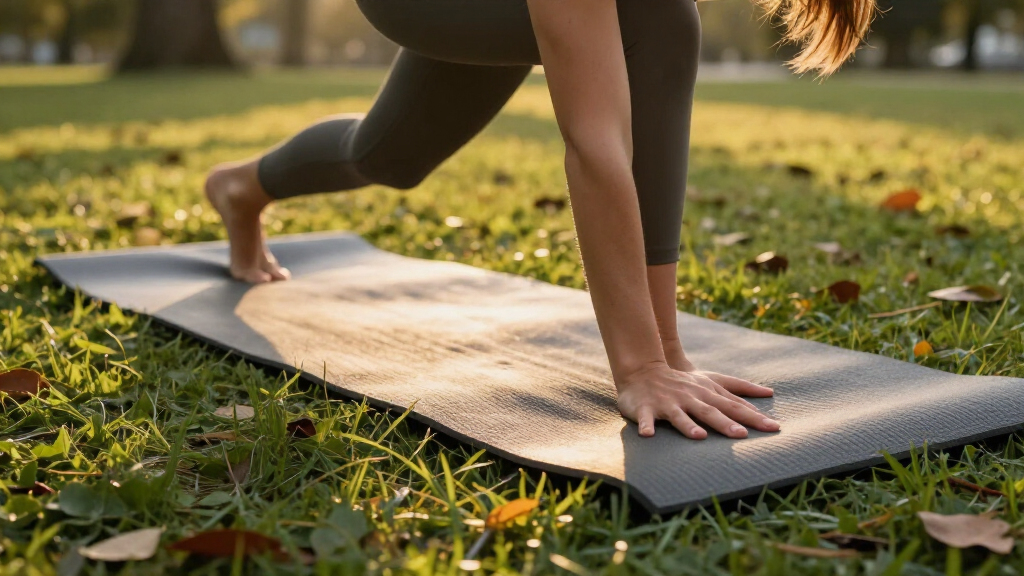
The Liforme Classic Yoga Mat is my best overall pick among non-slip yoga mats, pairing a grippy surface with alignment markings that can help guide poses. For a lower-cost everyday option, the Gruper TPE Yoga Mat adds a carry strap, while the Stakt Foldable Yoga Mat Pro suits people who value compact storage over a traditional roll. The main tradeoffs are grip, cushioning, size, and portability: extra padding can feel less stable in standing poses, while wide or heavy mats are harder to carry. Surface grip can also vary with sweat, cleaning, and room conditions. Read on for the full breakdown and help matching a mat to your practice.

Get workout gear delivered free with Prime
- Fast, free delivery on millions of items
- Prime Video, Amazon Music and more included
- Member-only deals all year
Complete the kit


Key Takeaways
- Liforme is the strongest all-around choice for shoppers who want grip and alignment guidance together, while its premium positioning makes it less suited to buyers focused on basic value.
- Gruper offers a practical entry point with a TPE construction and carry strap; buyers who need a larger practice area may prefer Gogokiwi or amazon.com/dp/B09XWTG9V8?tag=easyfitnessresults-20&ascsubtag=dc-1244551″ target=”_blank” rel=”nofollow sponsored noopener”>MRO instead.
- Stakt stands apart for folding and storage, making portability its defining advantage rather than maximum coverage or a conventional rolled-mat feel.
- Size changes the experience as much as surface texture: Gogokiwi adds width for solo practice, while MRO offers several very large formats for roomier workouts.
- Thicker mats trade portability and floor feedback for padding. Amazon Basics, Marcy, and Gaiam’s thick mat appeal to cushioning seekers, while thinner options are easier to carry and can feel more grounded.
| Gaiam Dry-Grip Yoga Mat |  | Best for Sweaty Sessions | Brand: Gaiam | Material: Polyvinyl chloride | Dimensions: 68 x 24 x 0.2 inches | VIEW LATEST PRICE | See Our Full Breakdown |
| Liforme Classic Yoga Mat with Alignment Design |  | Best for Alignment Guidance | Brand: Liforme | Material: Rubber and eco-polyurethane | Dimensions: 72.83 x 26.77 x 0.17 inches | VIEW LATEST PRICE | See Our Full Breakdown |
| Stakt Foldable Yoga Mat Pro |  | Best Foldable Mat | Brand: Stakt | Material: Ethylene vinyl acetate (EVA) foam blend | Flat dimensions: 69 x 24 x 0.47 inches | VIEW LATEST PRICE | See Our Full Breakdown |
| Ellylife Non-Slip Natural Rubber Yoga Mat with Alignment Lines |  | Best for Extra Room and Alignment | Brand: Ellylife | Material: Matte PU top and natural rubber base | Dimensions: 74.8 x 26.8 x 0.2 inches | VIEW LATEST PRICE | See Our Full Breakdown |
| MRO Extra Large Exercise Mat, 15 x 6 ft, 12 x 6 ft, or 9 x 6 ft, 7 mm |  | Best for Group and Multi-Activity Workouts | Brand: MRO | Material: Polyethylene and high-density memory foam | Dimensions: 179 x 72 x 0.28 inches | VIEW LATEST PRICE | See Our Full Breakdown |
| Amazon Basics Extra Thick Exercise Yoga Mat with Carrying Strap |  | Best for Extra Cushioning | Material: 100% NBR foam | Dimensions: 73.2 x 24.3 inches | Thickness: 0.5 inches | VIEW LATEST PRICE | See Our Full Breakdown |
| Gruper Non-Slip TPE Yoga Mat with Carrying Strap |  | Best Two-Sided Grip Option | Material: Thermoplastic elastomer (TPE) | Dimensions: 72 x 24 inches | Thickness options: 0.24 inches (6 mm) or 0.32 inches (8 mm) | VIEW LATEST PRICE | See Our Full Breakdown |
| Gaiam Premium 6mm Print Yoga Mat |  | Best for Cushioned Studio Practice | Material: Polyvinyl chloride (PVC) | Dimensions: 68 x 24 inches | Thickness: 6 mm | VIEW LATEST PRICE | See Our Full Breakdown |
| Gogokiwi Extra Wide Yoga Mat, 72 x 36 Inches, with Alignment Marks and Carrying Strap |  | Best for Extra-Wide Practice Space | Dimensions: 72 x 36 inches | Thickness options: 1/4 inch (6 mm) or 1/2 inch (12 mm) | Material: RecFoam | VIEW LATEST PRICE | See Our Full Breakdown |
| Gaiam Classic Print Yoga Mat, 4mm Non-Slip |  | Best Lightweight Pick | Material: Polyvinyl chloride (PVC) | Dimensions: 68 x 24 inches | Thickness: 4 mm | VIEW LATEST PRICE | See Our Full Breakdown |
| Marcy Non-Slip Multi-Purpose Yoga Mat with Carrying Strap, 6 mm |  | Best Lightweight All-Purpose Pick | Material: Thermoplastic elastomer (TPE) | Thickness: 6 mm (1/4 in) | Dimensions: 74 x 24 in | VIEW LATEST PRICE | See Our Full Breakdown |
| Gaiam Thick Yoga and Fitness Mat with Carrying Strap | 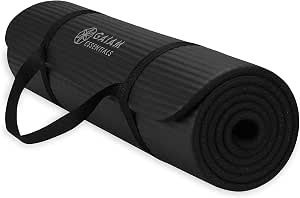 | Best for Cushioned Support | Material: Nitrile butadiene rubber (NBR) foam | Thickness: 10 mm (0.39 in) | Dimensions: 72 x 24 in | VIEW LATEST PRICE | See Our Full Breakdown |
| non-slip yoga mat | Material | Dimensions | Weight | Care |
|---|---|---|---|---|
| Gaiam Dry-Grip Yoga Mat | Polyvinyl chloride | 68 x 24 x 0.2 inches | 4.8 pounds | Hand wash only |
| Liforme Classic Yoga Mat with | Rubber and eco-polyurethane | 72.83 x 26.77 x 0.17 inches | 5.5 pounds | Hand wash only |
| Stakt Foldable Yoga Mat Pro | Ethylene vinyl acetate (EVA) foam blend | — | 3.4 pounds | Wipe clean |
| Ellylife Non-Slip Natural Rubb | Matte PU top and natural rubber base | 74.8 x 26.8 x 0.2 inches | 3.3 kg | Hand wash only |
| MRO Extra Large Exercise Mat | Polyethylene and high-density memory foam | 179 x 72 x 0.28 inches | 22.6 kg | Clean with a soft cloth or mop and mild soapy water; lay flat to dry |
| Amazon Basics Extra Thick Exer | 100% NBR foam | 73.2 x 24.3 inches | 1 kg | Hand wash only |
| Gruper Non-Slip TPE Yoga Mat w | Thermoplastic elastomer (TPE) | 72 x 24 inches | 2.6 lb (standard) or 3.1 lb (thickened) | Hand wash; dry flat |
| Gaiam Premium 6mm Print Yoga M | Polyvinyl chloride (PVC) | 68 x 24 inches | 3.1 pounds | Spot clean; air out for 2–3 days before use |
| Gogokiwi Extra Wide Yoga Mat | RecFoam | 72 x 36 inches | — | — |
| Gaiam Classic Print Yoga Mat | Polyvinyl chloride (PVC) | 68 x 24 inches | 2.1 pounds | Spot clean with a damp cloth and mild detergent; dry flat |
| Marcy Non-Slip Multi-Purpose Y | Thermoplastic elastomer (TPE) | 74 x 24 in | 1.5 lb | Wipe with a soft, clean cloth |
| Gaiam Thick Yoga and Fitness M | Nitrile butadiene rubber (NBR) foam | 72 x 24 in | 3.11 lb (listed) | Hand wash; wipe clean with a damp cloth |
More Details on Our Top Picks
Gaiam Dry-Grip Yoga Mat
The moisture-wicking surface makes this Gaiam a focused pick for hot yoga or workouts where damp hands and feet can undermine traction. Its 68-by-24-inch footprint is a familiar studio size, and the cushioned PVC surface also suits Pilates and floor exercises. Compared with the Liforme Classic Yoga Mat, it weighs less and prioritizes sweat management over alignment guidance and extra width. That makes it easier to carry, but it gives up some room and positioning cues. The 0.2-inch thickness offers a portable balance rather than plush joint protection, so buyers who need more padding may prefer the thicker Stakt Foldable Yoga Mat Pro. Care is another tradeoff: this mat is hand-wash only, so it is less convenient than a wipe-clean option.
Pros:- Moisture-wicking surface is designed to maintain traction during sweaty workouts
- Lightweight at 4.8 pounds for carrying to class
- Cushioned surface supports yoga, Pilates, and floor exercises
- Suitable for several types of fitness routines
Cons:- 0.2-inch thickness may not provide enough cushioning for sensitive joints
- Hand-wash-only care takes more effort than wipe-clean alternatives
- Narrower and shorter than the Liforme Classic Yoga Mat
Best for: Hot-yoga and fitness-class regulars who want a portable mat with a surface designed to maintain grip during sweaty sessions.
Not ideal for: People who need substantial cushioning for sensitive knees, want alignment markings, or prefer a mat that can be wiped clean.
- Brand:Gaiam
- Material:Polyvinyl chloride
- Dimensions:68 x 24 x 0.2 inches
- Weight:4.8 pounds
- Surface:Moisture-wicking, non-slip design
- Care:Hand wash only
- Color:Marbled
Our verdict“Choose the Gaiam Dry-Grip if sweat management and portability matter more to you than extra cushioning or alignment guides.”
Liforme Classic Yoga Mat with Alignment Design
The alignment guide sets this mat apart for practitioners who want visual cues for hand and foot placement while working on stable poses. It also has a grippy, sweat-resistant surface and a larger-than-standard 72.83-by-26.77-inch area, giving taller or broader users more room than the Gaiam Dry-Grip Yoga Mat. Its PVC-free rubber-and-eco-polyurethane construction will also appeal to buyers avoiding PVC. The tradeoff is carry weight: at 5.5 pounds, it is heavier than the Gaiam, and its 0.17-inch thickness is not the choice for anyone seeking generous padding. The Ellylife Non-Slip Natural Rubber Yoga Mat also offers alignment lines and more thickness, while this Liforme includes a bag and has a slightly lighter, more compact overall profile.
Pros:- Alignment guide supports positioning during practice
- Wider and longer than the Gaiam Dry-Grip Yoga Mat
- PVC-free rubber and eco-polyurethane construction
- Yoga mat bag is included
Cons:- At 5.5 pounds, it is heavier than the Gaiam Dry-Grip
- 0.17-inch thickness offers limited cushioning
- Hand-wash-only care may be inconvenient
Best for: Yoga practitioners who want alignment cues, a wider-than-standard practice area, and a PVC-free mat for studio sessions.
Not ideal for: Commuters prioritizing the lightest carry, or users who need thick cushioning for floor work and sensitive joints.
- Brand:Liforme
- Material:Rubber and eco-polyurethane
- Dimensions:72.83 x 26.77 x 0.17 inches
- Weight:5.5 pounds
- Surface:Grippy and sweat-resistant
- Features:Alignment guide; PVC-free
- Care:Hand wash only
- Included:Yoga mat bag
Our verdict“Pick the Liforme if alignment guidance and extra mat width outweigh the heavier carry and relatively thin cushioning.”
Stakt Foldable Yoga Mat Pro
The Stakt Mat Pro takes a different approach to portability: rather than rolling, its foldable 2-in-1 design lets you stack sections for added elevation and support. At 3.4 pounds, it is the lightest option in this group, and its stated 12 mm thickness gives it a more cushioned feel than the thinner Gaiam Dry-Grip Yoga Mat. The textured surface is designed for grip, though the supplied details do not specify how it performs when wet, so I would not rank it ahead of the Gaiam for hot yoga. The tradeoff is a standard 24-inch width and a 69-inch length that may feel restrictive to taller users or anyone who moves widely. Unlike the MRO Extra Large Exercise Mat, it is built for compact carrying rather than covering a large workout area.
Pros:- Foldable design packs into a compact 12 x 3 x 24-inch form
- 12 mm thickness provides more cushioning than the Gaiam Dry-Grip
- Weighs 3.4 pounds for easier carrying
- Wipe-clean care is convenient after workouts
Cons:- At 69 x 24 inches, it may feel small for taller or broad-moving users
- Grip details do not specify performance during sweaty sessions
- EVA foam blend may not suit buyers seeking a rubber or PVC-free surface with stated material credentials
Best for: Home exercisers and class-goers who want a lightweight mat that folds for transport and can add elevation for selected movements.
Not ideal for: Hot-yoga practitioners seeking specified moisture-wicking performance, or taller users who need more length and width.
- Brand:Stakt
- Material:Ethylene vinyl acetate (EVA) foam blend
- Flat dimensions:69 x 24 x 0.47 inches
- Folded dimensions:12 x 3 x 24 inches
- Thickness:12 mm
- Weight:3.4 pounds
- Design:Foldable, 2-in-1
- Care:Wipe clean
Our verdict“Choose the Stakt if a light, foldable format and added elevation matter more than a larger practice area or confirmed sweaty-session grip.”
Ellylife Non-Slip Natural Rubber Yoga Mat with Alignment Lines
The Ellylife combines a moisture-wicking matte PU top with a natural rubber base designed to stay put on hard floors, making it a strong fit for users who want both surface grip and floor stability. Its 74.8-by-26.8-inch dimensions give you more room than the Liforme Classic Yoga Mat, while printed alignment lines add visual positioning cues. At 5 mm thick, it aims to cushion joints without losing ground feel. The larger footprint is useful for broad movements, but it comes with a substantial carry tradeoff: the mat weighs 3.3 kg, much more than the Stakt Foldable Yoga Mat Pro. A carry strap and storage bag help with transport, yet they do not make it a light commute choice. It is also hand-wash only, unlike the Stakt’s wipe-clean surface.
Pros:- Matte PU top is designed for moisture-wicking grip
- Natural rubber base is designed to stay in place on hard floors
- Extra-large dimensions and printed alignment lines support spacious, guided practice
- Includes a carry strap and storage bag
Cons:- Weighs 3.3 kg, making it much heavier to carry than the Stakt Foldable Yoga Mat Pro
- Hand-wash-only care is less convenient than wipe-clean mats
- 5 mm thickness may not satisfy users seeking plush cushioning
Best for: Home or studio yogis who want extra width, alignment markings, and a surface designed to manage moisture during practice.
Not ideal for: People who walk or commute to class with their mat, since its 3.3 kg weight makes frequent carrying less convenient.
- Brand:Ellylife
- Material:Matte PU top and natural rubber base
- Dimensions:74.8 x 26.8 x 0.2 inches
- Thickness:5 mm
- Weight:3.3 kg
- Features:Printed alignment lines; moisture-wicking surface
- Care:Hand wash only
- Included accessories:Carry strap and storage bag
Our verdict“Choose the Ellylife for a roomy, alignment-guided practice at home if you can accept the heavier carry and hand-wash care.”
MRO Extra Large Exercise Mat, 15 x 6 ft, 12 x 6 ft, or 9 x 6 ft, 7 mm
The MRO is the outlier here: its 179-by-72-inch surface gives you far more space than a conventional yoga mat, which suits dance, jump rope, HIIT, or shared floor workouts as well as yoga. The double-sided non-slip design and 7 mm cushioning are aimed at grip, noise reduction, and floor protection, while the latex-free, non-toxic material details may help buyers with specific material preferences. Compared with the Ellylife Non-Slip Natural Rubber Yoga Mat, it offers dramatically more coverage, but it is far less portable at 22.6 kg. Its large format also needs considerable storage room, and the listed surface is shoe-friendly rather than tailored specifically to barefoot yoga traction. The included towel and jump rope add versatility, but this is a home workout surface, not an easy studio carry.
Pros:- Large surface accommodates movement and activities beyond yoga
- Double-sided non-slip design supports workout stability
- 7 mm cushioning helps protect knees, elbows, and floors
- Includes a microfiber towel, jump rope, straps, and carry bag
Cons:- At 22.6 kg, it is impractical for regular commuting to a studio
- Large dimensions require substantial storage space
- Shoe-friendly design may be less suited to buyers focused on barefoot yoga grip
Best for: Home workout users who need a large, cushioned surface for mixed activities such as aerobics, dance, jump rope, or group exercise.
Not ideal for: Yoga students who carry a mat to class, have limited storage space, or want a conventional mat focused on barefoot practice.
- Brand:MRO
- Material:Polyethylene and high-density memory foam
- Dimensions:179 x 72 x 0.28 inches
- Thickness:7 mm
- Weight:22.6 kg
- Surface:Double-sided non-slip; shoe-friendly
- Care:Clean with a soft cloth or mop and mild soapy water; lay flat to dry
- Material details:Latex-free and non-toxic
- Included accessories:Microfiber towel, jumping rope, 3 straps, and carry bag
Our verdict“Pick the MRO for a spacious, cushioned home workout zone, not for a portable yoga mat to carry to class.”
Amazon Basics Extra Thick Exercise Yoga Mat with Carrying Strap
The 0.5-inch NBR foam gives this mat a softer, more padded feel than the 6 mm Gruper and Gaiam Premium mats. That extra depth can be welcome for kneeling, stretching, and general floor workouts, while the textured surface adds traction for basic poses. It is a stronger fit for cushioning-focused routines than for anyone who wants a firm, close-to-the-floor feel during standing balance work. At 1 kg, it is light enough to carry with the included strap, though it takes up more space rolled than thinner mats. The main upkeep tradeoff is hand washing only. Compared with the slimmer Gaiam Classic, this is the more joint-friendly choice, but less suited to buyers prioritizing a compact, stable mat.
Pros:- 0.5-inch NBR foam provides substantial cushioning for kneeling and floor exercises
- Textured surface is designed to add traction
- Foam is described as springing back into shape
- Elastic strap helps with carrying and rolled storage
Cons:- Thick foam may feel less stable for standing balance poses
- Hand wash only care is less convenient than easy-wipe options
- Its extra thickness makes the rolled mat bulkier to store than thinner mats
Best for: Yoga and floor-workout beginners who prioritize cushioned support for knees and other pressure points
Not ideal for: Traveling practitioners or balance-focused yogis who want a thin, compact mat with a firm connection to the floor
- Material:100% NBR foam
- Dimensions:73.2 x 24.3 inches
- Thickness:0.5 inches
- Weight:1 kg
- Color:Black
- Care:Hand wash only
- Included:Elastic carrying strap
Our verdict“Choose this mat if cushioning matters more than a compact roll or a firm balance surface.”
Gruper Non-Slip TPE Yoga Mat with Carrying Strap
The Gruper’s textured surfaces on both sides give buyers more flexibility than the single textured surface listed for the Gaiam Premium 6mm Print. Its double-layer TPE construction is designed to resist tearing and deformation, and the choice of 6 mm or 8 mm thickness lets you weigh cushioning against a closer-to-floor feel. The included strap and storage bag make it a more complete carry setup than the Amazon Basics mat, which includes a strap but no bag. There are limits: the maker warns that shoes or pet paws may tear the mat, and care requires hand washing and flat drying. Sun exposure should also be avoided. This is a practical pick for barefoot home practice, not a tough all-purpose surface for pets or shoe-based workouts.
Pros:- Textured surfaces on both sides provide grip options
- Double-layer construction is designed to resist tearing and deformation
- Available in 6 mm and 8 mm thicknesses
- Includes both a carrying strap and storage bag
Cons:- Shoes or pet paws may tear the mat
- Hand washing and flat drying take more effort than quick wipe-down care
- Prolonged sunlight exposure should be avoided
Best for: Barefoot home yogis who want textured grip on either side and a choice of standard or thicker cushioning
Not ideal for: People who practice in shoes, share the mat with pets, or need a machine-washable option
- Material:Thermoplastic elastomer (TPE)
- Dimensions:72 x 24 inches
- Thickness options:0.24 inches (6 mm) or 0.32 inches (8 mm)
- Weight:2.6 lb (standard) or 3.1 lb (thickened)
- Color:Grey Blue / Black
- Care:Hand wash; dry flat
- Included:Yoga mat, carrying strap, and storage bag
Our verdict“Pick the Gruper for barefoot practice when two-sided texture and included storage matter more than rugged, low-maintenance use.”
Gaiam Premium 6mm Print Yoga Mat
This Gaiam pairs 6 mm cushioning with a textured, non-slip surface, offering a middle ground between the thicker Amazon Basics mat and the firmer 4 mm Gaiam Classic. That balance suits yoga, Pilates, and floor workouts where some joint padding helps but a half-inch foam mat would feel too soft. Its 68 x 24-inch footprint is shorter than the 72-inch Gruper, so taller practitioners may prefer the Gruper’s added length. The mat weighs 3.1 pounds and includes access to online yoga content, though neither feature changes its grip performance. One specific drawback is the harmless odor it may have when unwrapped: plan to air it out for 2–3 days before use. This is a versatile cushioned option, but not the best fit for buyers who want a longer mat or no airing period.
Pros:- 6 mm thickness cushions joints without the depth of the Amazon Basics mat
- Textured surface is designed to provide traction
- Works for yoga, Pilates, and floor workouts
- Includes access to online yoga content
Cons:- May have a harmless odor and needs 2–3 days of airing before use
- At 68 inches long, it is shorter than the Gruper and Gogokiwi mats
- Spot-clean care offers less washing flexibility than a washable mat
Best for: Practitioners who want moderate cushioning for studio yoga, Pilates, and floor work in one mat
Not ideal for: Taller yogis who need more than 68 inches of length or buyers who want to use a mat immediately after unpacking
- Material:Polyvinyl chloride (PVC)
- Dimensions:68 x 24 inches
- Thickness:6 mm
- Weight:3.1 pounds
- Surface:Textured, non-slip
- Color:Sublime Sky
- Care:Spot clean; air out for 2–3 days before use
- Included:Access to online yoga content
Our verdict“Choose this Gaiam if you want a versatile 6 mm mat and can accommodate its shorter length and initial airing time.”
Gogokiwi Extra Wide Yoga Mat, 72 x 36 Inches, with Alignment Marks and Carrying Strap
The Gogokiwi stands apart from standard-width options such as the 24-inch Gruper by offering a 36-inch-wide surface. That extra room can help when stretching, changing positions, or practicing without feeling confined to the mat’s edges. Its dual-sided texture is intended to add traction, while alignment marks give visual reference points during poses. Buyers can choose 6 mm for a closer-to-floor feel or 12 mm for more padding; the thicker version may compromise the stable, grounded feel some standing poses need. The included strap doubles as a stretching band, adding a use beyond transport. Its traction is designed for dry hands, so it is a weaker choice for sweaty practice than a mat marketed specifically for wet grip. Compared with the narrower Gaiam Premium, this prioritizes room to move over a more conventional footprint.
Pros:- 36-inch width gives substantially more room than standard 24-inch mats
- Dual-sided texture is designed to support traction
- Alignment marks provide visual positioning references
- Carry strap also works as a stretching band
Cons:- Traction is designed for dry-hand use
- The 12 mm option may feel less stable for close-to-the-floor balance work
- Its extra width may be awkward for storage or tight practice spaces
Best for: Home practitioners who want extra lateral room for stretching, Pilates, and pose changes
Not ideal for: People with sweaty hands who need wet-grip performance, or balance-focused yogis considering the 12 mm version
- Dimensions:72 x 36 inches
- Thickness options:1/4 inch (6 mm) or 1/2 inch (12 mm)
- Material:RecFoam
- Surface:Dual-sided texture
- Features:Alignment marks; closed-cell surface
- Included accessory:Carry strap that doubles as a stretching band
- Recyclability:100% recyclable material
Our verdict“Choose the Gogokiwi if you want a broad practice area and dry-hand traction matters more than compact storage or sweat grip.”
Gaiam Classic Print Yoga Mat, 4mm Non-Slip
At 4 mm thick and 2.1 pounds, the Gaiam Classic is the lightest-feeling option in this group by listed weight and easier to carry than the 6 mm Gaiam Premium or 0.5-inch Amazon Basics mat. Its textured surface is designed to provide traction, while the thinner profile gives standing poses a more direct connection to the floor than the heavily cushioned Amazon Basics. The tradeoff is less padding under knees and other pressure points than either of those thicker mats. It suits studio trips and home practice where portability matters more than plush support. The mat is made from PVC free of six common phthalates and includes a downloadable workout. Like the Gaiam Premium, it may have an initial odor and needs airing for 2–3 days; prolonged sun exposure can also cause fading or brittleness.
Pros:- 2.1-pound weight makes it lighter than the listed Gaiam Premium
- 4 mm thickness offers a closer-to-floor feel than thicker cushioned mats
- Textured surface is designed to provide grip and traction
- PVC is free of six common phthalates and a downloadable workout is included
Cons:- Provides less cushioning than the 6 mm Gaiam Premium and 0.5-inch Amazon Basics mats
- May have a strong initial odor and needs 2–3 days of airing
- Prolonged sun exposure may cause fading or brittleness
Best for: Studio-goers and home practitioners who want a lighter, thinner mat for carrying and stable standing poses
Not ideal for: People who need substantial knee cushioning or plan to leave their mat in direct sunlight
- Material:Polyvinyl chloride (PVC)
- Dimensions:68 x 24 inches
- Thickness:4 mm
- Weight:2.1 pounds
- Color:Pink Marrakesh
- Surface:Textured non-slip
- Care:Spot clean with a damp cloth and mild detergent; dry flat
- Included:Downloadable yoga workout
Our verdict“Pick the Gaiam Classic if portability and a thinner, steadier feel matter more than extra joint padding.”
Marcy Non-Slip Multi-Purpose Yoga Mat with Carrying Strap, 6 mm
The Marcy’s dual-sided texture gives it a practical grip-focused design for yoga, Pilates, and general floor work, while its 1.5 lb weight makes it easier to carry than the thicker Gaiam Thick Yoga and Fitness Mat. At 6 mm, it offers a modest buffer from hard floors without the softer, more cushioned feel of that 10 mm NBR option. Its moisture-resistant TPE surface can be wiped clean, a useful feature for routines that involve stretching or light sweating. The tradeoff is limited cushioning for anyone who needs more support at the knees or hips, and the product details don’t specify grip performance during heavy sweating. I’d choose it for portability and everyday versatility, not for maximum joint comfort or a specialist hot-yoga grip.
Pros:- Textured surfaces on both sides support traction across different floor routines.
- Lightweight at 1.5 lb and supplied with a shoulder strap for carrying.
- Moisture-resistant TPE construction can be wiped clean.
- 74 x 24 in size suits standard individual practice.
Cons:- 6 mm thickness may not cushion knees and hips enough on hard floors.
- Grip under heavy sweating is not specified.
- Less cushioned than the 10 mm Gaiam Thick Yoga and Fitness Mat.
Best for: Commuters and home exercisers who want a lightweight mat for moderate yoga, Pilates, stretching, and floor workouts.
Not ideal for: People who need substantial knee or hip cushioning, or who want a mat specifically described for heavy-sweat sessions.
- Material:Thermoplastic elastomer (TPE)
- Thickness:6 mm (1/4 in)
- Dimensions:74 x 24 in
- Weight:1.5 lb
- Surface:Dual-sided textured surfaces
- Care:Wipe with a soft, clean cloth
- Included:Shoulder carry strap
- Color:Mint green
- Model:MAT-06-GREEN
Our verdict“Choose the Marcy if easy carrying and wipe-clean versatility matter more to you than extra-thick joint cushioning.”
Gaiam Thick Yoga and Fitness Mat with Carrying Strap
The Gaiam Thick mat puts joint cushioning ahead of a firm, close-to-the-floor feel: its 10 mm NBR foam gives knees and hips more padding than the 6 mm Marcy TPE mat. A textured surface is intended to help reduce slipping on hard floors, making it a comfort-led option for yoga, Pilates, stretching, and floor workouts. That extra softness may be welcome during kneeling poses, but it can feel less stable for standing balance work than a thinner, firmer mat. The included adjustable strap helps with carrying and storage, though the listed weight is 3.11 lb, so it is less appealing for frequent transport than Marcy’s 1.5 lb design. I’d favor it for padded home sessions, with the caveat that the foam may need airing out for 24–48 hours at first.
Pros:- 10 mm NBR foam provides more cushioning for knees, hips, and joints than the 6 mm Marcy.
- Textured surface helps reduce slipping on hard floors.
- Suitable for yoga, Pilates, stretching, and other floor workouts.
- Adjustable carrying strap supports transport and storage.
Cons:- Soft cushioning may feel less firm during standing balance poses.
- Listed weight of 3.11 lb makes it heavier to carry than the Marcy mat.
- May have an initial foam odor that takes 24–48 hours to air out.
Best for: Home practitioners who spend time kneeling or stretching on hard floors and prefer extra padding over a firm surface.
Not ideal for: Traveling yogis, balance-focused practitioners, or anyone who prefers a thinner, more stable-feeling mat.
- Material:Nitrile butadiene rubber (NBR) foam
- Thickness:10 mm (0.39 in)
- Dimensions:72 x 24 in
- Weight:3.11 lb (listed)
- Surface:Textured
- Care:Hand wash; wipe clean with a damp cloth
- Included:Adjustable carrying strap
- Color:Black
Our verdict“Pick the Gaiam Thick mat if joint padding for home workouts matters more than portability and a firm standing surface.”
How We Picked
I ranked these mats around the question the category promises to answer: which options are most suited to a steady yoga practice? I compared the stated surface and material, cushioning, dimensions, portability features, and any added guidance such as alignment marks. A non-slip label alone does not establish how a mat performs for every person or in every condition, so I treated grip claims as a feature to weigh alongside mat construction and intended use—not as a guarantee.
The ranking gives priority to a useful balance of grip-oriented design, practice comfort, and day-to-day usability. Mats with more specific advantages, such as folding, extra width, or generous cushioning, rank well for those needs but do not automatically outrank versatile options. I also weighed tradeoffs: larger mats take up more space, thicker mats can reduce floor feedback, and added features may not matter to someone seeking a simple practice surface. The picks reflect the information provided for each model, not personal testing.
| non-slip yoga mat | Color |
|---|---|
| Gaiam Dry-Grip Yoga Mat | Marbled |
| Liforme Classic Yoga Mat with | — |
| Stakt Foldable Yoga Mat Pro | — |
| Ellylife Non-Slip Natural Rubb | — |
| MRO Extra Large Exercise Mat | — |
| Amazon Basics Extra Thick Exer | Black |
| Gruper Non-Slip TPE Yoga Mat w | Grey Blue / Black |
| Gaiam Premium 6mm Print Yoga M | Sublime Sky |
| Gogokiwi Extra Wide Yoga Mat | — |
| Gaiam Classic Print Yoga Mat | Pink Marrakesh |
| Marcy Non-Slip Multi-Purpose Y | Mint green |
| Gaiam Thick Yoga and Fitness M | Black |
Factors to Consider When Choosing Non-slip Yoga Mats
Grip is only one part of choosing a yoga mat. I would match the mat to the surfaces and poses you practice most, then check how its size, padding, care needs, and storage fit your routine.
Match Grip to Your Practice Conditions
Grip needs vary with how much you sweat, how quickly you move, and whether you practice at home or in a warm studio. A surface described as non-slip can still feel different when damp, dusty, or recently cleaned, so do not treat the label as a universal performance guarantee. If sweaty hands are your main concern, check care instructions and look for product details that address moisture rather than relying on texture alone. For slower sessions, a stable, comfortable surface may matter more than a highly textured feel. A common mistake is choosing by a single grip claim without checking whether the surface suits your practice and maintenance habits. If you can, review the return policy before buying a mat that must meet a very specific grip preference.
Choose Cushioning Without Losing Stability
Extra padding can make kneeling and floor-based poses more comfortable, especially on hard flooring. The tradeoff is that a softer or thicker surface may feel less steady in balance poses and may reduce the sense of connection to the floor. Rather than choosing the thickest mat by default, think about where discomfort occurs in your practice and whether a folded towel or knee pad could address it more selectively. A thinner mat can be easier to carry and may provide more direct floor feedback, but may not suit sensitive joints. Consider both the mat’s thickness and how firmly it compresses under your weight; thickness alone does not describe the full feel. If you alternate between standing sequences and floor work, a middle-ground cushion level is often the more versatile approach.
Measure Your Practice Space Before Buying
Standard dimensions work for many routines, but taller users, broad stances, or flowing sequences can make a wider or longer mat worthwhile. Extra room helps keep hands and feet on the mat, yet a larger footprint can be awkward in a shared studio or small home. Measure the clear floor area where you practice, including room to step around the mat, rather than comparing mat dimensions in isolation. A very large exercise mat may suit home workouts but can be impractical to carry to class or store in a closet. Width can be more useful than length for some poses, so consider where you tend to run out of space. Avoid paying for excess coverage if your practice area is already constrained.
Treat Portability as a Routine, Not a Bonus
A carry strap can make a rolled mat easier to transport, but it does not make a bulky or heavy mat compact. Folding designs can store neatly, though their structure and feel differ from a conventional roll. Before choosing, think about how far you carry the mat, whether you commute by foot or transit, and where it will live between sessions. A mat used only at home can prioritize size and cushioning; a class mat benefits from manageable weight and quick packing. One common mistake is focusing on the included strap while overlooking the packed dimensions. If storage is tight, compare the folded or rolled form—not just the mat laid flat.
Check Care Needs and Material Details
Mat materials can differ in texture, odor, weight, and cleaning requirements, so the material name alone does not tell you whether a surface will suit your routine. Read the manufacturer’s care guidance before using strong cleaners or machine washing, since unsuitable products can affect the surface. A mat used frequently may need regular wiping and full drying before storage to reduce odor and residue. If you prefer natural rubber or want to avoid a particular material, verify the product’s specifications and any relevant sensitivities before purchase. Low-maintenance expectations can be a poor match for a mat whose grip depends on a clean surface. Pick a care routine you will actually follow, not one that sounds manageable in theory.
Pay for Features You Will Use
Alignment markings can help with visual positioning, but they are not a substitute for instruction and may be unnecessary once you know your preferred stance. Extra width, folding construction, and heavy cushioning each solve different problems, so compare the feature with a real constraint in your practice. A beginner may get more value from a comfortable, easy-to-clean mat than from specialized markings. Someone with a fixed home practice space may benefit from a larger mat, while a regular commuter may put portability first. Avoid treating more features as automatically better: each can add bulk, care demands, or a surface feel that does not suit everyone. Spending more makes sense when a feature directly improves a repeated part of your routine.
Frequently Asked Questions
Can I rely on a non-slip yoga mat to stop my hands from sliding when I sweat?
Not in every condition. Grip can change with sweat, skin type, dust, cleaning residue, and the mat’s surface, so a non-slip description should be read as a design intent rather than a guarantee. Check whether the manufacturer gives care guidance for maintaining the surface, and let the mat dry fully after cleaning. If your hands slide heavily during warm practice, you may also need a towel designed for yoga or a different surface suited to moisture. A mat that feels secure in a dry room may behave differently in a heated class.
Should I choose a thicker mat if my knees hurt during yoga?
More cushioning can make kneeling poses more comfortable, but extra thickness is not a guaranteed fix for joint pain. A very soft surface may make standing balance work feel less stable, and discomfort can also depend on pose alignment, flooring, and individual needs. Consider whether you need padding across the whole mat or only under your knees; a folded towel or knee pad can provide targeted support. If pain persists, ask a qualified instructor or health professional about modifications. Choose a mat that feels supportive without compromising the poses you practice most.
Is a wider mat worth it for home yoga?
A wider mat can be useful if your hands or feet regularly land beyond a standard practice area, or if you prefer extra room for flowing sequences. It also occupies more floor space and can be harder to store or transport, so measure your practice area before choosing. For a small room, a standard-size mat may be more practical even if a wider one sounds appealing. If you mainly need room for broad stances, width may matter more than extra length. Match the added coverage to a recurring need rather than treating bigger as automatically better.
Are alignment markings useful for a beginner, or can they get in the way?
Alignment markings can give beginners a visual reference for placing hands and feet, which may help with consistency while learning poses. They are guides, not personalized instruction, and bodies differ in proportion and mobility. Some practitioners may find prominent markings distracting or prefer a plain surface. If you are learning from a teacher, follow their cues rather than forcing every pose to match a printed line. Choose markings when you expect to use them as a helpful reference, not as a replacement for feedback.
Which type of mat makes the most sense if I practice at home and attend classes?
A mat for both settings needs a balance between a comfortable practice area and manageable transport. A large or heavily cushioned mat can be pleasant at home but cumbersome to carry, while a compact option may be easier to commute with but offer less coverage. Think about which setting accounts for most of your sessions and prioritize that routine. If you attend class regularly, check the mat’s packed size and weight as well as whether a strap or foldable design suits your commute. For frequent home practice, make sure the mat also fits your available storage and floor space.
Conclusion
For the broadest mix of grip-oriented design and useful guidance, I recommend the Liforme Classic as best overall and best premium. The Gruper TPE mat is my best value-style pick for shoppers who want a straightforward mat with a carry strap, while beginners who want visual placement cues may prefer the Liforme or the Ellylife alignment-line mat. Choose the Stakt Foldable Yoga Mat Pro for compact storage, Gogokiwi for extra width, or MRO if a very large home practice area is the priority. If joint comfort comes first, compare the thicker Gaiam, Amazon Basics, and Marcy options, while keeping the stability tradeoff in mind. Pick the feature that solves your most frequent problem—grip, space, cushioning, or carrying—and let that need guide your final choice.
Fall Picks
fall essentials
As an affiliate, we earn on qualifying purchases.