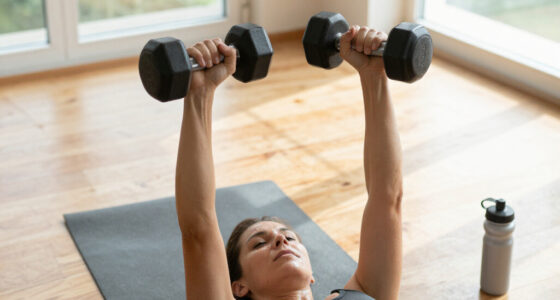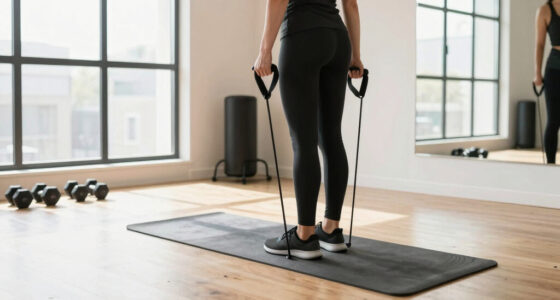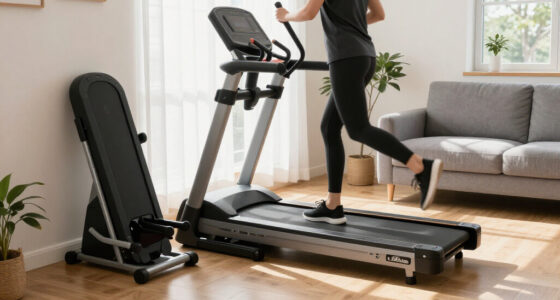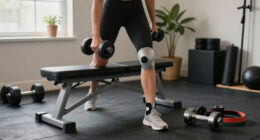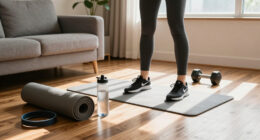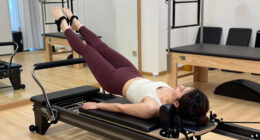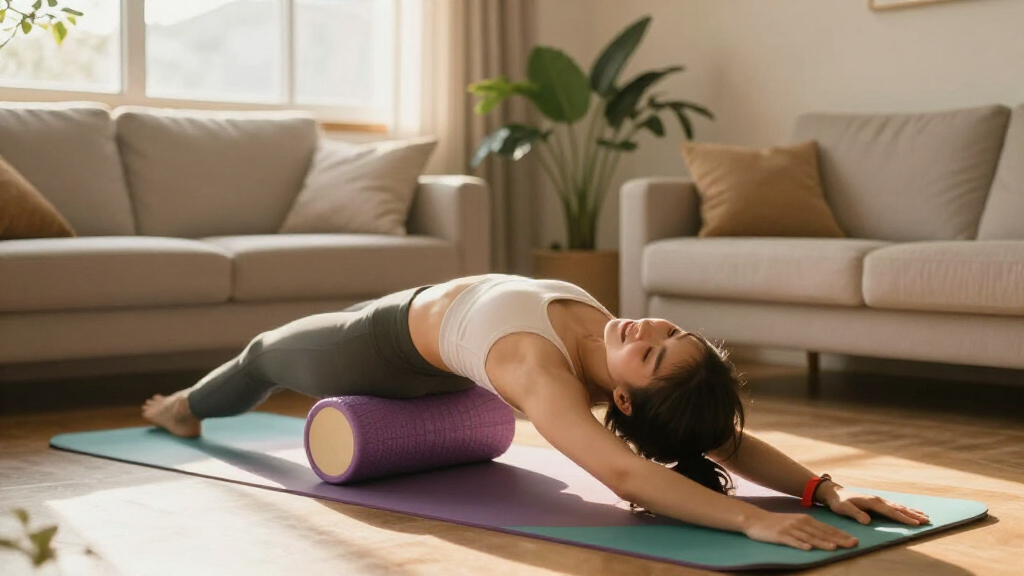

Student life means limited space, limited budget, and unpredictable schedules, so the best home workout equipment for students is compact, affordable, and versatile enough to replace a gym membership. My top pick is the LALAHIGH 36-in-1 Push Up Board, which bundles a push-up board, ab roller, and resistance bands into one system that covers nearly every muscle group for well under the cost of a semester of gym fees. For tighter budgets, the Ayombo Pilates Bar Kit delivers full-body resistance training that folds into a closet, and the DM01 Dual-Station Smith Machine suits students with a spare room who want serious strength training without commuting to a gym. The main tradeoff in this category is between portability and progression: bands and boards travel well but cap out on resistance, while machines like the DM01 grow with you but demand space and a bigger upfront spend. Read on for the full breakdown, including who each option suits and who should skip it.

Get workout gear delivered free with Prime
- Fast, free delivery on millions of items
- Prime Video, Amazon Music and more included
- Member-only deals all year
Complete the kit


Key Takeaways
- Versatility-per-dollar separated the top picks: the LALAHIGH 36-in-1 and the 10-in-1 Ab Roller Kit both combine multiple tools in one package, which matters more for students than single-purpose equipment at the same price.
- Bulk band sets like the KANGFITER 100 PCS pack are the cheapest entry point but only make sense if you’ll actually use the variety — most students will get more daily value from a structured kit like the Ayombo Pilates Bar.
- Two products in this lineup (XGSW stations at #6 and #8) are near-identical, which highlights how common rebranded workout stations are — checking warranty and seller support matters more than the brand name here.
- The FitDesk 3.0 occupies a category of its own: no other pick lets you study while exercising, making it the only option that solves the time-crunch problem rather than just the space problem.
- The DM01 Smith Machine is the only pick with real long-term progression (140LB stack, lat pulldown, leg press), but it’s strictly for students with a permanent spare space — it’s useless in a shared dorm room.
| Ayombo Pilates Bar Kit with Resistance Bands |  | Best Overall for Small Spaces | Resistance Bands: 30lb and 40lb, up to 70lb combined | Material: Metal lugs, iron connectors, foam grips | Adjustability: 3-section design, adjustable resistance | VIEW LATEST PRICE | See Our Full Breakdown |
| DM01 Dual-Station Smith Machine Home Gym |  | Best Premium Pick | Weight Stack: 140 lbs | Frame Material: Heavy-duty steel | Frame Dimensions: 2″×2″ commercial-grade tubing | VIEW LATEST PRICE | See Our Full Breakdown |
| KANGFITER 100 PCS Bulk Resistance Bands |  | Best Value for Group Training | Quantity: 100 pcs | Material: Natural latex | Resistance Levels: 5 levels | VIEW LATEST PRICE | See Our Full Breakdown |
| MQRW Push Up Board with Accessories |  | Best Upper-Body Focus | Includes: Push-up board, 3-section bar, 6 resistance bands, 2 ankle straps, door anchor, ab roller wheel | Material: Lightweight but stable | Targeted Muscles: Chest, triceps, shoulders, back | VIEW LATEST PRICE | See Our Full Breakdown |
| 10-in-1 Ab Roller Exercise Kit |  | Best Budget Core Starter Kit | Ab Roller Wheel Diameter: 3 inches | Maximum Weight Capacity: 440 lbs | Material: Non-slip rubber, stainless steel, NBR foam | VIEW LATEST PRICE | See Our Full Breakdown |
| XGSW Multi-Function Home Gym Workout Station with Pulley, Arm, and Leg Trainers |  | Best All-in-One Strength Station | Dimensions: 69.1 x 39.2 x 78.7 inches | Weight: 154 pounds | Frame Material: Commercial-grade steel | VIEW LATEST PRICE | See Our Full Breakdown |
| FitDesk Standing Exercise Bike Desk 3.0 |  | Best for Studying While Exercising | Weight Capacity: 300 lbs | User Height Range: 4’10” to over 6′ | Adjustable Features: Seat height, desk angle | VIEW LATEST PRICE | See Our Full Breakdown |
| XGSW Multi-Function Home Gym Workout Station with Pulley, Arm, and Leg Trainers |  | Best Shared-Apartment Gym Anchor | Dimensions: 69.1 x 39.2 x 78.7 inches | Weight: 154 pounds | Frame Material: Durable steel | VIEW LATEST PRICE | See Our Full Breakdown |
| Pedal Resistance Band with Handle, Durable Latex Tubes, Soft Foam Foot Pedal |  | Best Budget Pick for Dorm Rooms | Material: High-elasticity latex tubes | Foot Pedal: Non-slip fabric, wider and thicker for comfort | Handles: Sweat-resistant | VIEW LATEST PRICE | See Our Full Breakdown |
| LALAHIGH 36-in-1 Push Up Board Home Gym Equipment with Ab Roller & Resistance Bands |  | Best Structured Beginner System | Material: ABS plastic | Board Dimensions: 36 inches | Configurations: 36-in-1 exercise system | VIEW LATEST PRICE | See Our Full Breakdown |
| home workout equipment for student | Material | Includes |
|---|---|---|
| Ayombo Pilates Bar Kit with Re | Metal lugs, iron connectors, foam grips | — |
| DM01 Dual-Station Smith Machin | — | — |
| KANGFITER 100 PCS Bulk Resista | Natural latex | Storage bag, instruction guide |
| MQRW Push Up Board with Access | Lightweight but stable | Push-up board, 3-section bar, 6 resistance bands, 2 ankle straps, door anchor, ab roller wheel |
| 10-in-1 Ab Roller Exercise Kit | Non-slip rubber, stainless steel, NBR foam | Ab roller, knee mat, push-up bars, wrist wraps, resistance band, jump rope, guide book, gift box |
| XGSW Multi-Function Home Gym W | — | — |
| FitDesk Standing Exercise Bike | — | Digital monitor, laptop tray |
| XGSW Multi-Function Home Gym W | — | — |
| Pedal Resistance Band with Han | High-elasticity latex tubes | — |
| LALAHIGH 36-in-1 Push Up Board | ABS plastic | Push-up board, resistance bands, Pilates bar, pulleys |
More Details on Our Top Picks
Ayombo Pilates Bar Kit with Resistance Bands
For a student trying to build a home gym in a dorm room or shared apartment, this Pilates bar kit hits the sweet spot between price, portability, and workout variety. The 3-section bar breaks down small enough to slide under a bed, and the 30lb plus 40lb bands let you scale from beginner squats to harder glute and back work. Compared with the MQRW Push Up Board, which leans heavily on upper-body training, the Ayombo covers legs, glutes, core, and arms more evenly, which matters if you only own one piece of equipment. The non-slip foam grips make longer sessions comfortable. The tradeoff is real, though: there is no cardio element and no way to push past 70lb of combined resistance, so lifters chasing serious strength gains will plateau. Assembly is straightforward but fiddly the first time.
Pros:- Adjustable 30lb/40lb bands scale up to 70lb for progressive training
- Detachable, space-saving design fits under a bed
- Non-slip foam grips keep hands secure during sweaty sessions
- Works for all fitness levels, from beginners to family sharing
Cons:- No cardio component, so it can’t replace running or HIIT
- Durability depends on careful band maintenance and proper storage
Best for: Students in dorms or small apartments who want one affordable, full-body tool that stores anywhere
Not ideal for: Strength-focused lifters or anyone wanting cardio — resistance caps out around 70lb combined
- Resistance Bands:30lb and 40lb, up to 70lb combined
- Material:Metal lugs, iron connectors, foam grips
- Adjustability:3-section design, adjustable resistance
- Portability:Detachable, space-saving, lightweight
- Suitable For:Home workouts, family use, portable fitness
Our verdict“If you can only buy one piece of student workout gear, this is the most balanced, budget-friendly place to start.”
DM01 Dual-Station Smith Machine Home Gym
This is the serious investment option in the lineup, and it plays a completely different game than everything else here. While the Ayombo Pilates Bar Kit and other resistance-band options top out around 70lb, the DM01’s 140lb quick-adjust weight stack and 2000lb-rated steel frame support genuine progressive overload across 20+ exercises, including lat pulldowns and leg presses. The dual-station design means two people can train at once — a real advantage for roommates or family setups. The obvious cost is literal: this machine costs many times more than any other pick, takes up a permanent footprint, and demands an assembly session that is closer to furniture-building than unboxing. It also assumes you’ll stay in one place, which is a poor match for student life with yearly moves. This pick makes the most sense for a long-term home base, not a dorm.
Pros:- 20+ exercises with lat pulldown and leg press stations
- 140lb quick-adjust weight stack enables efficient circuit training
- 2000lb load capacity commercial-grade steel frame
- Dual-station design lets two users train simultaneously
Cons:- Premium price far exceeds every other pick in this roundup
- Assembly is complex and the footprint demands a dedicated room
Best for: Students living at home or in a long-term rental who want gym-grade strength training without a gym membership
Not ideal for: Dorm residents and frequent movers — it’s bulky, heavy, and expensive to relocate
- Weight Stack:140 lbs
- Frame Material:Heavy-duty steel
- Frame Dimensions:2″×2″ commercial-grade tubing
- Maximum Load Capacity:2000 lbs
- Number of Exercises:20+
- Adjustable Components:Seat and backrest
Our verdict“Buy this only if you have a permanent space and serious strength goals; everyone else should stick with portable picks.”
KANGFITER 100 PCS Bulk Resistance Bands
On a per-band basis, nothing in this roundup comes close on price — and that’s exactly the point. This 100-piece bulk set is built for sharing: an entire fitness club, a sorority workout group, or roommates splitting the cost. Where the Ayombo Pilates Bar Kit serves one person at a time, the KANGFITER set lets a dozen people train simultaneously across five latex resistance levels, from rehab-grade light bands to heavier options. The included storage bag and instruction guide help organize the chaos. The tradeoffs are worth weighing honestly: there’s no weight-based resistance ceiling here since these are loop-style therapy bands rather than heavy tubing, and the seller doesn’t publish exact resistance figures per level, which makes precise progress tracking harder. Latex also degrades if stored poorly, so 100 bands can slowly become 80 usable ones. Solo buyers should skip this and buy a smaller set.
Pros:- Lowest cost per band of any option in this guide
- Five resistance levels cover rehab, stretching, and strength work
- Storage bag and instruction guide included
- Natural latex is versatile for indoor and outdoor training
Cons:- Bulk set is excessive and wasteful for individual use
- No specific resistance values listed, limiting measurable progression
- Latex degrades without proper cool, dry storage
Best for: Student clubs, fitness groups, or roommates who need inexpensive bands for many people at once
Not ideal for: Solo buyers — 100 bands is overkill, and unpublished resistance levels frustrate serious progress tracking
- Quantity:100 pcs
- Material:Natural latex
- Resistance Levels:5 levels
- Includes:Storage bag, instruction guide
- Suitable For:Group fitness, physical therapy, full-body workouts
Our verdict“Split the cost with a group and this becomes the cheapest real workout equipment you’ll ever buy; alone, it’s more than you need.”
MQRW Push Up Board with Accessories
Where most picks here try to do everything, the MQRW doubles down on what students actually ask for most: chest, shoulders, triceps, and back. The color-coded push-up board guides hand placement so you’re targeting the right muscles without guessing — a genuine advantage over the 10-in-1 Ab Roller Kit, which offers more pieces but far less structured guidance. Bundled resistance bands, ankle straps, a door anchor, and an ab roller round out a full-body option, and the whole thing folds flat for closet storage. Compared with the Ayombo Pilates Bar, the MQRW gives you more training variety for the money, but its resistance ceiling is lower, so stronger users will outgrow the bands within months. The sheer number of attachments can also feel chaotic if you just want to show up and train. This model is better suited to beginners building an upper-body habit than lifters chasing numbers.
Pros:- Color-coded board removes guesswork from hand positioning
- Folds flat for easy dorm or closet storage
- Includes bands, ankle straps, door anchor, and ab roller for variety
- Scales from total beginner to moderate fitness levels
Cons:- Resistance tops out early for stronger users
- Many attachments can overwhelm beginners who want simplicity
Best for: Beginners who want structured, guided upper-body training with bonus full-body accessories
Not ideal for: Intermediate or advanced users — band resistance is too light for continued strength gains
- Includes:Push-up board, 3-section bar, 6 resistance bands, 2 ankle straps, door anchor, ab roller wheel
- Material:Lightweight but stable
- Targeted Muscles:Chest, triceps, shoulders, back
- Foldable:Yes
- Suitable For:Upper and lower body, strength, aerobic exercises
Our verdict“Pick this over band-only kits if guided upper-body training is your priority; skip it if you’ve been lifting for a year or more.”
10-in-1 Ab Roller Exercise Kit
This kit earns its spot as the cheapest full-package entry point in the roundup. For the price of a pizza delivery, you get an ab roller with a 440lb capacity, push-up bars, resistance bands, a jump rope, wrist wraps, and a knee mat — meaning it’s the only budget pick here that includes an actual cardio tool, which neither the Ayombo bar kit nor the MQRW board offers. That said, its center of gravity is unmistakably the core: the ultra-wide roller and knee pad are the stars, and the rest are supporting accessories rather than standalone equipment. Compared with the KANGFITER bulk bands, you get structure and accessories instead of volume, making this the better solo buy. Be honest about the learning curve, though — ab rollouts are genuinely hard for beginners, and juggling ten components without a plan leads to unused gear. The included guide book helps, but only if you open it.
Pros:- Jump rope adds a cardio option most kits in this roundup lack
- 440lb weight capacity roller suits nearly all body types
- Knee mat and non-slip grips make floor work comfortable
- Ten components cover core, arms, shoulders, and legs cheaply
Cons:- Ab rollouts are too difficult for many true beginners
- Ten components can feel cluttered without a set routine
Best for: Budget-conscious students who want core-focused training plus light cardio tools in one cheap package
Not ideal for: Buyers who dislike technical bodyweight exercises — ab rollouts demand real core strength from day one
- Ab Roller Wheel Diameter:3 inches
- Maximum Weight Capacity:440 lbs
- Material:Non-slip rubber, stainless steel, NBR foam
- Includes:Ab roller, knee mat, push-up bars, wrist wraps, resistance band, jump rope, guide book, gift box
- Target Areas:Core, abdominals, shoulders, arms, legs
- Use Environment:Indoor and outdoor
Our verdict“The most complete training kit you can grab on a student budget, provided you’re patient enough to master the roller.”
XGSW Multi-Function Home Gym Workout Station with Pulley, Arm, and Leg Trainers
For students with a spare corner in a garage or basement apartment, this all-in-one gym station replaces an entire weight room. The pulley system, arm trainer, and leg trainer cover squats, presses, and deadlifts without needing a barbell collection, which is where it pulls ahead of the LALAHIGH 36-in-1 Push Up Board — that kit is strength training in miniature, while this is genuine progressive loading on a commercial-grade steel frame. The tradeoff is honest: at 154 pounds and roughly six feet tall, it demands real floor space and a serious assembly session, so a dorm or shared room simply can’t host it. Compared with the FitDesk 3.0, it targets a completely different goal — building muscle rather than staying lightly active while studying.
Pros:- Covers squats, bench presses, deadlifts, and pulley work in one machine
- Commercial-grade steel frame built to survive years of heavy use
- Installation manual and video included, which eases a complicated build
- 24-month warranty on the main frame is generous for this category
Cons:- One of the largest footprints in this roundup — it dominates a room
- Assembly is time-consuming and realistically a two-person job
- No listed price means students must verify affordability before committing
Best for: Students in houses or large apartments who want barbell-style strength training without buying free weights or a gym membership
Not ideal for: Dorm and small-apartment dwellers — its 69 x 39 inch footprint and 154-pound frame leave no room to spare
- Dimensions:69.1 x 39.2 x 78.7 inches
- Weight:154 pounds
- Frame Material:Commercial-grade steel
- Exercise Stations:Pulley system, arm trainer, leg trainer
- Supported Exercises:Squats, bench presses, deadlifts, and more
- Warranty:24 months main frame, 12 months accessories
Our verdict“This is the pick for students with the space and commitment to make strength training a fixture of their week — everyone else should look at compact alternatives.”
FitDesk Standing Exercise Bike Desk 3.0
The FitDesk 3.0 solves a problem unique to students: how to move during marathon study sessions. By pairing a stationary bike with an adjustable laptop desk, it turns reading and note-taking into light cardio — something no other product in this roundup attempts. Where the XGSW home gym station demands a dedicated workout block, this fits exercise into time that already exists. It accommodates riders from 4’10” to over 6′ and folds with wheels for storage, a clear advantage over the fixed, 154-pound XGSW for anyone in shared housing. The compromises are real, though: it wobbles on uneven floors, and the resistance ceiling is low enough that serious cyclists will outgrow it quickly. Think of it as an activity multiplier, not a training tool.
Pros:- Merges study time and movement, removing the excuse of a packed schedule
- Folds up and rolls away, suiting dorm rooms and shared apartments
- Fits a wide height range from 4’10” to over 6′ with adjustable seat and desk angle
- 300 lb weight capacity and digital performance monitor add durability and motivation
Cons:- Stability suffers on carpet or uneven flooring — a pad helps but doesn’t fully fix it
- Resistance is limited, so fitness gains plateau early
- Still needs storage space even when folded, unlike a resistance band set
Best for: Students who spend hours at a laptop and want passive cardio built into study time rather than carved out separately
Not ideal for: Anyone training for strength or high-intensity fitness — the light resistance won’t build meaningful power
- Weight Capacity:300 lbs
- User Height Range:4’10” to over 6′
- Adjustable Features:Seat height, desk angle
- Foldable:Yes, with wheels for portability
- Includes:Digital monitor, laptop tray
- Use Case:Indoor cycling while working or studying
Our verdict“Buy this if your biggest barrier to exercise is time at the desk; skip it if you want measurable strength or endurance gains.”
XGSW Multi-Function Home Gym Workout Station with Pulley, Arm, and Leg Trainers
This XGSW model is effectively the twin of the B0GJ4XM7FM station — same dimensions, same 154-pound steel frame, same pulley, arm, and leg stations — so the choice between them comes down to price and availability rather than capability. Where it earns a separate slot is as a split-the-cost option: for roommates pooling money on one piece of equipment, a single machine that handles full-body training for multiple users beats each person buying separate gear like the Pedal Resistance Band or the MQRW Push Up Board, which are built for one person at a time. The included manual and setup video matter more here, because a shared purchase usually means a shared assembly afternoon. Just know the drawbacks are identical too: it eats a room’s footprint and takes hours to build.
Pros:- Full-body training capability shared across multiple users for one purchase price
- Same commercial-grade steel construction as the higher-profile XGSW variant
- Setup manual and video included, helpful when assembling with roommates
- 24-month main frame warranty protects a group investment
Cons:- Functionally identical to its sibling ASIN, so comparison shopping on price is mandatory
- Assembly and footprint are just as demanding as the other XGSW station
- No listed price makes budget planning for a group purchase harder
Best for: Roommates or student houses pooling budgets for one durable, multi-user strength station instead of individual gear
Not ideal for: Solo students in tight quarters — one person rarely justifies this much steel and floor space
- Dimensions:69.1 x 39.2 x 78.7 inches
- Weight:154 pounds
- Frame Material:Durable steel
- Exercise Stations:Pulley system, arm trainer, leg trainer
- Supported Exercises:Squats, bench presses, deadlifts, and more
- Warranty:24 months main frame, 12 months accessories
- Setup Support:Installation manual and video included
Our verdict“If two or more students are splitting costs on serious strength equipment, this station makes financial sense — otherwise compare it strictly against its twin on price.”
Pedal Resistance Band with Handle, Durable Latex Tubes, Soft Foam Foot Pedal
For the price of a couple of coffees, this pedal resistance band delivers the most accessible entry point in the roundup. Unlike the LALAHIGH 36-in-1 kit, which spreads its value across a push-up board, Pilates bar, and pulleys, this concentrates everything into one tool: the foam foot pedals anchor the bands for standing presses, rows, glute work, and core exercises, with tension rated 60% stronger than standard bands. It fits in a backpack, works barefoot in a dorm room, and doubles for physical therapy moves — a flexibility the KANGFITER bulk band set can’t match since those loose bands are aimed at group or rehab settings rather than solo full-body circuits. The honest limit is progression: with no stated adjustable tension levels, stronger students will eventually outgrow it.
Pros:- Ultra-portable design suits dorms, travel, and quick workouts between classes
- Wider, thicker non-slip foot pedals are comfortable barefoot or in sneakers
- Stronger latex tension gives a more challenging workout than typical bargain bands
- Doubles for yoga flows and physical therapy-style recovery work
Cons:- No clear adjustability in tension, capping long-term progression
- Requires decent technique to actually feel the target muscles working
- Latex tubes will degrade with heavy, frequent use over time
Best for: Broke students in dorms who want a full-body option that fits in a drawer and costs less than a textbook
Not ideal for: Students chasing progressive overload — fixed tension means limited room to grow stronger
- Material:High-elasticity latex tubes
- Foot Pedal:Non-slip fabric, wider and thicker for comfort
- Handles:Sweat-resistant
- Tension:60% stronger than standard bands
- Target Areas:Abdomen, arms, legs, back
- Portability:Lightweight and compact
Our verdict“The cheapest credible path to full-body training in a dorm — buy it for convenience, not for long-term progression.”
LALAHIGH 36-in-1 Push Up Board Home Gym Equipment with Ab Roller & Resistance Bands
What separates the LALAHIGH 36-in-1 kit from a plain push-up board like the MQRW Push Up Board is structure: the color-coded positions on the extended board tell a beginner exactly where to place their hands to hit chest, shoulders, or triceps, removing the guesswork that makes bodyweight training stall. Bundling resistance bands, a Pilates bar, pulleys, and an ab roller into a foldable package gives a student a progressive path from first push-up to full-body circuits — more guided than the Pedal Resistance Band, though less iron-clad than the XGSW station. The tradeoffs fit its price class: ABS plastic won’t survive careless abuse, resistance bands top out well below gym weights, and the sheer number of components means a learning curve before everything clicks. It’s a training curriculum in a box, not a power rack.
Pros:- 36 exercise configurations give beginners a clear, varied routine from day one
- Folds flat for under-bed storage, ideal for dorm life
- Multiple tools in one kit — board, bands, Pilates bar, and pulleys — cover the whole body
- Anti-slip handles add stability and confidence during harder movements
Cons:- Setup and learning the system can overwhelm true first-timers
- ABS plastic construction is durable but not abuse-proof
- Needs clear floor space to unfold and use properly, unlike simple bands
Best for: Fitness beginners who want guided, varied workouts without guessing what to do or paying for a gym
Not ideal for: Intermediate or advanced lifters — band and bodyweight resistance won’t challenge established strength
- Material:ABS plastic
- Board Dimensions:36 inches
- Configurations:36-in-1 exercise system
- Includes:Push-up board, resistance bands, Pilates bar, pulleys
- Design Features:Foldable, anti-slip handles
- Target Use:Full-body strength training at home or on the go
Our verdict“The smartest starting point for a student beginning fitness from zero who wants direction, variety, and portability in a single purchase.”
How We Picked
I judged every product against the constraints that actually define student life: footprint, price, versatility, and noise. Equipment that folds away, fits under a bed, or works in a shared room scored higher than bulkier gear with similar capability. I also weighted versatility-per-dollar heavily — a kit that replaces three separate purchases beats a single-tool product at the same price, which is why the multi-function bundles dominated the top of the ranking. Progression mattered too: equipment that a beginner can outgrow in a month ranked lower than gear with adjustable resistance or expandable function.
For the bigger investments like the DM01 Smith Machine and the FitDesk, I evaluated them on a different axis: long-term value versus upfront cost and space demands. A 140LB weight stack justifies its price only if the student has a stable living situation for at least a couple of years. Finally, I penalized redundancy and rebranding — duplicate XGSW-style stations and generic single-resistance tools slid down the list because they offer less differentiation for the money. The result is a ranking ordered from best all-around student fit down to specialized picks that only make sense for specific situations.
| home workout equipment for student | Material | Includes |
|---|---|---|
| Ayombo Pilates Bar Kit with Re | Metal lugs, iron connectors, foam grips | — |
| DM01 Dual-Station Smith Machin | — | — |
| KANGFITER 100 PCS Bulk Resista | Natural latex | Storage bag, instruction guide |
| MQRW Push Up Board with Access | Lightweight but stable | Push-up board, 3-section bar, 6 resistance bands, 2 ankle straps, door anchor, ab roller wheel |
| 10-in-1 Ab Roller Exercise Kit | Non-slip rubber, stainless steel, NBR foam | Ab roller, knee mat, push-up bars, wrist wraps, resistance band, jump rope, guide book, gift box |
| XGSW Multi-Function Home Gym W | — | — |
| FitDesk Standing Exercise Bike | — | Digital monitor, laptop tray |
| XGSW Multi-Function Home Gym W | — | — |
| Pedal Resistance Band with Han | High-elasticity latex tubes | — |
| LALAHIGH 36-in-1 Push Up Board | ABS plastic | Push-up board, resistance bands, Pilates bar, pulleys |
Factors to Consider When Choosing Home Workout Equipment For Students
Before picking any single product above, step back and think about how and where you’ll actually train. Students routinely buy equipment that mismatches their living situation or schedule, and that gear ends up as a clothes rack by midterms. These factors will steer you toward the right tier of the market before you compare specifics.
Your Living Situation Dictates Everything
The single biggest mistake students make is buying for the gym they wish they had instead of the room they actually live in. A shared dorm rules out anything heavy, loud, or floor-mounted — which eliminates Smith machines and workout stations entirely, no matter how good the specs look. In that environment, foldable, under-bed gear like band kits and pilates bars are the realistic ceiling. A private room or shared house with a garage changes the math completely, opening the door to the DM01 or an XGSW station. Be honest about whether your housing is stable for the next two years; big equipment is expensive to move and usually sells at a steep loss secondhand. When in doubt, buy small now and upgrade after you know your training habits will stick.
Total Cost of Ownership, Not Sticker Price
A cheap product you replace twice costs more than a mid-range one you keep for four years. Budget bands and plastic boards have real failure points — snapped latex, cracked board slots, warped handles — so check what’s replaceable before buying. Bundled kits spread the risk: if the jump rope in a 10-in-1 kit fails, you still have nine working tools. Compare each purchase against the alternative it replaces: a $150 kit that substitutes for a $40/month gym membership pays for itself in under four months, while a $900 Smith machine takes nearly two years to break even. Factor in hidden costs too, like mats to protect dorm flooring or assembly help for weight-stack machines. The cheapest option is rarely the cheapest option.
Versatility Beats Specialization for Beginners
Most students don’t yet know whether they’ll gravitate toward strength, cardio, or mobility work, so single-purpose equipment is a bet on a preference you haven’t discovered. A standalone ab roller or push-up board commits you to one movement pattern; a multi-function kit lets you experiment until something clicks. This is why the top-ranked picks in this roundup are bundles rather than specialist tools. The exception is the FitDesk: it’s single-purpose, but its purpose — exercising during study hours — solves a problem every student has. If you already know you love one modality, specialization becomes a strength rather than a risk. If you don’t, hedge with versatility.
Noise and Shared Space Etiquette
Rattling weight stacks, thumping jump ropes, and cable machines are genuinely disruptive in thin-walled student housing, and irritated roommates will end your home gym faster than any design flaw. Resistance bands and pedal exercisers are near-silent, which is why they dominate the compact end of this list. Machines like the DM01 are acceptable in a basement or garage but will generate complaints in an apartment. Jump ropes — included in several of these kits — are the surprise offender: they’re quiet in your hands but the impact carries through floors. If you train early or late, weight-borne cardio should happen at the campus gym while your quiet home gear handles strength and mobility. Plan your equipment around your roommates’ schedules as much as your own.
Progression: Will You Outgrow It?
Beginner-friendly equipment often has a hidden expiration date. Fixed-resistance bands and bodyweight boards can be fully mastered within months of consistent training, leaving you with nothing left to gain. Look for adjustable or stackable resistance, add-on compatibility, or a weight stack you won’t max out for years. The Ayombo pilates bar and band-based kits partially solve this by letting you combine bands for more tension, while the DM01’s 140LB stack has genuine headroom. A smart pattern for students: start with a $30–60 versatile kit, and only invest in progressive equipment once you’ve proven you’ll use it consistently past the three-month mark, which is where most home fitness routines die. Buying progression you never reach is just wasted money.
Watch for Rebrands and Duplicate Listings
This category is flooded with white-label workout stations and identical band kits sold under a dozen names — this roundup itself contains two near-identical XGSW stations. The practical consequence: price differences between lookalike products often reflect nothing but the seller, while warranty support, replacement parts, and return policies vary widely. Before buying any machine-style product, check who actually handles warranty claims and whether replacement cables and parts are sold separately. For consumables like latex bands, check whether refills are available cheaply, because the frame will outlive the bands by years. A few minutes of seller research separates a supported purchase from a disposable one. Never pay a premium for a brand name attached to identical hardware.
Frequently Asked Questions
Can resistance bands actually build muscle, or do I need a weight machine like the DM01?
For a student’s first one to two years of training, resistance bands can absolutely build muscle — the stimulus comes from tension and effort, not from iron specifically, and band-based kits like the Ayombo Pilates Bar can deliver a legitimately challenging full-body program. The catch is the resistance ceiling: once you can complete high-rep sets on the heaviest band combination, progression stalls, whereas a 140LB weight stack keeps offering incremental increases for years. Bands also have a variable resistance curve that feels easier at the start of a movement, which some lifters find limits strength gains near sticking points. The practical answer is sequencing: spend $30–60 on bands now, and only invest in a machine if you’re still training consistently after several months. Most students never reach the point where bands hold them back, and by the time you do, a campus gym membership may solve it more cheaply than a home machine.
Which of these options actually work in a shared dorm room?
Honest answer: fewer than half of them. The safe dorm picks are the Ayombo Pilates Bar Kit, the pedal resistance band, the KANGFITER band set, and the compact push-up boards and ab roller kits — all of which store under a bed or in a closet and make essentially no noise. Anything floor-mounted, heavy, or involving a weight stack, like the DM01 or the XGSW stations, is a non-starter in shared housing, both for space and because dropping a lat pulldown at 6 a.m. will make you unpopular fast. The FitDesk is borderline: it’s quiet enough, but it’s the size of a small desk chair setup, so it needs a permanent corner. Also check your housing rules — many dorms prohibit wall or door-mounted equipment, which rules out anything with a door anchor unless you can loop it around a sturdy post instead. When in doubt, everything you buy should fit in a duffel bag.
Is the FitDesk worth it just for studying while exercising, or is it a gimmick?
The FitDesk earns its price for one specific student profile: someone with heavy reading, video-lecture, or gaming hours who currently does zero activity. Pedaling at light intensity doesn’t interfere with reading comprehension the way higher-effort exercise does, so it converts otherwise sedentary hours into low-grade movement — genuinely valuable during exam periods when gym time disappears. What it won’t do is replace real training: the resistance is light, so it’s activity, not fitness progression, and it shouldn’t be your only equipment. Compared with the other nine picks, it’s also the least portable, functioning more like a piece of furniture than workout gear. If you already do dedicated workouts three or more times a week, a cheaper band kit plus your existing routine beats the FitDesk. But if your schedule collapses during midterms and you know it, it’s the only option here that keeps you moving anyway.
Why do two products on this list look almost identical (the XGSW stations)?
This is a real pattern in the budget home-gym market: a single factory produces a multi-function workout station, and multiple sellers list it under their own brand names with minor cosmetic differences. It matters for two reasons. First, price shopping between lookalikes is smart — you should buy whichever listing is cheaper at the moment you purchase, since the hardware is effectively the same. Second, the differences that do matter are invisible in the photos: warranty length, return policy, and whether the seller stocks replacement cables and pulleys, which are the parts most likely to wear out on cable-based stations. Before ordering either, read recent reviews specifically mentioning breakages and customer service responses. If both sellers look equally shaky on support, treat the machine as semi-disposable and budget accordingly. This same advice applies to rebranded resistance band sets across the whole category.
What’s the smartest first purchase if I can only afford one thing?
Buy the most versatile bundle you can afford, because your biggest early risk is quitting, and variety is what keeps beginners engaged. In this lineup that points to either the LALAHIGH 36-in-1 kit or the 10-in-1 Ab Roller Kit — both give you multiple movement types, progressive band resistance, and a defined structure to follow, all for roughly the cost of a textbook. Skip buying a single tool like a lone ab roller or one push-up bar, even if it’s cheaper, because one movement pattern gets boring within weeks. Also skip the bulk KANGFITER band set as a first purchase: 100 pieces sounds impressive, but without handles, anchors, or a program, most students never use more than a few of them. Once you’ve trained consistently for three months, you’ll know exactly which second purchase your routine actually needs. Spending that first $150 on a big machine before you’ve proven your habits is the most common waste in this category.
Conclusion
The right pick here depends less on fitness goals and more on where you live and how much you can spend up front. For the best overall choice, the LALAHIGH 36-in-1 Push Up Board hits the sweet spot of versatility, price, and dorm-room practicality that fits nearly every student situation. The best value pick is the Ayombo Pilates Bar Kit, which delivers genuine full-body resistance training for the price of a few coffees a week. For beginners, the Pedal Resistance Band with Handle is the gentlest, most intuitive entry point — no setup, no learning curve, no intimidation. Students with stable housing and a serious strength-training goal are the only ones who should stretch to the premium pick, the DM01 Dual-Station Smith Machine, because its 140LB stack and lat pulldown offer the only real long-term progression in this lineup. For specific needs: the FitDesk 3.0 for anyone whose study schedule swallows their gym time, the KANGFITER bulk bands for group housemates or rehab work, and the compact 10-in-1 Ab Roller Kit for core-focused training in the smallest spaces. Whatever you choose, start smaller than your ambition — the equipment you actually use beats the equipment you admire.
Halloween Picks
halloween
As an affiliate, we earn on qualifying purchases.