
TL;DR

Get workout gear delivered free with Prime
- Fast, free delivery on millions of items
- Prime Video, Amazon Music and more included
- Member-only deals all year
Most muscle growth happens within 6-12 reps per set, but training close to failure across a broader range can also promote hypertrophy. Effort and progressive overload matter more than just the number of reps.
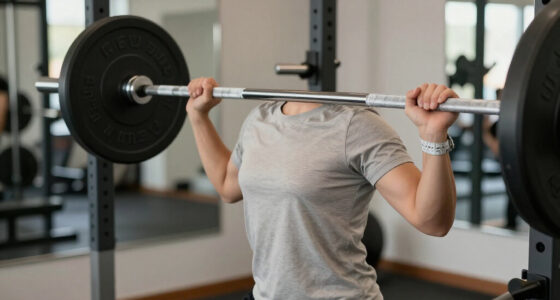
Imagine you’re doing a set of squats. You feel the burn in your thighs, muscles trembling as you push towards fatigue. Now, ask yourself: how many reps does it really take to build muscle — not just tire you out? The answer isn’t a strict number, but understanding the science can help you train more effectively.
Whether you’re lifting heavy for fewer reps or using lighter weights for more, the goal remains the same: stimulate your muscles enough to encourage growth. This article cuts through the hype and explains what truly matters when it comes to reps and muscle building.
Most muscle growth occurs within 6-12 reps per set, but effective hypertrophy can happen across a wider range if effort is maximized.
Training close to muscular failure, regardless of rep count, is a major driver of muscle growth.
Mixing different rep ranges in your routine stimulates different muscle fibers and prevents plateaus.
Progressive overload — gradually increasing effort, weight, or reps — keeps muscles responding and growing.
Quality of reps beats quantity; controlled, proper form ensures you get the most out of every set.
Why 6-12 Reps Are the Gold Standard (And Why It’s Not the Whole Story)
Most trainers recommend doing **6-12 reps per set** for muscle growth. This range is popular because it balances intensity and volume, making it accessible for most lifters and effective for stimulating hypertrophy. The reason it works is that it typically involves lifting weights heavy enough to recruit a significant portion of muscle fibers while allowing enough repetitions to induce fatigue and metabolic stress, both key drivers of growth.
However, recent research reveals that this is not the only effective rep range. Building muscle across a broader spectrum—such as 3 reps with very heavy loads or 30 reps with lighter weights—can also stimulate hypertrophy if the sets are performed close to muscular failure. This suggests that the traditional 6-12 range is more about convenience and safety for most people rather than an exclusive zone for muscle growth.
The implication is that the choice of rep range should be tailored to individual goals, recovery capacity, and training style. Heavy, low-rep sets are excellent for building maximal strength and recruiting fast-twitch fibers, but they may not be sustainable or suitable for everyone. Conversely, higher reps can improve muscular endurance and metabolic conditioning but might require longer rest periods or careful programming to avoid overtraining. The key takeaway? The effectiveness depends on effort, fatigue, and progression, not just the number of reps.
adjustable dumbbell set for hypertrophy
As an affiliate, we earn on qualifying purchases.
As an affiliate, we earn on qualifying purchases.
How Your Reps and Effort Level Drive Muscle Growth
The number of reps alone doesn’t tell the whole story—how hard you work during each set is equally, if not more, important. Training close to failure ensures maximum muscle fiber recruitment, including the fast-twitch fibers that have the greatest potential for growth. This means that whether you’re doing 5 reps or 20, pushing yourself until your muscles are near exhaustion triggers a more potent hypertrophic response.
Effort level influences the quality of the stimulus. When you lift a weight that causes your muscles to shake or feel a burning sensation, you’re signaling your body that more adaptation is needed. Conversely, stopping early, even if the rep count is high, can result in insufficient fatigue, limiting muscle activation and growth signals.
For example, performing 10 reps with a weight that allows you to do only 8 reps before failing is more effective than doing 20 reps with a weight that leaves your muscles mostly fresh. This is because the fatigue and muscle tension achieved near failure are what drive hypertrophy. The tradeoff is that training close to failure repeatedly can increase fatigue and recovery demands, so balancing effort with adequate rest is essential for sustainable progress.
resistance bands for muscle building
As an affiliate, we earn on qualifying purchases.
As an affiliate, we earn on qualifying purchases.
The Impact of Repetition Range on Muscle Endurance and Size
| Repetition Range | Primary Benefits | Example Exercises |
|---|---|---|
| 3-6 reps | Builds maximal strength and stimulates fast-twitch muscle fibers effectively. Heavy loads promote neural adaptations, leading to increased force production. However, focusing solely on low reps can limit muscular endurance gains and may increase injury risk if not programmed carefully. | Deadlifts, heavy squats, bench presses. |
| 8-12 reps | Optimal for hypertrophy by balancing mechanical tension and metabolic stress. This range promotes muscle size while allowing manageable training volume, making it a versatile choice for most lifters. Overemphasis on this range alone might neglect endurance or maximal strength development, so variation is key. | Barbell curls, lunges, shoulder presses. |
| 15-30 reps | Primarily enhances muscular endurance and stimulates hypertrophy through metabolic stress. While it improves stamina, excessive focus on high reps without adequate effort may lead to diminished returns and plateauing, especially if fatigue is not properly managed. | Bodyweight squats, lighter dumbbell sets, resistance band exercises. |
Understanding these ranges helps you tailor your training to specific goals. For example, if your main aim is strength, prioritizing low reps with heavy weights makes sense, but incorporating higher reps can improve endurance and recovery. Conversely, focusing solely on high reps might boost stamina but could limit strength gains. The tradeoff lies in balancing these ranges based on your overall objectives and recovery capacity. Varying your rep ranges not only targets different muscle fibers but also prevents plateaus by challenging your muscles in diverse ways, leading to more comprehensive development.
weighted jump rope for strength training
As an affiliate, we earn on qualifying purchases.
As an affiliate, we earn on qualifying purchases.
Frequently Asked Questions
Can I build muscle with high reps and light weights?
Yes. Higher reps with lighter weights can promote hypertrophy through metabolic stress, especially if you push close to failure. It’s a useful strategy for endurance and avoiding joint strain.
How many reps should I do for maximum muscle growth?
The most common recommendation is 6-12 reps per set, but recent research shows you can build muscle across a broader range, from 3 to 30 reps, as long as effort and fatigue are high.
Does lifting heavier weights with fewer reps build more muscle?
Heavy weights with fewer reps do promote strength gains and contribute to size, especially when combined with higher-rep work. Both approaches work, and mixing them yields the best results.
Is it better to train to failure every session?
Not necessarily. Training close to failure maximizes hypertrophy but can lead to overtraining if done excessively. Balance your effort, include recovery, and listen to your body.
How important is training volume compared to reps?
Training volume (sets x reps x load) often has a bigger impact on muscle growth than the specific rep range. Focus on increasing total effort over time for best results.
As an affiliate, we earn on qualifying purchases.
Conclusion
Focusing solely on a specific number of reps misses the bigger picture. Building muscle is about effort, variation, and pushing your limits safely. Next time you hit the gym, remember: it’s not just about how many reps you do, but how you do them.
Keep challenging your muscles with effort and variety, and your progress will thank you. After all, muscle growth is a journey, not a set number — so move smart, push hard, and enjoy the gains.
Fall Picks
fall essentials
As an affiliate, we earn on qualifying purchases.