
TL;DR

Get workout gear delivered free with Prime
- Fast, free delivery on millions of items
- Prime Video, Amazon Music and more included
- Member-only deals all year
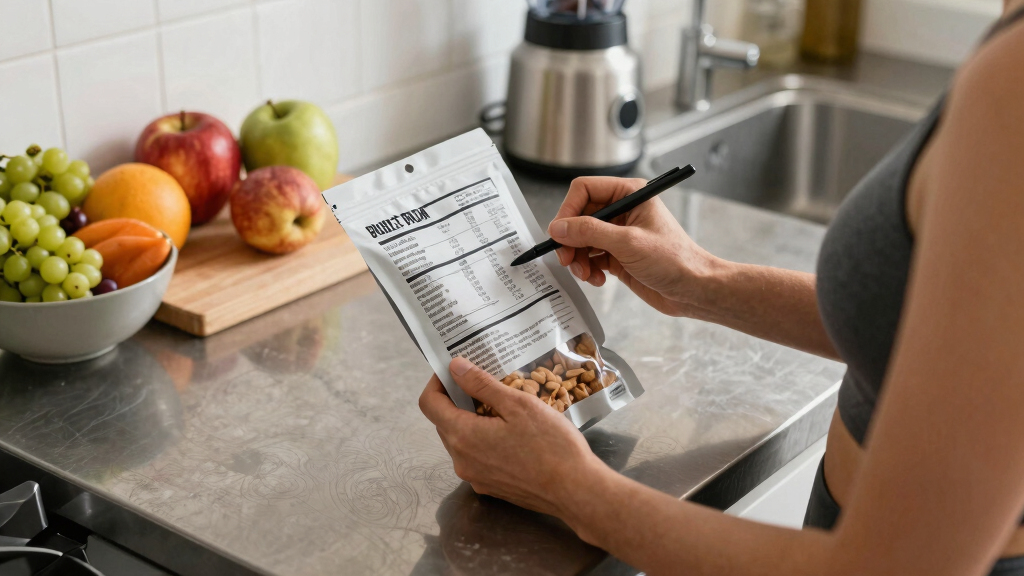
Reading a nutrition label like a coach means understanding serving sizes, calories, macronutrients, and ingredients. Focus on nutrient density, watch for misleading claims, and compare similar foods to make smarter choices.
Ever pick up a snack and wonder if it’s actually good for you? Nutrition labels are supposed to help, but they can feel like a foreign language. Learning to read them like a coach turns numbers into actionable insights, giving you the power to fuel your body better every day.
It’s not about obsessing over every detail. It’s about knowing what to look for, spotting the marketing tricks, and making choices that support your goals—whether that’s losing weight, building muscle, or just feeling healthier. Ready to become a label detective? Let’s dive in.
Always check the serving size first — it influences everything else you see.
Compare similar products using a simple table to avoid hidden ingredients and excess sugars.
Pay attention to % Daily Values to gauge nutrient density, not just calories.
Read ingredients carefully — avoid hidden sugars, artificial additives, and overly processed foods.
Use labels as a guide to support your goals—balance, moderation, and whole foods are key.
Start with the Serving Size — Don’t Let It Fool You
The first thing to check is the serving size. It sets the stage for everything that follows. For example, a granola bar might list 150 calories per serving, but if that serving is only half the bar, eating the whole bar doubles your calorie intake—often without realizing it.
Always compare your actual portion to what’s listed. A large bag of chips might say 120 calories per cup, but if you eat two cups, that’s 240 calories—more than you expected. Coaches emphasize this because tiny differences in serving sizes can add up fast.
**Tip:** Use a measuring cup or scale the first few times you read labels to get a real sense of actual serving sizes. It helps prevent underestimating your intake.
As an affiliate, we earn on qualifying purchases.
Calories Count — Know Your Energy Budget
Calories are the energy your body gets from food. Coaches often say, “Know your daily calorie budget,” because it’s the foundation of weight management. Too many calories, and you gain weight; too few, and you might lose muscle or energy.
For example, if you’re aiming for 2,000 calories a day, eating a snack with 300 calories means you’re using 15% of your daily allowance. Be mindful of how snacks, drinks, and meals stack up.
**Pro tip:** Track your intake for a few days to see where your calories are going. Apps or a simple notebook can help you get a clear picture.
As an affiliate, we earn on qualifying purchases.
Master the Macronutrients — Fats, Carbs, and Protein
Reading the macronutrients on the label is like reading the blueprint of your food’s fuel. Here’s what to focus on:
- Fats: Total fat, saturated fat, trans fats, and unsaturated fats. Aim to keep trans fats at zero and limit saturated fats. Think of avocado or nuts—rich in healthy fats.
- Carbohydrates: Total carbs, fiber, and sugars. High fiber helps digestion and keeps you full. Watch for added sugars like corn syrup or cane sugar—these are empty calories.
- Proteins: Vital for muscle repair. A chicken breast packs around 25 grams of protein per 3-ounce serving, making it a common example.
For example, a protein bar might have 200 calories, 10 grams of fat, 20 grams of carbs, and 15 grams of protein. Coaches suggest prioritizing foods that balance these for sustained energy and recovery.
As an affiliate, we earn on qualifying purchases.
Spot the Hidden Ingredients — Read the List Carefully
The ingredients list is your secret weapon. It reveals what’s really inside—beyond the marketing hype. For example, a ‘low-fat’ yogurt might contain added sugars to compensate for flavor. If you see high-fructose corn syrup or artificial sweeteners at the top, it’s worth reconsidering.
Ingredients are listed from most to least. So, if sugar appears as the first or second ingredient, it’s a sugary product, even if it claims to be healthy.
**Tip:** Use the ingredients list to find less processed options—fewer additives, more whole foods. It’s a quick way to avoid hidden sugars and preservatives.
healthy snack portion control containers
As an affiliate, we earn on qualifying purchases.
As an affiliate, we earn on qualifying purchases.
Decode the Percent Daily Values — Your Food’s Nutritional Scorecard
The %DV tells you how much a nutrient contributes to your daily diet based on a 2,000-calorie standard. For example, a cereal with 25% DV of fiber offers a quarter of your daily fiber needs in one serving.
Foods with 5% or less are low in that nutrient; 20% or more are high. Use this to compare products. For instance, choose a yogurt with 15% DV of calcium over one with 5%.
**Quick tip:** Don’t obsess over every %DV, but use it as a guide to pick nutrient-rich foods over empty-calorie options.
Compare Like a Coach — Use a Simple Chart to Make Smarter Choices
When choosing between two similar products, a quick comparison table can save you from sneaky ingredients and hidden sugars. Here’s an example:
| Feature | Product A | Product B |
|---|---|---|
| Calories | 150 | 160 |
| Sugars | 5g | 12g |
| Fiber | 3g | 1g |
| Protein | 4g | 3g |
This simple comparison helps you see that Product A offers less sugar and more fiber, making it a smarter choice overall.
Watch for Red Flags — What to Avoid on Labels
Some ingredients and claims are designed to distract you from what’s really inside. Watch out for:
- “Low-fat” or “sugar-free”—these can hide other unhealthy ingredients.
- Artificial sweeteners and preservatives—sometimes they’re worse than sugar.
- High sodium content—excess salt can spike blood pressure.
For example, a ‘sugar-free’ cookie might contain artificial sweeteners linked to digestive issues or cravings. Always read beyond the label to see what you’re really eating.
Adjust Based on Your Goals — How to Use Labels Smartly
Whether you want to lose weight, build muscle, or just eat healthier, use labels as your guide:
- For weight loss: focus on lower calorie, high fiber, and protein options.
- For muscle gain: prioritize higher protein and calorie-dense foods.
- For overall health: look for foods rich in vitamins, minerals, and less added sugar.
Example: If you’re trying to lose weight, choose a Greek yogurt with higher protein and lower sugar, even if it costs a bit more.
Frequently Asked Questions
How do I interpret % Daily Values on labels?
% Daily Values show how much a nutrient in one serving contributes to your daily diet based on a 2,000-calorie intake. Use these numbers to compare foods and choose those higher in beneficial nutrients like fiber and vitamins, while watching for high sodium or added sugars.
What does it mean if a product is labeled ‘low-fat’ or ‘sugar-free’?
These claims can be misleading. ‘Low-fat’ might mean the product contains other unhealthy ingredients, and ‘sugar-free’ may include artificial sweeteners. Always check the ingredient list and nutrition facts for a full picture.
Should I avoid all processed foods?
Not necessarily. Focus on choosing minimally processed options with fewer additives and more whole ingredients. Reading labels helps you identify healthier processed foods and avoid hidden sugars and unhealthy fats.
How can I tell if a food is truly healthy for me?
Look for foods with high fiber, protein, vitamins, and minerals, and low saturated fat, trans fats, added sugars, and sodium. Use labels to compare and choose options that support your specific goals.
Can labels help me with my fitness goals?
Absolutely. Reading labels helps you control calorie intake, boost nutrient quality, and avoid unhealthy ingredients—key tools for achieving weight loss, muscle gain, or overall health improvements.
Conclusion
Reading nutrition labels like a coach isn’t about obsessing over every detail. It’s about developing a sharper eye for what’s really inside your food—so you can fuel your body intentionally. The next time you shop, remember: those tiny numbers and words are your allies, not enemies.
Challenge yourself to pick smarter options, one label at a time. Your body and your goals will thank you for it.
Halloween Picks
halloween
As an affiliate, we earn on qualifying purchases.