TL;DR

Get workout gear delivered free with Prime
- Fast, free delivery on millions of items
- Prime Video, Amazon Music and more included
- Member-only deals all year
The calorie count displayed on a treadmill, elliptical, or stair climber is an estimate, not a direct measurement. It’s useful for comparing workouts on the same machine, but errors of 20–30% or more are common — especially when you skip entering your weight or lean on the handrails. Track trends and workload measures like watts, pace, and heart rate instead of trusting any single number.
You just finished a 45-minute elliptical session. The display flashes 512 calories burned — and for a second, you’re doing the math on dessert. Hold that thought.
That number is an estimate, not a measurement. No cardio machine actually counts the energy your body burns. It runs a formula based on time, speed, and a few assumptions about you — and the gap between the estimate and reality can be surprisingly wide.
In this article, you’ll learn where that number comes from, why it’s often inflated (and sometimes deflated), which machines tend to get closest, and what to track instead if you care about progress. No fads, no math homework — just what the number actually means.
The calorie count on any cardio machine is an estimate built from population-average formulas — never a direct measurement of your body’s energy use.
Leaning on treadmill or stair-climber handrails reduces actual calorie burn while the display keeps estimating as if you were unsupported.
Power-measuring machines (quality bikes and rowers) tend to produce the most dependable estimates; ellipticals tend to be the least dependable.
Never add your machine’s number to your watch’s number — they’re two estimates of the same workout, and one may count total calories while the other counts act…
Use 70–80% of the displayed number if you’re using it for nutrition decisions, and judge results by month-scale trends, not daily math.
The Truth About Calorie Counts on Cardio Machines
That number flashing on the treadmill is an estimate, not a measurement. No cardio machine reads your body’s energy use — it runs a formula on assumptions about a stranger. Errors of 20–30% or more are common, especially when you skip entering your weight or lean on the handrails.
No cardio machine actually counts the energy your body burns. It’s a math problem applied to a stranger who happens to weigh what you entered.
Core InsightWhere That Calorie Number Actually Comes From
It comes from a standardized equation, not a sensor reading your body. The machine takes what it knows — duration, speed, incline, resistance, sometimes your weight — and plugs it into a formula built from population averages. Like a restaurant estimating your bill from the number of plates on the table.
Machine inputs
Duration, speed, incline, resistance — and sometimes watts of mechanical power.
Your data (maybe)
Weight, age, sex — only if you enter them. Skip it, and a default profile is used.
Population formula
A pre-set equation built on averages for a typical person, not your metabolism.
Displayed estimate
A plausible guess that can overshoot or undershoot your real burn by 20–30%+.
A lab method that calculates calories from the oxygen you consume and the carbon dioxide you produce. Your gym’s treadmill does not have a metabolic cart inside it — almost nothing in a consumer gym does.
Why Your Treadmill Is Probably Inflating Your Burn
Machines work with incomplete or wrong information about you. The classic scene: someone on a steep incline, white-knuckling the handrails. Your legs do meaningfully less work — the display keeps calculating as if you’re fully unsupported.
Default profiles
Never enter your weight? The machine assumes one — if the default is heavier than you, your calorie count climbs instantly.
Total vs. active calories
Some machines count calories your body would have burned at rest anyway, padding the number without labeling it.
Population averages
Your metabolism, fitness level, and movement efficiency may not match the average person the equation was built on.
Equations that don’t fit
Caffeine, stress, heat, and medications shift your heart rate without changing actual energy use — breaking HR-based estimates.
Post-exercise burn
Some displays quietly fold in an estimate of afterburn — the extra calories burned after you stop.
Wrong resistance, wrong direction
Incorrectly entered resistance or incline — or unusual efficiency at a movement — can make the number undershoot real effort.
Which Machines Get Closest — and Which to Squint At
Machines that directly measure mechanical power have a built-in advantage over machines that guess. A quality smart bike usually beats an elliptical for estimate quality — though brand, calibration, and maintenance matter as much as machine type.
| Machine | Estimate Quality | Why |
|---|---|---|
| Stationary bike | ✓ Often best | Power-measuring bikes track real mechanical work; only human efficiency assumptions add error. |
| Rowing machine | ✓ Good | Measures power per stroke, though technique quality affects the calorie conversion. |
| Treadmill | ~ Reasonable | Speed and incline are known, but running economy varies — and rail-holding breaks the math. |
| Stair climber | ✗ Often inflated | Handrail support is nearly universal and rarely accounted for in the calculation. |
| Elliptical | ✗ Least dependable | Stride mechanics, arm involvement, and resistance systems vary wildly between brands. |
Your Watch vs. the Machine — Which Number Wins?
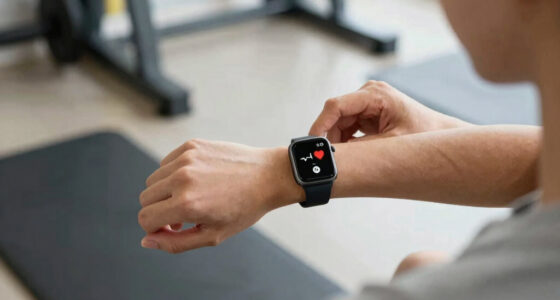
Neither is automatically more accurate, because each knows a different half of the puzzle. The machine knows the workload but almost nothing about you; the watch knows your heart rate and profile continuously, but wrist sensors have their own error bars.
The Cardio Machine
- Knows speed, incline, resistance — sometimes exact watts
- Consistent measurement of the same workload over time
- Almost no information about you personally
- Default profiles and hidden assumptions inflate the figure
The Smartwatch
- Continuous heart rate plus your personal profile
- A chest strap reads more reliably than a wrist sensor
- Wrist optical sensors and calorie algorithms carry error bars
- May report a different quantity: active vs. total calories
Two practical rules
1 — Never add the two numbers together. A treadmill saying 480 and a watch saying 350 are two estimates of the same workout — not separate burns. Possibly neither is right; possibly they aren’t even answering the same question.
2 — Pick the more conservative number and use it consistently. For indoor cycling, a calibrated power meter gives the most trustworthy workload data you can get outside a lab.
How to Use Calorie Estimates Without Getting Fooled
Treat the display like a ruler with slightly wobbly markings — consistent enough to measure change, too rough for exact science. Follow these six rules and the number becomes a tool instead of a trap.
Enter your real details — every time
Weight, age, and any other data the machine requests, on every single session.
Hands off the handrails
Unless you genuinely need them for safety — leaning quietly cuts your real burn.
Same machine, same settings
Comparing sessions only works when the measurement conditions match.
Watch the trend, not the number
Four weeks of data beats one workout. Judge by month-scale changes.
Track workload measures too
Time, distance, pace, resistance, watts, and heart-rate zones tell the real story.
Treat calories as an upper bound
Don’t eat back every calorie shown — use 70–80% of the display for nutrition planning.
Estimate → Trend → Progress
Where That Calorie Number Actually Comes From
The calorie count on a cardio machine comes from a standardized equation, not a sensor that reads your body’s energy use. The machine takes what it knows — duration, speed, incline or resistance, and sometimes your body weight — and plugs those values into a pre-set formula built from population averages.
Think of it like a restaurant estimating your bill from the number of plates on your table. It has no idea what you actually ordered. If the table next to you ordered steak and you ordered salad, the estimate breaks down fast.
The gold standard for measuring energy expenditure is indirect calorimetry — a lab method that calculates calories from the oxygen you consume and the carbon dioxide you produce. Your gym’s treadmill does not have a metabolic cart inside it. Almost nothing in a consumer gym does.
So what you’re looking at is a math problem applied to a stranger who happens to weigh what you entered. Sometimes that’s close. Sometimes it’s not.
heart rate monitor for cardio workouts
As an affiliate, we earn on qualifying purchases.
As an affiliate, we earn on qualifying purchases.
Why Your Treadmill Is Probably Inflating Your Burn
Cardio machines frequently overestimate calories for one simple reason: they’re working with incomplete or wrong information about you. The most common culprits are default user profiles. If you never enter your weight, the machine assumes one for you — and if that default is heavier than you are, your calorie count climbs.
Here’s a scenario every gym-goer has seen: someone walking briskly on a steep incline, white-knuckling the handrails. Holding the rails reduces the actual work your legs and heart are doing — sometimes dramatically — but the treadmill keeps calculating as if you’re moving unsupported. The display says 600 calories. Your body did meaningfully less.
Other reasons machines overshoot:
- Total vs. active calories: some machines count calories your body would have burned at rest anyway, padding the number
- Population-average formulas: your metabolism may not match the average person the equation was built on
- Heart-rate math that doesn’t fit you: caffeine, stress, heat, and medications can all shift your heart rate without changing energy use
- Sneaky add-ons: some displays quietly include an estimate of post-exercise burn
- And yes — marketing. A machine that flatters you may win your loyalty
Underestimates happen too. If resistance or incline is entered wrong, or you’re unusually efficient at a movement, the number can undershoot your real effort.
As an affiliate, we earn on qualifying purchases.
Which Machines Get Closest — and Which to Squint At
No cardio machine counts calories perfectly, but machines that directly measure mechanical power — the actual work you’re producing — have a built-in advantage over machines that guess. That’s why a quality smart bike usually beats an elliptical for estimate quality.
Here’s how the main machines compare, according to Easy Fitness Results analysis of how each one gathers data:
| Machine | Estimate quality | Why |
|---|---|---|
| Stationary bike | Often best | Power-measuring bikes track real mechanical work; only human efficiency assumptions add error |
| Rowing machine | Good | Measures power per stroke, though technique quality affects the calorie conversion |
| Treadmill | Reasonable | Speed and incline are known, but individual running economy varies — and rail-holding breaks the math |
| Stair climber | Often inflated | Handrail support is nearly universal and rarely accounted for |
| Elliptical | Least dependable | Stride mechanics, arm involvement, and resistance systems vary wildly between brands |
One caveat: the brand and maintenance of a machine matter as much as its type. A calibrated commercial bike can beat a worn-out one of the same model, and a display might be accurate for one person and way off for their workout partner on the very same machine.
elliptical machine with accurate calorie tracking
As an affiliate, we earn on qualifying purchases.
As an affiliate, we earn on qualifying purchases.
Your Watch vs. the Machine — Which Number Wins?
Neither your smartwatch nor the cardio machine is automatically more accurate, because each one knows different halves of the puzzle. The machine knows the workload — speed, incline, resistance, sometimes watts — but almost nothing about you. The watch knows your heart rate and profile continuously, but wrist sensors and calorie algorithms have their own error bars.
A familiar scene: you finish a run, and the treadmill says 480 calories while your watch says 350. Which is right? Possibly neither — and possibly they’re not even answering the same question. One may be reporting total calories (including what you’d burn at rest) while the other reports active calories (the extra burn from exercise alone).
Two practical rules:
- Never add the two numbers together. They’re two estimates of the same workout, not separate burns
- For heart-rate-based estimates, a chest strap usually reads more reliably than a wrist sensor — but even a perfect heart rate doesn’t guarantee a perfect calorie number
If you cycle indoors, a calibrated power meter gives you the most trustworthy workload data you can get outside a lab. For everything else, pick the number that tends to be more conservative and use it consistently.
fitness tracker for workout trends
As an affiliate, we earn on qualifying purchases.
As an affiliate, we earn on qualifying purchases.
How to Use Calorie Estimates Without Getting Fooled
You can use the calorie display as a useful comparison tool if you treat it like a ruler with slightly wobbly markings — consistent enough to measure change, too rough for exact science. Follow these steps:
- Enter your real weight and any other details the machine asks for — every time
- Keep your hands off the handrails unless you genuinely need them for safety
- Use the same machine and settings when comparing one session to another
- Watch the trend, not the single number — four weeks of data beats one workout
- Track workload measures too: time, distance, pace, resistance, watts, and heart-rate zones
- Don’t automatically eat back every calorie shown — treat the number as an upper bound
- If you use exercise calories for nutrition planning, shave the estimate down and judge the plan by month-scale weight and performance trends, not daily math
That last point deserves emphasis. If your elliptical says you burned 500 calories and you “earn” a 500-calorie snack, a 20% overestimate means you just wiped out the deficit — without noticing. A conservative haircut (say, using 70–80% of the displayed number) protects you from that trap.
If you remember one thing: the number is a rough reference point, not a receipt. Use it to compare workouts, not to balance your food ledger.
Why Burning 3,500 Calories Doesn’t Mean Losing a Pound
The classic rule — burn 3,500 calories, lose one pound of fat — is a rough approximation at best, because your body is a dynamic system, not a calculator. Exercise calories don’t convert neatly into predictable fat loss, even when the estimates are perfect.
Why? Real-world outcomes get scrambled by increased appetite after workouts, reduced activity later in the day (that post-gym couch time counts), water and glycogen shifts, and your body adapting to repeated exercise. Add in the error bars on both exercise and food estimates, and daily arithmetic becomes guesswork.
Consider a typical scenario: someone burns a genuine 400 calories walking five days a week, but finds themselves snacking more and moving less on workout days. Weeks later, the scale hasn’t moved — and they conclude exercise “doesn’t work.” It worked. The rest of the equation shifted.
And no, sweating more doesn’t mean burning more. Sweat is your body’s cooling system responding to temperature, humidity, and clothing — not a receipt for energy spent. A hot yoga class can leave you drenched with a smaller energy cost than a cool, steady run.
This is also why fitness guidance is shifting toward performance indicators — pace, watts, distance, heart-rate response, and how you feel — rather than calorie burn as the measure of a good workout.
What Newer Machines and Wearables Are Getting Right
Newer connected equipment is quietly getting better at this, because it combines workload data, heart rate, and your personal profile instead of relying on time and body weight alone. Smart bikes, rowers, and treadmills now report watts, training load, heart-rate zones, and performance trends right alongside the calorie number.
Wearables are moving in the same direction, using fitness history and physiological responses to individualize their algorithms. Platforms are also getting clearer about the difference between active and total energy, which clears up a lot of apples-to-oranges confusion.
But here’s the honest limitation: these algorithms are proprietary and change constantly, which makes independent validation difficult. Nobody outside the company can fully audit how the number is produced. Better is not the same as exact.
A higher calorie number still doesn’t mean a better workout. Cardiovascular fitness, endurance, recovery, enjoyment, and showing up next week all matter more than any single display figure.
Frequently Asked Questions
Are cardio machine calorie counts accurate?
They’re estimates, and the error can be meaningful — often 20% or more in either direction. Accuracy improves when you enter your real body weight and use good technique, but no consumer machine measures energy expenditure directly. Use the number to compare relative effort across sessions, not as an exact record of energy burned.
Do cardio machines usually overestimate calories?
Many do under common conditions — especially when personal data is missing, a default (heavier) profile is used, or the user leans on the handrails. Some machines also display total calories rather than active calories, which inflates the figure. Underestimates are possible too, particularly when resistance or body weight is entered incorrectly.
Which cardio machine gives the most accurate calorie count?
A calibrated machine that measures mechanical power directly — such as a quality smart bike or power-measuring rower — has a clear advantage, because it tracks the actual work you produce. Individual metabolic efficiency still prevents perfect accuracy, so even the best machines remain estimates.
Why does my treadmill show a different number than my smartwatch?
They use different sensors and algorithms, and often different definitions. The machine knows workload but little about you; the watch knows your heart rate and profile but has weaker workload data. One may also report total calories while the other reports active calories. Never add the two numbers together — they estimate the same workout.
Should I eat back the calories my machine says I burned?
Not automatically. Both exercise and food estimates contain error, so a common approach is to use 70–80% of the displayed number and then judge the plan by longer-term weight and performance trends. If you have specific nutrition or weight-management goals, a registered dietitian can help you build a plan that fits your body and routine.
Does holding the treadmill handrails change calorie burn?
Yes. Supporting part of your body weight on the rails reduces muscular and cardiovascular demand — sometimes substantially — while the machine may keep estimating calories as if you were moving unsupported. The displayed number can end up notably higher than what you actually burned.
Conclusion
Treat the calorie display like a dashboard gauge, not a checkout scanner. Enter your weight, skip the handrails, compare your own sessions on the same machine, and let workload numbers like pace, watts, and heart-rate zones tell you whether you’re actually getting fitter.
The best workout isn’t the one with the biggest number on the screen. It’s the one you’ll do again on Thursday.
Halloween Picks
halloween
As an affiliate, we earn on qualifying purchases.