

TL;DR
Strength training quietly changes your body by increasing lean muscle, which elevates your resting calorie burn. It improves posture, supports fat loss, and enhances overall body composition, making it a key tool for weight management.
Ever notice how some people seem to naturally look more toned, even without intense workouts? The secret isn’t just in what they do — it’s in what strength training quietly reshapes. This isn’t about bulking up or lifting heavy weights in a gym. It’s about small, consistent changes that redefine your body from the inside out.
In this guide, you’ll see how strength training builds more than muscle. It boosts your metabolism, improves posture, and supports a leaner, healthier body over time. No hype, no gimmicks — just the real science behind how resistance work reshapes you in ways you’ll barely notice until you see the results.
Building muscle through strength training boosts your resting metabolic rate by up to 15%, helping you burn more calories naturally.
Consistent, small efforts—like twice-weekly workouts—can significantly reshape your body over time without heavy lifting.
Simple moves like squats, push-ups, and rows create noticeable toning and posture improvements.
Bodyweight and resistance band exercises provide accessible, effective options for all fitness levels.
Combining strength training with cardio offers a balanced approach that supports long-term weight management.
How Strength Training Builds Lean Muscle and Changes Your Shape
Strength training stimulates muscle growth, known as hypertrophy. When you lift weights or use resistance bands, your muscles adapt by getting stronger and thicker. This process doesn’t just add bulk; it reshapes your entire body by giving you a more toned, athletic appearance. For example, consistently doing bodyweight squats or resistance exercises can lead to a noticeable reduction in the appearance of flabbiness and a more defined silhouette. This is because muscle tissue is denser and more compact than fat, so as you build muscle, your body becomes more sculpted and firm.
Understanding this process matters because it highlights that small, regular efforts can lead to significant visual and functional changes over time. When muscles grow, they also support your joints better, improve posture, and increase overall strength, which can prevent injuries and alleviate chronic aches. The tradeoff is that muscle hypertrophy is a gradual process requiring patience and consistency; it’s not instant but highly effective in creating sustainable body reshaping.
By focusing on proper form and progressive overload—gradually increasing resistance—you ensure your muscles continue to adapt, leading to continuous improvements in body composition and function. Think of muscle growth as a long-term investment: patience and consistency yield the best returns.

WHATAFIT Resistance Bands,Exercise Bands,Workout Bands with Handles,Door Anchor and Ankle Straps,5 Resistance Levels Fitness Bands,for Strength,Training, Physical Therapy, and Home Gym Equipment
5 Adjustable Resistance Levels for Versatile Training: This resistance bands set includes 5 color-coded bands with individual poundage…
As an affiliate, we earn on qualifying purchases.
As an affiliate, we earn on qualifying purchases.
Why Your Resting Metabolic Rate Gets a Boost from Lifting Weights
Strength training increases your muscle mass, which is more metabolically active than fat tissue. This means that even when you’re resting, your body is using more energy to maintain that muscle. The implication is profound: as you build muscle, your baseline calorie burn—the number of calories your body needs to function at rest—rises. For instance, gaining just 2 pounds of muscle can elevate your daily calorie expenditure by approximately 50 calories. Over weeks and months, this small increase compounds, making weight management easier without additional effort.
This boost in resting metabolic rate effectively turns your body into a more efficient fat-burning machine. It’s like having a tiny furnace inside you that keeps working 24/7, burning calories even when you’re not actively exercising. The tradeoff here is that increasing muscle mass requires consistent effort over time; it’s not a quick fix. However, understanding this effect empowers you to prioritize resistance training as a strategic way to enhance your metabolism naturally. The key takeaway is that building muscle isn’t just about appearance—it’s about creating a sustainable metabolic advantage that supports long-term weight control.
Think of your metabolism as a bank account—regular deposits (muscle gains) grow your capacity to burn calories, making future weight management less effortful. To maximize this, incorporate progressive resistance exercises into your routine and be patient as your metabolic rate gradually increases.

MQRW Push Up Board,Home Gym,Portable Exercise Equipment,Pilates Bar and 20 Fitness Accessories with Resistance Bands and Ab Roller Wheel,Full Body Workout at Home
【Workout Equipment System】Portable Exercise Pack is used with various workout equipment attachments:Foldable Push up board,3-section Bar,6 Resistance Bands,…
As an affiliate, we earn on qualifying purchases.
As an affiliate, we earn on qualifying purchases.
Practical Strength Training Moves That Quietly Reshape Your Body
If you want to see change without fancy equipment, focus on simple, effective movements. Here’s a quick list:
- Squats — sculpt your thighs and glutes
- Push-ups — strengthen your chest, shoulders, and arms
- Deadlifts — target your back and hamstrings
- Rows — tone your upper back and improve posture
- Planks — reinforce your core and stability
To maximize results, aim for 3 sets of 10-15 reps for each exercise, performed twice a week. As you progress, gradually increase repetitions or resistance to continue challenging your muscles. Incorporate these exercises into your routine consistently—say, every Monday and Thursday—and review your form regularly to prevent injury and ensure effectiveness. Over a few months, these small but regular efforts will lead to noticeable improvements in your body’s tone, posture, and overall strength. Remember, the key is consistency and gradual progression, not perfection on day one. These moves are adaptable for home, park, or gym, making them accessible regardless of your schedule or equipment access.
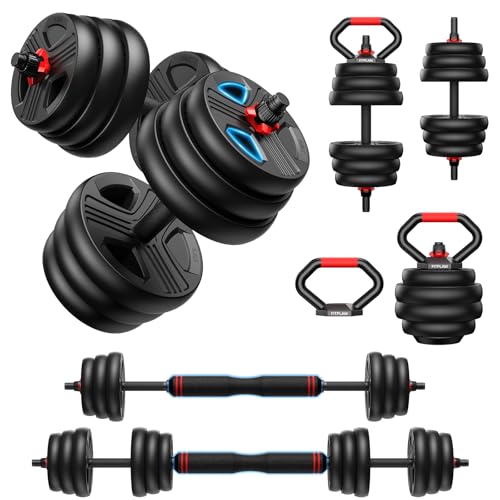
FDS1 Adjustable dumbbell set, 45lbs Free Weights set with upgraded nut, 5 in 1 Weight Set Used as Kettlebells, Barbell, Push up Stand, Fitness Exercise for Home Gym Suitable Men/Women
【5 in 1 Multifunctional Dumbbell Set】This versatile dumbbell set 45lb total (22.5lb each) quickly converts into dumbbells, barbells,…
As an affiliate, we earn on qualifying purchases.
As an affiliate, we earn on qualifying purchases.
How Resistance Bands and Bodyweight Moves Make It Easy and Effective
Many are turning to resistance bands and bodyweight exercises because they offer a flexible, accessible way to build strength without needing a gym. These tools allow you to perform a variety of movements that target all major muscle groups, and they can be easily incorporated into daily routines. For example, resistance bands can be used for bicep curls, shoulder presses, or even leg lifts—each movement providing enough resistance to stimulate muscle growth when performed with proper form and increased repetitions.
Practically, using resistance bands or bodyweight exercises requires only a small space and minimal equipment, making them ideal for busy schedules or those with limited access to gyms. They also promote better joint health because of their low-impact nature. When you challenge yourself by increasing resistance (using tighter bands or more repetitions), you enhance muscle engagement, which accelerates body reshaping. The tradeoff is that these methods require disciplined progression—gradually increasing resistance or repetitions—to continue seeing results. Incorporating these exercises into your weekly routine can be as simple as replacing some of your cardio days with resistance band circuits or adding a few bodyweight moves after your daily walk. The key takeaway is that effective strength training doesn’t need to be complicated or expensive; consistency and gradual challenge are what matter most.

STAND TALL: A Practical Guide to Fixing Mid Back Pain, Correcting Your Posture, and Staying Active for Life
As an affiliate, we earn on qualifying purchases.
As an affiliate, we earn on qualifying purchases.
The Surprising Power of Small, Consistent Efforts
Consistency in strength training isn’t just about sticking to a routine—it’s about understanding that small, manageable efforts can lead to profound changes over time. When you commit to just 10 to 20 minutes of targeted exercises two or three times a week, you create a sustainable habit that your body gradually adapts to. This regularity allows your muscles to recover and grow, your metabolism to stay elevated, and your posture to improve—all without overwhelming your schedule.
Think of it like watering a plant: consistent, moderate watering encourages steady growth, whereas sporadic or intense efforts can stress the plant and hinder progress. For example, dedicating 15 minutes three times a week to bodyweight exercises can significantly improve muscle tone and posture in just 8 weeks. The key is to set realistic goals, track your progress, and stay committed—even on days when motivation is low. Over time, these small efforts accumulate, leading to noticeable body reshaping and health benefits. The tradeoff is that patience and persistence are necessary, but the results are sustainable and less likely to lead to burnout or injury. Use this understanding to design a manageable plan that fits your lifestyle, and remember: slow and steady wins the race.
Balancing Cardio and Strength for Lasting Results
While cardio exercises like running or cycling burn calories quickly and boost cardiovascular health, strength training offers a different but equally important benefit: it quietly reshapes your body by building lean muscle and increasing metabolic rate. Combining both creates a synergistic effect, where cardio helps burn calories during activity, and strength training enhances your body’s ability to burn calories at rest. This balanced approach supports sustainable weight management and prevents plateaus.
For example, integrating two days of brisk walking or cycling with two days of resistance exercises ensures you’re not only burning calories during your workout but also maintaining a higher resting metabolic rate afterward. This combination also minimizes the risk of overtraining and injury, balancing effort and recovery. The tradeoff is that focusing solely on one can limit your overall progress; a dual approach maximizes efficiency. Practical decision-making involves scheduling your week to include both types of exercise—perhaps alternating days—and adjusting intensity based on your goals and fitness level. Remember, the goal is consistency over perfection, creating a routine that fits your lifestyle and fosters long-term habits.
Safety Tips for Beginners and Older Adults Starting Out
Starting strength training safely is crucial to prevent injury and build confidence. For beginners, the focus should be on proper form, lighter resistance, and gradual progression. For example, beginning with bodyweight exercises like wall push-ups or seated squats helps you learn movement patterns without risking strain. As your strength improves, you can slowly increase resistance or repetitions.
Older adults or those with existing health conditions should prioritize professional guidance. Consulting with a trainer or healthcare provider can help tailor a program that accommodates joint limitations and mobility concerns. Incorporating low-impact movements and avoiding rapid increases in intensity reduces injury risk. Listening to your body—stopping if you experience pain or discomfort—is essential for sustainable progress. The tradeoff is that rushing into advanced exercises without proper preparation can lead to setbacks or injuries, so patience and gradual increases are key. Use this approach to create a safe, effective routine that promotes long-term health and strength gains at any age.
Frequently Asked Questions
How long does it take to see noticeable changes from strength training?
Most people notice improvements in strength and body tone within 4-8 weeks of consistent effort. Visible changes like increased muscle definition might take a bit longer, around 8-12 weeks.
Do I need heavy weights to see results?
No. Progressively increasing resistance—whether through heavier weights, more repetitions, or resistance bands—is what matters. Many see results with bodyweight exercises and lighter resistance, especially when done regularly.
Can strength training help me lose fat?
Yes. While it builds muscle, strength training also raises your metabolism, supporting fat loss when paired with a balanced diet. It’s more about reshaping than just losing weight on the scale.
Is strength training safe for seniors or beginners?
Absolutely, with proper guidance and appropriate exercises. Starting slow, focusing on form, and consulting professionals can make strength training a safe, effective part of your routine at any age.
How does strength training compare to cardio for body reshaping?
Both are valuable. Cardio burns calories fast and improves heart health, while strength training builds muscle and shapes your body. Combining both offers the best long-term results.
Conclusion
Strength training quietly reshapes your body, transforming fat into firm muscle, improving posture, and making your metabolism work for you. It’s a slow, steady process that rewards consistency over intensity. Think of your muscles as the silent sculptors—gradually carving out a healthier, more vibrant version of you.
Start small, stay consistent, and watch how your body transforms from the inside out. After all, real change isn’t loud — it’s steady, persistent, and uniquely yours.