
TL;DR

Get workout gear delivered free with Prime
- Fast, free delivery on millions of items
- Prime Video, Amazon Music and more included
- Member-only deals all year
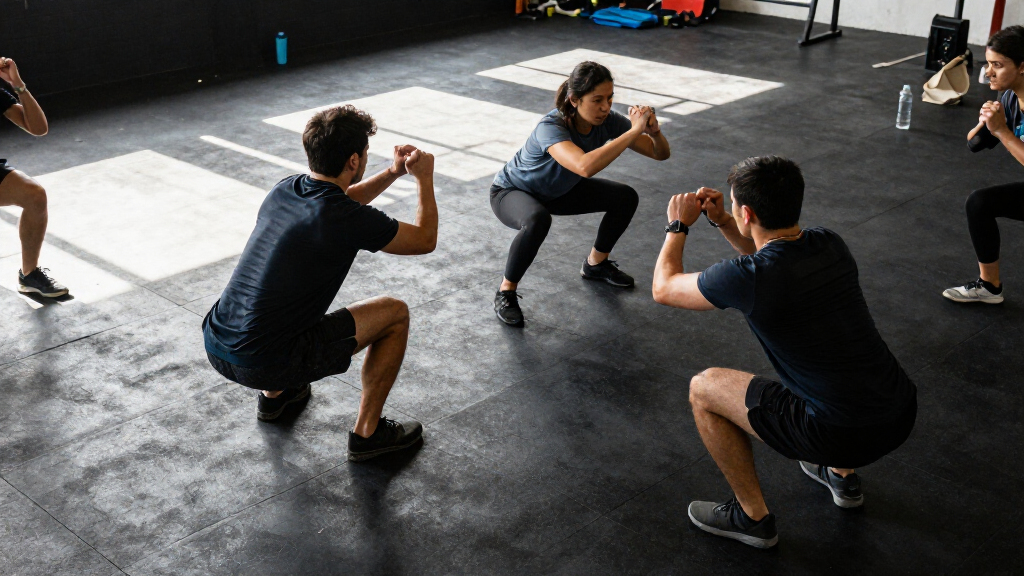
Group workouts can feel easier because shared effort, music, coaching, and conversation may make exercise feel less lonely and keep your attention from settling on every difficult moment. That change in experience does not necessarily mean your body is doing less work, and group energy can also tempt you to push past your own pace. A welcoming class, sensible options, and permission to rest can help you find out whether group exercise suits you.
A tough final minute can feel shorter when everyone around you is counting down. Your legs still work, your breathing still rises, and the floor may still seem a long way away. Yet exercising with other people can make that same effort feel less lonely or easier to stay with.
The group effect has several possible parts: seeing others share the effort, hearing a coach’s cues, moving to music, and having a class waiting on your calendar. Those features can change how you experience a workout; they do not guarantee that your body has an easier job. Research has explored social support, group identity, and synchronized movement in exercise, but studies use different formats and measures, so no single explanation fits everyone [1][2].
Here, you’ll learn what “easier” can mean, why group workouts feel motivating for some people and uncomfortable for others, and how to try a class without treating the person on the next mat as your pace setter. Think of it as a way to make movement more welcoming, not a test you have to pass.
Group workouts can feel more manageable because company, music, and coaching shift your attention; that feeling does not mean your body is doing less work.
A friendly class may help you feel that you belong and make it easier to show up, but class culture and your comfort with groups matter.
Shared energy can encourage effort and also invite unhelpful comparison, so choose your own pace, modifications, and rest.
Synchronized movement may support a sense of connection for some people, but it is not required for exercise to be worthwhile.
Try a beginner-friendly class as an experiment; a workout with one friend, a live online session, or solo movement may fit you better.
Why Group Workouts Feel Easier The effort is still real
Company, music, and coaching can make exercise feel more manageable. That feeling does not mean your body is doing less work.
“Easier” can mean more enjoyable
Perceived effort and physical demand are related, but they are not the same.
- Feeling less alone in the hard moments
- Noticing the minutes less
- Finding it easier to start and return
- Your movements, pace, and workout length
- Your body’s readiness that day
- Your need to rest or choose a modification
What can shift the experience
Shared effort
Seeing others work can make exercise feel less solitary. A welcoming class may make showing up more appealing.
Music and cues
A beat, conversation, or coach’s next instruction gives your attention somewhere else to land.
A scheduled class
A set time, instructor, or workout partner can make starting simpler, when the class fits your life.
Group energy has two sides
| Can help | Can make things harder |
|---|---|
| Company can ease the feeling of doing it alone. | Comparison can tempt you to push past your pace. |
| Coaching and options can help you take part. | Fast cues or an unwelcoming class can feel intimidating. |
| Moving in sync may support connection for some people. | Synchronization is not required for exercise to be worthwhile. |
Try a class as an experiment
Look for a beginner-friendly class and an instructor who offers options.
Treat the room’s energy as company, not a target. Modify movements or rest when you need to.
A small class, one workout friend, a live online session, or solo movement may fit better.
“Easier” May Mean More Enjoyable, Not Less Work
Group workouts can feel easier because company and shared attention may make effort more enjoyable or less noticeable, even when the physical workload stays much the same. Your muscles, breathing, and heart still respond to the workout you do. Feeling more willing to keep going does not prove your body has done less work.
That distinction helps explain a familiar scene: during a solo run, you might check the clock every thirty seconds, but in a dance class you follow the instructor and suddenly the last song is nearly over. You may have spent the same amount of time moving, yet noticed each minute less. A conversation, a beat, or the next simple cue can give your attention somewhere else to land.
It also helps to separate perceived effort from physical demand. Perceived effort is how hard the activity feels to you. Physical demand depends on what you’re doing, how quickly, for how long, and what your body is ready for that day. These can influence one another, but they are not identical measures.
Feeling more comfortable is useful feedback about your experience; it is not a reason to ignore pain, dizziness, unusual shortness of breath, or a need to rest.
For example, you might enjoy a steady beginner cycling class because a coach breaks the ride into short intervals. That can make the session feel manageable, even when your legs are working hard. You can appreciate the easier feeling and still choose a lower resistance or take a break.
Products Worth Considering

Withings Body Scan Smart Scale with Segmental Body Composition and ECG, Black

Withings BPM Connect Wi-Fi and Bluetooth Blood Pressure Monitor

Coway Airmega AP-1512HHS Smart Air Purifier, Black
As an affiliate, we earn on qualifying purchases.
Shared Effort Can Make Exercise Feel Less Lonely
The real reason group workouts feel easier often starts with not feeling alone in the hard part: seeing other people make an effort can create a sense that you belong in the room. That shared experience may help a class feel more inviting and can give you a reason to return. It does not mean every group automatically becomes a supportive community.
Consider someone at a first strength class who cannot match the instructor’s full range of motion. If the instructor offers a lighter version and other people use different weights, the room sends a useful message: everyone can work at a level that fits them. That can take some pressure out of being new. In a class where the loudest message is “keep up,” the same room can feel isolating instead.
Research on exercise participation considers social support and group identity alongside physical outcomes [1]. The practical point is modest: a friendly class can make showing up feel more appealing, particularly when you value company. Whether you feel connected depends on details such as the instructor, class culture, class size, and your comfort with groups.
You do not need to know everyone by name to get something from shared effort. A nod from the person beside you, the instructor remembering that you are new, or the simple sound of several people moving together may make a workout feel less like a solo chore. If you prefer more space, you can get some of that company from a small class or a walk with one friend.
Music, Cues, and Conversation Can Move Your Attention
Music, coaching, and light conversation can make a group workout feel more manageable by giving your attention something besides discomfort to follow. A coach’s cue about the next movement or a song’s steady beat can help the minutes pass. This shift may change how hard the session seems without changing the session’s movements or duration.
Imagine a brisk indoor cycling class. When you ride alone, you may notice every warm flush and each time your legs start to tire. In class, you hear the instructor say “easy gear for thirty seconds,” then the music swells and the group settles into the next interval. Your body still pedals, but your mind has a clear next task instead of one long countdown.
Researchers have examined attention and psychological factors in exercise settings, though findings vary with the activity, people, and measures used [1]. A distraction that helps one person may bother another. You might find a lively playlist energizing; your friend might prefer quiet and a predictable route through each movement.
If a class’s noise or fast instructions make you feel lost, that is useful information about the setting. Try standing where you can see the instructor, ask for a simple explanation before class, or choose a quieter session. The most helpful cue is one that lets you take part without guessing or straining to keep up.
A Scheduled Class Can Make Starting Easier
A group class can support consistency by giving your workout a set time, a place, and sometimes a person who expects you to arrive. That structure reduces the small daily negotiation of deciding whether to exercise. It can help you build a routine, though a packed schedule or an inconvenient class time can make attendance harder.
For instance, you might plan to take a Tuesday evening class with a friend. At 5 p.m., after a long workday, your motivation may be low; knowing that your friend is meeting you at the door can make the first step simpler. Once you arrive, the instructor has prepared the session, so you don’t need to invent a workout while tired.
This is a practical advantage of group exercise, not a guarantee of long-term attendance. A class that costs too much, starts too early, or leaves you feeling out of place may not fit your life. The best routine is one you can repeat with reasonable comfort, whether it happens in a studio, at a park, through a live online class, or on a regular walk with a neighbor.
Start with a small commitment, such as one beginner session each week, and see how it fits your energy and calendar. If a class helps you show up, that is a meaningful benefit. If solo movement works better, you have not failed at fitness; you have found a format that suits you.
Group Energy Can Encourage You—or Push You Too Far
Other people can encourage you to work harder, but their pace is not a reliable measure of what your body should do. A group can help you feel energized, while comparison can tempt you to lift more, move faster, or skip rest before you feel ready. A well-run class makes room for different fitness levels and offers ways to scale movements.
Picture two people in the same circuit class: one is returning after a long break, and the other has trained regularly for years. If both try to use the same weight because the person beside them does, the class stops being helpful guidance. Choosing lighter weights, shorter ranges of motion, or a rest interval lets each person participate without copying someone else’s capacity.
Use this simple check during class: can you follow the cue, keep control of the movement, and take a break when you need one? If the answer is no, lower the pace or pause. A group class should not require you to ignore pain or hide that you need an option.
- Choose your own load. Start lighter than your maximum and adjust after you learn the movement.
- Use modifications early. You do not need to wait until you are exhausted to choose a simpler version.
- Take rest when needed. A pause can help you return with better control.
- Ask the instructor. If you have a pre-existing condition, an injury, or a specific concern, ask a qualified health or fitness professional what options are appropriate for you.
The class’s energy can be a nudge, not a command. Let it help you begin; let your own pace decide how you continue.
Moving in Sync Can Build a Sense of Connection
Moving or breathing in time with other people may add to the sense of connection that some participants feel in a class. A shared beat makes a room of separate efforts look and sound like one activity. Research has explored links between synchronized movement and social bonding or cooperation [2], but that does not establish that every group workout produces the same effect.
You can see why a rhythm matters in a dance class: the instructor claps a four-count, several people step together, and the room feels easier to join than a row of people each guessing what comes next. In a walking group, a shared route and steady conversation can create a softer version of the same togetherness, even without matching every step.
People respond differently to that feeling. You might enjoy coordinated movements, while someone else finds choreography confusing or prefers to move at their own pace. Fitness level, class format, instructor cues, and the group’s atmosphere all shape the experience. Synchrony is one possible ingredient, not a special requirement for a worthwhile workout.
If coordinated exercise appeals to you, try a beginner dance, rowing, or walking session and notice whether the shared rhythm helps you feel engaged. If it doesn’t, a small group with independent pacing may suit you better. The goal is not to perform in perfect time; it is to find a way of moving that feels workable and welcoming.
Try a Class Without Making It a Test
A low-pressure first visit gives you a better chance of learning whether group exercise fits you than trying to match the room’s fastest person. Pick a beginner-friendly class, ask about modifications, and give yourself permission to rest. You are there to see how the format feels, not to prove you belong.
- Check the class description. Look for beginner sessions, clear movement instructions, and language that welcomes different experience levels. If the description is unclear, contact the studio or organizer before booking.
- Tell the instructor you’re new. Arriving a few minutes early lets you ask where to stand and which options to try. For example, in a strength class you can ask which lighter dumbbells are available.
- Set your own pace. Use the easiest modification first and add effort only if it feels controlled and comfortable. The person beside you is not a measuring stick.
- Notice how you feel afterward. Ask whether you enjoyed the class, felt welcomed, and could take breaks when needed. You don’t have to judge your body by how many repetitions you completed.
A live online class or a workout with one friend may offer some structure and company with less pressure than a busy studio. If you feel self-conscious, try a quieter class time or choose a spot where you can watch the instructor clearly. One visit is information, not a verdict on your ability to exercise with others.
Fitness routines should fit the person doing them. If you have a pre-existing condition, an injury, or questions about which activity is appropriate, seek guidance from a qualified professional. A welcoming setting should let you adjust the workout rather than ask you to ignore your needs.
Frequently Asked Questions
Why does exercising with other people feel easier?
Company, music, coaching, and shared effort can shift your attention and make exercise feel less solitary. You may enjoy the session more or notice discomfort less, even though the physical work still depends on the workout itself.
Does a group workout reduce the physical effort?
Not necessarily. A group can change how hard the session seems, but the movements, pace, duration, and your own capacity still shape the physical demand. Use your own comfort and control to guide your effort.
Is group exercise more effective than working out alone?
Neither format is best for everyone. A class may help you enjoy company or keep a schedule, while solo exercise may offer more quiet and flexible pacing. Choose the setting you can return to safely and comfortably.
What if I feel self-conscious or behind the class?
Try a beginner session, arrive early to speak with the instructor, and choose a place where you can see the movements. Use modifications and breaks as needed; the class’s pace does not define your fitness or your right to take part.
How can I avoid pushing too hard to keep up?
Pick your own weights and movement options, and pause when you need to. If you feel pain, dizziness, or unusually short of breath, stop and seek appropriate guidance. If you have a pre-existing condition or injury, ask a qualified professional about suitable activity.
Can exercising with one friend provide similar support?
For many people, a regular walk or workout with one friend can provide company and a reason to show up. You do not need a full class to enjoy shared effort; agree on a pace and activity that work for both of you.
Conclusion
Group workouts feel easier for some people because shared effort, cues, rhythm, and routine can make exercise more enjoyable and less lonely. The body still responds to the movements and pace you choose, so let the group’s energy support you without letting comparison set your limits.
Try one welcoming beginner session and pay attention to how you feel during and afterward. If the class helps you return, keep it in your routine; if it doesn’t, find another way to move. The best workout is a door you can walk through again.