
TL;DR

Get workout gear delivered free with Prime
- Fast, free delivery on millions of items
- Prime Video, Amazon Music and more included
- Member-only deals all year
At-home body fat scales estimate body fat with bioelectrical impedance analysis, or BIA; they measure weight directly but infer body composition from electrical resistance and other information. Hydration, meals, exercise, and device design can shift the estimate, so use the same scale under similar conditions and read longer-term patterns alongside other measures.
Your scale can show a lower body fat percentage tomorrow without your body having lost any fat overnight. That sharp change may reflect water shifts, a recent workout, or when you last ate, rather than a sudden change in your body.
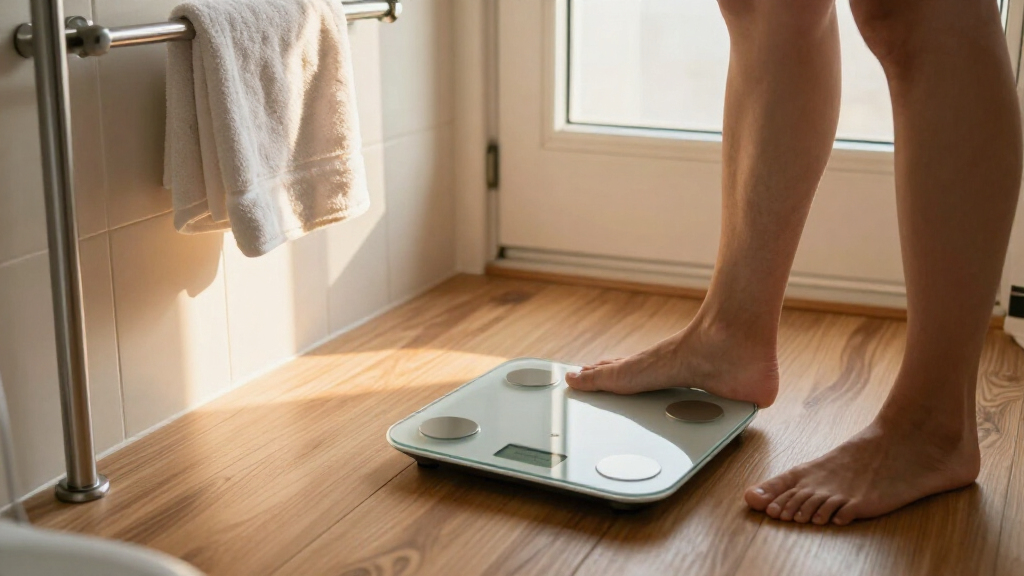
At-home body fat scales use bioelectrical impedance analysis (BIA) to estimate body composition. They send a weak electrical current through your body and combine the resulting resistance with details such as height, weight, age, and sex. The number looks precise, but it is still an estimate built from a model.
This guide explains what your scale measures, why its readings move around, and how to get more useful comparisons. You’ll also see why extra app metrics can look more certain than they are—and how to track progress without letting one number define your health or effort.
The scale measures weight directly; body fat, muscle, and other composition figures are BIA-based estimates.
Hydration, meals, exercise, alcohol, temperature, time of day, and fluid changes can shift a reading.
Repeatability means consistency; it does not prove that an estimate is accurate.
Use one scale under similar conditions and look at longer-term patterns alongside waist, clothing fit, strength, or fitness changes.
A body fat percentage cannot diagnose health or describe your overall fitness.
The Hidden Limits of At-Home Body Fat Scales What the numbers can tell you
These scales measure weight directly but estimate body composition using electrical resistance. Readings can shift with everyday conditions, so use them as rough trends rather than precise health assessments.
What the scale measures
Bioelectrical impedance analysis (BIA) turns an electrical signal and profile details into model-based estimates.
- Body weight
- Electrical resistance
- Body fat and muscle
- Water and visceral fat
Why readings move
Short-term changes in the signal can look like changes in body composition.
Hydration shifts
Hydration and fluid changes can affect resistance even when body fat has not changed.
Daily conditions
Meals, exercise, alcohol, skin temperature, and time of day can shift the estimate.
Consistency is not accuracy
A scale may give similar readings under similar conditions and still differ from a reference measurement.
| What to assess | What it means |
|---|---|
| Repeatability | Whether readings stay consistent under similar conditions |
| Accuracy | Whether an estimate is close to a reference measurement |
| App metrics | Additional figures are generally model-based estimates |
Build a more useful trend
A consistent routine can reduce avoidable variation, though it cannot make an estimate a direct measurement.
Use the same scale on a hard, level surface and follow its instructions.
Choose a consistent time, often morning after using the bathroom and before eating or exercise.
Follow longer-term patterns alongside waist, clothing fit, strength, or fitness changes.
What Your Scale Measures Directly—and What It Guesses
An at-home body fat scale measures your weight directly and estimates body composition from electrical resistance. Its display may show body fat, muscle mass, water, or visceral fat, but those figures are model-based estimates, not direct measurements of each tissue.
The current travels more easily through some tissues than others, especially because water and electrolytes affect conductivity. The scale uses that signal, along with your weight and profile details, to estimate body composition. It cannot isolate fat or muscle the way its labels might suggest. The estimate depends on assumptions about how your body relates to the device’s measurements, so it may fit some people better than others.
Think of the scale as a weather app estimating tomorrow’s conditions from several clues. It has a signal—in this case, how easily a weak electrical current travels through your body—and it uses a set of assumptions to turn that signal into a forecast. A number like 27.4% can look exact even when the underlying estimate has meaningful uncertainty.
For example, you step on the scale after waking and see 27.4%. After dinner, the same device reports 28.1%. The scale did not directly spot extra fat; food, fluid, and normal daily changes may have altered the signal its algorithm interprets. That distinction matters because reacting to the displayed decimal as if it were a direct tissue measurement can make ordinary variation look like meaningful progress or setback.
This distinction matters when an app presents several numbers in tidy colored charts. A separate muscle mass or body water reading doesn’t mean the scale independently measured those things. Treat the figures as indicators produced by one system, and check how the manufacturer defines each metric before drawing conclusions.
Products Worth Considering

Withings Body Smart Wi-Fi and Bluetooth Body Composition Scale

Withings Body Scan Smart Scale with Segmental Body Composition and ECG, Black

LEVOIT Vital 200S-P Smart Air Purifier for Large Rooms
As an affiliate, we earn on qualifying purchases.
Why the Same Scale Can Give Different Readings Tomorrow
At-home body fat scales can show day-to-day changes because BIA estimates respond to fluid movement as well as body composition. Hydration, recent food or drink, exercise, alcohol, skin temperature, time of day, and, for some people, menstrual-cycle-related fluid changes can all affect readings.
These factors matter because the scale interprets electrical resistance as a clue about body composition. A change in water distribution can alter that clue even when body fat has not changed. Exercise may also affect fluid balance and skin temperature; a meal or drink changes what is included in your weight. The device has limited ways to tell these short-term conditions apart from a lasting change in tissue.
Imagine weighing yourself after a salty dinner and a late workout, then again the next morning. Your body may handle fluid differently across those moments, and your skin temperature or hydration can differ too. A change on the screen may look like a change in fat or muscle when it mostly reflects conditions around the measurement.
That’s why one reading is a snapshot, not a verdict. It is a bit like checking the temperature outside while standing in the sun one day and in the shade the next: the difference tells you something about the measurement conditions, but not necessarily about a large change in the whole environment. If you mistake a snapshot for a trend, you can overreact to noise; if you ignore every reading, you may miss a broad pattern. Repeated measurements in similar conditions help balance those risks.
For a fairer comparison, use the same scale at a similar time and follow its instructions. Many people choose the morning, after using the bathroom and before eating or exercising. If you menstruate, comparing readings at similar points in your cycle may help explain recurring fluid-related shifts, though patterns vary from person to person. Consistency reduces some variation, but it cannot remove the uncertainty built into the estimate.
How to Get a More Useful Trend From Your Scale
You can make home body fat readings more comparable by keeping the setup and timing consistent. A routine cannot turn an estimate into a direct measurement, but it can reduce some avoidable variation between sessions. That makes the trend easier to interpret, even though it does not guarantee that the trend matches the exact amount of fat or muscle you have.
- Use one scale on a hard, level surface, and follow the manufacturer’s placement and setup instructions. Different devices use different sensors and models, so switching scales can create a new baseline rather than a comparable continuation.
- Measure under similar conditions. For example, weigh in the morning after using the bathroom and before eating or exercising. This limits some predictable changes in weight and fluid, while accepting that normal variation remains.
- Look at a longer pattern instead of reacting to a single day’s number. Give ordinary fluctuations room to settle. A gradual pattern across repeated readings is more informative than a single jump, though it still describes the scale’s estimate.
- Add other useful clues, such as weight trends, waist circumference, how clothing fits, and changes in strength or fitness. These measures capture different aspects of change; together they can provide more context, but none alone gives a complete account of health or body composition.
- Ask a qualified professional if you need help interpreting measurements for a health decision or existing condition. A professional can consider your circumstances and the limits of each measurement instead of treating an app result as a diagnosis.
Suppose your body fat estimate jumps after a hard spin class. If you also record when you exercised and compare readings over several weeks under similar conditions, you can see that one surprising result sits inside a larger pattern. The goal is consistent context, not daily perfection. The tradeoff is that waiting for a pattern takes patience, but it reduces the chance that you make a decision based on a temporary fluctuation.
How often you measure depends on whether the information helps you. Frequent readings can make normal fluctuations feel urgent; less frequent, consistent checks may be easier to interpret. If tracking becomes stressful or pushes you toward unhelpful choices, step back and discuss a better approach with a qualified professional.
Why Extra Metrics Can Create False Precision
More numbers on a smart-scale app do not automatically mean more accurate information. Readings labeled visceral fat, bone mass, body water, or segmental muscle are often estimates generated from the same signal and model, rather than separate measurements of those tissues. Several outputs can therefore share the same underlying uncertainty: a neat set of metrics may look like multiple confirmations when they are partly different interpretations of one measurement.
Recent consumer models may add hand grips, multiple electrical frequencies, or app charts that divide the body into segments. These features can collect more information or make trends easier to view. Still, a polished display and extra sensors do not erase the basic limits of estimating composition from electrical resistance. More inputs may improve an estimate for some people or uses, but the value depends on how the model combines them and how well it has been evaluated.
Think of adding more gauges to a car dashboard: they can show more readings, but their usefulness still depends on how each gauge works and whether it is calibrated well. When a device shows “visceral fat 9,” ask what that number means in the manufacturer’s documentation. It is not a diagnosis, and it does not tell the whole story of your health. Without a clear definition and evidence for that specific measure, the number can be difficult to interpret or compare with another device’s result.
When comparing devices, look for independent validation against a reference method and read what population and conditions the study covered. A list of features or a confident marketing claim cannot tell you whether the estimate works equally well for different people. Validation in one group or under one set of conditions may not establish performance for everyone. Models and evidence change, so check current documentation for the specific scale you use.
How to Judge Accuracy Claims Without Getting Lost in Specs
Repeatability means a scale gives similar readings under similar conditions; accuracy means its estimates are close to a reference measurement. A device can be repeatable without being accurate, which is why a steady trend should not be mistaken for a perfectly true number. Repeatability is still useful: it can help show how the scale’s estimate changes over time, as long as conditions remain comparable. Accuracy matters when you need to know how close the displayed value is to your actual body composition.
For instance, imagine a scale that reports nearly the same body fat percentage every morning, while a reference assessment suggests the estimate is several percentage points off. The scale may still help you notice whether its own readings tend to move over time, but you should not treat its displayed value as exact. If the estimate is consistently offset, a change in the scale’s number may still be informative, but it cannot tell you the precise size of a change in your body.
| What you’re comparing | What it tells you | What it cannot promise |
|---|---|---|
| Repeat readings on one scale | Whether the device is consistent under similar conditions | That the number matches your actual body composition |
| Different scales or brands | That devices may report different estimates | That their numbers can be compared directly |
| A scale estimate and a DXA scan | How an estimate compares with a reference method | That either result answers every health question |
DXA scans can provide more informative reference measurements than a home scale, but they also have limitations and aren’t necessary for everyone. Calipers and other methods have their own sources of error. Different methods define or estimate body composition in different ways, so a discrepancy does not automatically show which result is universally “right” for every purpose. If you’re comparing methods, use guidance from a qualified professional and avoid assuming that a more expensive device must be truer.
What Your Body Fat Number Can’t Tell You About Health
A body fat percentage alone cannot tell you whether you are healthy, fit, well-nourished, or making progress that matters to you. Health is broader than one estimate; it includes factors a scale cannot capture, such as fitness, nutrition, fat distribution, medical history, and how you feel in daily life. The number can be a limited piece of context, but treating it as a verdict risks overlooking important changes or creating concern that the measurement cannot resolve.
Picture someone training for a local hiking trip. Their scale’s body fat estimate barely shifts over a few weeks, but they can climb the neighborhood hill with less stopping and carry their pack more comfortably. Those changes count, even when a single app graph stays flat. Fitness and daily function can improve on a different timeline from body composition, so one metric may fail to reflect the outcome that matters most to that person.
Likewise, a lower percentage does not automatically mean better health or a better experience in your body. The number does not explain why it changed, and it cannot account for your personal circumstances. Use it, if it suits you, as one limited clue alongside other measures rather than as a grade. Choosing measures tied to your own goals can make tracking more useful, while keeping the scale from defining progress on its own.
If you have a health concern or need measurements to guide a decision, a qualified health professional can help put results in context. People with pacemakers or other implanted medical devices should follow their clinician’s advice, device maker’s guidance, and the scale manufacturer’s safety instructions before using BIA. A household scale cannot substitute for medical assessment.
Frequently Asked Questions
Are at-home body fat scales accurate?
They offer estimates, and individual readings can differ meaningfully from reference methods such as DXA. A scale may be repeatable under similar conditions without being accurate for your body. Use its readings as rough trends, not exact measurements.
Why does my body fat percentage change from one day to the next?
BIA readings can shift with hydration, food or drink, exercise, alcohol, skin temperature, and time of day. For some people, menstrual-cycle-related fluid changes also affect readings. A day-to-day change may reflect fluid movement rather than a change in fat.
Can I trust the muscle or visceral-fat numbers?
Read these as algorithm-based estimates, not direct measurements or diagnoses. Check how your scale’s manufacturer defines each metric, and avoid treating a single app figure as a complete picture of your health.
How often should I use a body fat scale?
Consistency matters more than frequency. If you choose to track, measure under similar conditions and focus on a longer-term pattern. If frequent checks make you focus on daily noise, consider stepping back.
Does a more expensive scale give a truer result?
Not necessarily. Hand grips or multiple frequencies can add information, but price and feature count do not establish accuracy. Check current independent validation for the specific model if accuracy matters to your decision.
Can a body fat scale tell me whether I’m healthy or fit?
No single body composition figure captures overall health or fitness. A scale cannot assess everything from nutrition and strength to medical history and fat distribution. Ask a qualified health professional for help interpreting measurements related to a health concern.
Can I use a BIA scale if I have an implanted medical device?
Follow the guidance from your clinician, the device maker, and the scale manufacturer before using a BIA scale. People with pacemakers or other implanted medical devices should check those instructions rather than relying on the scale app for safety guidance.
Conclusion
Use your scale to notice a rough pattern, not to decide what your body is worth or what happened overnight. Keep the device, timing, and conditions similar, then read its estimate beside other changes that matter to you.
A number is only one small window. Your day-to-day life is the wider view.