TL;DR
Fit&Well published a beginner step-aerobics routine for home, with guidance from certified personal trainer Nelly Flaque. The roughly 15-minute session combines step-ups, side steps, marching and stretches; it uses a low platform and allows extra rest as needed.
Fit&Well has outlined a beginner step-aerobics routine for home, with certified personal trainer Nelly Flaque recommending a low step, controlled movements and rest breaks. The report describes step aerobics as an activity that can work the legs and glutes and says the routine uses an aerobic step.

Get workout gear delivered free with Prime
- Fast, free delivery on millions of items
- Prime Video, Amazon Music and more included
- Member-only deals all year
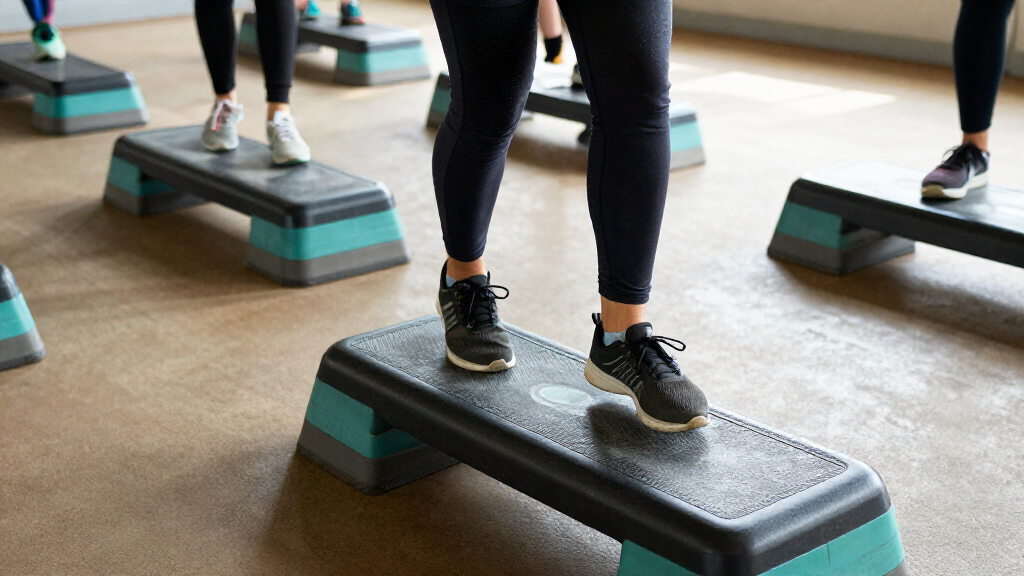
The routine takes just under 15 minutes and calls for a sturdy aerobic step on a flat, nonslip surface, supportive athletic shoes and the platform’s lowest height. It begins with one minute each of marching and side-stepping, then moves through step-ups, alternating step-ups, side step-ups and recovery movements on the floor. The listed intervals include one-minute exercises and segments of 30 seconds per side, with 15-second rests; some step-up intervals split the time between leading with each leg.
Flaque advises starting at a height that allows a person to step up and down without losing balance, leaning excessively forward or pushing hard off the floor with the trailing leg. The report says adjustable risers can let beginners start lower and increase the platform height later, once they can move with control. It also recommends checking that the platform is wide enough for the whole foot and has a sturdy, textured surface.
The session ends with a gradual cool-down: a slow march, calf and quadriceps stretches, and a forward fold. The report says beginners or people returning to exercise can replace platform steps with marching in place, choose a lower step height and rest longer when needed. It also includes further workout options, including YouTube workouts.
A Low-Equipment Way to Train at Home
The workout gives readers a structured option for moving at home using an aerobic step and supportive shoes. The report says step aerobics can strengthen the legs and glutes, and describes a step workout as raising the heart rate more than walking on flat ground. These are general descriptions of step aerobics, not measured outcomes for this particular routine.
The report emphasizes managing difficulty by using the lowest setting, following the guidance on balance and control, and taking more rest if needed. It also describes alternatives such as marching in place and using a lower step height.
Products Worth Considering

Levoit Air Purifier for Home, Pets, Bedroom – Smart Wi‑Fi for Large Rooms

BowFlex Results Series 552 SelectTech Adjustable Dumbbells (Pair)

Bowflex SelectTech 840 Adjustable Kettlebell
As an affiliate, we earn on qualifying purchases.
How the Routine Is Structured
Step aerobics uses a raised platform as the surface for repeated up-and-down and lateral movements. In the Fit&Well report, Flaque says stepping can resemble the effort of going uphill because both involve moving from a lower point to a higher one. She also says a step workout can raise heart rate more than walking on flat ground.
The workout alternates platform work with floor-based movements, including marching and side steps, which provide lower-intensity periods while keeping participants moving. A warm-up comes before the main sequence, and the cool-down follows it. The report also notes that a step can be used for basic step-ups or a short cardio session, but its central development is the specific beginner routine and setup advice.
“Start at a height where you can step up and down without losing your balance, leaning too far forward or pushing excessively off the floor with your trailing leg.”
— Nelly Flaque, as quoted by Fit&Well
Limits of the Published Guidance
The supplied report does not state its publication date or set a recommended weekly frequency. It gives qualitative descriptions of potential benefits but does not present research data about this particular workout. It also does not specify whether the routine is appropriate for people with injuries, balance problems or particular health conditions. Flaque’s advice is general guidance as reported by Fit&Well, not an individualized assessment.
How Beginners Can Start Safely
Readers can follow the report’s setup guidance: place a sturdy, textured platform on a flat, nonslip floor, wear supportive athletic shoes and use the lowest step height. Begin with the warm-up, move at a controlled pace and take longer breaks whenever necessary. If stepping onto the platform feels unsteady, the report suggests marching in place instead of using it for every movement.
The article also includes additional workout options, including YouTube workouts. Its practical guidance for the beginner routine is to adapt the step height and movements as described in the report.
Key Questions
How long does the beginner workout take?
Fit&Well says the full routine should take just under 15 minutes, including its warm-up and cool-down. Participants can take longer rests, so their actual session may run longer.
Do I need weights?
No hand weights are listed for this workout. It uses body-weight step-ups and floor movements on and around an aerobic platform.
What kind of step should a beginner use?
The report recommends a sturdy platform with a textured surface and enough room for the whole foot. Adjustable risers can help a beginner start low; Flaque suggests roughly four inches for new users and prioritizes balance and control.
Can I modify the routine if stepping is difficult?
Yes. The report says beginners or people returning to exercise can march in place instead of stepping onto the platform for every movement, use a lower height and rest longer. Its supplied excerpt does not include all of Flaque’s modification advice.
What should I do after the stepping exercises?
The published sequence ends with a slow march and gentle stretches for the calves, quadriceps and hamstrings. Flaque advises allowing breathing to return gradually toward normal rather than stopping abruptly.
Source: fitandwell.com