TL;DR

Get workout gear delivered free with Prime
- Fast, free delivery on millions of items
- Prime Video, Amazon Music and more included
- Member-only deals all year
A Fit&Well writer says year-round step-ups and Bulgarian split squats helped them feel steadier while hiking to a 5,889-foot summit in Albania. The report describes how to do both exercises and adjust their difficulty, but it is a personal account, not evidence that they prevent injuries or guarantee easier uphill walking.
A Fit&Well writer says year-round step-ups and Bulgarian split squats helped them feel steady while hiking to a 5,889-foot (1,795-metre) summit in Albania’s Alps. The account offers two single-leg exercises walkers can try and describes one person’s experience; it does not establish that the movements prevent knee problems.
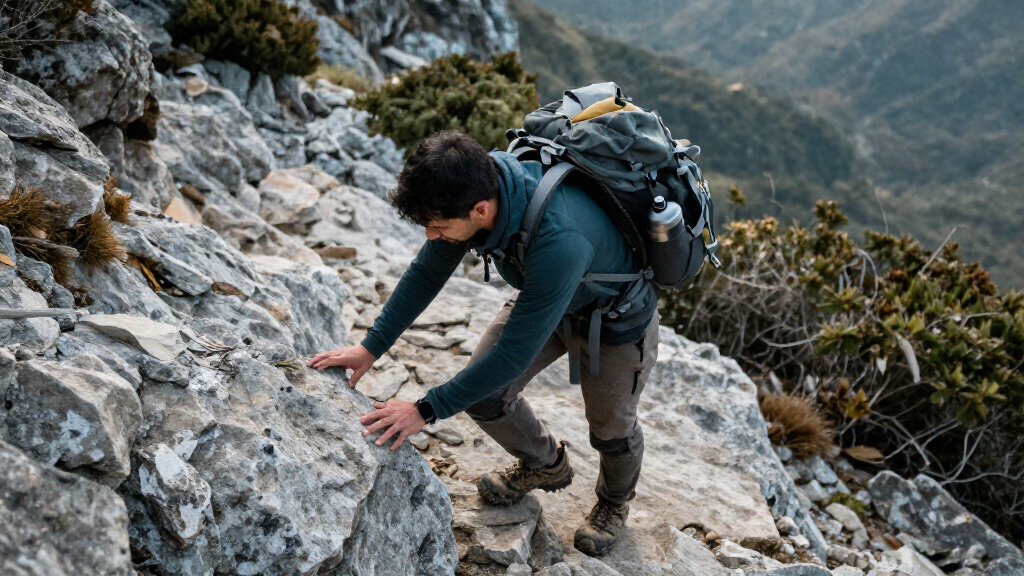
The writer says the hike was challenging but enjoyable, and reports feeling steady while stepping over boulders and large rocks. They also say they had no knee discomfort on the descent. The source does not identify the peak, provide a route or hiking date, or report an evaluation of the exercises’ effects.
The two movements were included in the writer’s training plan by their coach and are also exercises the writer says they program for personal-training clients. A step-up involves placing one foot on a box or chair, pushing through that leg to rise, then lowering under control. The report suggests 8–12 repetitions per side.
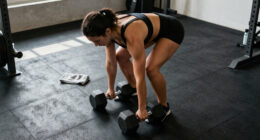
A Bulgarian split squat is performed with the rear foot supported on a chair, bench or couch while the front leg bends to lower the body. The writer also recommends 8–12 repetitions on each side. The report describes progressing from bodyweight to added weight. It suggests a lower surface as an easier step-up variation, and a higher surface or added weight as harder variations; for split squats, it mentions adding weights. It does not give a training schedule or say how long the writer had been doing the exercises.
How Single-Leg Strength Fits Hiking
The writer describes step-ups and Bulgarian split squats as single-leg exercises and says they helped them feel steady while stepping over boulders and large rocks. The report also says the exercises mimic the uphill motion of hiking and can be done at home using a chair or at the gym.
That practical relevance should not be mistaken for a universal result. The writer describes their own preparation and experience; the source does not provide a study comparing hikers who do these movements with those who do not. Nor does one successful hike show that the exercises alone account for performance on a mountain.
The distinction matters for walkers deciding how to train: these movements may form part of a general strength routine, but the article does not establish that they will prevent knee pain, avert injury or make steep terrain safe for everyone.
Products Worth Considering

Bowflex SelectTech 840 Adjustable Kettlebell

Fitbit Sense Health & Fitness Smartwatch (White/Gold, International Version)

Theragun Prime 6th Generation Deep Tissue Massage Gun – Black
As an affiliate, we earn on qualifying purchases.
The Writer’s Training Approach
The writer says they live in London, where access to challenging terrain is limited, and head farther afield a few times each year. On a recent trip to the Albanian Alps, they reached a summit that the report gives as 5,889 feet, or 1,795 metres. The report does not name the mountain.
The writer presents the two exercises as part of ongoing preparation rather than a last-minute plan. Their coach includes them in a programme, and the writer says they also prescribe them to personal-training clients. The report says step-ups and split squats work the hips, hamstrings, quadriceps and glutes, and improve core stability; these are descriptions of the exercises, not findings from a test conducted during the hike.
For step-ups, the instructions call for a box or chair and controlled lowering, with all repetitions completed on one side before switching. For split squats, the rear foot rests on an elevated surface while the front foot remains planted. The source says to keep the right knee directly above the right ankle as the body lowers. It gives easier and harder variations for the movements.
“It was tough, but I was still able to enjoy it because I do single-leg exercises year-round.”
— Fit&Well writer
What the Personal Account Cannot Show
The report does not identify the summit, the hike date, the route’s length or elevation gain, or the conditions on the day. It also does not specify how often the writer performed each movement or how long they had trained. Those details would help readers understand how closely their own circumstances compare.
There is no independent evaluation or research presented to establish that these two exercises caused the writer’s steadiness or lack of knee discomfort. The article also does not claim that the routine prevents injuries. Individual ability, technique, health history and hiking conditions can affect how a person responds to strength training and mountain terrain.
Adapting the Exercises Safely
The source provides exercise instructions rather than a future event or follow-up study. Walkers interested in trying the movements can start with body weight and a stable, low platform, using controlled repetitions and stopping if they experience pain. The report’s suggested range is 8–12 repetitions per side; it does not prescribe how many sessions to do each week.
Progression can be gradual: the report suggests a higher platform or added weight for step-ups and weights for split squats. Readers should choose a variation they can perform with control rather than treating the summit story as a training guarantee. Anyone with a current injury, ongoing knee symptoms or a health condition should ask a qualified health or exercise professional for individual advice.
Key Questions
Which two exercises did the writer use?
The writer named step-ups and Bulgarian split squats, both performed one leg at a time.
How high was the summit?
The report gives the summit height as 5,889 feet (1,795 metres) in the Albanian Alps. It does not identify the peak.
How many repetitions does the report suggest?
It suggests 8–12 repetitions on each side for both exercises. It does not specify a weekly schedule.
Do the exercises prevent knee pain?
The report does not establish that. The writer says they had no knee discomfort on this hike’s descent, but that is a personal account and not proof that the exercises prevent pain or injury.
Can the movements be done at home?
According to the report, step-ups can use a stable chair or box, and split squats can use a chair, bench or couch to support the rear foot. Start with a setup that feels stable and seek professional advice if you have an injury or health condition.
Source: fitandwell.com